Qasr Al Hosn & Al MarkaziyahAbu Dhabi
Al Bahr Towers Responsive Façade
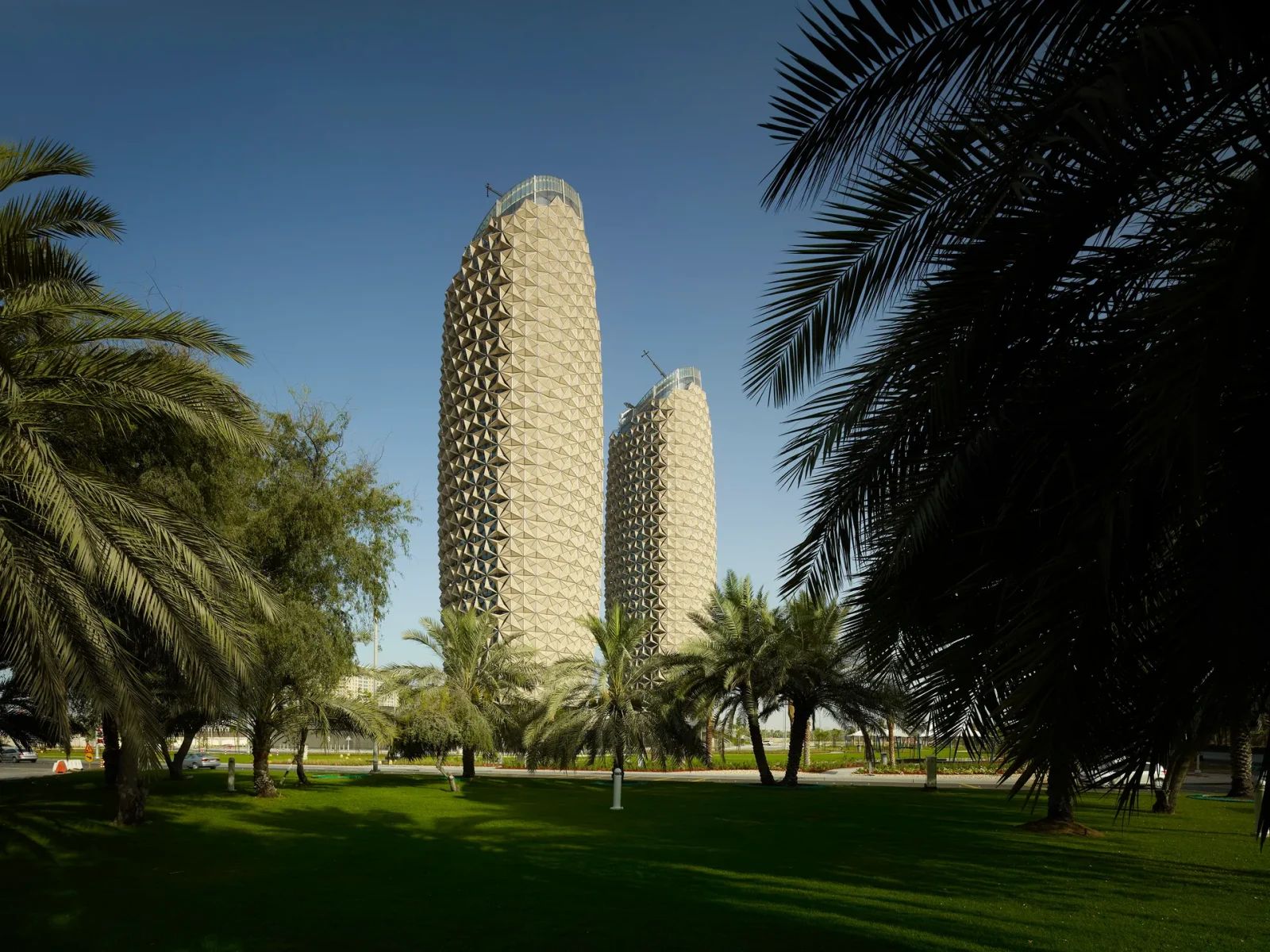
Twin cylinders wrapped in 2,000 folding umbrellas — a mashrabiya that opens and closes with the sun.
Al Bahr Towers are twin 25-storey office cylinders on the eastern approach into Abu Dhabi island, completed in June 2012 for the Abu Dhabi Investment Council. Each tower rises roughly 145 metres, and together they hold about 70,000 square metres of office space. What makes them internationally significant is not their height but their skin: the world's first large-scale commercial building to carry a dynamic, computer-controlled shading façade.
The towers were designed by Aedas, with the responsive façade developed by the practice's computational design team under Abdulmajid Karanouh, and engineering by Arup. Diar Consult acted as local associate architect and Al-Futtaim Carillion built the scheme. The shading system reinterprets the mashrabiya — the carved wooden lattice screen of traditional Arab architecture, used for centuries to filter light, cut glare and preserve privacy — at the scale of an entire tower.
The screen sits roughly two metres clear of the glazed curtain wall and is composed of triangular fibreglass-coated panels grouped into scalable hexagonal units. Driven by a programmed sequence tracking the sun's movement, each unit folds open and closed through the day and shuts fully at night, cutting solar gain by more than fifty per cent while allowing the use of clearer, less heavily tinted glass inside. The geometry was resolved parametrically, with the panel arrangement derived from Islamic tessellation.
The project won the Council on Tall Buildings and Urban Habitat's Innovation Award in 2012, the jury noting that no adaptive façade had previously been attempted at this scale. The towers remain in use as offices, with one occupied by the Abu Dhabi Investment Council; the interiors are not open to the public, and the building is experienced from the street and from the approach roads.
Exhibo editorial
The thing moves. That is the part nobody quite prepares you for. You expect a pattern; you get a mechanism, and if you stand at the base of the eastern tower for twenty minutes in the late afternoon you will catch the panels shifting through their sequence — not dramatically, not all at once, but enough that the whole surface of the building has quietly changed texture by the time you look up again.
Every emirate has towers that gesture at heritage: a bit of geometry printed on glass, a lattice motif applied like wallpaper. This one actually does the job the original did. A mashrabiya was never decoration — it was climate equipment, a way of living somewhere unbearably bright without shutting the light out entirely. Aedas kept the function and threw away the wood. The result is that rare building where the reference is load-bearing rather than polite, and it earns the odd distinction of being at its most beautiful at the hour when it is working hardest.
How to find it
On the eastern approach into Abu Dhabi island, at the junction of Al Saada Street and Sheikh Zayed Bin Sultan Street, near the Al Nahyan district. The towers are visible for some distance along Al Salam Street — the best full view of the folding screen is from across the road on the seaward side, where both cylinders read together. Offices are private; there is no public interior access, so plan on viewing from street level.
Similar places
All places
News by Exhibo
Editorial coverage on Exhibo
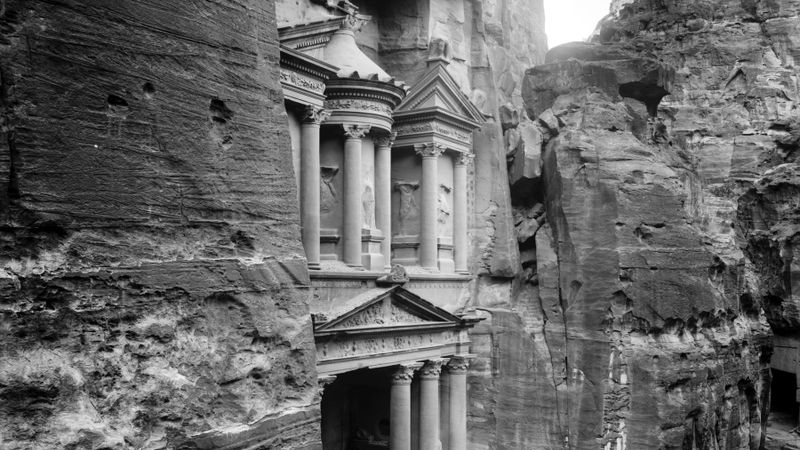
Filmed, but Not Recorded: The Arab World’s Missing Film Locations
Wikidata knows Gladiator was filmed in Morocco. It doesn’t know where.
Ouarzazate is the second most filmed place in the Middle East and North Africa, yet 25 of its 27 productions are recorded only in Wikipedia prose. We compared filming records worldwide and found that in the Arab world, Wikidata usually knows the country but not the place.
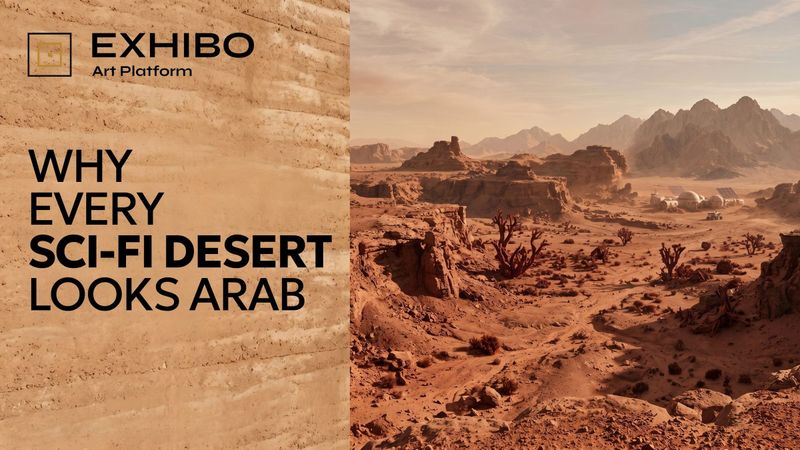
Why Every Sci-Fi Desert Looks Arab
From Arrakis to Tatooine, when a film wants a desert to feel ancient, prophetic and alien, it reaches for an Arab and Berber vocabulary — and reveals more about the West that built it than the region it borrows from.
The wrapped faces, the trilling women, the barely-displaced Arabic: cinema's alien deserts keep sounding Arab. But the vocabulary was assembled in the West — from Orientalist painting to Lawrence to Dune — and it says more about who is looking than about anyone being looked at.
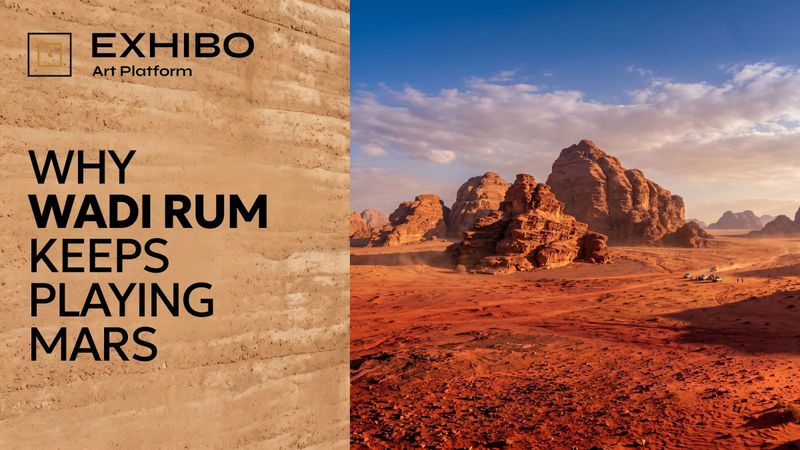
Why Wadi Rum Keeps Playing Mars: A Desert That Is Right About the Wrong Planet
A valley in southern Jordan has become cinema's favourite Mars — not because it is like the planet, but because it looks like the one we carry in our heads.
Put Wadi Rum beside a rover photograph and you can't tell which is Mars. But the desert shares almost nothing with the real planet except its colour — and lately, the illusion has grown powerful enough that real space missions have come to Jordan to rehearse.