Marrakech

Ourika & High Atlas foothills

0 galleries · 0 museums · 0 places

About this district

South of Marrakech the plain rises quickly into the High Atlas, and the Ourika Valley is the closest of these mountain escapes — a green river valley of Berber villages, terraced fields and waterfalls, an hour or so from the city with the snow-line above. It is landscape and living mountain culture rather than a gallery scene: roadside villages, craft cooperatives, the waterfalls at Setti Fatma, the cultivated slopes. You come for the day, up the valley and back, trading the red city for cold water and high air. The scale is vertical. The pace belongs to the mountains.

Galleries

No published galleries in this district yet.

Museums

No published museums in this district yet.

Places

No published places in this district yet.

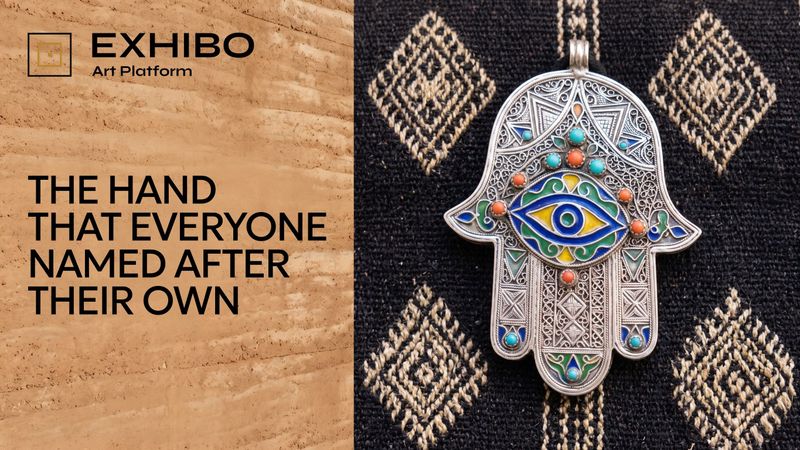
A geometric khamsa — an open five-fingered hand with an eye at its centre — in the Kabyle silver style of North Africa.
Editorial

The Hand That Everyone Named After Their Own

The Khamsa across North Africa — Marrakech, Tunis, Algiers — and why the oldest thing about it is the shape, not the story.

Everyone calls it something different — the Hand of Fatima, the Hand of Miriam, the Hand of Mary. One five-fingered shape, several holy names, each written onto it by a community that made it its own. From a carved hand over the Alhambra's gate to Kabyle silver, synagogue lamps and a boy on a Marseille motorway, this is the story of a symbol older than the names it carries — and shared by more people than any one of them.

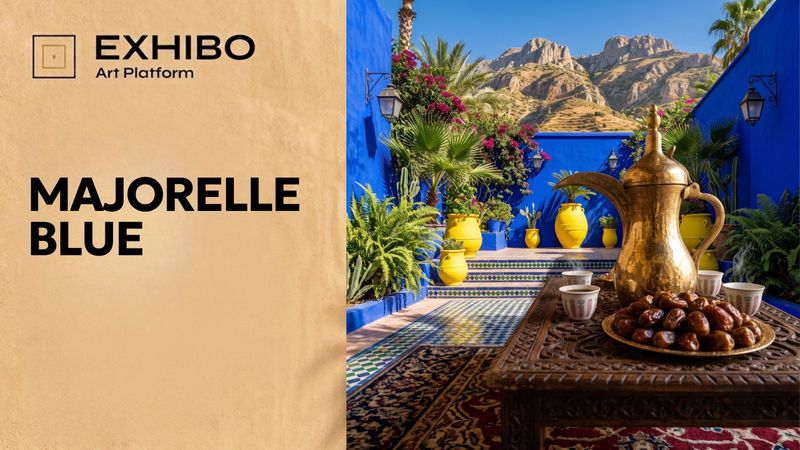
The cobalt-blue studio wall of the Jardin Majorelle in Marrakech, set against green foliage and terracotta pots in bright sun.
Editorial

Majorelle Blue: How a Painter (Almost) Trademarked a Colour

How a French painter lent his surname to a blue that Morocco had been dyeing, firing and painting for centuries — and what that tells us about who gets to own a colour.

Everyone repeats the same tidy line: a painter fell in love with Marrakech, invented an electric blue, and trademarked it. Almost every clause is a simplification. The colour was already deep in Morocco's visual language — in indigo, in the cobalt of Fez, in the blue of zellige — long before Jacques Majorelle poured it over a single studio wall. What he actually did was rarer and stranger: not invent a colour, but compose a place, and attach a name to a hue no one can truly own.

The deep rust-red mega-dunes of the Liwa crescent in the Empty Quarter, rising in smooth ridges under clear sky, with a thin line of green date palms at their base
Editorial

Why Liwa Is Red

The red of the world's tallest dunes isn't a fact about the sand — it's a record of everywhere the sand has been. A drowned sea, an ice-age wind and a buried green Arabia, all pressed into a single colour.

Everyone knows why Liwa is red: iron in the sand. It's true the way "the Gulf is white to reflect heat" is true — the first sentence of a much longer story. The red is a microscopically thin coat of rust on grains of clear quartz, and where those grains came from is almost impossible to picture from the dunes: the floor of a sea that no longer exists, lifted grain by grain and stacked three hundred metres high.

A cross-section of a medieval bathhouse: bathers above, and below them two horned fire spirits tending the furnace that heats the water.
Editorial

The Real Jinn: How the Middle East Imagined Them Before Disney

Seven kings, one for each day of the week. A portrait of Fever. Two spirits keeping a bathhouse warm. What the manuscripts actually show — and what the lamp replaced.

Folio 35v of a manuscript in Oxford shows the public baths at Tiberias in cutaway. Upstairs, people washing. Downstairs, two jinn tending the furnace, mid-conversation. It is not what most of the world expects — and it is much closer to what the unseen was actually understood to be for. A long read across twelve centuries of manuscripts, fieldwork, survey data and horror cinema.