Kuwait City

South Sabhan

1 gallery · 0 museums · 0 places

About this district

An industrial district south of the centre, holding the Sultan Gallery — the oldest and one of the most important commercial galleries in Kuwait. South Sabhan is factories and warehouses, and among them sits a gallery of real historic weight, in a renovated industrial space. This is a district defined by one pioneering institution in an industrial setting. The register is contemporary and foundational.

Galleries

Museums

No published museums in this district yet.

Places

No published places in this district yet.

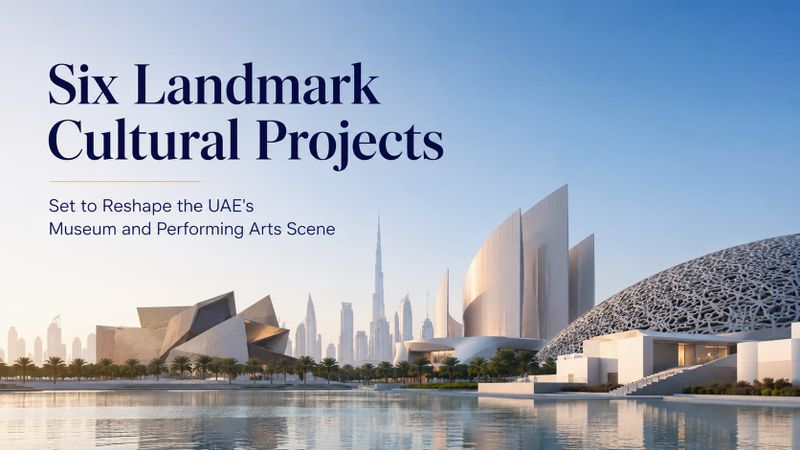
Six Landmark Cultural Projects Set to Reshape the UAE's Museum and Performing Arts Scene

Six Landmark Cultural Projects Set to Reshape the UAE's Museum and Performing Arts Scene

From a Frank Gehry-designed Guggenheim on Saadiyat Island to a floating art museum on Dubai Creek, six major institutions are set to redraw the country's cultural map over the coming years.

The UAE's museum and performing arts landscape is entering one of its most ambitious build-out phases yet, with six major cultural institutions — spanning Abu Dhabi, Dubai and Sharjah — currently in development. From the long-awaited Guggenheim Abu Dhabi to a floating art museum on Dubai Creek, here is what is coming and when.
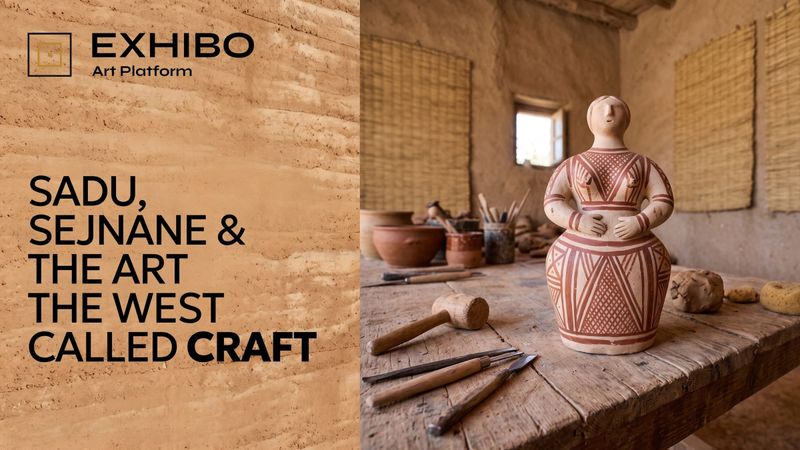
A hand-built terracotta figure painted with two-tone geometric patterns — triangles and crosshatch in red-brown on a pale ground — in the Sejnane style of northern Tunisia.
Editorial

Women Makers: Sadu, Sejnane and the Art the West Called Craft

How the women of Sejnane and the Sadu tents made a world of geometric art the museum system had no shelf for — and how it is finally being called by its name.

Two women's traditions — the clay of Sejnane in Tunisia, the woven tents of the Arabian Peninsula — share no bloodline, only a rhyme: the same spare geometry, held and passed down by women, in whatever material their world gave them. This is the story of the visual knowledge the West filed under "craft," the makers it kept downstairs, and the contemporary artists now carrying it back up into the room where "art" is defined.

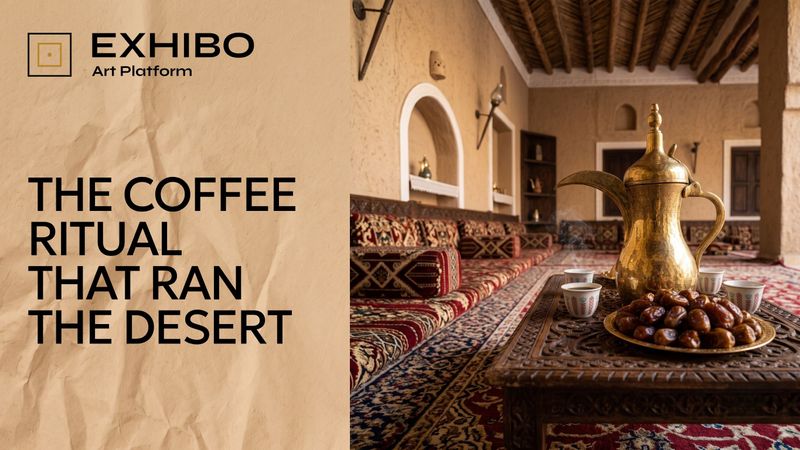
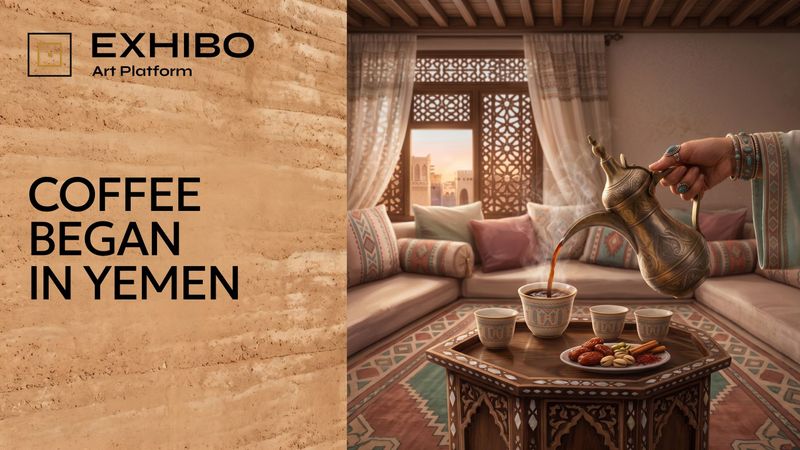
A host pours Arabic coffee from a dallah into a small handle-less finjan cup in a majlis
Editorial

The Coffee Ritual That Ran the Desert

A cup of coffee in the desert was a contract, a test, a truce, and a promise of protection — a whole social order in the tilt of a small white cup.

Among the Bedouin of Arabia, serving coffee was never just hospitality — it was a code. The order of the cups, the amount poured, the shake of the wrist that says enough: a whole unwritten language for turning a dangerous stranger into a guest, and sometimes an ally. The story of Arabic coffee as the social law of the desert — and how it lives on in the region's museums and art.

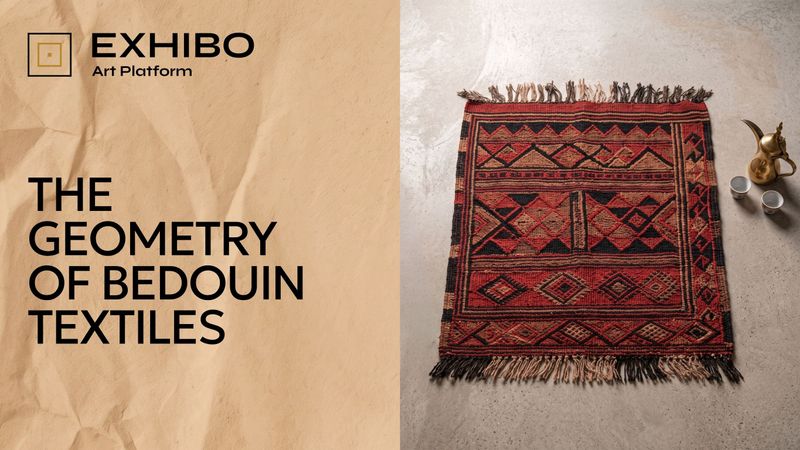
Handwoven Sadu textile with traditional Bedouin geometric patterns in red, black and brown
Editorial

Sadu Weaving: The Geometry of Bedouin Textiles

The geometry the Bedouin wove, and the women who carried it in memory because nothing was written down.

On a loom you stake into the sand, Bedouin women wove the interior world of the Gulf — tents, dividers, camel trappings — and threaded through the wool a geometry that carried tribe, family and meaning. A story of Sadu: the patterns and their names, the women who transmitted them without a single written word, and the quiet work of keeping the craft alive.