A cemetery of the Tunisian campaign
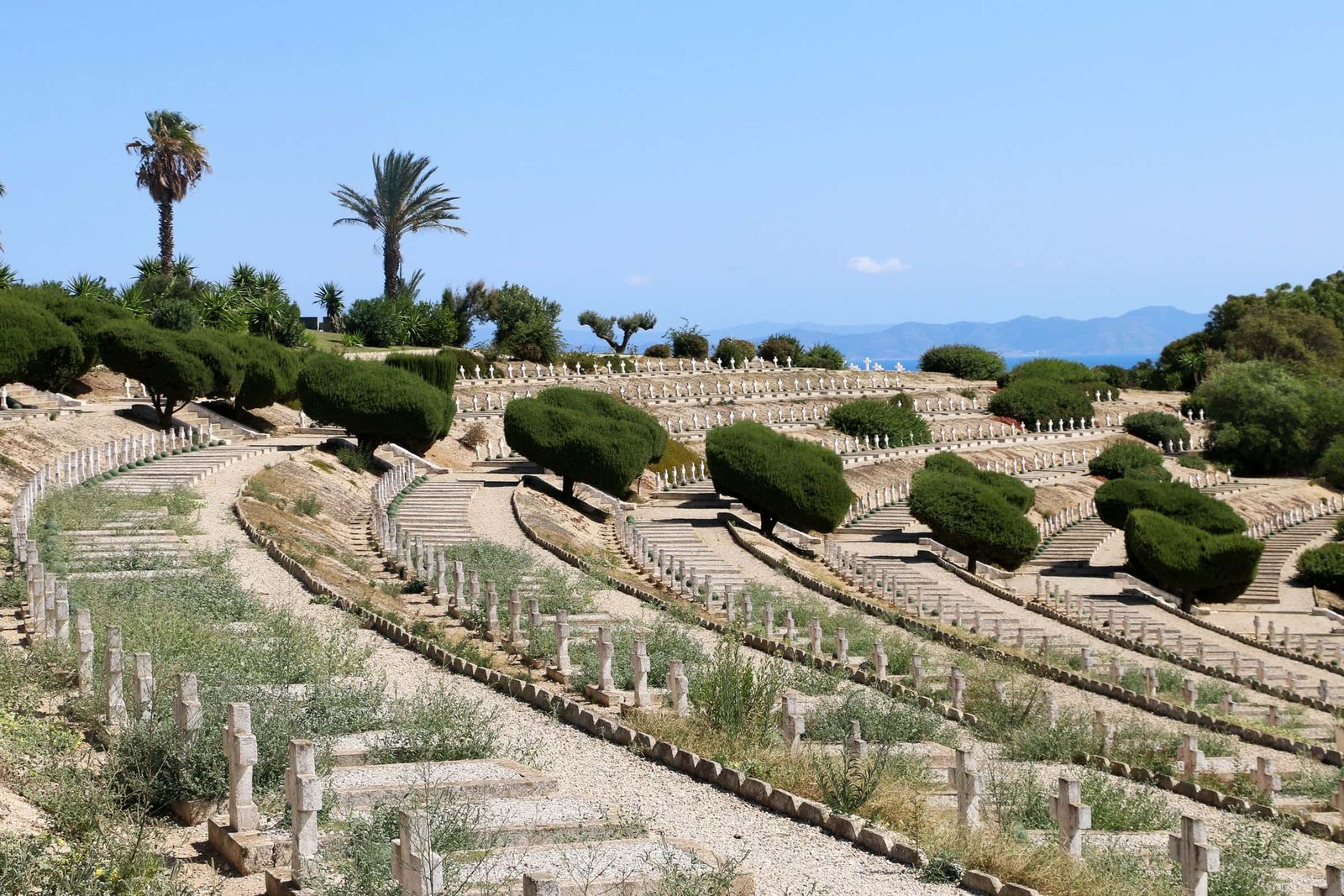
The French Military Cemetery of Gammarth stands on the hill of Gammarth Supérieur, north of La Marsa, looking out over the Gulf of Tunis. It is the national war cemetery of France in Tunisia. It was created on 5 January 1944 for the soldiers of the French Army of Africa who fell in the Tunisian campaign of 1942 and 1943, the fighting that drove German and Italian forces out of North Africa.
More than 4,000 soldiers rest here. Most lie in individual graves laid out in long curving rows across the terraces. The remains of soldiers who could not be identified were gathered in an ossuary. A columbarium holds the remains of men who died while serving in Tunisia in peacetime, brought here from older military plots.
Memorials
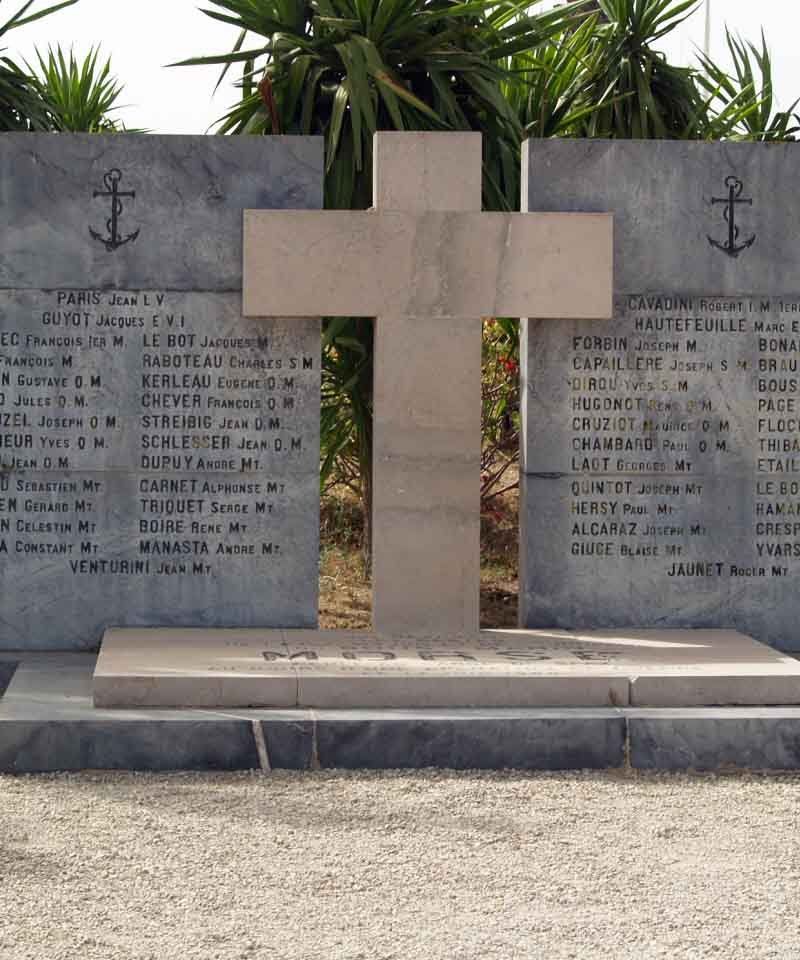
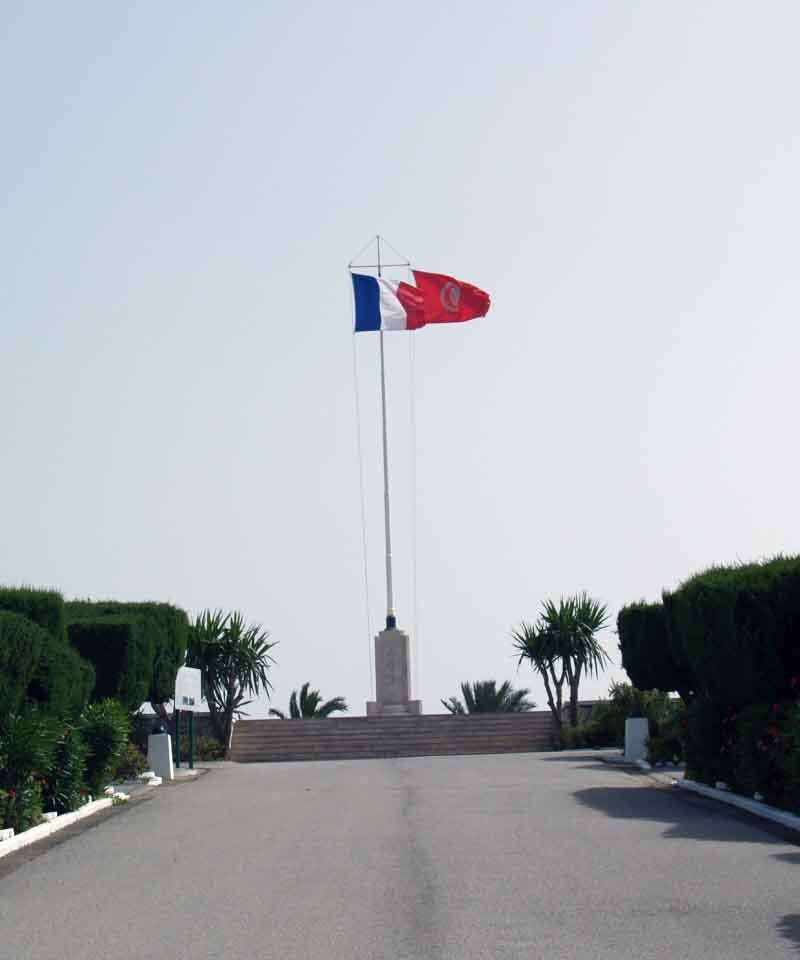
The cemetery holds the tomb of the Unknown Soldier of the Tunisian campaign. A separate memorial remembers the crew of the French submarine Morse, lost off the Tunisian coast in June 1940. Plaques on the walls list soldiers, teachers and students who died in the two world wars. A tall flagpole carries the French flag above the central alley.
The cemetery today
The cemetery is maintained by the French state. Ceremonies are held here each year on 11 November and for the anniversary of the end of the Second World War in May. Hedges, palms and white headstones stand against the sea, with the hill of Sidi Bou Said on the horizon.
On the other side of Carthage the North Africa American Cemetery remembers the American dead of the same campaign.
Exhibo editorial
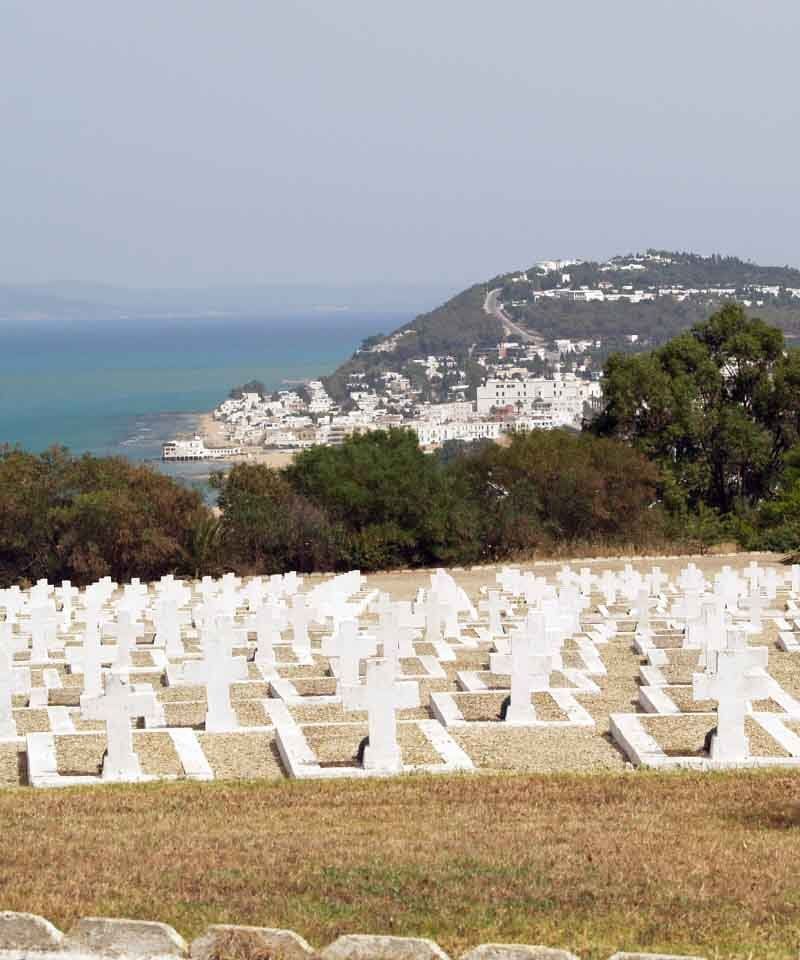
It is one of the most beautiful views in greater Tunis. Almost nobody comes for it. The rows of white headstones curve along the hillside like lines of verse. Below them the sea opens towards Sidi Bou Said and the mountains of Cap Bon.
The silence is the point. Most of the names belong to soldiers of the Army of Africa, many of them North African themselves. Walk slowly, read a few of them and look out at the gulf they were fighting for.
Gallery
How to find it
The cemetery is on the hill of Gammarth Supérieur, north of La Marsa, about 20 km north-east of central Tunis. There is no rail station nearby; take a taxi from La Marsa or the TGM station at La Marsa Plage. The entrance is on the road climbing through Gammarth Supérieur. Visitors are asked to dress and behave with respect.
Similar places
All places
News by Exhibo
Editorial coverage on Exhibo
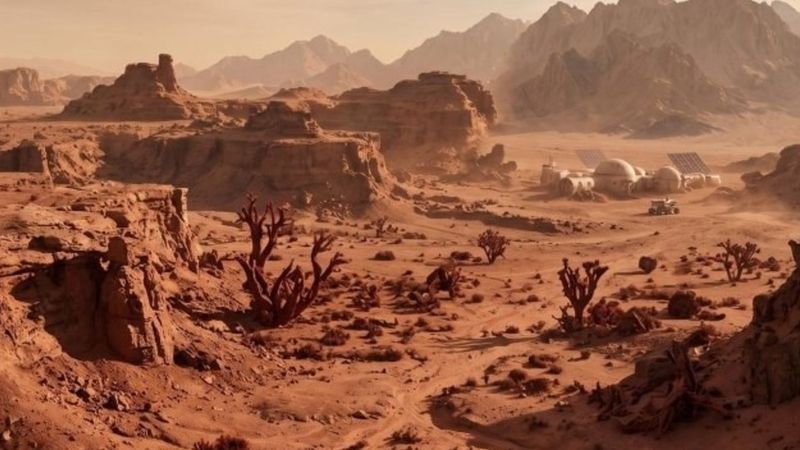
Why Every Sci-Fi Desert Looks Arab
From Arrakis to Tatooine, when a film wants a desert to feel ancient, prophetic and alien, it reaches for an Arab and Berber vocabulary — and reveals more about the West that built it than the region it borrows from.
The wrapped faces, the trilling women, the barely-displaced Arabic: cinema's alien deserts keep sounding Arab. But the vocabulary was assembled in the West — from Orientalist painting to Lawrence to Dune — and it says more about who is looking than about anyone being looked at.

The Real Aladdin: The Story That Belonged to No Country
Aladdin has no Arabic manuscript older than its French translation. Behind the gap stands a young man from Aleppo, catalogued for a century as anonymous.
The most famous "Arabian" tale in the world is missing from the oldest Arabic manuscript of the Thousand and One Nights — because before a French translator wrote it down in Paris, there was no manuscript of it to be missing from.
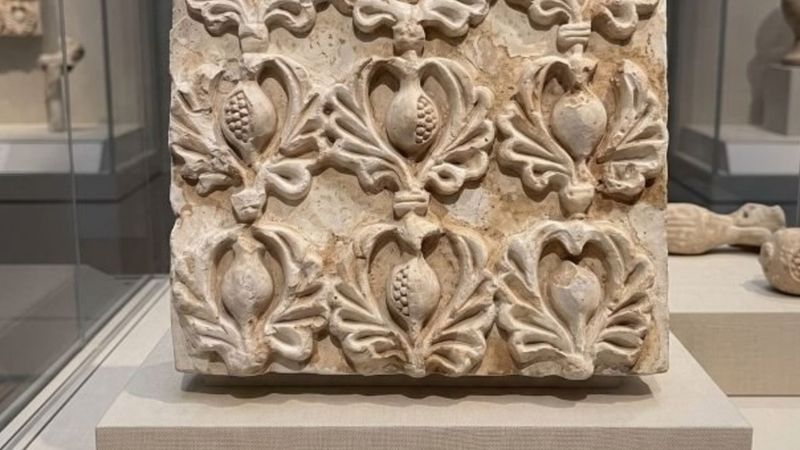
The Fruit We Are Sure We Recognize
How the pomegranate became one of the most confidently named motifs in Islamic ornament — and one of the least confidently identified — across a thousand years of tile, silk and stucco, with meanings we mostly attached later.
A slab of sixth-century plaster in the Met shows a fruit you recognise at a glance: a pomegranate, and surely it means paradise. Hold that certainty up to the light and it dissolves. Across a thousand years of tile, silk and stucco, the pomegranate is the shape we name most confidently and identify least — blurring into the artichoke and the palmette, its meanings attached by later viewers, its very name partly a nineteenth-century invention