The martyr bishop of Carthage
Cyprian was bishop of Carthage in the middle of the 3rd century and one of the great writers of the early Latin Church. In 258, during the persecution under the emperor Valerian, he was beheaded outside the city. He was the first bishop of Africa to die as a martyr. His cult spread across the Christian world. Churches were raised in his memory in Carthage itself.
The basilica by the sea
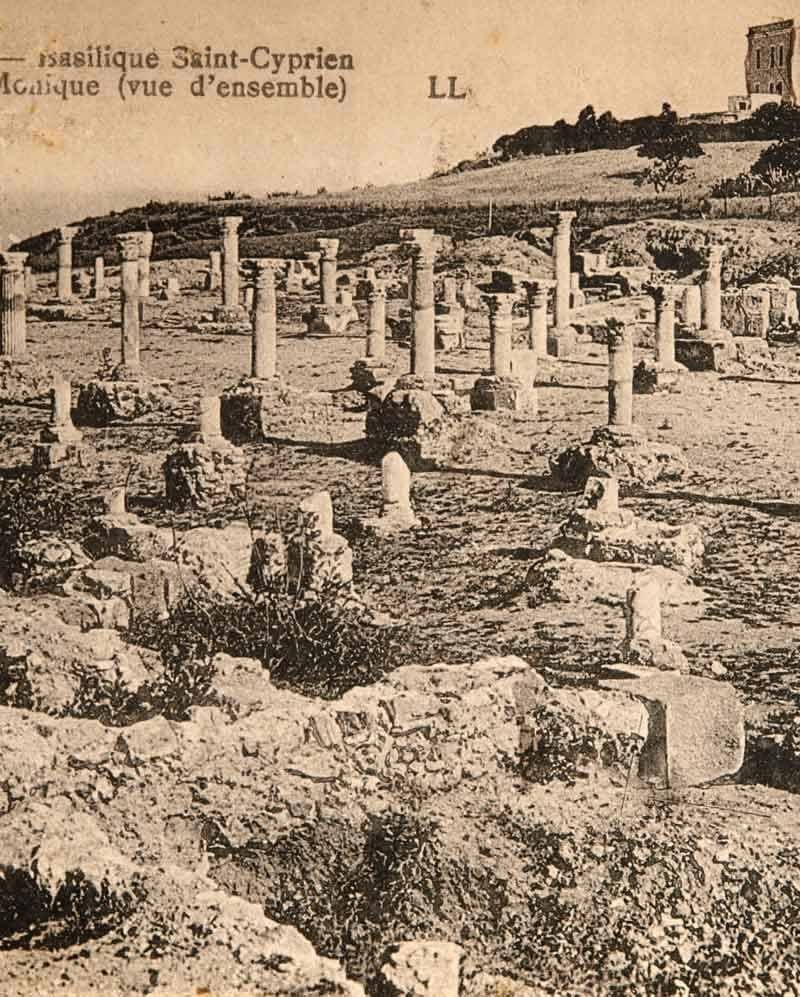
The ruins of a large basilica lie on the Bordj Djedid plateau at the northern edge of the archaeological site, on a terrace above the sea. They were found in 1915 by Father Alfred-Louis Delattre during his last excavation campaign. Ancient writers placed the church of Saint Cyprian in front of the city, near the sea. The location and the scale of the building led to its identification with that church. It is also known as the basilica near Sainte-Monique, after the nearby hill.
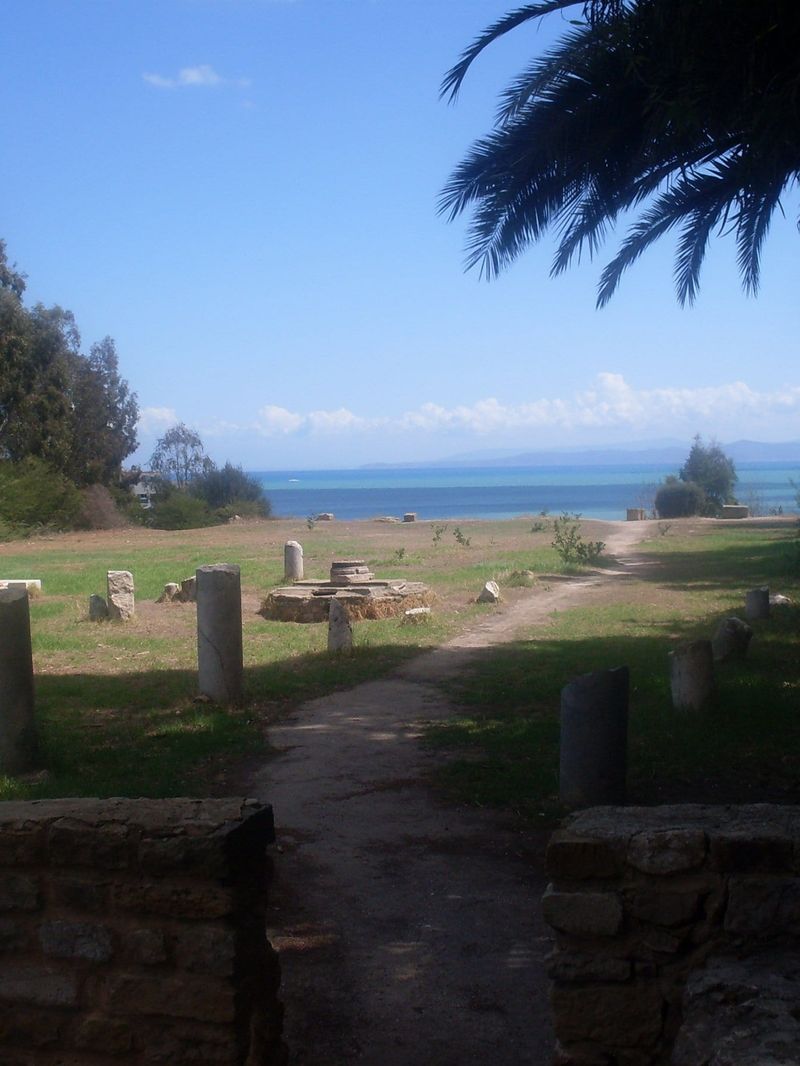
The building was a large church with several aisles separated by rows of columns. Old photographs taken after the excavation show its long nave with column bases standing in rows. Burials were found in and around it, as was usual near the tomb or memorial of a martyr. In later centuries a fort was built on the plateau nearby.
The site today
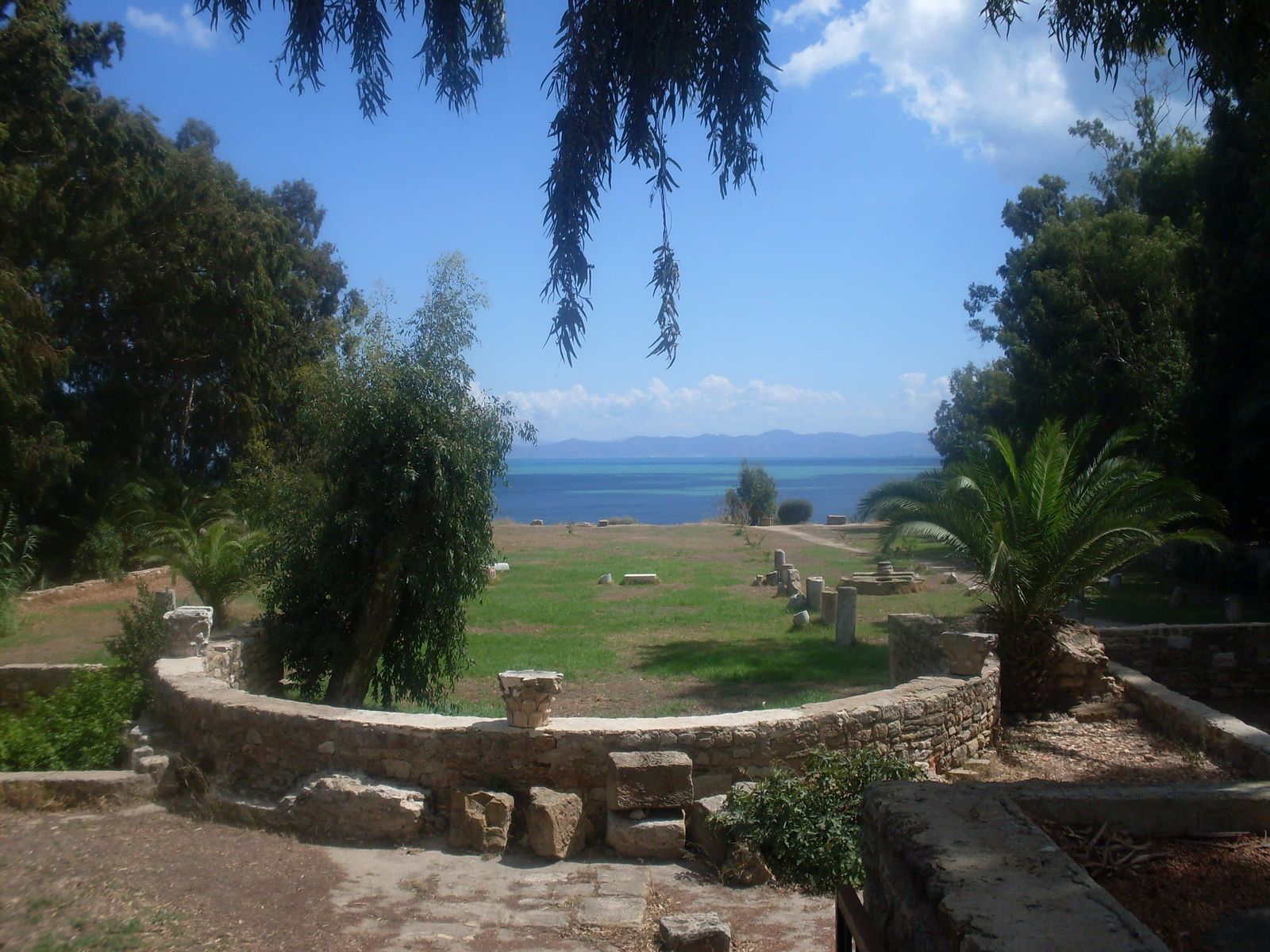
Today the basilica is an open terrace of column bases and low walls among trees and grass. It is not a ticketed monument and has few signs. Its great attraction is the setting: the ruins look straight out over the Gulf of Tunis towards the mountains of Cap Bon.
Exhibo editorial
Of all the Christian ruins of Carthage, this one has the view. The plan is simple, columns in rows, but the sea fills every gap between them.
Few people come. Some are disappointed by how little survives. Come for the place rather than the stones. Sit on a column base in the late afternoon and think of Cyprian's congregation, gathering here above the water to remember a bishop who chose to stay.
Gallery
How to find it
The basilica stands on the Bordj Djedid plateau at the northern end of the Carthage archaeological area, above the sea. It is a walk of about fifteen minutes from Carthage Hannibal or Carthage Présidence station on the TGM, passing Damous El Karita and the North Africa American Cemetery. Paths can be overgrown and access to parts of the coast is restricted near official buildings, so ask locally.
Similar places
All places
News by Exhibo
Editorial coverage on Exhibo
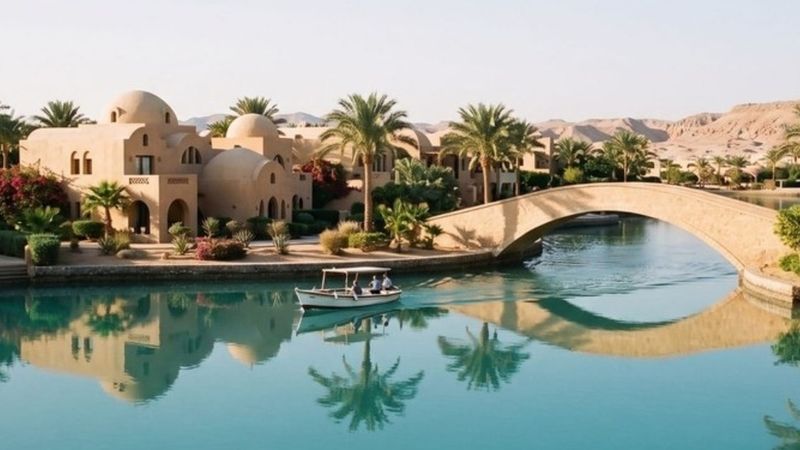
Why the Middle East Keeps Building Venice
From the Red Sea to the Gulf, canal towns keep getting called Venice. The water was usually about something else — and Venice was never quite Venice either.
The Middle East is full of “Venices”. Most began as a way to manufacture shoreline; the name usually arrived later, in English, from the people selling it.
Elie Khouri's New Foundation Takes Shape in Dubai
A private villa in Jumeirah 1 becomes the home for Ekaf
Collector Elie Khouri transforms a historic Jumeirah 1 residence into a contemporary art venue opening in 2028.

Following Damascus... Osthaus and the Islamicate Collection
Museum Folkwang revisits the founder's early travels and the formation of its historic Islamic Department
A survey of Karl Ernst Osthaus's collecting habits, featuring loans from Berlin and Dresden alongside European modernist responses.