Pearling Path Visitor Centre, Muharraq
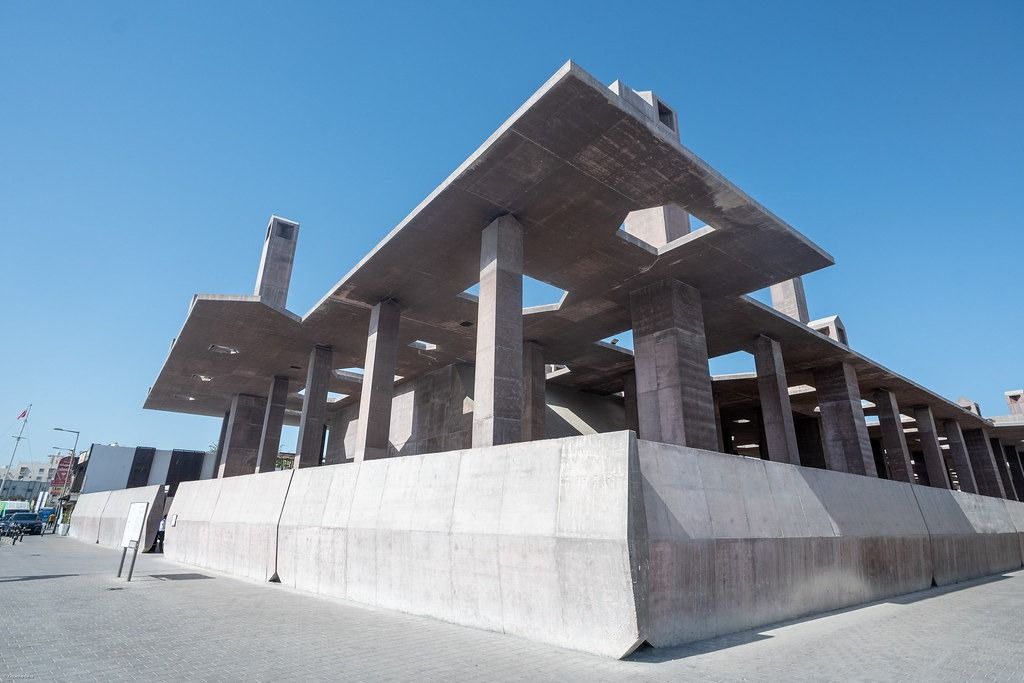
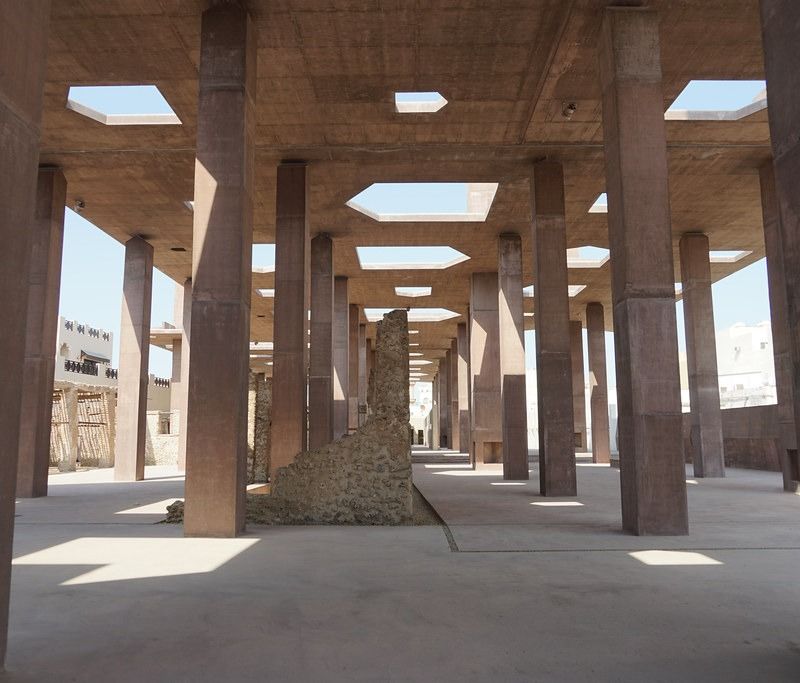
A ten-metre concrete canopy on a forest of columns by Valerio Olgiati, the gateway to Bahrain's UNESCO Pearling Path.
The start of the Pearling Path
For centuries the wealth of Bahrain came from the sea. Divers from Muharraq sailed out each summer to the oyster beds of the Gulf. The island's merchants traded the pearls they brought up across the world. The trade collapsed in the 1930s. In 2012 UNESCO inscribed what survives of it on the World Heritage List as Pearling, Testimony of an Island Economy: three offshore oyster beds, a stretch of seashore at Bu Maher Fort and the houses, shops and warehouses of pearl merchants in Muharraq, linked by a walking route through the old town known as the Pearling Path.
The visitor centre marks the start of that route. It was designed by the Swiss architect Valerio Olgiati for the Bahrain Authority for Culture and Antiquities and opened in November 2018.
A roof over the ruins
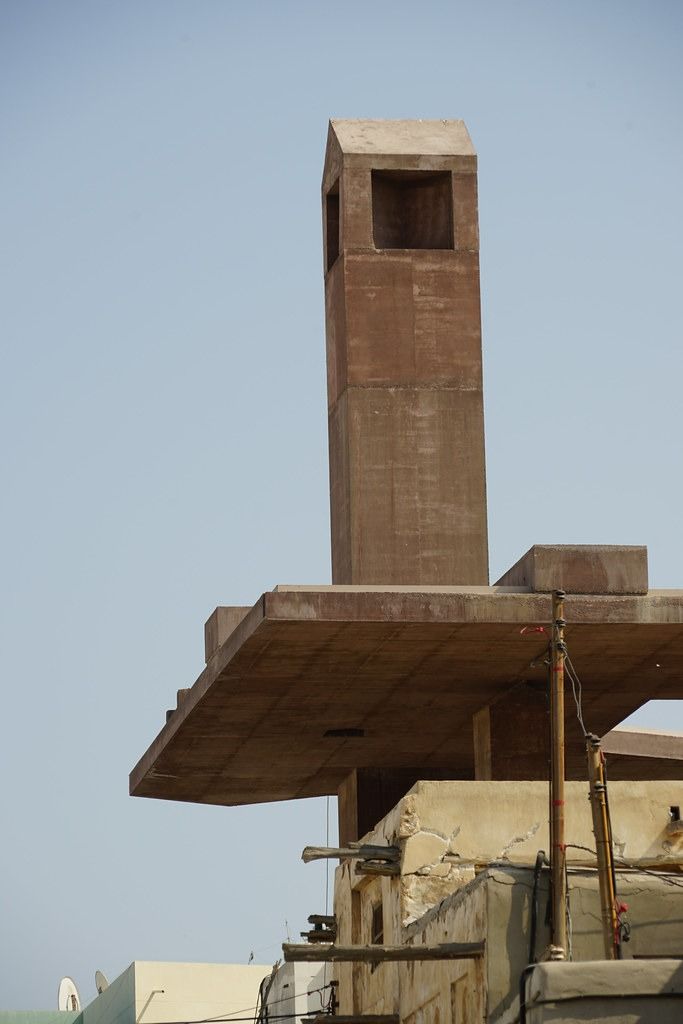
The site holds the ruins of an amara, a building that combined warehouse, workshop and market for the pearling trade. Olgiati did not rebuild it. Instead he raised a single concrete roof over the whole plot, about 10 metres above the ground, carried on a forest of columns of different thicknesses. The columns end in pointed tops on which the roof seems to rest. Some of them push up through it and continue as tall wind towers, a modern answer to the wind catchers that once cooled the houses of the Gulf. The roof is cut with openings shaped like the outlines of pitched roofs, which let patches of sunlight fall on the old walls below.
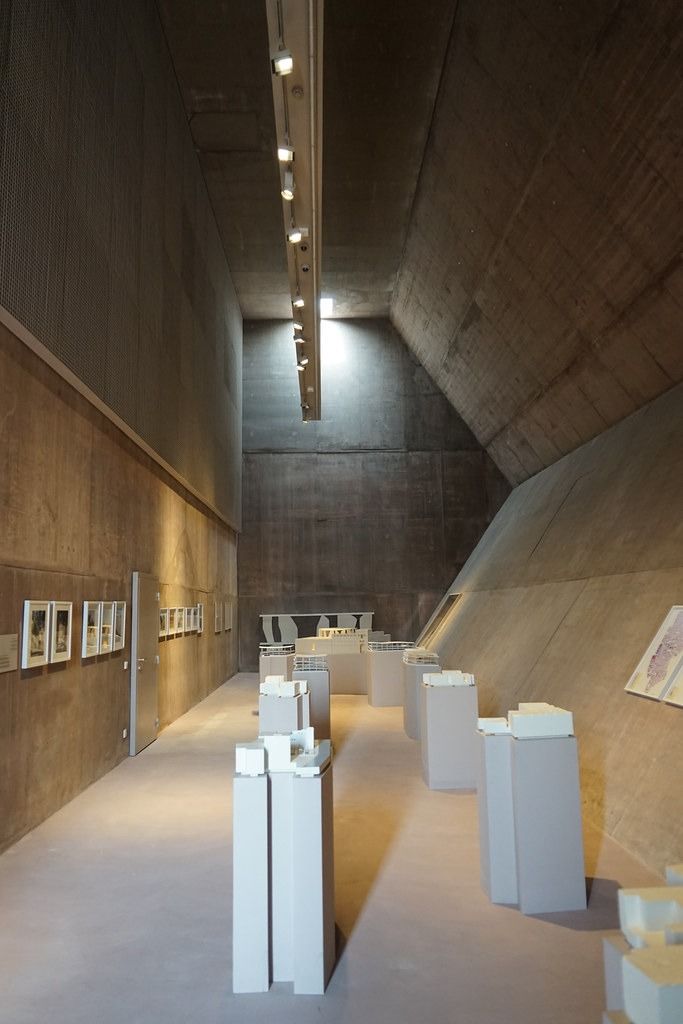
Along the edge of the site, high slabs of concrete stand like a broken wall, with gaps between them as entrances. The concrete is coloured a warm, deep red. Under the canopy the ruins sit in shade, open to the air. A small enclosed building on the site holds exhibitions on pearls and the pearling trade.
Olgiati described the result as "an urban room for the people of Muharraq with the scale of a public park". In the low, dense streets of the old town, its wind towers rise above every roof.
Exhibo editorial
Most heritage projects try to blend in. This one does the opposite. Olgiati put a monumental red roof over a ruin and left the ruin alone, so the past sits in a shaded room rather than behind glass.
Walk in from the bright lane and the temperature drops. Light comes down through the roof openings in shifting shapes. Then look up at the wind towers and back at the crumbling walls of the amara. There is no better place to start the Pearling Path.
Gallery
How to find it
The visitor centre stands in the old town of Muharraq, the island across the bay from Manama, near the traditional souq. It is the official starting point of the Pearling Path; collect a map here and follow the signs through the lanes to the merchants' houses. Bu Maher Fort, the seaward end of the route, is on the south tip of the island.
Similar places
All places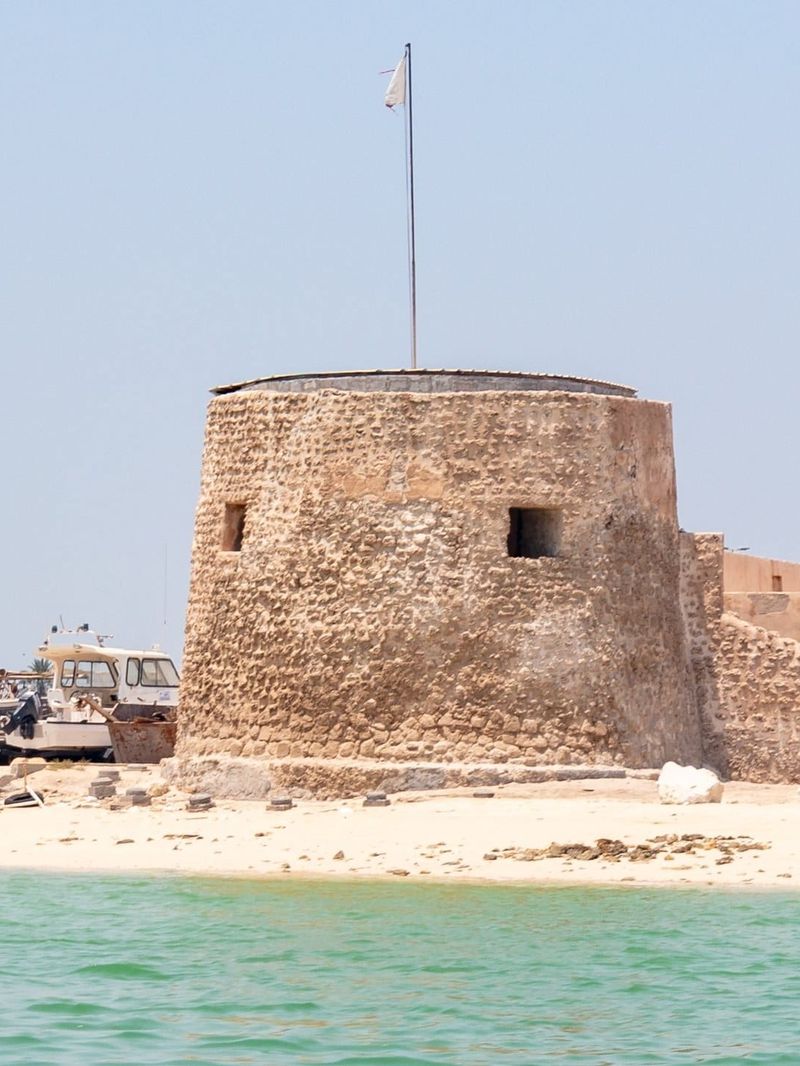
News by Exhibo
Editorial coverage on Exhibo
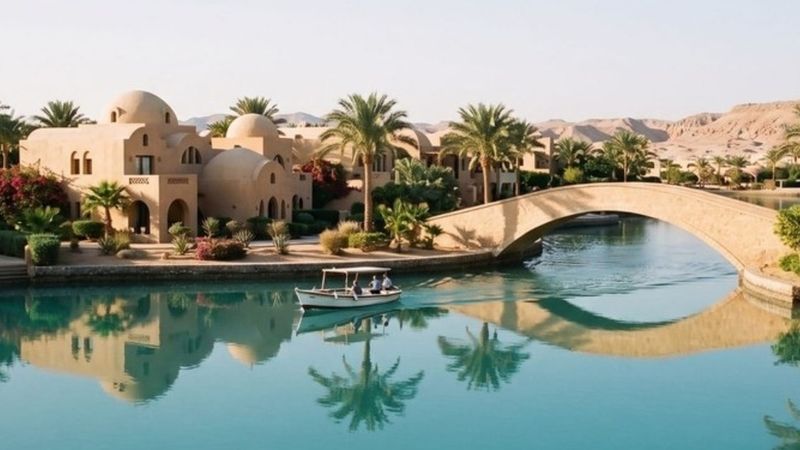
Why the Middle East Keeps Building Venice
From the Red Sea to the Gulf, canal towns keep getting called Venice. The water was usually about something else — and Venice was never quite Venice either.
The Middle East is full of “Venices”. Most began as a way to manufacture shoreline; the name usually arrived later, in English, from the people selling it.
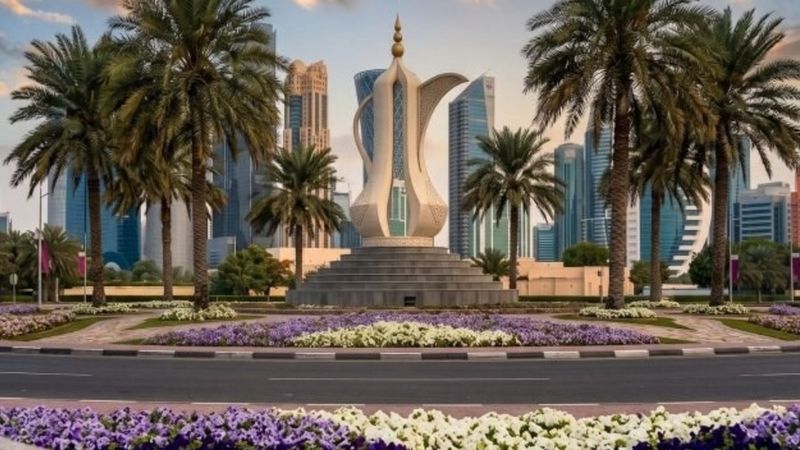
Why Doha Is Full of Roundabouts
An old circle at a crossroads, sharpened by British road engineering, became the way an Arabian city found its way and remembered itself — and it took the bulldozers to reveal it.
In a city where a landmark was more useful than an address, Doha's roundabouts became its navigation, its landscaping and its national image all at once. Now they're being torn out for signalled junctions — and the affection for them arrived, as one scholar put it, only posthumously.
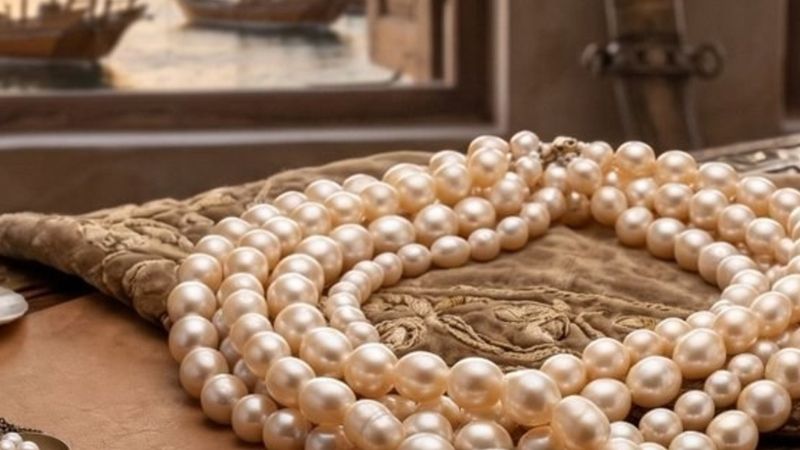
The Sea That Came Before the Oil: The History of the Pearl
Eight thousand years before the first barrel, the Gulf had already built a global economy — out of an oyster, a held breath, and a rope.
Before oil, the Arabian Gulf ran on the pearl: a global luxury trade that raised its cities from the sand, drew fortunes and real suffering in equal measure, and then vanished almost overnight. The story of the industry that made the modern Gulf — and the quiet way it is coming back.