Concrete by OMA
Rem Koolhaas's first building in the UAE — four warehouses fused into a shape-shifting arts space with pivoting walls and a sprayed-concrete skin.
Concrete is a multi-disciplinary cultural space at the heart of Alserkal Avenue, the arts district in Dubai's Al Quoz industrial area, and the first building in the United Arab Emirates completed by OMA — the Office for Metropolitan Architecture, founded by Pritzker Prize laureate Rem Koolhaas. It opened on 15 March 2017, with the project led by OMA partners Iyad Alsaka and Kaveh Dabiri and engineering and interiors delivered by Dubai-based firms.
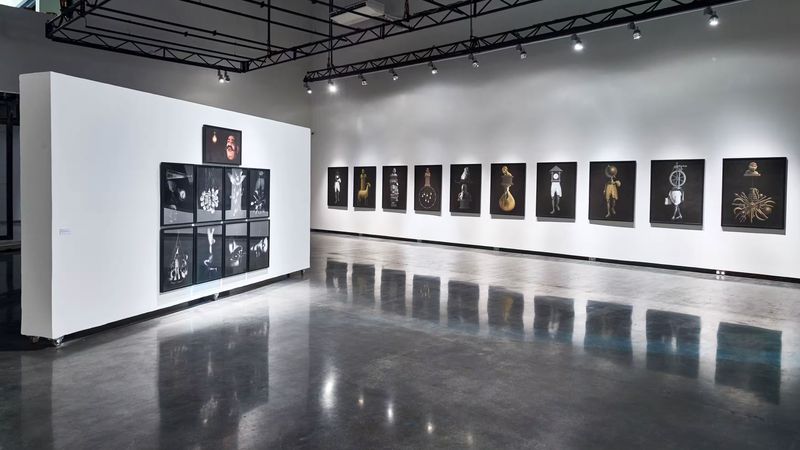
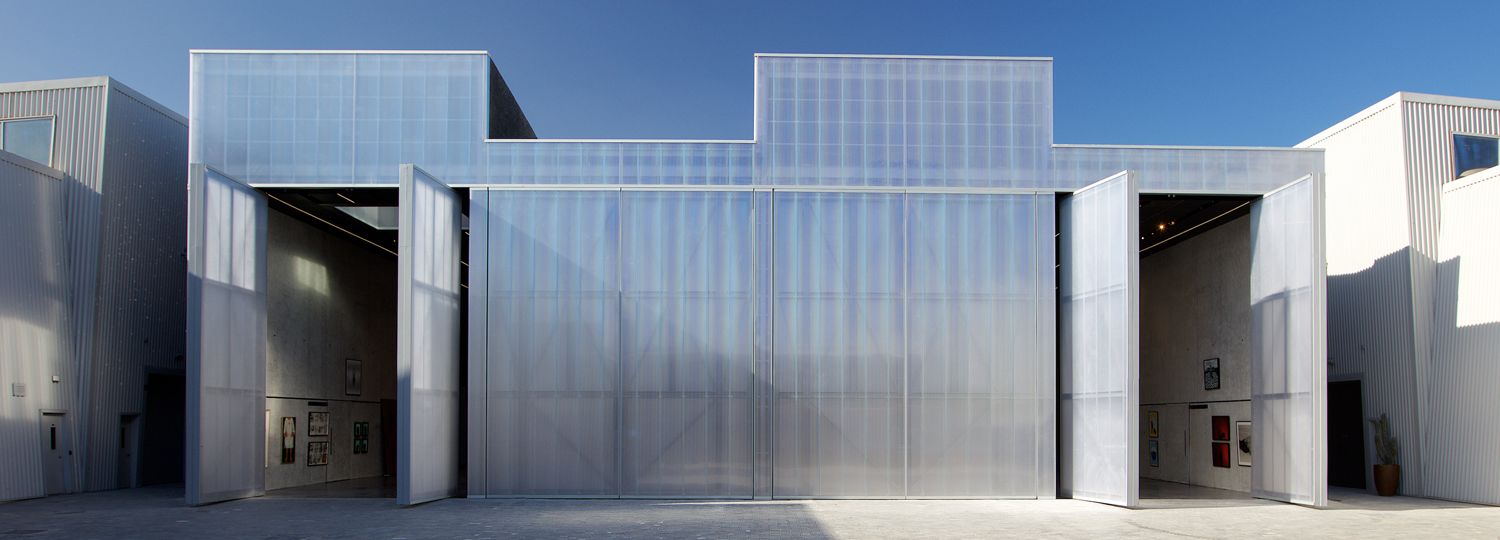
Rather than build new, OMA infiltrated an existing structure: four former warehouses on a site once occupied by a marble factory were conserved and re-imagined into a single flexible venue of roughly 600 square metres, with 8-metre ceilings. The interior can be reconfigured through enormous pivoting and sliding walls into multiple layouts — capable of hosting up to four separate events at once — for exhibitions, performances, conferences and lectures. A translucent façade with full-height sliding doors dissolves the boundary between inside and out, letting the space open seamlessly onto Alserkal Avenue's central courtyard.
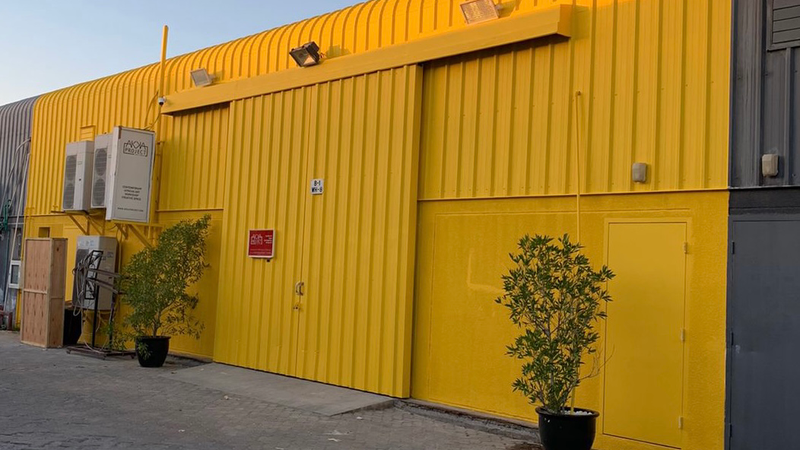
Externally, the building is distinguished from the surrounding warehouses by tilting volumes wrapped in a custom dark concrete spray. Koolhaas framed the project as significant precisely because it was 'totally produced in Dubai' — not an imported ideal but an arts institution embedded within an existing local building. Concrete was the first building in Dubai to be shortlisted for the Aga Khan Award for Architecture, and it anchored Alserkal Avenue's evolution into the emirate's most important arts hub.
Exhibo editorial
Koolhaas's first UAE building doesn't look like a statement, and that's the statement. Where a starchitect might have dropped a sculptural object into Dubai, OMA did the opposite: took four ordinary Al Quoz warehouses and quietly rewired them into a space that can be four different rooms by lunchtime, walls pivoting, façade sliding open onto the courtyard.
The dark sprayed-concrete skin is the only real flourish, and even that's just there to tell this warehouse apart from its neighbours. What Koolhaas kept saying about it is the tell — that it was 'totally produced in Dubai', not a foreign ideal parachuted in. In a city addicted to the imported spectacle, a great architect choosing to infiltrate an existing building rather than replace it is the genuinely radical move. Go for whatever's showing; stay for how the room bends around it.
How to find it
Concrete sits at the heart of Alserkal Avenue in Al Quoz 1 (Street 8), amid the district's converted warehouses and galleries. It faces the Avenue's large central courtyard — look for the building distinguished from its neighbours by a dark sprayed-concrete skin and tilting volumes, with a translucent façade and full-height sliding doors that open onto the courtyard. Opening times follow whatever exhibition or event is running; check Alserkal Avenue's programme.
Similar places
All places
News by Exhibo
Editorial coverage on Exhibo
Young Dealers Reshape the Historical Art Market
How a new generation is navigating high costs, family legacies, and shifting aesthetics in the Old Masters sector
A look at how emerging gallery directors and specialists are overcoming steep financial barriers to redefine historical art commerce in London and beyond.
Contemporary Istanbul Expands Its Global Footprint Amid Shifting Markets
The twenty-first edition welcomes seventeen new exhibitors while navigating regional economic headwinds
A look at how the Istanbul fair balances local momentum with international growth against a backdrop of macroeconomic volatility.
How to Approach a Gallery
Research, soft approaches, cold-email etiquette and timing for artists who want a gallery conversation without burning bridges
Galleries decide on fit, capacity and trust more than abstract talent. This guide covers how artists research programmes and price bands, read submission policies, build warm contact, write a short outreach email, prepare materials, time follow-ups, and spot pay-to-exhibit traps, without promising representation.