
Istanbul · Turkey
Contemporary Istanbul Expands Its Global Footprint Amid Shifting Markets
The twenty-first edition welcomes seventeen new exhibitors while navigating regional economic headwinds
The Latest Edition Expands Its Global Footprint
The twenty-first iteration of Contemporary Istanbul is scheduled to open its doors between 23 and 27 September at Tersane Istanbul, a meticulously restored Ottoman maritime facility situated along the Golden Horn. This year's gathering will host upwards of seventy exhibitors hailing from twenty-four distinct nations. By leveraging its geographical position straddling two continents, the event continues to function as a vital nexus for curators, buyers, and commercial spaces spanning Europe, the Middle East, and Asia.
Organisers highlight that approximately twenty-five percent of this year's roster comprises first-time participants. This influx of fresh talent underscores the market's widening geographic appeal. Among those making their debut are Hong Kong-based Whitestone Gallery and Pearl Lam Projects, alongside Parisian operators Michel Rein and Galerie Vallois. The international group also features Beirut's Galerie Tanit and Lisbon's Galeria Francisco Fino, signalling a deliberate push beyond traditional Western circuits. Such additions reflect a strategic recalibration aimed at diversifying the fair's commercial footprint.
Within the exhibition layout, the New Ground initiative remains dedicated to showcasing nascent commercial ventures and early-career creators. Domestic representation retains considerable weight, with nearly half of the participating booths located within the city itself. Standout local entities include Zilberman, Pi Artworks, Anna Laudel, Galeri Nev Istanbul, and Sevil Dolmacı. They share floor space with established international players such as Leila Heller Gallery, Buchmann Galerie, and Pedro Cera, creating a balanced dialogue between homegrown practices and global perspectives. This hybrid approach reinforces the event's role as a testing ground for both regional momentum and cross-continental trade.
Operating within Turkey presents ongoing complexities. Since 2018, the national economy has contended with sustained currency depreciation and stubbornly high inflation rates. While macroeconomic indicators show expansion, lingering political instability—characterised by recent governmental actions against dissent—has deterred certain overseas capital flows. Compounding these domestic pressures, broader geopolitical tensions across the surrounding territories have further inflated logistical and energy expenditures. Market participants must therefore navigate a landscape where cultural programming intersects directly with macroeconomic volatility.
Ali Güreli, who founded and chairs the event, emphasises that assessing the Turkish art market requires looking beyond isolated national metrics. He notes that the country operates within a tightly woven regional framework, meaning external shifts inevitably ripple through local institutions. Simultaneously, evolving legislation and fiscal policies continue to reshape operational landscapes. Güreli observes that international commentary often neglects the adaptive capacity of Turkey's creative infrastructure, focusing instead on transient volatility rather than systemic resilience.
To mitigate financial strain for commercial partners, the fair has implemented structural adjustments designed to reduce overhead. These initiatives feature a bonding arrangement intended to streamline deposit requirements, alongside a collaborative agreement with Turkish Airlines aimed at subsidising freight logistics. Additionally, organisers point to recent legislative incentives, including targeted fiscal concessions, which seek to position the nation as a more viable hub for cross-border artistic exchange. Such measures demonstrate a pragmatic response to the cost pressures currently affecting the global gallery sector.
Despite these institutional challenges, Güreli maintains that the city retains a formidable entrepreneurial drive and a deeply rooted creative heritage. He argues that the convergence of urban history and contemporary production yields an atmosphere difficult to replicate elsewhere. For collectors and professionals navigating shifting market dynamics, the upcoming gathering promises both practical engagement and a reflection of how cultural ecosystems adapt amid broader socioeconomic currents.
Galleries mentioned
Related reading
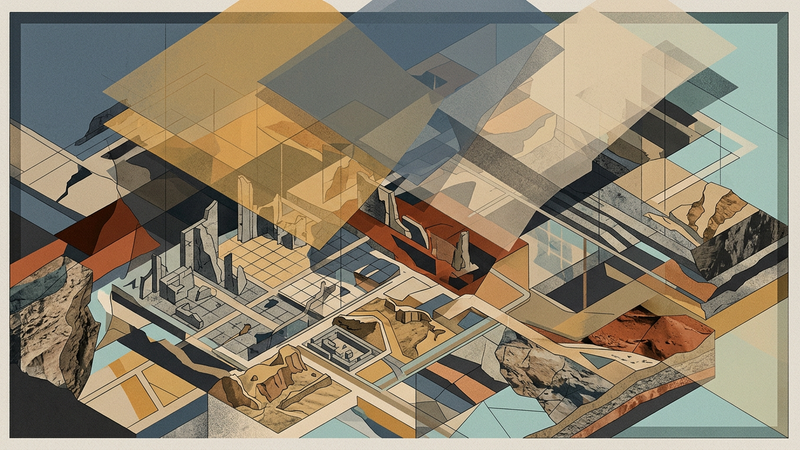
Olivo Barbieri: Time Space Geometry
Aerial surveys and optical distortions reshape how we perceive landscape and history
Borusan Contemporary presents Olivo Barbieri's first Turkish solo show, examining how elevated perspectives and manipulated focus transform familiar terrains into abstract compositions.
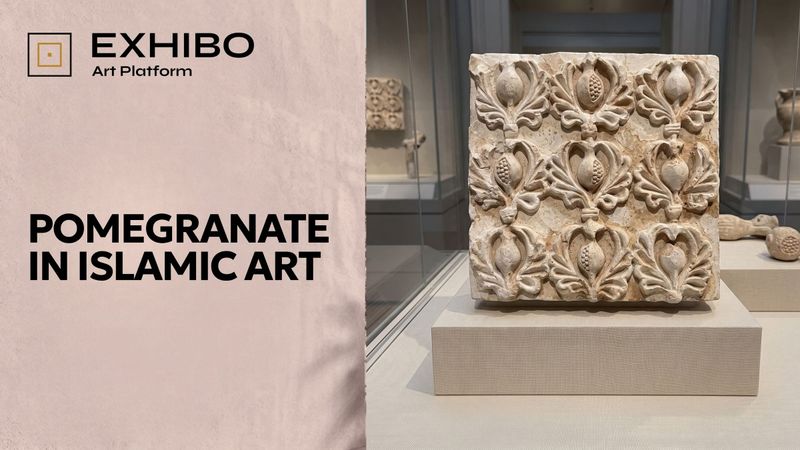
The Fruit We Are Sure We Recognize
How the pomegranate became one of the most confidently named motifs in Islamic ornament — and one of the least confidently identified — across a thousand years of tile, silk and stucco, with meanings we mostly attached later.
A slab of sixth-century plaster in the Met shows a fruit you recognise at a glance: a pomegranate, and surely it means paradise. Hold that certainty up to the light and it dissolves. Across a thousand years of tile, silk and stucco, the pomegranate is the shape we name most confidently and identify least — blurring into the artichoke and the palmette, its meanings attached by later viewers, its very name partly a nineteenth-century invention
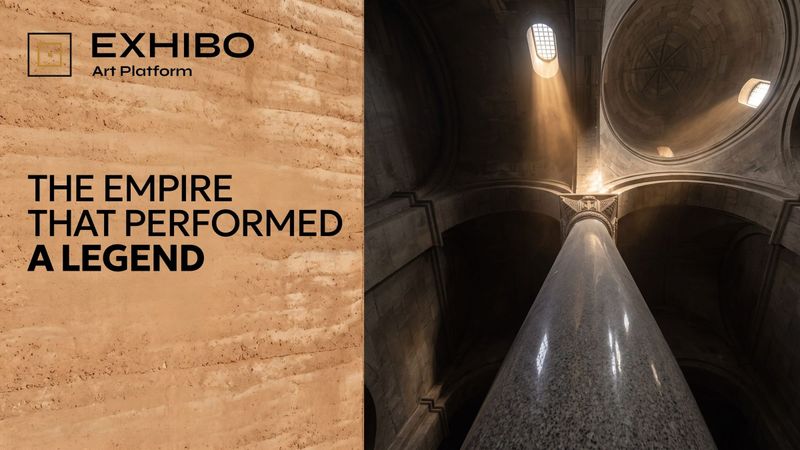
Seventy Thousand Solomons: The Empire That Performed a Legend
A demon catalogue in the conqueror's library, a sixteenth-century text where kingship is an office held seventy thousand times, and the columns a sultan dragged across three provinces to prove he held it.
Mehmed II kept a Greek catalogue of demons in his library at Topkapı. Seventy years later a sultan named for a prophet was rebuilding the walls of Jerusalem and hauling Roman columns out of Egypt and the Lebanon into a mosque above the Golden Horn. In between, Ottoman writers turned Solomon from a warning into a job — and the empire applied for it in stone.