

Istanbul · Turkey
A Submerged Archive of Early Bronze Age Commerce
Newly uncovered ceramic cargo near Kekova rewrites prehistoric navigation records
A Submerged Archive of Early Bronze Age Commerce
Researchers operating beneath the turquoise waters near the Turkish island of Kekova have uncovered a collection of ceramic vessels that could rewrite our understanding of prehistoric navigation. Led by Professor Hakan Öniz from Akdeniz University, a team affiliated with the Mediterranean Archaeology Association recovered approximately thirty storage jars resting between twenty-five and forty metres underwater. These flat-bottomed containers, marked by dual lateral handles, initially appeared to date back to the Ottoman era. However, closer examination revealed a far more profound antiquity, pointing toward the Early Bronze Age rather than recent centuries.
The clay composition and morphological features strongly align with ceramics manufactured across the Jordan Valley. This geographical marker suggests the watercraft was engaged in long-distance commercial exchange well before recorded history. While written records hint at maritime activity in the eastern Mediterranean during this epoch, physical confirmation has remained elusive until now. The submerged find offers tangible proof that organised sea lanes were actively utilised roughly four and a half millennia ago, bridging the Levant, Egypt, and the Aegean basin.
Reconstructing Ancient Trade Networks
Initial surveys conducted in 2022 flagged the area due to notoriously treacherous hydrodynamics. Strong opposing currents funnel through narrow channels, generating violent surface conditions that would easily overwhelm wooden hulls. The original timber structure, potentially measuring ten metres in length, has completely succumbed to decay, likely consumed by marine borer molluscs over the intervening centuries. Yet the resilient earthenware survived, preserving vital traces of its original contents within sealed interiors.
Academic collaboration proved essential for accurate dating. Upon recognising stylistic parallels in published Egyptian archaeological literature, Öniz sought verification from Dr Karin Sowada at Macquarie University in Sydney. Her assessment confirmed the vessels matched known Levantine amphorae, echoing examples unearthed across Troy and Minoan Crete. Preliminary results, recently detailed in the Journal of Maritime Archaeology, place the sinking event firmly between 2700–2400 BCE. This chronology surpasses the previously recognised record holder, a Greek vessel discovered near Dokos in 1975 and dated to approximately 4,200 years ago.
Material Analysis and Human Narratives
Scientific investigation continues to unravel the practical realities of ancient seafaring. Current analytical techniques, including X-ray fluorescence and diffraction protocols, are being deployed to identify residual substances trapped inside the pottery. Potential payloads range from fermented grape juices and pressed olive extracts to botanical resins and preserved proteins. Beyond commercial goods, the crew's daily existence emerges through smaller artefacts. One perforated clay container, etched with nine distinct markings possibly linked to ritual practices, may have functioned as a dairy churn. Historical logistics suggest the voyage might have included live livestock, allowing mariners to produce dairy staples before eventual consumption.
Mehmet Nuri Ersoy, Turkey's culture minister, emphasised how these containers reflect enduring commercial patterns along the Anatolian shoreline, underscoring profound cultural dialogue across the region. Such discoveries transcend mere cataloguing of antiquities. They illuminate the intricate web of exchange that bound distant civilisations together long before imperial expansion. The remnants also evoke the human dimension of early exploration, reminding scholars of the individuals whose journeys ended abruptly beneath the waves. As conservation efforts proceed, these submerged relics will continue to reshape academic perspectives on prehistoric connectivity and material culture.
Related reading
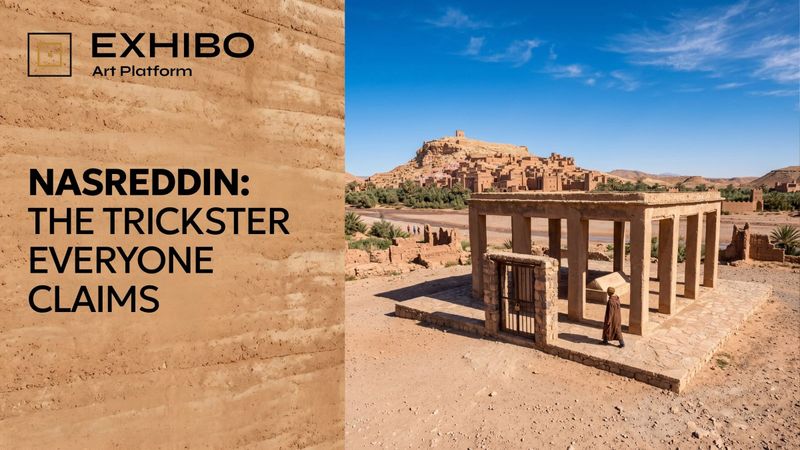
Nasreddin: The Trickster Everyone Claims
A padlocked gate with no walls, two rival graves, and stories told among two dozen peoples: how the wise fool of the Islamic world became a shape every culture fills with itself.

Contemporary Istanbul Expands Footprint and Eyes Anatolian Markets
Founder Ali Güreli outlines spatial upgrades, Asian focus, and proposed fiscal incentives for the growing fair

Contemporary Istanbul Expands Its Global Footprint Amid Shifting Markets
The twenty-first edition welcomes seventeen new exhibitors while navigating regional economic headwinds