
Istanbul · Turkey
Contemporary Istanbul Expands Footprint and Eyes Anatolian Markets
Founder Ali Güreli outlines spatial upgrades, Asian focus, and proposed fiscal incentives for the growing fair
A Unified Layout and Eastern Ambitions
The latest iteration of Contemporary Istanbul returned to Tersane Istanbul, occupying a newly configured ground-level layout within the historic Ottoman wharf complex along the Golden Horn. Spanning roughly six thousand square metres under nine-metre ceilings, the reconfigured footprint unified the exhibition spaces into a single continuous floor. This architectural shift has streamlined navigation for visitors and collectors alike, while a dedicated zone continues to host the event's Dialogues programme, which recently turned its attention to emerging Asian markets.
According to founder Ali Güreli, consolidating the entire programme onto one level significantly enhances the visitor experience. With approximately seventy participants representing more than fifteen nations, the gathering has steadily expanded its global footprint. Looking ahead, the organiser confirmed that the event will reconvene next October alongside the nineteenth Istanbul Biennial. Beyond immediate scheduling, Güreli revealed ambitions to establish a secondary market event situated across the Bosphorus on the Anatolian peninsula. He also noted ongoing discussions with Turkey's Ministry of Culture and Tourism regarding potential fiscal incentives, drawing comparisons to recent European reductions aimed at stimulating institutional and corporate acquisitions.
Shifting Geographies and Curatorial Strategies
While previous iterations have spotlighted regions such as Latin America or Central and Eastern Europe, the current programme deliberately centres on Asia. This geographical pivot reflects Istanbul's unique position straddling two continents. Güreli pointed to substantial cultural investments in metropolitan hubs like Mumbai, Shenzhen, Beijing, and Seoul, noting how prominent architectural practices are shaping their local scenes. Consequently, a cohort of newcomers joined the roster, including Jessica Silverman Gallery from San Francisco, São Paulo's Galeria Karla Osorio, Parisian outfits Galerie Georges-Philippe & Nathalie Vallois and Galerie La La Lande, alongside Beirut's Galerie Tanit and local operators Rast Gallery and Shiva Zahed.
Domestic participants also capitalised on the revised spatial configuration. Senem Özgören, who runs OG Gallery, highlighted the logistical benefits of hosting neighbours alongside international peers. The refreshed environment reportedly smoothed operations during high-profile preview periods, offering a stabilising counterweight to broader economic fluctuations. Galeria Karla Osorio introduced a trio of creators exploring Neo-concrete traditions through abstract compositions that balance loose brushwork with precise geometry. Younger Turkish practitioners featured prominently, with works by Paris-based Yaz Taşçı and Sine Içli drawing consistent attention. Meanwhile, a collaborative booth featuring Galerie Michel Rein and Villa Magdalena showcased Sila Candansayar's mixed-media sculptures and gestural paintings, which proved particularly popular among early buyers.
Institutional Presence and Technological Verification
Established local houses maintained substantial footprints, utilising the generous dimensions for ambitious group displays. Dirimart presented an eclectic mix ranging from Brooklyn painter Summer Wheat and British sculptor Tony Cragg to foundational figures of Turkish modernism, Bedri Rahmi Eyüboğlu and Abidin Elderoğlu. At artSümer, the textile-focused duo Canan and Gözde İlkin delivered a vivid installation, whilst Pearl Lam Projects occupied a generous bay featuring Japanese creator Chisato Matsumoto. Her practice was represented by intricate fabric constructions and a monumental fifteen-metre sewn-sail assembly positioned near the exit.
Transatlantic interest remained strong. Jessica Silverman Gallery's participation followed recommendations from its Turkish director, Hakkı Serhat, driven by collector enthusiasm for Turkish-born painter Hayal Pozanti. Executives noted the depth of dialogue and sustained engagement from regional audiences. Alongside traditional gallery models, the fair integrated emerging commercial technologies. Abu Dhabi-based Numeraire Future Trends served as the official solution partner, demonstrating biometric authentication protocols alongside collaborating dealers Zilberman Gallery and Gillian Jason Gallery. Chief executive Marsha Lipton emphasised the sector's reliance on verifiable digital frameworks to safeguard physical assets amid increasingly complex market conditions.
Galleries mentioned
Related reading

Contemporary Istanbul Expands Its Global Footprint Amid Shifting Markets
The twenty-first edition welcomes seventeen new exhibitors while navigating regional economic headwinds
A look at how the Istanbul fair balances local momentum with international growth against a backdrop of macroeconomic volatility.
Olivo Barbieri: Time Space Geometry
Aerial surveys and optical distortions reshape how we perceive landscape and history
Borusan Contemporary presents Olivo Barbieri's first Turkish solo show, examining how elevated perspectives and manipulated focus transform familiar terrains into abstract compositions.
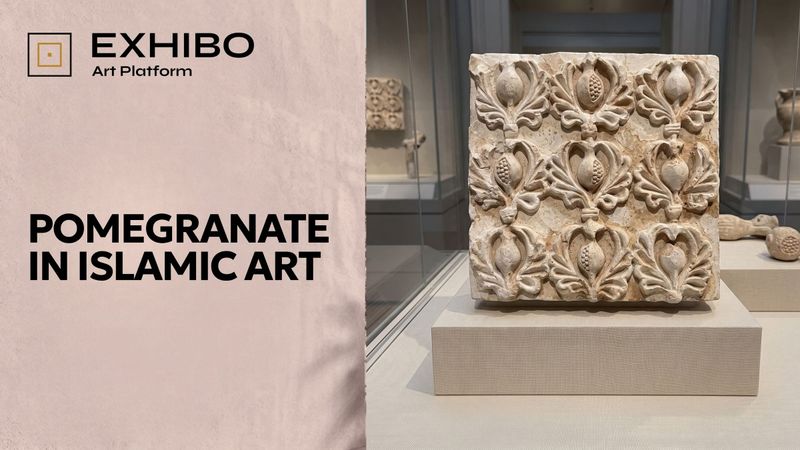
The Fruit We Are Sure We Recognize
How the pomegranate became one of the most confidently named motifs in Islamic ornament — and one of the least confidently identified — across a thousand years of tile, silk and stucco, with meanings we mostly attached later.
A slab of sixth-century plaster in the Met shows a fruit you recognise at a glance: a pomegranate, and surely it means paradise. Hold that certainty up to the light and it dissolves. Across a thousand years of tile, silk and stucco, the pomegranate is the shape we name most confidently and identify least — blurring into the artichoke and the palmette, its meanings attached by later viewers, its very name partly a nineteenth-century invention