
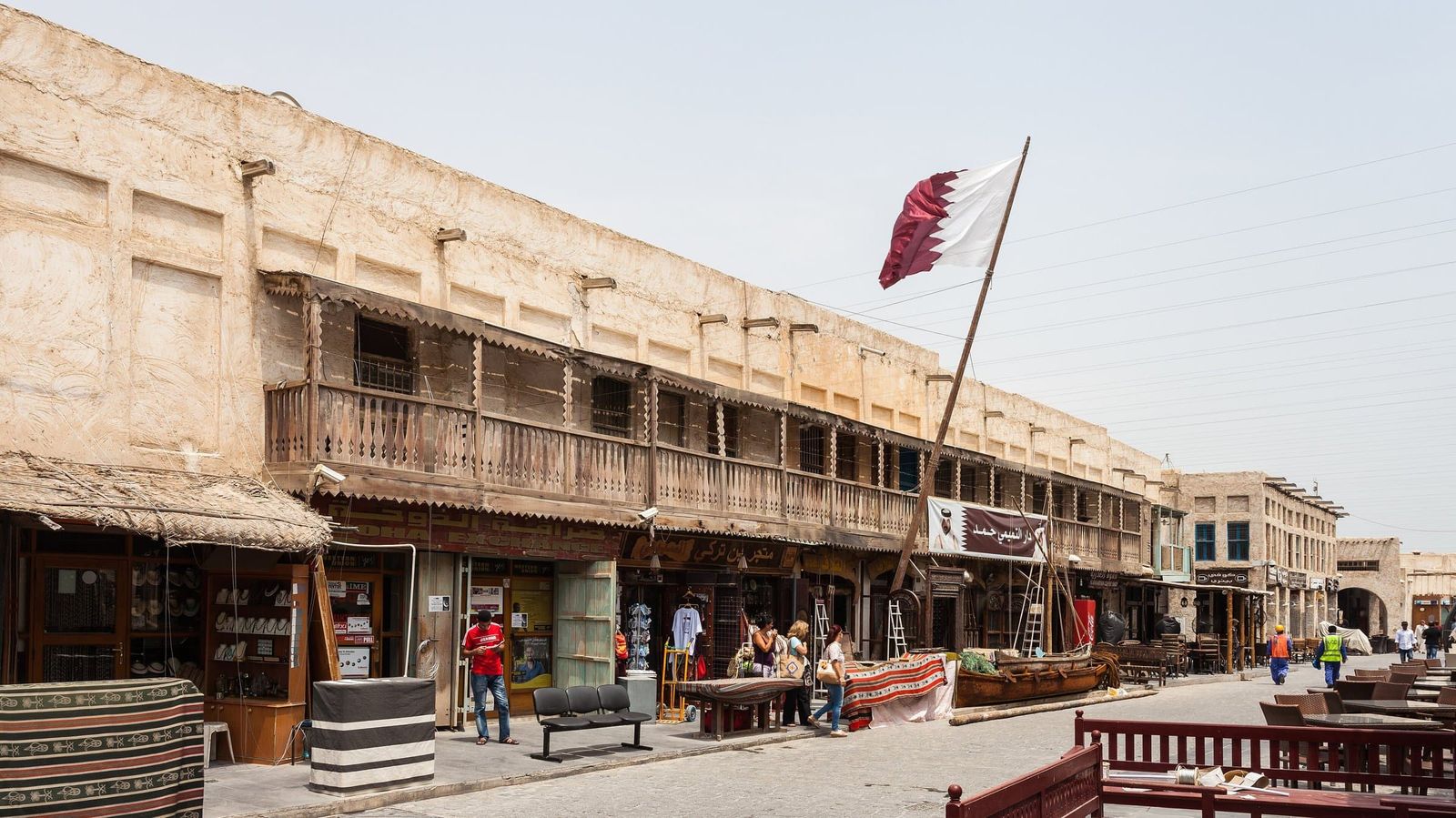
Souq Waqif
Doha's old market by the wadi, rebuilt with roofs of mangrove poles and clay: lanes of cloth, spice and old trades.
The market on the wadi
Souq Waqif grew up where Doha began. When the town was still a fishing and pearling village, its people gathered on the banks of a seasonal stream, the wadi Msheireb, to buy and sell goods. The stream ran down to the sea through the middle of the market. Boats could come right up into the souq to unload. Today that wadi is the paved main street that runs through its centre. The souq once stood on the shore. Land reclaimed for the Corniche from the late 1960s moved the sea several hundred metres away.
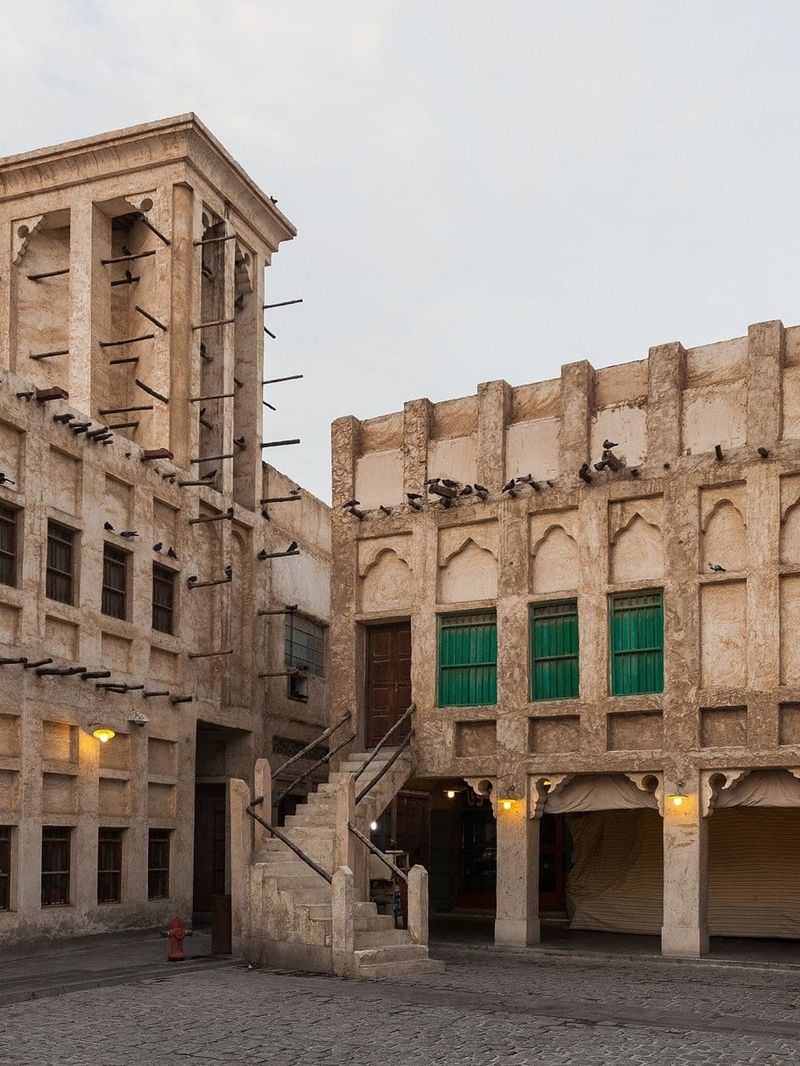
Behind the shops lived the merchants. Their houses of one and two storeys doubled as storerooms, with tall ground floors for goods brought in by porters and carts along the narrow lanes.
A revival rather than a theme park
By the end of the 20th century the old market had fallen into disrepair. Many buildings had been altered with concrete and covered with metal sheeting. In the early 2000s the Amiri Diwan commissioned a full revitalisation. The architect Mohamed Ali Abdullah of the Private Engineering Office led a study of the history of the market and its buildings. Design ran from 2004 to 2007 and the work was completed in 2008 over about 16 hectares.
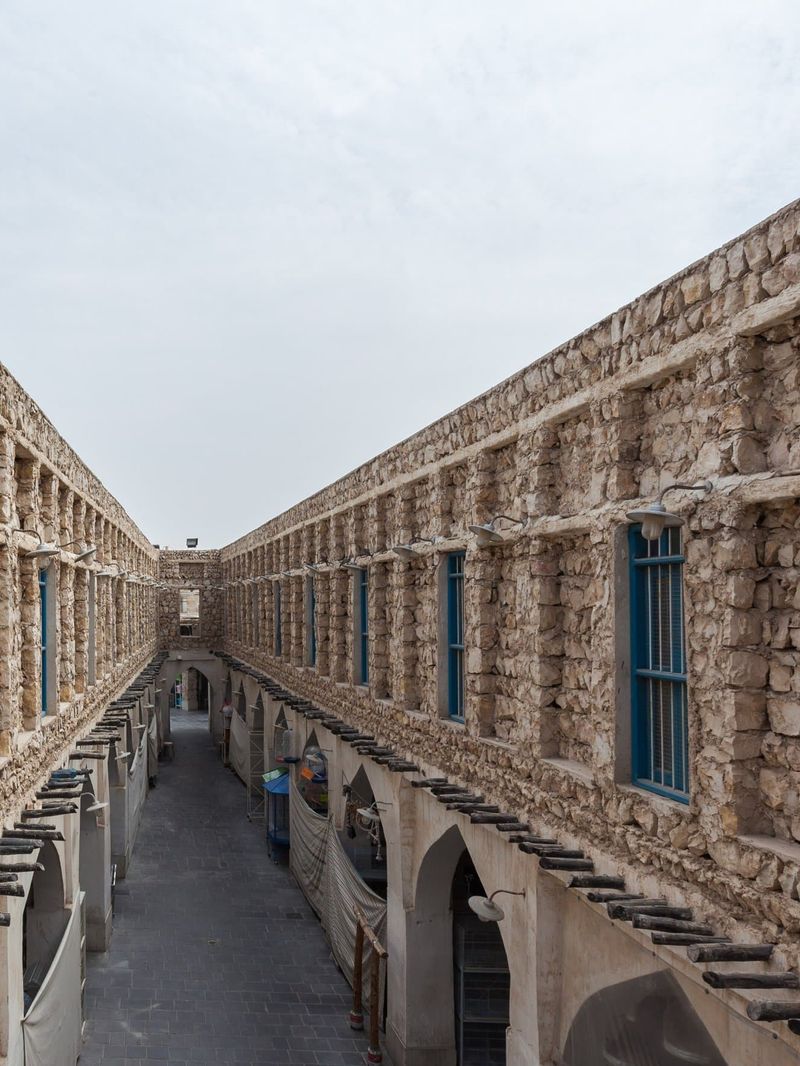
Modern buildings were demolished. The metal roofs were replaced with traditional ceilings of mangrove poles and bamboo bound with clay and straw. Old ways of keeping the buildings cool were brought back. A new lighting system was added to light the lanes after dark. In the 2008 to 2010 cycle the project was shortlisted for the Aga Khan Award for Architecture.
A working market
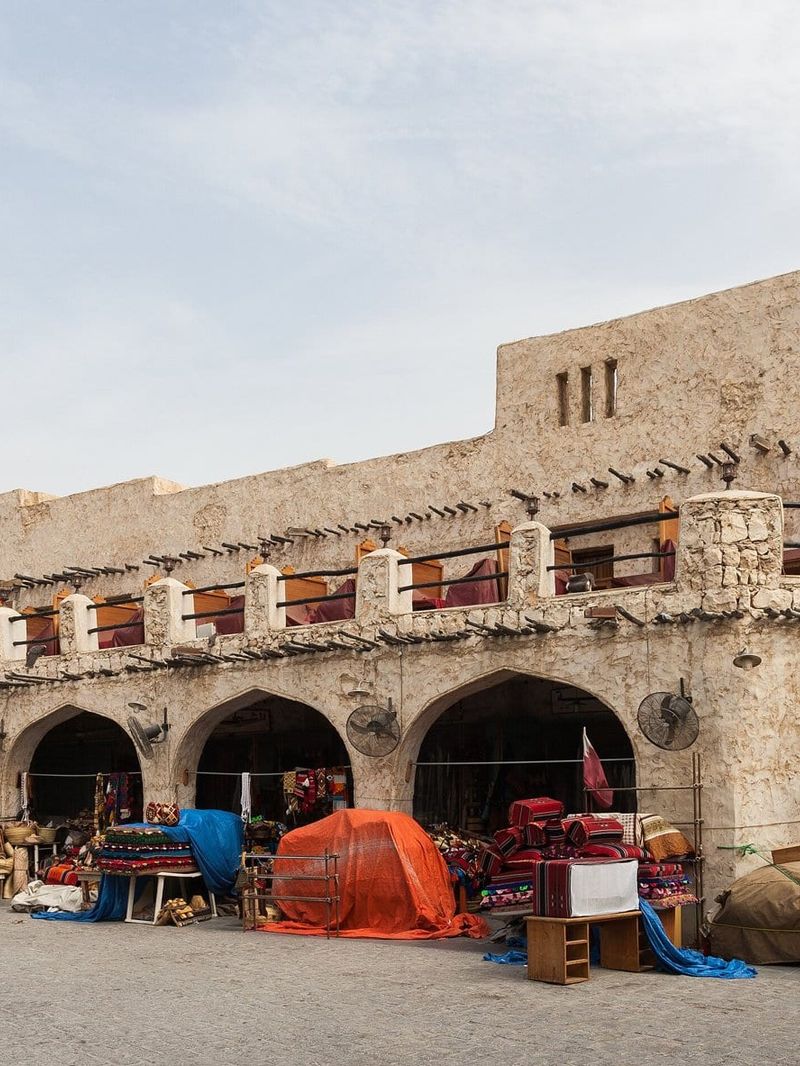
Souq Waqif is still a real market used by residents as well as visitors. Covered lanes lead to the cloth market, antiques and collectibles, spices and household goods. The pet market lies in the northern part. Courtyards and squares are filled with cafés and restaurants. A street food market opens in the evening. Wind towers and wooden balconies rise above the arcades.
The souq is the heart of old Doha. On its west side runs Jassim bin Mohammed Street, with the new quarter of Msheireb Downtown Doha beyond it. To the north lie the Corniche and the Clock Tower by the Amiri Diwan. In the main square stands Pouce, the giant bronze thumb by César; see Pouce, Souq Waqif.
Exhibo editorial
Most new souqs in the Gulf are built to look old. This one was old, then nearly lost, then rebuilt by people who first studied how it had been made. The difference shows in small things: the shadow under a mangrove-pole ceiling, a wall that is cool to the touch at noon.
Come after sunset, when the lanes fill up and the smell of grilled meat and incense drifts through the arcades. Get a little lost. The souq is small enough that you always find your way out again.
Gallery
How to find it
Souq Waqif is in central Doha, south of the Corniche and east of Msheireb Downtown Doha. Souq Waqif metro station on the Gold Line is a short walk away. Msheireb station, where all metro lines meet, is about ten minutes on foot. There are public car parks around the souq. Shops open in the morning, close in the early afternoon and reopen in the evening, when the souq is busiest.
Similar places
All places
News by Exhibo
Editorial coverage on Exhibo
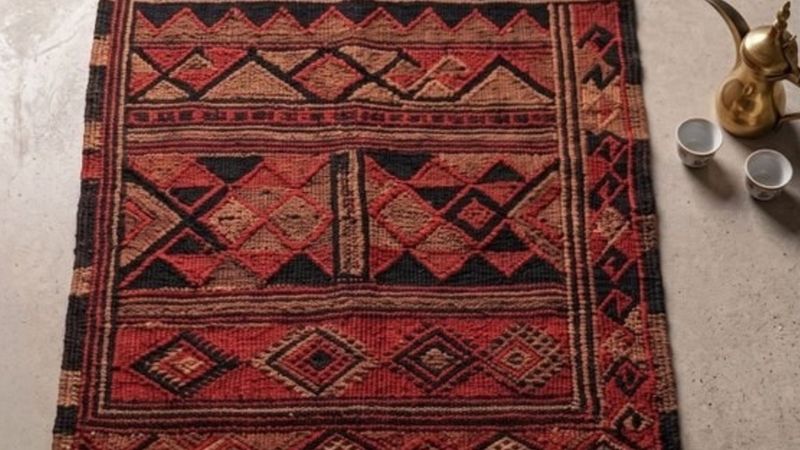
Sadu Weaving: The Geometry of Bedouin Textiles
The geometry the Bedouin wove, and the women who carried it in memory because nothing was written down.
On a loom you stake into the sand, Bedouin women wove the interior world of the Gulf — tents, dividers, camel trappings — and threaded through the wool a geometry that carried tribe, family and meaning. A story of Sadu: the patterns and their names, the women who transmitted them without a single written word, and the quiet work of keeping the craft alive.
Why the Middle East Keeps Building Venice
From the Red Sea to the Gulf, canal towns keep getting called Venice. The water was usually about something else — and Venice was never quite Venice either.
The Middle East is full of “Venices”. Most began as a way to manufacture shoreline; the name usually arrived later, in English, from the people selling it.
Art Basel Qatar Announces 2027 Exhibitor Line-Up and Expanded Support Framework
Curatorial shifts, high participant turnover, and new financial safeguards shape the second edition
The fair confirms 82 galleries, a new thematic framework, and enhanced logistical backing amid regional uncertainty.