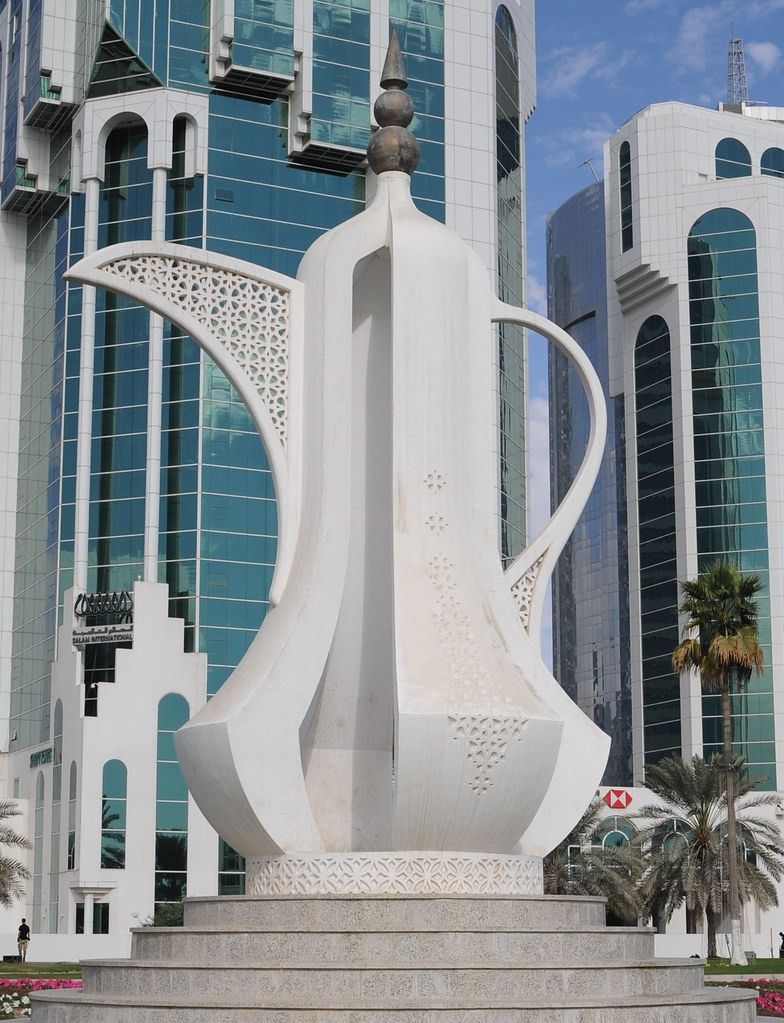
Dallah Coffee Pot Monument, Doha Corniche
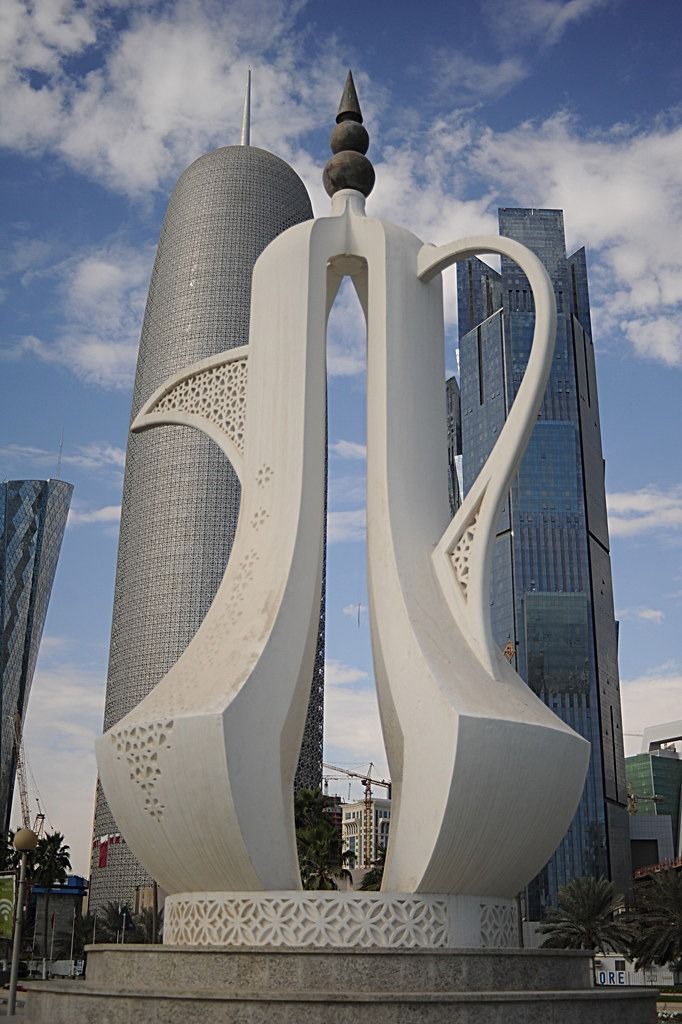
A giant white Arabic coffee pot on the Doha Corniche, raised to the Gulf's oldest gesture of welcome.
A coffee pot on the Corniche
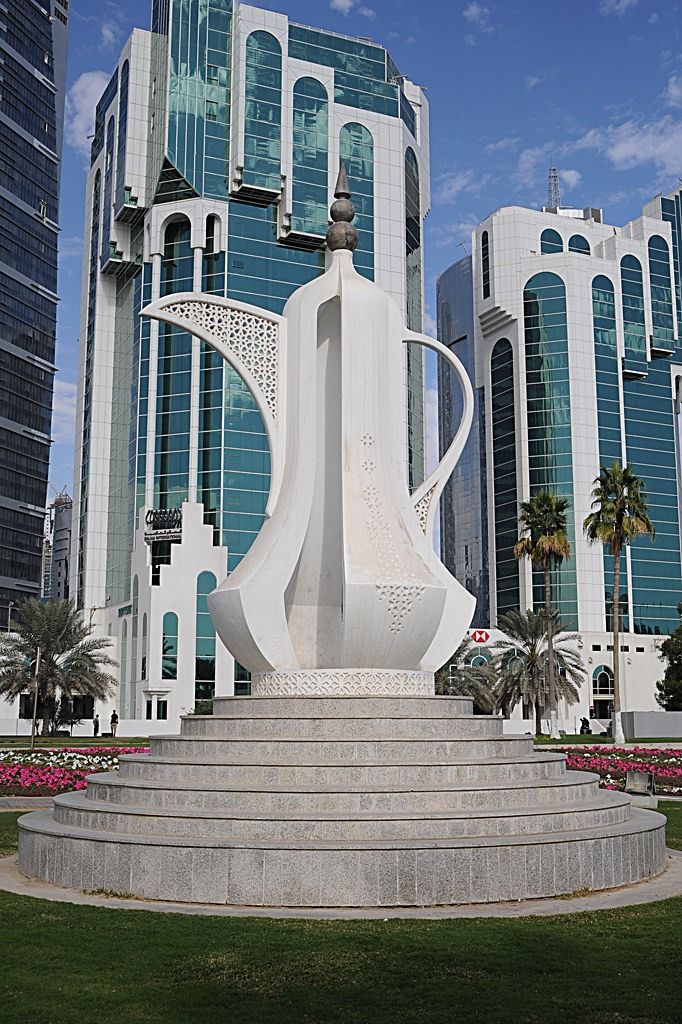
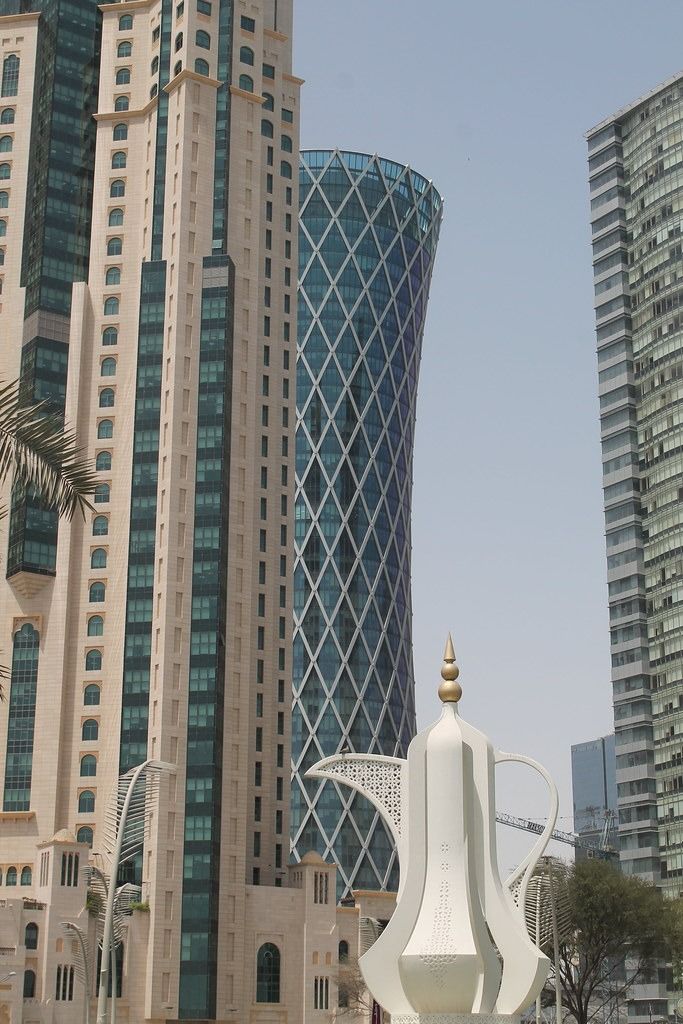
On the Doha Corniche, by Sheraton Park at the edge of the West Bay towers, stands a giant white dallah, the traditional Arabic coffee pot. It rises from a round stepped base in a garden bed beside the promenade. The sculpture copies the classic Gulf form: a full rounded body, a tall neck, a pointed lid topped with a finial and a long beak-like spout curving out from the body. Its surfaces are cut with openwork patterns. Behind it rise the glass towers of West Bay, so the old pot and the new city fill the same view.
The dallah and Arabic coffee
In the Gulf the dallah stands for hospitality. Arabic coffee, gahwa, is lightly roasted and often flavoured with cardamom. It is brewed in the dallah and poured in small amounts into little handleless cups, the finjan, for guests in the majlis. The host pours and the guest drinks. The cup is refilled until the guest gently shakes it to say enough. Serving coffee is a daily ritual and a mark of respect.
In 2015 UNESCO inscribed "Arabic coffee, a symbol of generosity" on its list of the intangible cultural heritage of humanity, nominated jointly by Qatar, Saudi Arabia, the UAE and Oman. Jordan later joined the listing.
A landmark of the Corniche
The coffee pot has been one of the best known sights of the Corniche for years, photographed by walkers, runners and families on the waterfront of the Doha Corniche. Further along the bay stands Orry the Oryx, the mascot of the 2006 Asian Games. Across town another oversized object, César's giant thumb Pouce, waits in Souq Waqif.
Exhibo editorial
Most monuments celebrate a battle or a ruler. This one celebrates a cup of coffee. That says something true about the Gulf, where the first thing that happens when you walk into a house is that someone pours you gahwa.
Come at dusk, when the sky behind West Bay turns pink and the towers light up. The white pot looks almost delicate in front of all that glass. It is an easy stop on a walk along the Corniche and a good place to start the evening.
Gallery
How to find it
The Dallah stands on the Doha Corniche by Sheraton Park, on the West Bay end of the promenade. Walk along the Corniche from the Museum of Islamic Art towards West Bay, or take the metro to the Corniche station on the Red Line and walk along the waterfront towards West Bay.
Similar places
All places
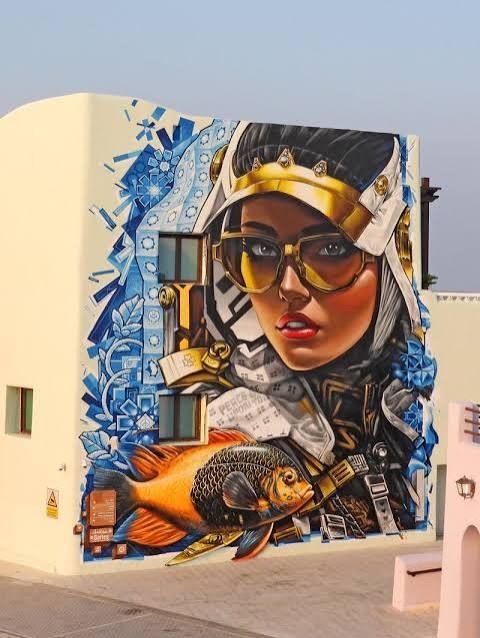
News by Exhibo
Editorial coverage on Exhibo
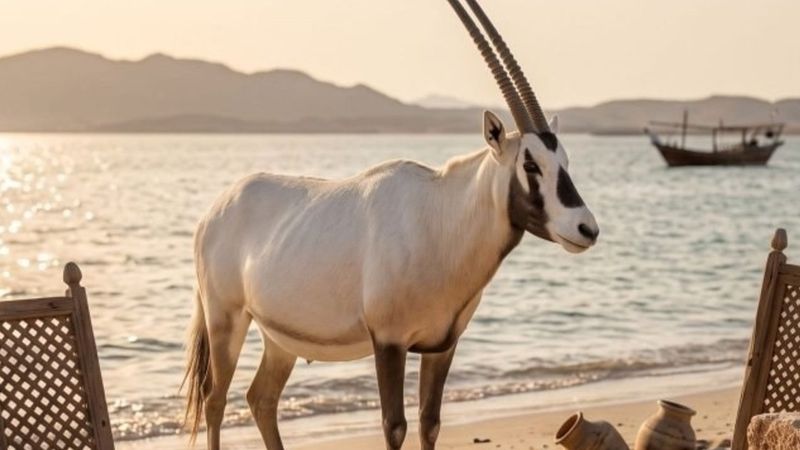
The Animal We Drew Everywhere Once It Was Gone
From Neolithic rock to airline tailfin — how the Arabian oryx vanished from the desert, came back from nine animals, and multiplied everywhere as a symbol in the very decades it was gone.
The last wild Arabian oryx was shot in 1972. By then it was already a picture — carved on Bronze Age tombs, mistaken by the ancients for a unicorn, praised by poets as the eyes of the beloved. This is the story of an animal that went extinct in the wild and was brought back from nine survivors, and of the strange gap between the creature and the emblem it became: fast, sharp and ascendant on a nation's tailfin, while the animal itself survives by standing still in the shade.
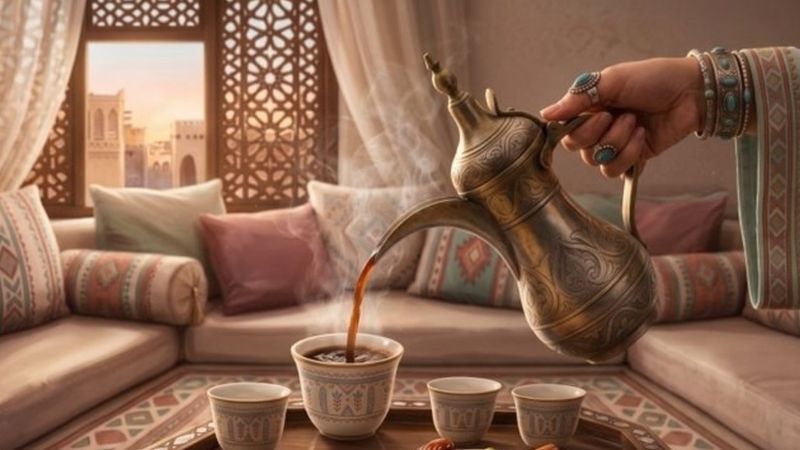
Coffee Began in Yemen
The coffee plant is Ethiopian. But the drink — roasted, brewed, and made the center of a culture — is Yemeni.
Before the espresso machine, before the café, a Sufi in Yemen brewed a bean to stay awake for God. This is the story of how coffee became coffee — from the prayer lodges of the Shadhili order to the Red Sea port of Mocha that named a drink, and finally to the shape the Gulf poured all of it into: the dallah on the one-dirham coin.
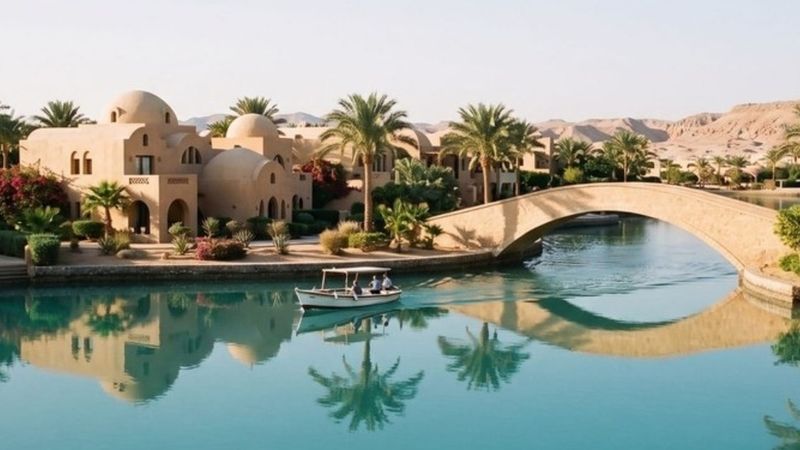
Why the Middle East Keeps Building Venice
From the Red Sea to the Gulf, canal towns keep getting called Venice. The water was usually about something else — and Venice was never quite Venice either.
The Middle East is full of “Venices”. Most began as a way to manufacture shoreline; the name usually arrived later, in English, from the people selling it.