
The second capital of the caliphs
Samarra lies on the Tigris some 130 km north of Baghdad. In 836 the Abbasid caliph al-Mu'tasim moved his court here from Baghdad. For more than half a century, until 892, Samarra was the capital of an empire that stretched from Tunisia to Central Asia. Then the caliphs went back to Baghdad and most of the vast city was abandoned. Because it was never rebuilt, Samarra keeps the plan of a great early Islamic capital better than any other site. UNESCO inscribed Samarra Archaeological City on the World Heritage List in 2007. Its ruins run for more than 40 km along the river. Most of them have never been excavated.
The Great Mosque
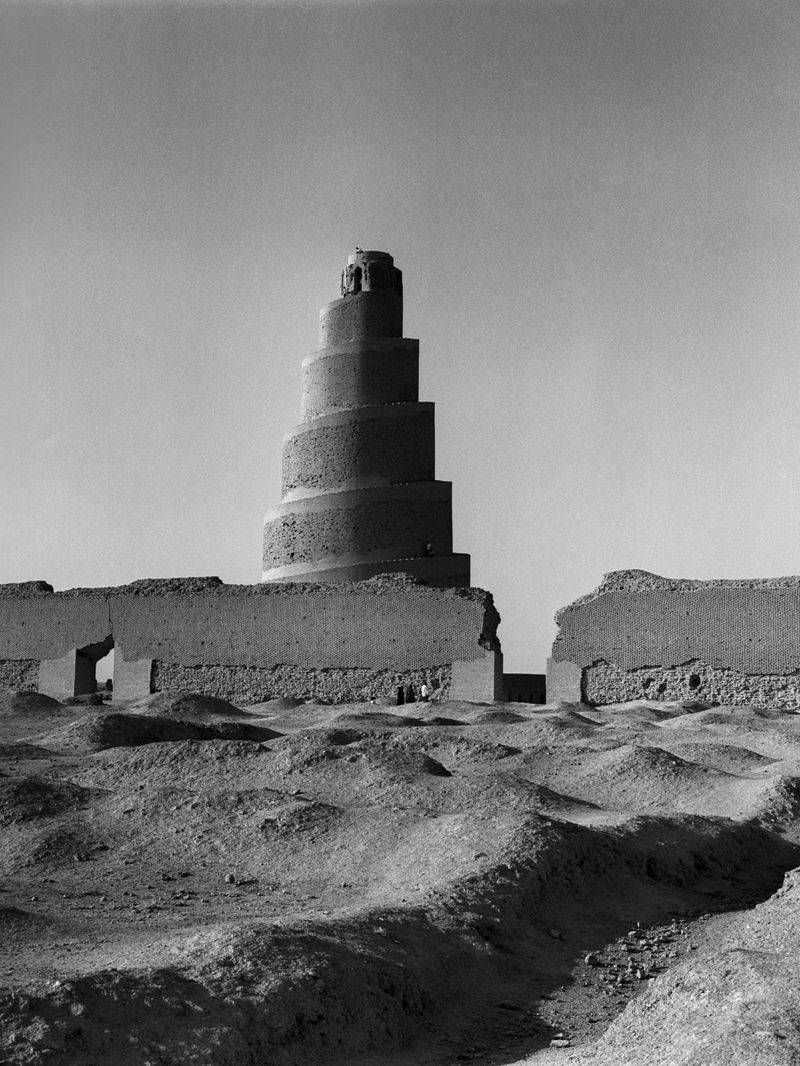
The caliph al-Mutawakkil, who ruled from 847 to 861, built a new congregational mosque on the north-east side of the city. It was finished around the middle of the 9th century. When it was built it was the largest mosque in the world. Its brick enclosure measures about 239 by 156 metres. The outer walls still stand to their full length, reinforced by rows of semicircular towers and topped by a frieze of square sunken niches.
Inside, a huge open courtyard was surrounded by covered aisles carried on columns, deepest on the side facing Mecca. Medieval writers describe walls faced with glass panels. Excavators found broken pieces of dark blue glass in the prayer hall. The roof and columns have long gone, so today the walls enclose a vast empty court.
The Malwiya
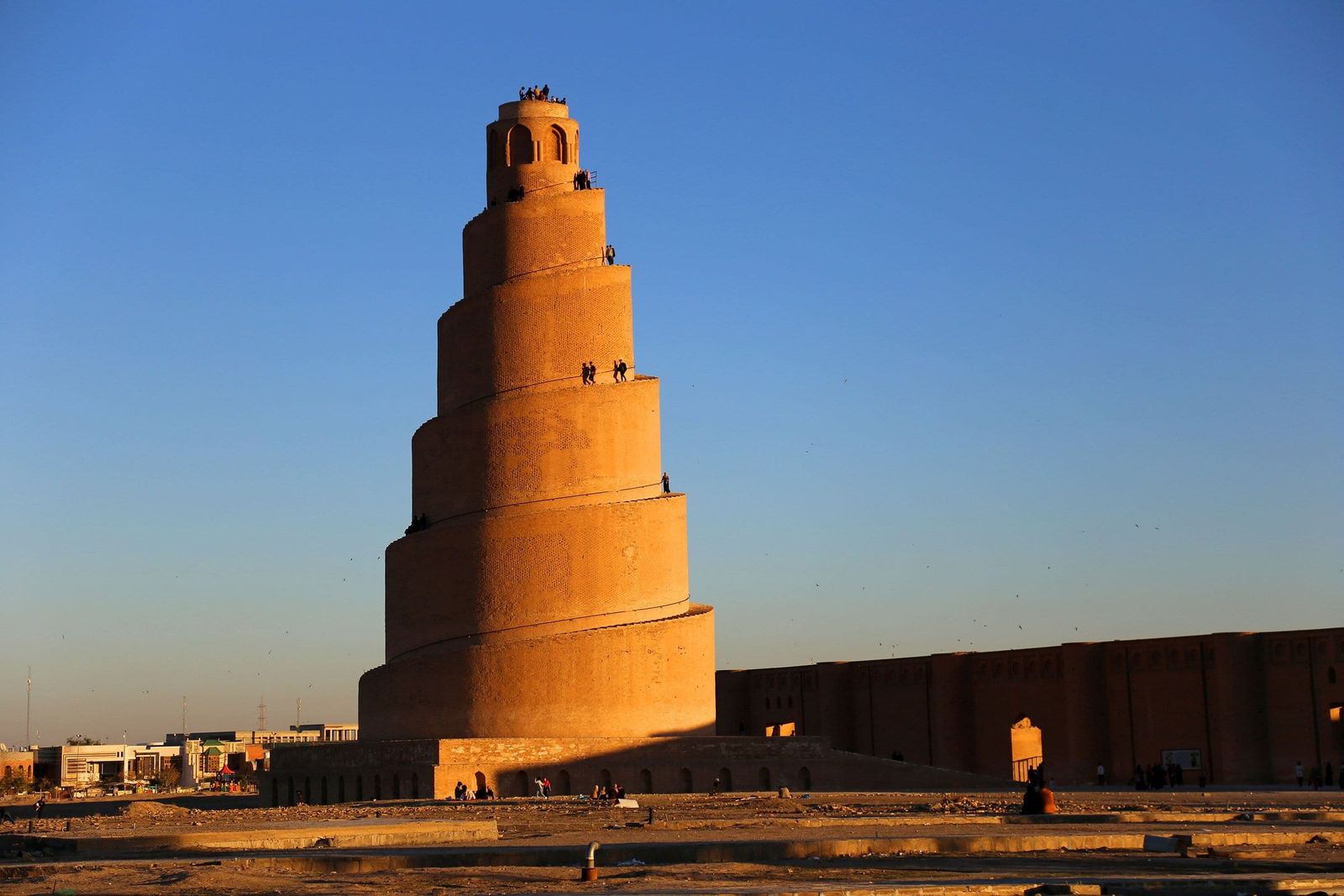
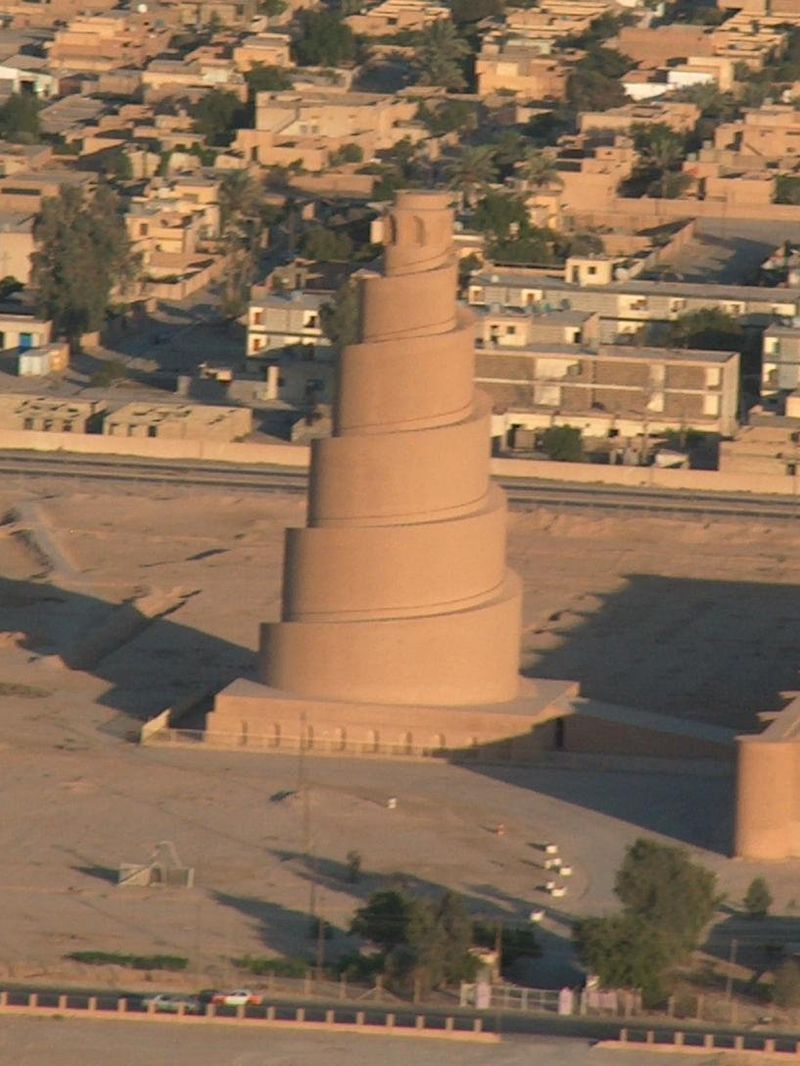
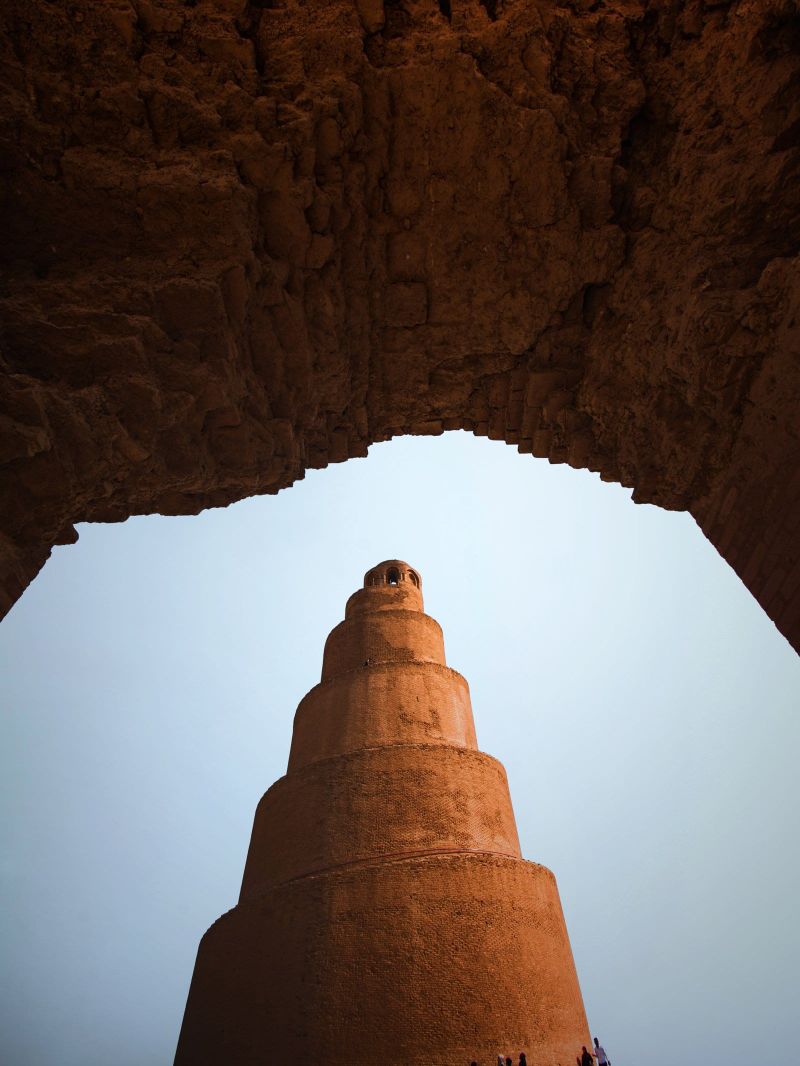
North of the mosque, outside its wall, rises the Malwiya, the spiral minaret. Its name means twisted, like a snail shell. A tall square base about 33 metres across carries a cone of fired brick. A ramp winds counterclockwise round it five times up to a small round pavilion at the top, about 52 metres above the ground. No other early minaret looks like it.
In 2005 a bomb damaged the top of the minaret. In 2015 UNESCO and the Iraqi government launched a project to conserve the site.
More of Samarra
The same caliph built a second great mosque with a smaller spiral minaret, the Mosque of Abu Dulaf, north of the city. The ruins of the caliphal palaces lie along the river. Samarra gave its name to a style of carved stucco that spread across the Islamic world. Potters here developed lustreware, glazed to shine like gold and silver. For the story of the city that came before Samarra, see the Abbasid Al-Mustansiriya Madrasa in Baghdad.
Exhibo editorial
Pictures do not prepare you for the scale. The Malwiya rises out of a flat plain. The mosque wall beside it runs on for a quarter of a kilometre. Together they show exactly what al-Mutawakkil wanted to say about the size of his power.
Climb it if you have the nerve. There is no railing on the ramp. From the top the whole caliphal city spreads out below, still mostly under the earth. Come late in the afternoon, when the low sun turns the brick the colour of honey.
Gallery
How to find it
Samarra is about 130 km north of Baghdad, on the highway towards Tikrit. The Great Mosque and the Malwiya stand on the north side of the modern town. Most visitors come by private car or with a tour from Baghdad; carry your passport for road checkpoints.
Similar places
All places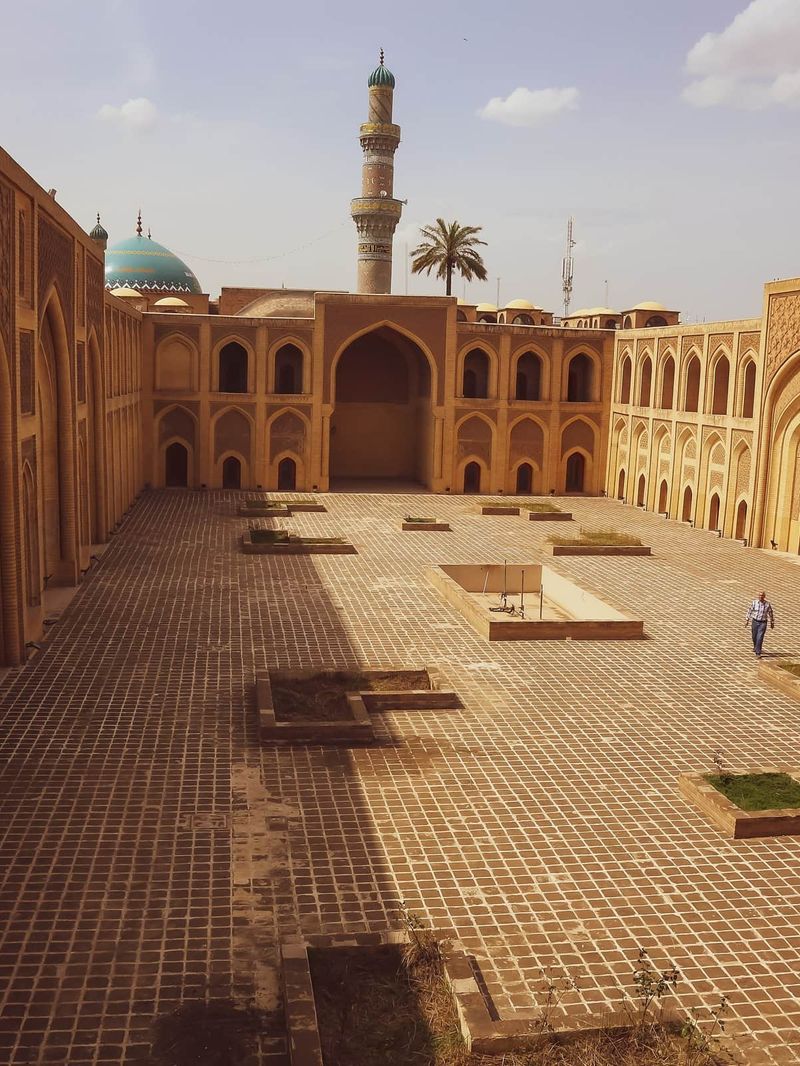
News by Exhibo
Editorial coverage on Exhibo
Iraq Museum Reopens in Baghdad After Two-Year Closure
New galleries put lamassu and Abbasid mihrabs back on view as December nears.
The Iraq Museum in Baghdad reopens on 1 December after two years of renovations. New rooms bring lamassu, Assyrian reliefs and Islamic galleries back onto the floor.
The Real Oasis of The Alchemist: Al-Fayoum and the Dream Coelho Borrowed
Paulo Coelho sent his shepherd to a real place in Egypt. What Santiago would have found there and where the story of the treasure at home came from.
Santiago's oasis is real. Al-Fayoum lies 100 km from Cairo, with Roman-era painted portraits, a temple on the caravan road and a dream story centuries older than Coelho.
Filmed, but Not Recorded: The Arab World’s Missing Film Locations
Wikidata knows Gladiator was filmed in Morocco. It doesn’t know where.
Ouarzazate is the second most filmed place in the Middle East and North Africa, yet 25 of its 27 productions are recorded only in Wikipedia prose. We compared filming records worldwide and found that in the Arab world, Wikidata usually knows the country but not the place.