Taposiris Magna
A Ptolemaic temple of Osiris and a lighthouse tower modelled on the Pharos, west of Alexandria — where the search for Cleopatra's tomb continues.
A temple of Osiris on the coast
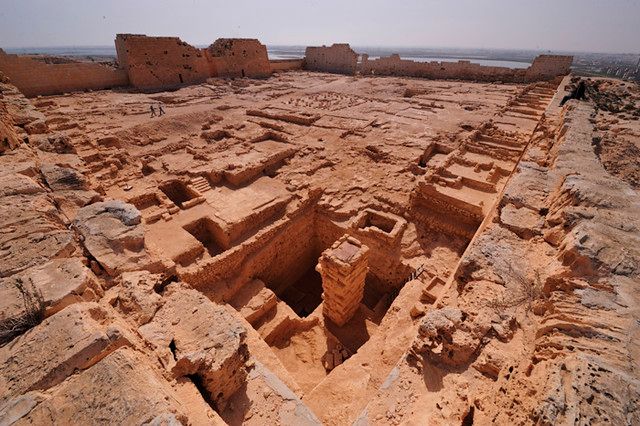
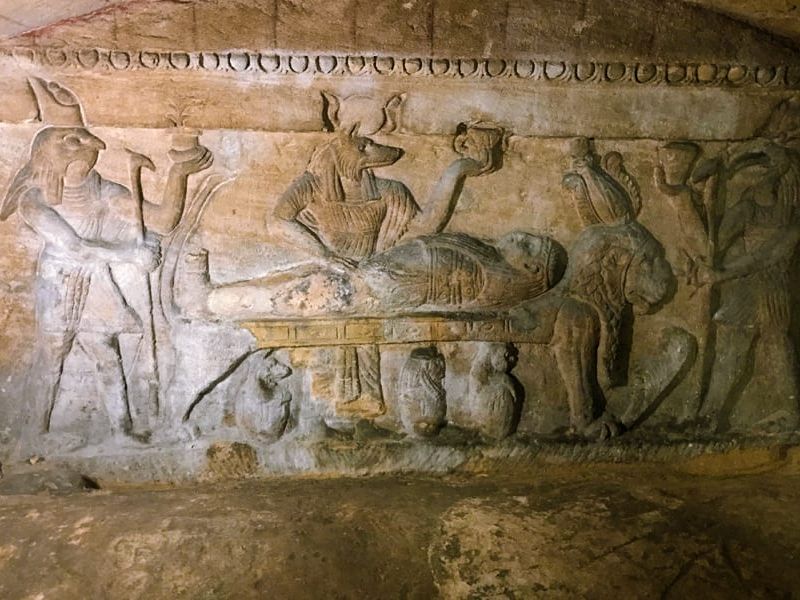
Taposiris Magna lies on a limestone ridge between the Mediterranean and Lake Mariout, about 45 kilometres west of Alexandria, near the modern town of Borg el-Arab. Its name, "great tomb of Osiris", refers to the tradition that a part of the god's body was buried here. The town was founded in the early Ptolemaic period, probably under Ptolemy II in the third century BC, and its main monument is a large temple dedicated to Osiris, whose massive enclosure walls and pylon-like gateway still stand. The temple was later reused as a Roman fortress, and a Christian church was built inside its walls.
The lighthouse
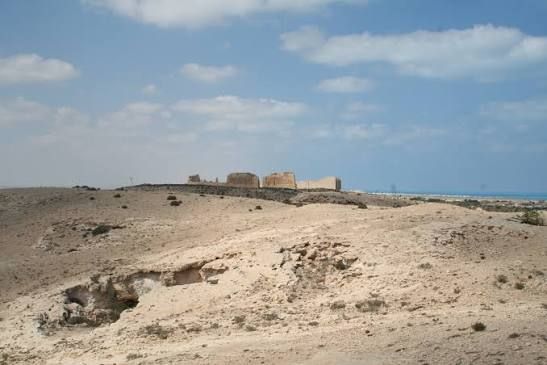
Nearby, on the ridge, stands a tower of the Ptolemaic period known as the Abusir lighthouse, which may have served as a lighthouse or a funerary monument. With its square base, octagonal middle section and originally a circular top, it is believed to reproduce, on a smaller scale, the design of the great Pharos of Alexandria, and is one of the best surviving indications of how the Pharos looked.
The search for Cleopatra
Since 2005, an Egyptian–Dominican mission led by the archaeologist Kathleen Martínez has excavated the temple, convinced that Cleopatra VII and Mark Antony may have been buried in or near it. The excavations have uncovered coins bearing Cleopatra's image, statues, a necropolis and, in 2022, a long tunnel cut through the rock beneath the temple. Whether the tomb will be found remains an open question, but the work has made Taposiris one of the most talked-about sites in Egypt.
Exhibo editorial
On a windswept ridge west of Alexandria, between the sea and a shining lagoon, stand two strange survivors: the great walls of a temple of Osiris, and a tower that is, as far as anyone can tell, a miniature copy of the lost lighthouse of Alexandria. Stand beside it and you can almost picture the Pharos rising over the harbour.
Then there's the question that brings most people here: is Cleopatra buried somewhere beneath? Excavations continue, and access to the temple can depend on permissions — but even from outside, with the sea wind and the light over Lake Mariout, it's an atmospheric place to wonder.
Gallery
How to find it
Taposiris Magna lies about 45 km west of Alexandria along the coastal road towards El Alamein, near the village of Abusir and Borg el-Arab. The temple walls and the lighthouse tower stand on the ridge on the inland side of the road.
Similar places
All places
News by Exhibo
Editorial coverage on Exhibo
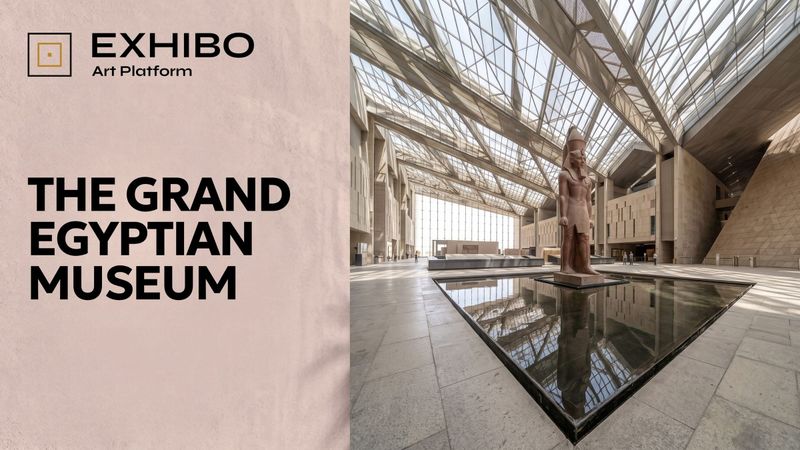
The Museum That Reflects Everything, Including You
How the world's largest single-civilisation museum gathers a nation's heritage, national story, tourism economy and repatriation claims under one reflective roof — and what those mirrored surfaces quietly ask of everyone who walks in.
Around the colossus of Ramses II, shallow pools mirror the floor so exactly that visitors keep stepping in. It is a small, faintly comic thing — and a way into a much larger question about the Grand Egyptian Museum. A civilisation is gathered here and made whole, while its three most famous faces stay abroad. A home for a nation's heritage opens, and the nation queues outside it. A monument to Egyptian sovereignty rises, financed largely from Tokyo.
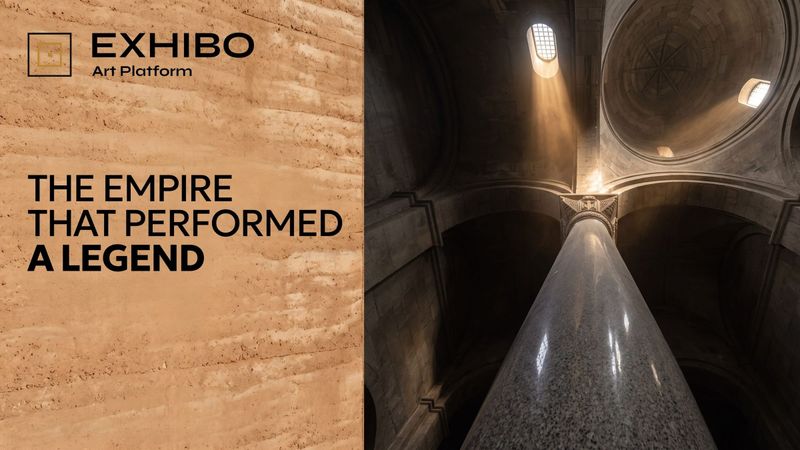
Seventy Thousand Solomons: The Empire That Performed a Legend
A demon catalogue in the conqueror's library, a sixteenth-century text where kingship is an office held seventy thousand times, and the columns a sultan dragged across three provinces to prove he held it.
Mehmed II kept a Greek catalogue of demons in his library at Topkapı. Seventy years later a sultan named for a prophet was rebuilding the walls of Jerusalem and hauling Roman columns out of Egypt and the Lebanon into a mosque above the Golden Horn. In between, Ottoman writers turned Solomon from a warning into a job — and the empire applied for it in stone.