
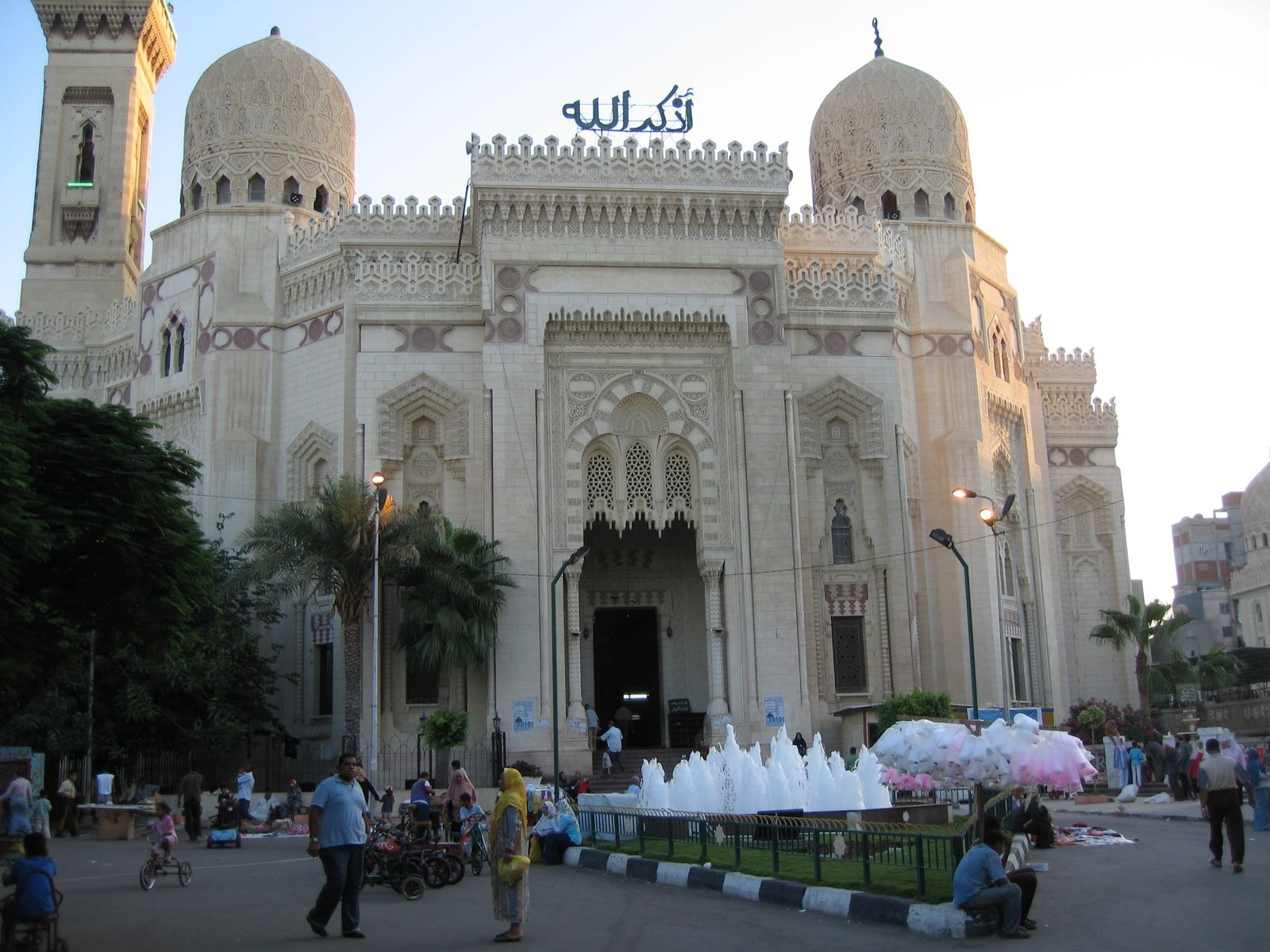
Mosque of Abu al-Abbas al-Mursi
Alexandria's best-loved mosque, a 1940s neo-Mamluk landmark over the tomb of a thirteenth-century Andalusian Sufi saint.
A saint from al-Andalus
Abu al-Abbas al-Mursi was a Sufi master born in 1219 in Murcia, in al-Andalus (Islamic Spain), who travelled east with his family and settled in Alexandria, where he became the leading disciple and successor of Abu al-Hasan al-Shadhili, founder of the Shadhiliyya Sufi order. He taught in Alexandria for more than forty years and died there in 1287. He is venerated as the patron saint of the city, and his tomb has been a place of pilgrimage for more than seven centuries; his annual mawlid is one of Alexandria's great popular festivals.
The mosque
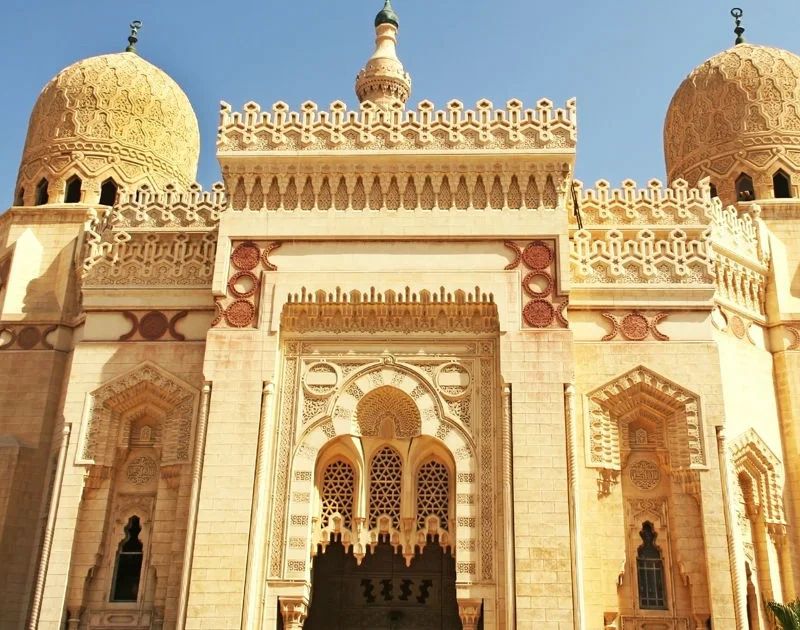
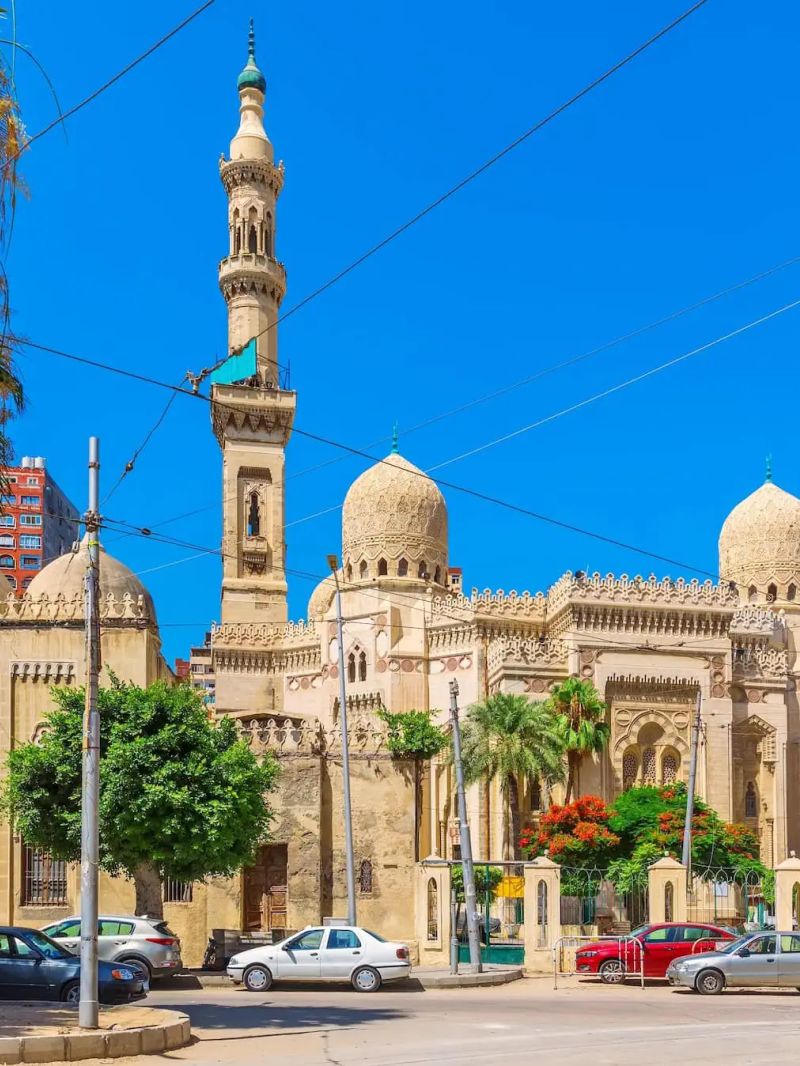
A mosque was built over his tomb soon after his death and was rebuilt and enlarged several times. The present building, the largest and most famous mosque in Alexandria, was constructed between the late 1920s and 1945 to designs by the Italian architect Mario Rossi, chief architect of the Egyptian Ministry of Endowments, in a neo-Mamluk and Andalusian-inspired style. Built of cream-coloured artificial stone, it has an octagonal plan crowned by four domes and a tall, slender minaret, and its interior is richly decorated with arabesques, marble, carved wood and mosaics, with granite columns supporting the octagonal central space.
The neighbourhood
The mosque stands on a large square in the Anfushi district near the Eastern Harbour, surrounded by other shrines of Sufi saints, including that of Imam al-Busiri, author of the famous poem in praise of the Prophet, the Burda. It is an active mosque, and visitors are welcome outside prayer times.
Exhibo editorial
On the square in front of Abu al-Abbas there is always movement: pigeons, families, fishermen walking home from the harbour, people coming to pray at the saint's tomb. The mosque rises over it all, pale and graceful, its minaret visible from much of the Corniche — the true symbol of Alexandria for many of its people.
Step inside outside prayer times to see the octagonal hall, its arches and its play of light, and pause at the saint's tomb. Then walk to the Citadel of Qaitbay a few minutes away, or eat grilled fish in one of the Anfushi restaurants nearby.
Gallery
How to find it
The mosque stands on Abu al-Abbas Square in Anfushi, a short walk inland from the Corniche of the Eastern Harbour and about 10 minutes on foot from the Citadel of Qaitbay. Enter from the square; women may be directed to a separate entrance.
Similar places
All places
News by Exhibo
Editorial coverage on Exhibo
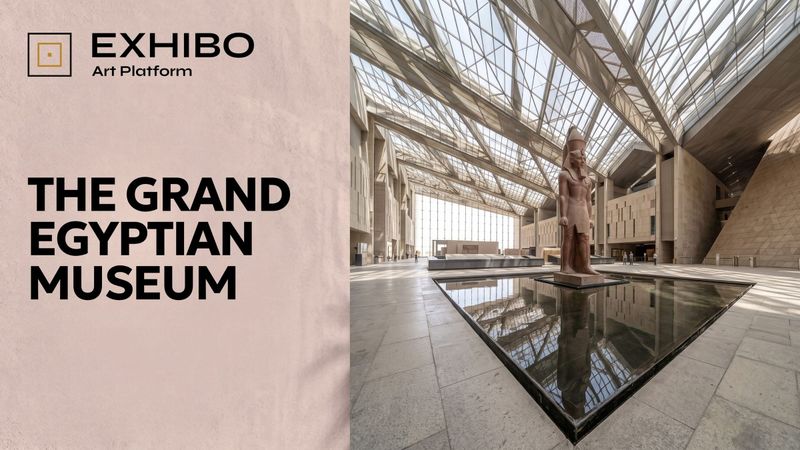
The Museum That Reflects Everything, Including You
How the world's largest single-civilisation museum gathers a nation's heritage, national story, tourism economy and repatriation claims under one reflective roof — and what those mirrored surfaces quietly ask of everyone who walks in.
Around the colossus of Ramses II, shallow pools mirror the floor so exactly that visitors keep stepping in. It is a small, faintly comic thing — and a way into a much larger question about the Grand Egyptian Museum. A civilisation is gathered here and made whole, while its three most famous faces stay abroad. A home for a nation's heritage opens, and the nation queues outside it. A monument to Egyptian sovereignty rises, financed largely from Tokyo.
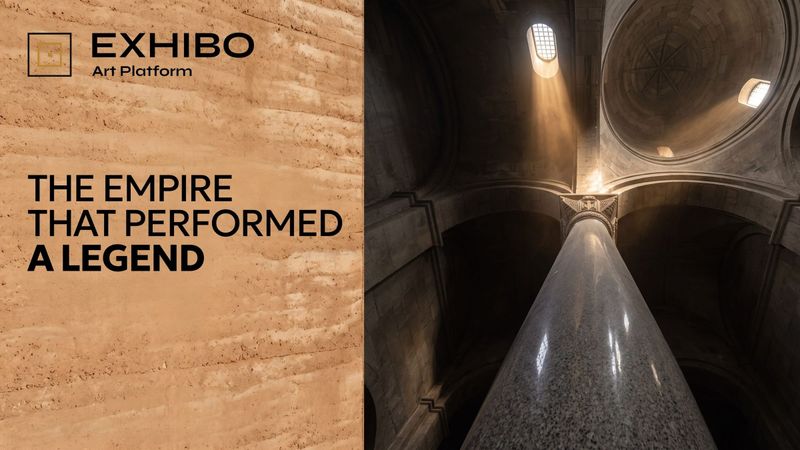
Seventy Thousand Solomons: The Empire That Performed a Legend
A demon catalogue in the conqueror's library, a sixteenth-century text where kingship is an office held seventy thousand times, and the columns a sultan dragged across three provinces to prove he held it.
Mehmed II kept a Greek catalogue of demons in his library at Topkapı. Seventy years later a sultan named for a prophet was rebuilding the walls of Jerusalem and hauling Roman columns out of Egypt and the Lebanon into a mosque above the Golden Horn. In between, Ottoman writers turned Solomon from a warning into a job — and the empire applied for it in stone.