Marea
A Greco-Roman wine port on the southern shore of Lake Mariout, famous in antiquity for its Mareotic wine.
The wine town of Lake Mariout
Marea lies on the southern shore of Lake Mariout, about 45 kilometres south-west of Alexandria. In the Hellenistic, Roman and Byzantine periods, the lands around the lake were among the most fertile vineyards of the Mediterranean, and Mareotic wine was praised by Roman poets such as Horace and Virgil. Marea was a busy harbour town from which wine, pottery and agricultural produce were shipped across the lake to Alexandria and beyond. Some scholars identify it with the town known in late antiquity as Philoxenite, a stopping point for pilgrims travelling to the shrine of St Menas at Abu Mena.
The ruins
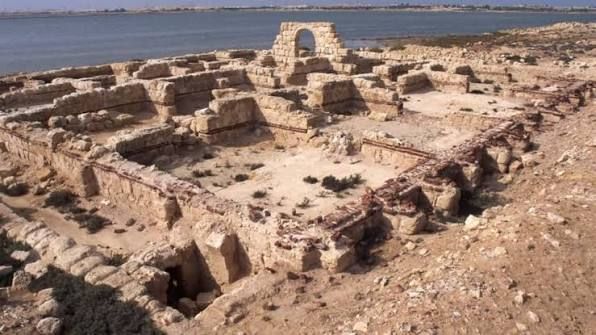
Archaeological excavations, conducted for many years by a Polish mission from the University of Warsaw, have uncovered the remains of the ancient harbour with its stone piers, warehouses, a large Byzantine basilica, baths, houses, shops, kilns for the production of wine amphorae, and wine presses. The site gives a vivid picture of an ancient wine economy and of a town on the pilgrimage route to Abu Mena.
Visiting
Marea is a little-known site, and access arrangements may vary; it is best visited with a guide who can confirm opening and combined with Abu Mena, a short distance to the south.
Exhibo editorial
It's hard to imagine now, looking at the reeds and salt flats of Lake Mariout, that this shore was once one of the great wine regions of the Roman world. At Marea you can see the evidence: the stone piers of the harbour where amphorae were loaded onto boats, the wine presses, the kilns that made the jars.
It's a quiet, little-visited place, best combined with Abu Mena nearby on a day out from Alexandria. Go with someone who can confirm access, and raise a glass of Egyptian wine to the Mareotic vineyards that evening.
How to find it
Marea lies on the southern shore of Lake Mariout, about 45 km south-west of Alexandria, off the road towards Borg el-Arab and Abu Mena. A car and a guide familiar with the site are recommended.
Similar places
All places
News by Exhibo
Editorial coverage on Exhibo
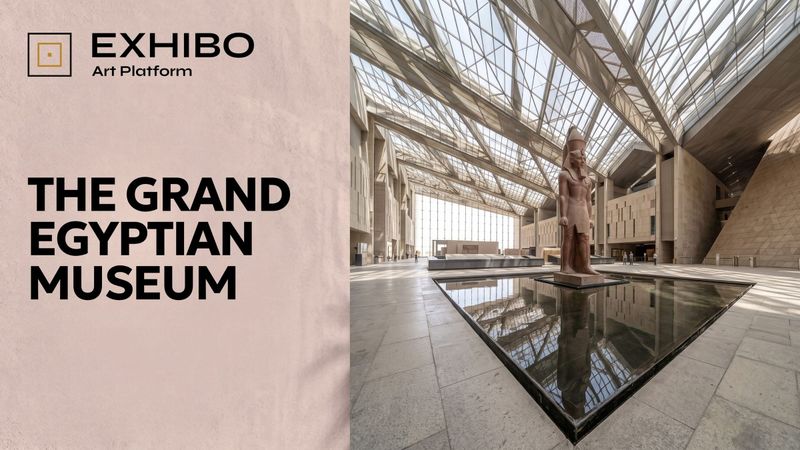
The Museum That Reflects Everything, Including You
How the world's largest single-civilisation museum gathers a nation's heritage, national story, tourism economy and repatriation claims under one reflective roof — and what those mirrored surfaces quietly ask of everyone who walks in.
Around the colossus of Ramses II, shallow pools mirror the floor so exactly that visitors keep stepping in. It is a small, faintly comic thing — and a way into a much larger question about the Grand Egyptian Museum. A civilisation is gathered here and made whole, while its three most famous faces stay abroad. A home for a nation's heritage opens, and the nation queues outside it. A monument to Egyptian sovereignty rises, financed largely from Tokyo.
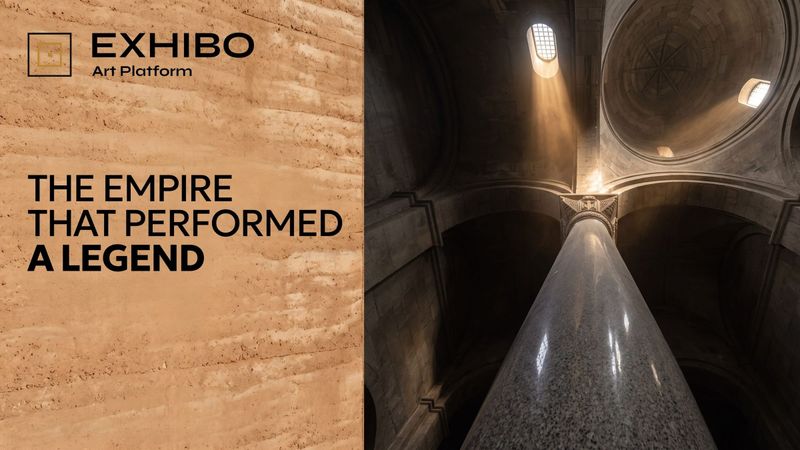
Seventy Thousand Solomons: The Empire That Performed a Legend
A demon catalogue in the conqueror's library, a sixteenth-century text where kingship is an office held seventy thousand times, and the columns a sultan dragged across three provinces to prove he held it.
Mehmed II kept a Greek catalogue of demons in his library at Topkapı. Seventy years later a sultan named for a prophet was rebuilding the walls of Jerusalem and hauling Roman columns out of Egypt and the Lebanon into a mosque above the Golden Horn. In between, Ottoman writers turned Solomon from a warning into a job — and the empire applied for it in stone.