
Yas Bay Waterfront Art Trail
Twelve works along one promenade — Murakami, KAWS, four astronaut cats and a row of painted electrical substations.
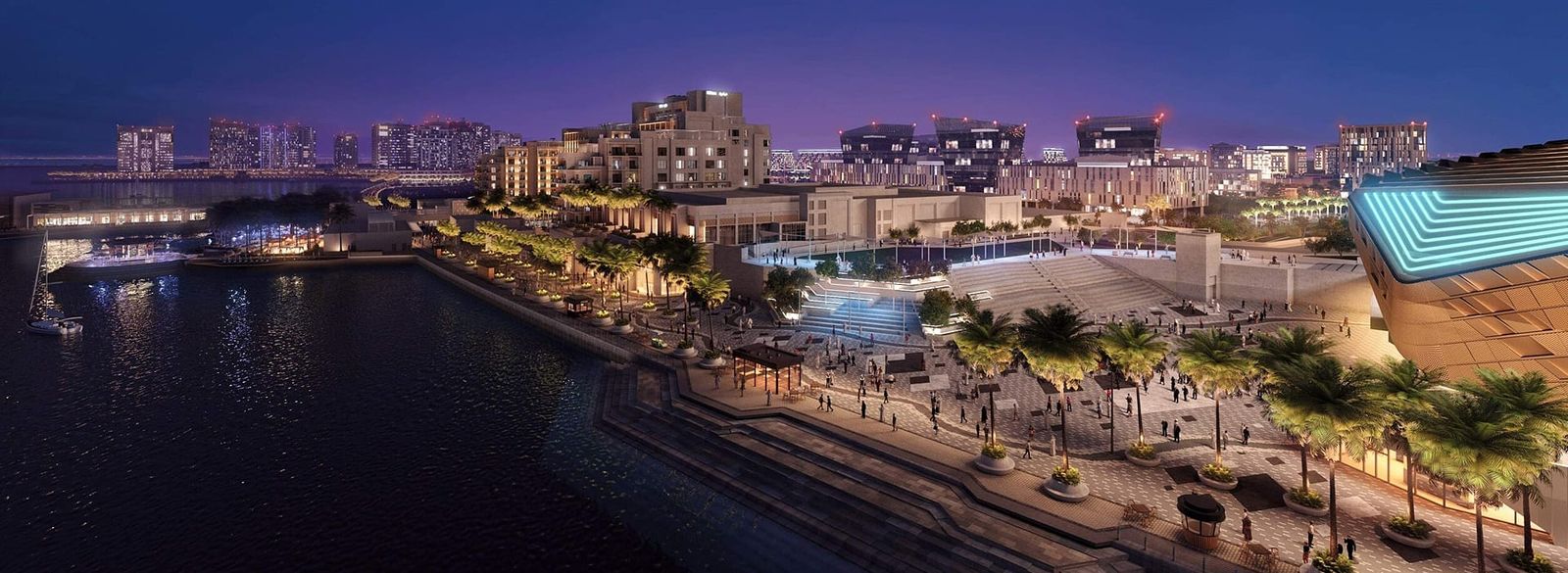
The Yas Bay Waterfront on the southern end of Yas Island holds one of the densest concentrations of free public art in the UAE: more than twelve installations spread along the promenade, the plaza and the lobby, assembled by developer Miral from 2021 onwards.
The headline works arrived together in July 2022. Takashi Murakami's Flower Parent and Child stands ten metres tall on the promenade, executed in the artist's signature gold leaf and decorated on every side with flower motifs so that it presents differently depending on the viewing angle; Murakami intended it to convey energy and hope, and it is among his largest works. The sculpture first appeared in Tokyo in 2020, originally titled Haha Bangla Manus. Alongside it, KAWS — Brian Donnelly — installed Final Days, which greets visitors walking through the Yas Bay Waterfront lobby towards the promenade: a figure with crossed-out eyes, bones imitating hair and ears, and a distorted mouth, in the pop-appropriating idiom Donnelly built from Mickey Mouse and Snoopy.
Spread across the waterfront plaza are four Astrocat installations by the Korean art-toy studio CoolRainLabo, made in 2021 — fibreglass astronaut cat figures, one seated, one standing, one carrying a skateboard, referencing the UAE's space programme after Hazza Al Mansouri became the country's first astronaut in 2019.
The area's electrical substations were handed to muralists rather than screened off: Supakitch, MonkeyBird and Beastman each turned a utility box into a painted canvas. The Emerging Man sculpture stands in the water nearby, and Fatspatrol's 100-metre mural The Humans is a short walk away beside Etihad Arena.
Everything on the trail is outdoors on a free public promenade and can be seen at any hour, alongside some forty cafés, restaurants and retail units. Final Days is in the lobby, so is subject to building hours.
Exhibo editorial
Somebody at Miral made a decision that most developers never make, which was to spend the art budget on more than one thing. The default in this region is a single commissioned centrepiece, photographed for the brochure, and then four hundred metres of nothing. Here you get a Murakami, a KAWS, four astronaut cats and — the detail that gives the game away — three painted electrical substations.
The substations are the tell because nobody has to do that. A substation is a grey box you screen with a hedge; handing it to Supakitch or MonkeyBird costs money and produces no headline. But it means the walk has texture between the big pieces, so you are not marching from landmark to landmark but noticing things. Do the full promenade at dusk in the cooler months. The gold on the Murakami holds the last light longer than anything else out there, and you will find at least two works nobody told you about.
How to find it
Along the promenade at Yas Bay Waterfront on the southern end of Yas Island, beside Etihad Arena. Park at Yas Bay and walk the length of the boardwalk rather than heading for one work: Murakami's gold Flower Parent and Child is on the promenade, the four CoolRainLabo Astrocats are across the waterfront plaza, and the painted substations are scattered between them. KAWS's Final Days sits inside the Yas Bay Waterfront lobby, so pass through the building on your way out. The Emerging Man is in the water at the steps, and Fatspatrol's The Humans mural is a short walk away by Etihad Arena. Free and outdoors at any hour.
Similar places
All places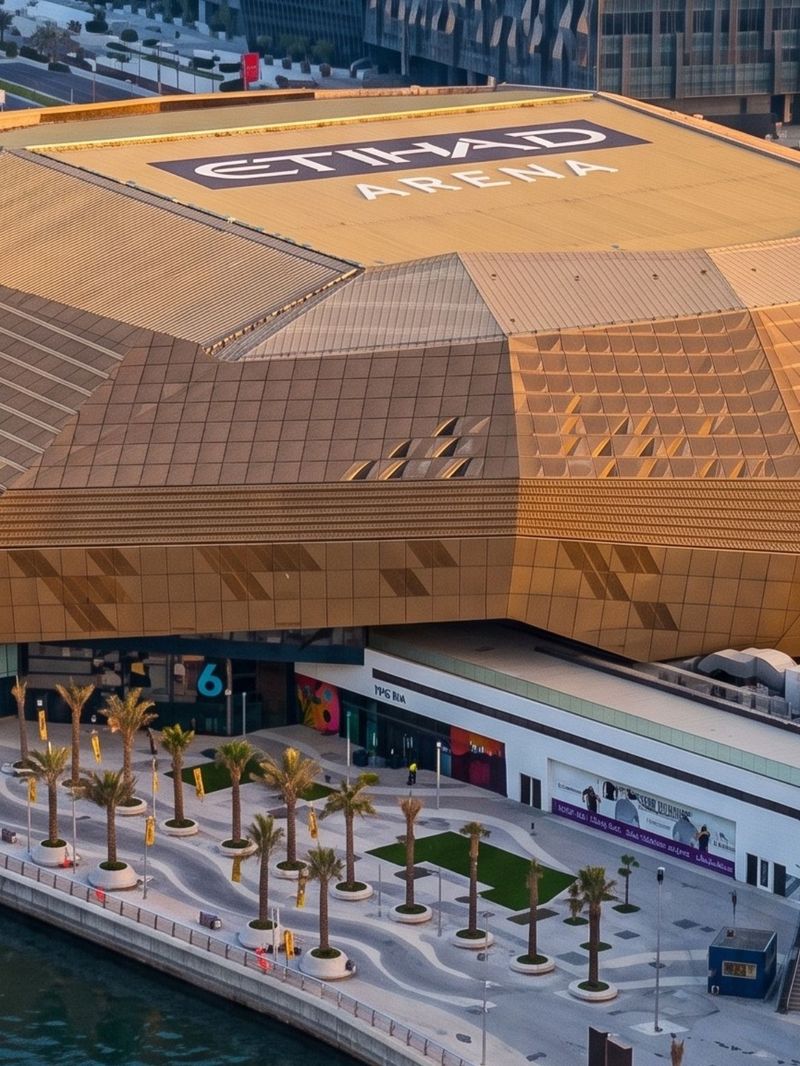
News by Exhibo
Editorial coverage on Exhibo
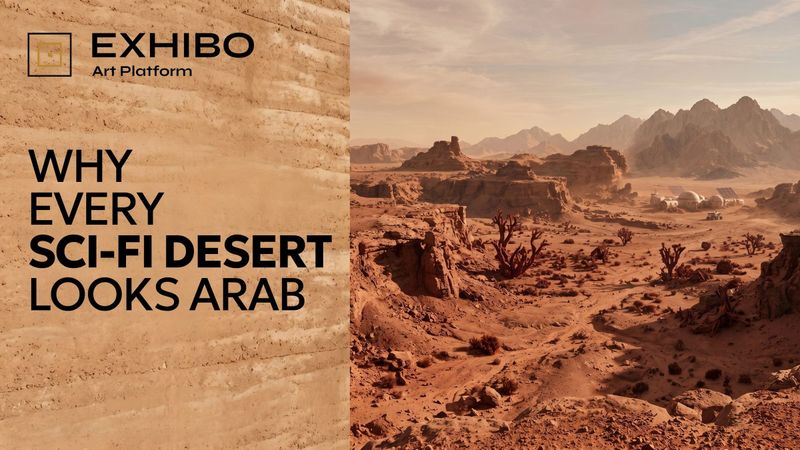
Why Every Sci-Fi Desert Looks Arab
From Arrakis to Tatooine, when a film wants a desert to feel ancient, prophetic and alien, it reaches for an Arab and Berber vocabulary — and reveals more about the West that built it than the region it borrows from.
The wrapped faces, the trilling women, the barely-displaced Arabic: cinema's alien deserts keep sounding Arab. But the vocabulary was assembled in the West — from Orientalist painting to Lawrence to Dune — and it says more about who is looking than about anyone being looked at.
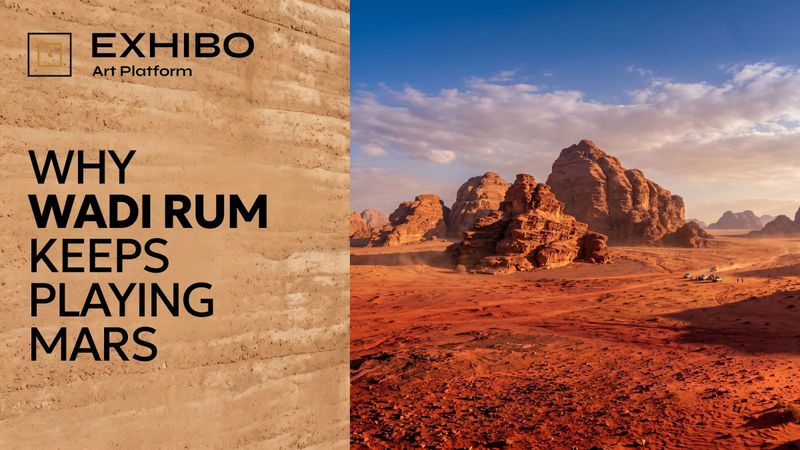
Why Wadi Rum Keeps Playing Mars: A Desert That Is Right About the Wrong Planet
A valley in southern Jordan has become cinema's favourite Mars — not because it is like the planet, but because it looks like the one we carry in our heads.
Put Wadi Rum beside a rover photograph and you can't tell which is Mars. But the desert shares almost nothing with the real planet except its colour — and lately, the illusion has grown powerful enough that real space missions have come to Jordan to rehearse.
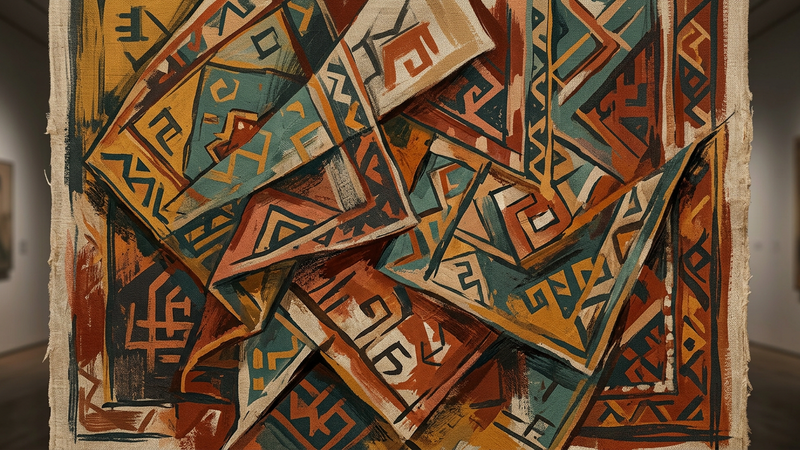
Threads of Heritage: Batima Zaurbekova's Woven Legacy
A survey of Kazakh tapestry pioneers redefines fibre art at Almaty's Kasteyev Museum
Eight decades after her birth, Batima Zaurbekova's textile innovations take centre stage in a major retrospective that bridges Central Asian craft and contemporary visual culture.