
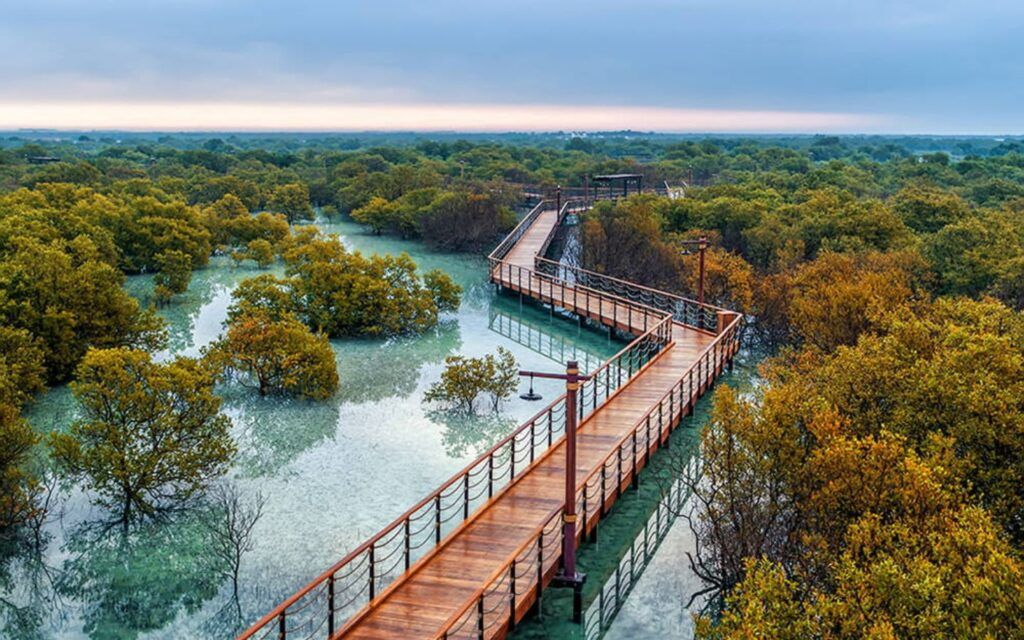
Jubail Mangrove Park Boardwalk
2.6 kilometres of timber walkway threaded through grey mangroves on stilts — with a net you can lie on above the water.
Jubail Mangrove Park occupies the northern tip of Al Jubail Island, between Saadiyat and Yas Islands, and was the first self-contained educational, nature and leisure destination of its kind in the UAE. Implementation began in 2018 and the park opened to the public in January 2020, drawing 100,000 visitors in its first three weeks.
The park is a public-private project between the UAE government, Modon Properties and the Jubail Island Investment Company, developed in consultation with the Environment Agency Abu Dhabi. Danish practice CEBRA Architects designed the scheme, with the Australian consulting firm GHD handling project management, detailed design and delivery in the ecologically sensitive marine environment. CEBRA describe their approach as learning from the landscape — deriving the architecture from the geological and biological conditions of the habitat rather than imposing a form on it. The project won National Winner for Education Project of the Year for the UAE at the MEED Projects Awards 2020.
The centrepiece is a 2.6-kilometre elevated timber boardwalk carried on stilts above the water, engineered to withstand varying salinity and built to leave the mangrove root systems undisturbed. It is laid out as three loops of roughly 1, 1.6 and 2 kilometres in a deliberately staggering, deviating geometry that keeps the route unpredictable and lets visitors turn back at different points without breaking the flow. Along the way are six learning nodes, a 250-metre promenade, rest stops, viewpoints and a viewing tower. One section carries a floating mesh platform that visitors can stand on to look directly down into the water, and a dedicated area for observing mangrove roots at close range.
The route passes through mangrove habitat, intertidal mudflats, salt marshes, lagoon channels and unusual sandstone formations known as zeugens. The forest is principally grey mangrove, which stabilises the shoreline, filters water and sequesters carbon; the park protects a substantial share of the UAE's total mangrove cover. Wildlife includes herons, egrets, flamingos, osprey, kingfishers, turtles, crabs and fish.
Entry is ticketed and inexpensive, with reduced child pricing; the park is open daily with a last entry before closing. Kayak tours are booked separately. Swimming, diving, pets and food on the boardwalk are not permitted, and there are no lifeguards.
Exhibo editorial
The mesh platform is the moment. You step off timber onto a net suspended over the shallows and the ground stops being ground — there is half a metre of clear water under your shoes, crabs working the mud, small fish moving through the roots, and the mild vertigo of standing on something you can see straight through.
What makes the whole route work is a decision CEBRA made that sounds trivial and is not: the boardwalk does not go straight. It staggers and deviates, so you never see more than the next thirty metres, and a two-kilometre walk through a fairly uniform forest keeps producing corners. Compare that to every other elevated walkway in the Gulf, which runs dead ahead and shows you the entire experience in the first ten seconds. Come at either end of the day — sunrise for the birds, late afternoon for the light through the leaves — and give it the full loop rather than the short one.
How to find it
At the northern tip of Al Jubail Island, between Saadiyat and Yas Islands — roughly twenty minutes by car from central Abu Dhabi, opposite the royal stables, and well signposted from the main road. Parking is free; buy tickets at the entrance, where there is no significant queue. Start at the visitor centre and pick a loop: the orange 1km route carries the floating mesh platform, the Power of the Sea viewing area and the mangrove-roots observation point, while the longer loops extend into the salt marshes and lagoon channels. Climb the viewing tower for the panorama over the forest and the city skyline. No food or drink on the boardwalk; no swimming or pets.
Similar places
All places
News by Exhibo
Editorial coverage on Exhibo
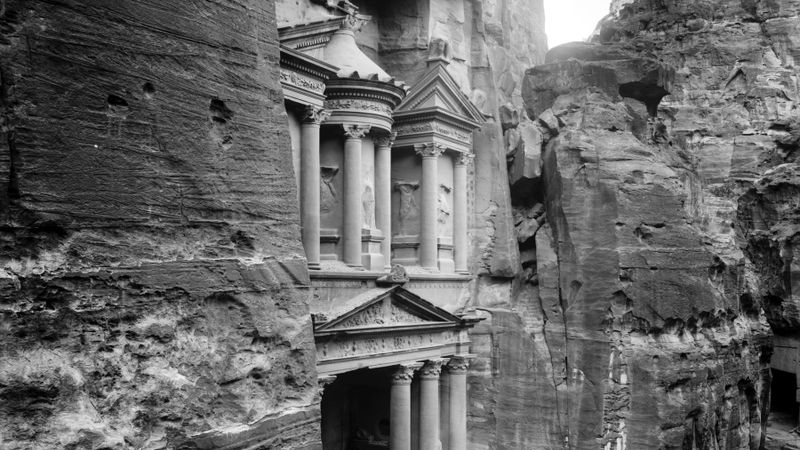
Filmed, but Not Recorded: The Arab World’s Missing Film Locations
Wikidata knows Gladiator was filmed in Morocco. It doesn’t know where.
Ouarzazate is the second most filmed place in the Middle East and North Africa, yet 25 of its 27 productions are recorded only in Wikipedia prose. We compared filming records worldwide and found that in the Arab world, Wikidata usually knows the country but not the place.
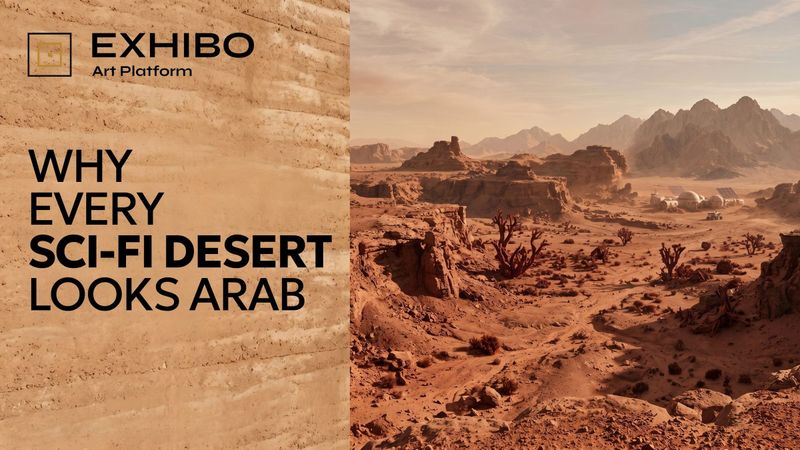
Why Every Sci-Fi Desert Looks Arab
From Arrakis to Tatooine, when a film wants a desert to feel ancient, prophetic and alien, it reaches for an Arab and Berber vocabulary — and reveals more about the West that built it than the region it borrows from.
The wrapped faces, the trilling women, the barely-displaced Arabic: cinema's alien deserts keep sounding Arab. But the vocabulary was assembled in the West — from Orientalist painting to Lawrence to Dune — and it says more about who is looking than about anyone being looked at.
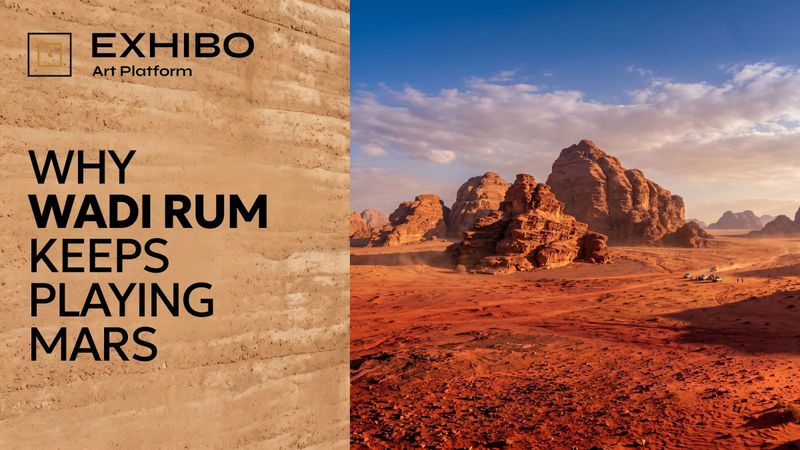
Why Wadi Rum Keeps Playing Mars: A Desert That Is Right About the Wrong Planet
A valley in southern Jordan has become cinema's favourite Mars — not because it is like the planet, but because it looks like the one we carry in our heads.
Put Wadi Rum beside a rover photograph and you can't tell which is Mars. But the desert shares almost nothing with the real planet except its colour — and lately, the illusion has grown powerful enough that real space missions have come to Jordan to rehearse.