Emirates Palace Domes & Archways
A kilometre of sand-coloured palace under 114 domes — built for a summit, opened as a hotel, lit like a jewel.
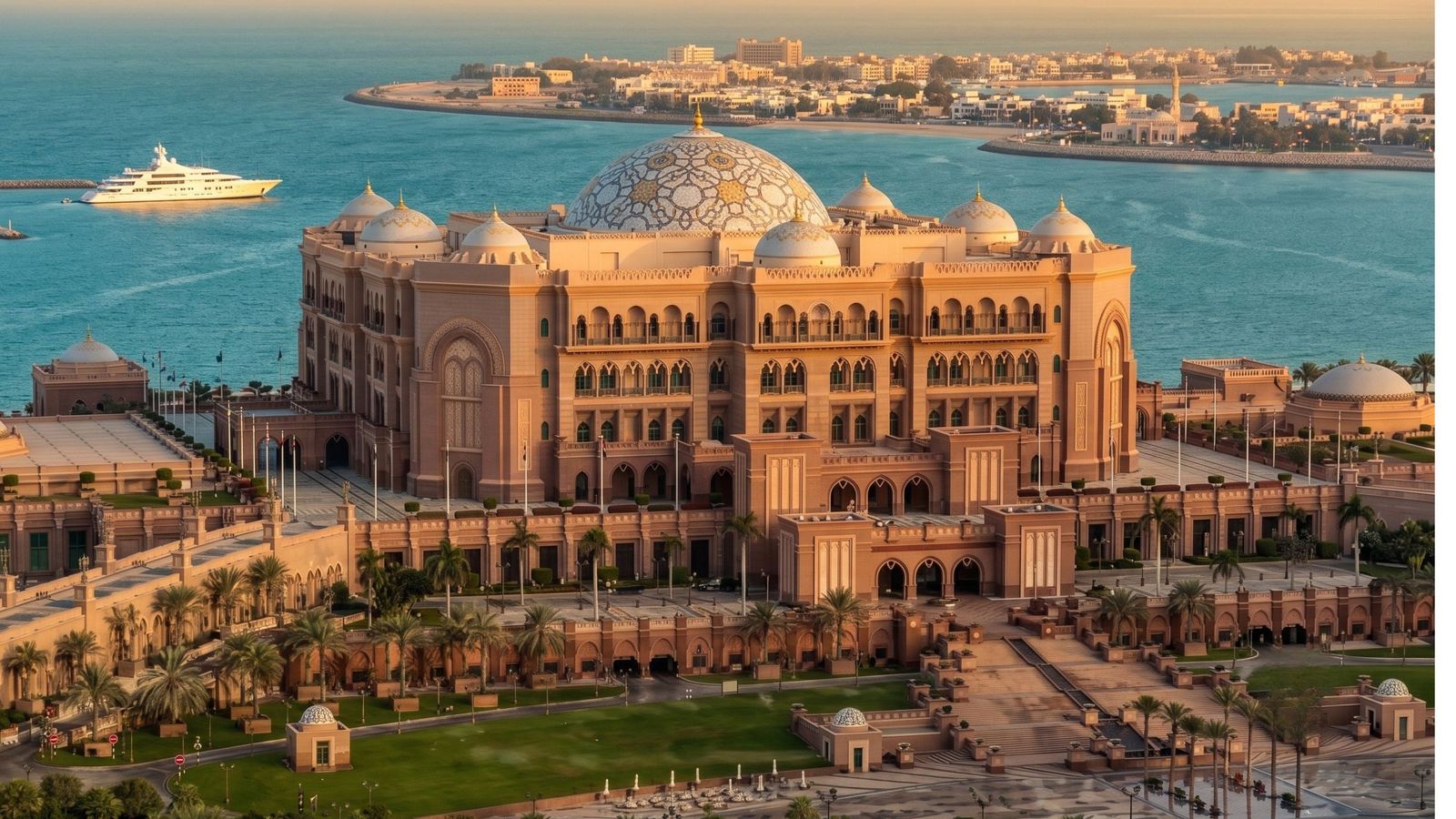
Emirates Palace, now operating as Emirates Palace Mandarin Oriental, is a palatial hotel and state venue on the western Corniche at Al Ras Al Akhdar. It is one of the defining pieces of architecture in the capital: the main structure extends over a kilometre wing to wing, set within roughly 84 to 100 hectares of gardens on reclaimed land, with a 1.3-kilometre private beach.
The building was designed by WATG — Wimberly, Allison, Tong & Goo — under principal in charge Jeremy Heyes, with construction by the Belgian firm BESIX. Work began in December 2001 with a team of around eighty design professionals working on site, driven by the deadline of Abu Dhabi hosting the Gulf Cooperation Council summit; the building was completed in 2004 and opened in 2005 at a reported cost of around three billion US dollars. It was conceived from the outset as both a hotel and a venue for heads of state, and is owned by the Government of Abu Dhabi. Kempinski operated it until 1 January 2020, when Mandarin Oriental took over; a two-year refurbishment followed, with the reopening in February 2023.
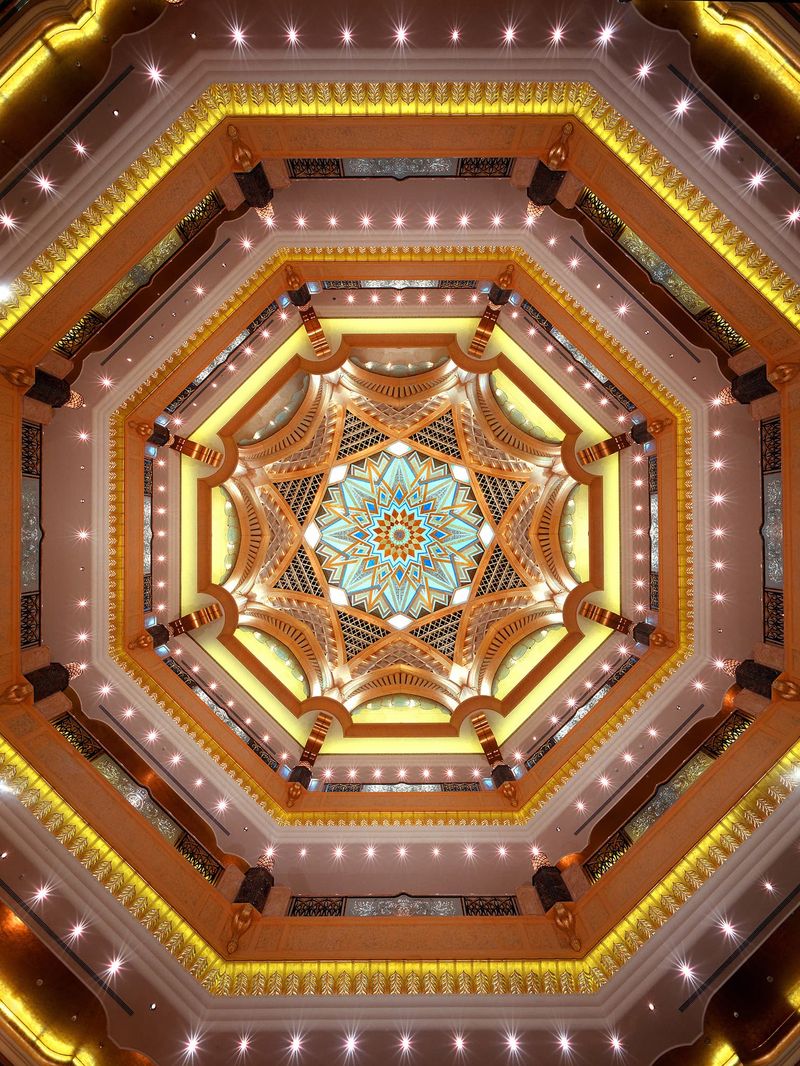
The architecture applies Islamic principles — symmetry, geometric pattern, hierarchical emphasis — at enormous scale, with an exterior colour drawn from the sands of the Arabian Desert. The composition is crowned by a central patterned dome rising 72.6 metres above ground, worked in gold, mother-of-pearl and crystal, flanked by 114 smaller domes distributed across the building. A triumphal arch marks the approach, and the grounds hold some 200 fountains. WATG used modern etching and casting techniques to make traditional patterns integral to the façade rather than applied to it.
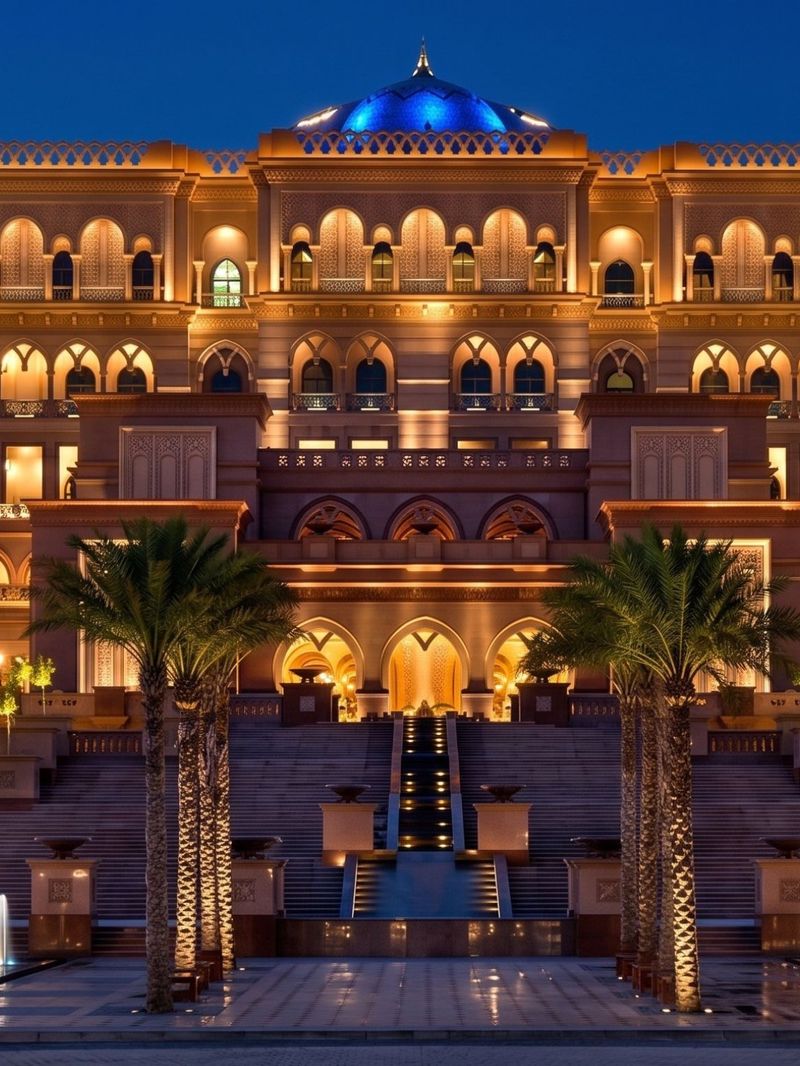
Inside are 394 rooms including 92 suites and 22 residential suites for heads of state, 1,002 crystal chandeliers — the largest weighing 2.5 tonnes — more than 92,900 square metres of marble and 26,247 metres of 22-carat gold leaf. The gardens hold around 8,000 trees. At night the exterior lighting shifts subtly, with a rainbow effect played across the main dome. The hotel is a working luxury property; public areas, restaurants and the grounds are accessible to non-residents, and the exterior is freely viewable from the Corniche.
Exhibo editorial
The lighting is the part locals set their evenings by. Somewhere after dark the main dome starts cycling through colour — slowly, without announcement — and half the cars pulled over on the Corniche verge are there for exactly that. It is the least serious thing about a building that is otherwise entirely serious, and it is the reason the place is loved rather than merely admired.
What gets lost in the numbers — and there are a lot of numbers, the gold leaf, the chandeliers, the tonnage of marble — is that this was built to a political deadline. A GCC summit was coming, eighty designers went on site, and three years later there was a kilometre of palace where there had been reclaimed sand. Abu Dhabi in 2001 needed a room big enough to receive the Gulf's heads of state and a statement large enough to be read from outside the region. It got both, in the same object. Everything else here — the hotel, the cappuccino with gold flakes, the tour buses — arrived afterwards, as a use for a building that already existed for another reason.
Gallery
How to find it
On West Corniche Road at Al Ras Al Akhdar, opposite Etihad Towers and beside the Founder's Memorial. The formal approach through the triumphal arch and up the axial drive is the intended first view — arrive by car or taxi rather than on foot to get it. Non-residents can enter the public areas, lobby and restaurants; the central dome is best appreciated from inside the main atrium looking up. For the exterior, the Corniche promenade and the beach side give the full kilometre-wide elevation. Come back after dark for the colour-shifting dome lighting.
Similar places
All places
News by Exhibo
Editorial coverage on Exhibo
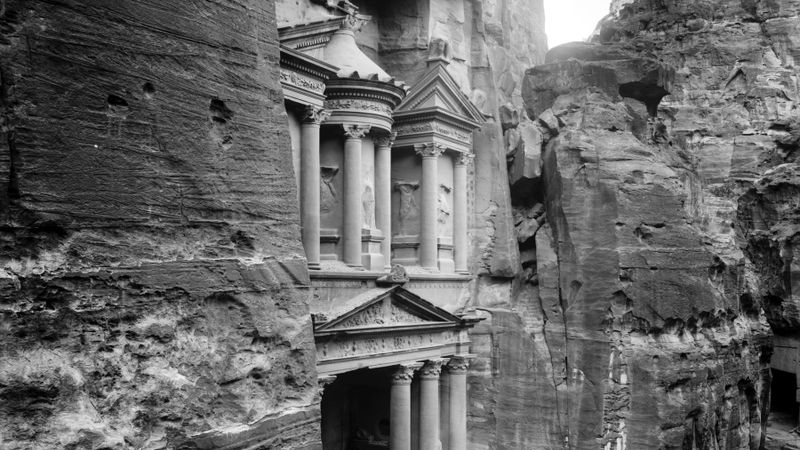
Filmed, but Not Recorded: The Arab World’s Missing Film Locations
Wikidata knows Gladiator was filmed in Morocco. It doesn’t know where.
Ouarzazate is the second most filmed place in the Middle East and North Africa, yet 25 of its 27 productions are recorded only in Wikipedia prose. We compared filming records worldwide and found that in the Arab world, Wikidata usually knows the country but not the place.
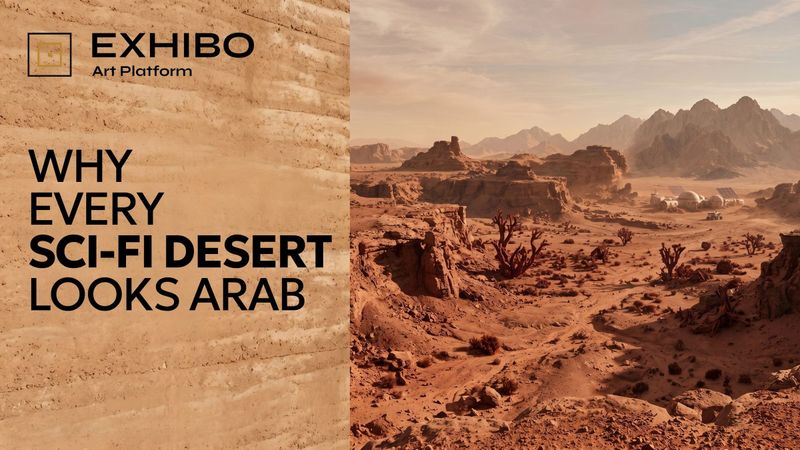
Why Every Sci-Fi Desert Looks Arab
From Arrakis to Tatooine, when a film wants a desert to feel ancient, prophetic and alien, it reaches for an Arab and Berber vocabulary — and reveals more about the West that built it than the region it borrows from.
The wrapped faces, the trilling women, the barely-displaced Arabic: cinema's alien deserts keep sounding Arab. But the vocabulary was assembled in the West — from Orientalist painting to Lawrence to Dune — and it says more about who is looking than about anyone being looked at.
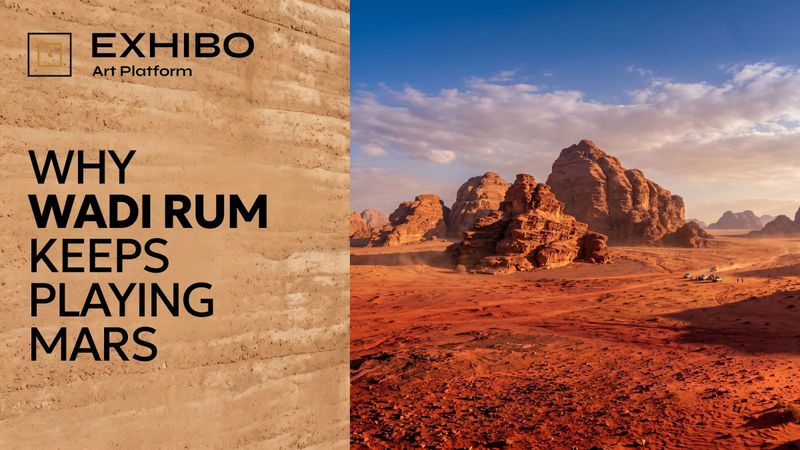
Why Wadi Rum Keeps Playing Mars: A Desert That Is Right About the Wrong Planet
A valley in southern Jordan has become cinema's favourite Mars — not because it is like the planet, but because it looks like the one we carry in our heads.
Put Wadi Rum beside a rover photograph and you can't tell which is Mars. But the desert shares almost nothing with the real planet except its colour — and lately, the illusion has grown powerful enough that real space missions have come to Jordan to rehearse.