
Online · Dubai · 20/10/2022
Jerusalem: City of Paradoxes
Online exhibition — not staged at a physical venue.
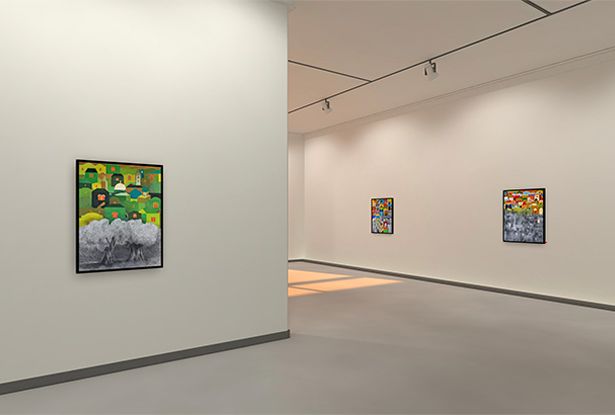
.hidden { font-size: 0.00001px; } Jerusalem: City of Paradoxes by Hosni Radwan - Virtual Exhibition Jerusalem: City of Paradoxes Hosni RadwanOnline Exhibition The city of Jerusalem is the focus of Hosni Radwan’s latest series of artworks. Using charcoal, acrylic, and gold leaf on canvas, he attempts to express his fascination with a city haunted by shades of paradoxes. The minute Radwan saw Jerusalem, after living in the diaspora most of his life, he fell in love with it. He was fascinated with the place, its beauty, and contradictions; the little arches, the oriental style of architecture, the smells, the colors, the noises, and the unique way of living. Jerusalem brought the artist closer to safety and belonging as it carried him back to his childhood in the old city of Baghdad (the place where his family was displaced in 1948). The two places have many things in common, which appear on the surface of his paintings as childish sparkles, cold grey corners, little ancient white domes, golden holy places as well as pink stones. Using black charcoal mixed with colorful vibrant colors touches metaphorically on the situation of the city, taking history and politics into account. Radwan applies colorful areas and uses charcoal as well in an attempt to reveal contradictions: day and night; past and present; oppression and freedom; vibrant life and the loss of some of its aspects under occupation. The holy city in this series is present with all its details yet it seems hollow as there are no people and very few traces. In the two paintings, Jerusalem: City of Paradoxes (3 and 4), Radwan presents the city using vibrant colors that are dominated by warm reds, oranges, and yellows. Its old houses and alleys and little stairs are all colorful as well as the little scattered windows. The city in Radwan’s works looks like a town from a fairy tale. At the bottom of the paintings, he uses charcoal to draw lonely olive trees. The olive grove appears outside the city in black and white not touched by Radwan’s magic colorful wand. The trees look ancient yet sturdy with a certain hint of sadness and steadfastness. In Jerusalem: City of Paradoxes (1), The holy city is divided into two parts; a colorful vibrant part that looks as if bathing in the sunlight, and a dark part with little ancient houses and holy places covered with nightshades. In the middle, a few buildings are dipping in the dawn or dusk hues. The deep intense red skies in the diptych, Jerusalem: City of Paradoxes (5), are distinctive. The old city seems tranquil as never been. Radwan mixes charcoal and acrylic, presenting a deep red hue that carries the city to a different calm peaceful geographical spot in his imagination. He uses charcoal for drawing the old city’s houses with their stairs, alleys, and arches. While their windows beam with red and orange colors similar to the sky as if reflecting the deep red skies. It’s easy to see the safety and belonging in this homely warm atmosphere radiating from those little windows and doors. In the painting Jerusalem: City of Paradoxes (2), Radwan divides the painting into blocks, and then shuffles them around. As if he is asking the viewer to shuffle them back in his head. The charcoal blocks mix with the colored blocks, forming an intriguing work. PRESS RELEASE
Participants
News by Exhibo
Editorial coverage on Exhibo
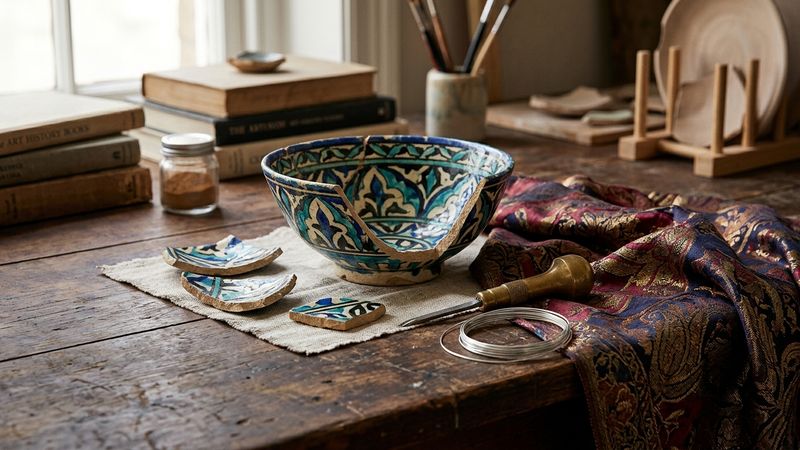
Islamic Decorative Arts: Ceramics, Metalwork, Glass and Textiles
From Kashan luster bowls to Mamluk mosque lamps and Safavid silks: a museum survey of four luxury media with named works in London, New York and Doha
Islamic decorative arts are the portable luxury crafts of Muslim-ruled lands: pottery and tile, inlaid brass, enamelled glass, woven silk and knotted carpet. This survey follows workshop conditions, techniques and trade from Abbasid Iraq to Ottoman Istanbul, with four close readings and a media comparison table, while Iznik depth, arabesque theory and building programmes sit in sibling articles on the series hub.
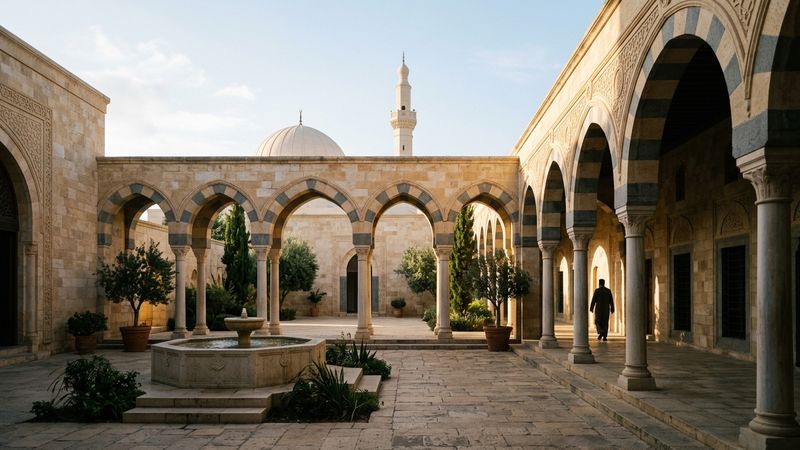
Islamic Architecture, Explained
Mosque types, domes, minarets and courtyard plans from Umayyad Jerusalem to Ottoman Istanbul, with five regional schools read through buildings you can visit
Islamic architecture is the building tradition of Muslim-ruled lands from the seventh century onward: hypostyle mosques, courtyard sahn, minaret towers and dome engineering shaped by prayer law, climate and regional craft. This guide maps Umayyad, Mamluk, Safavid, Mughal and Ottoman schools through named monuments, with muqarnas vaulting and decorative arts deferred to sibling pages in the series.
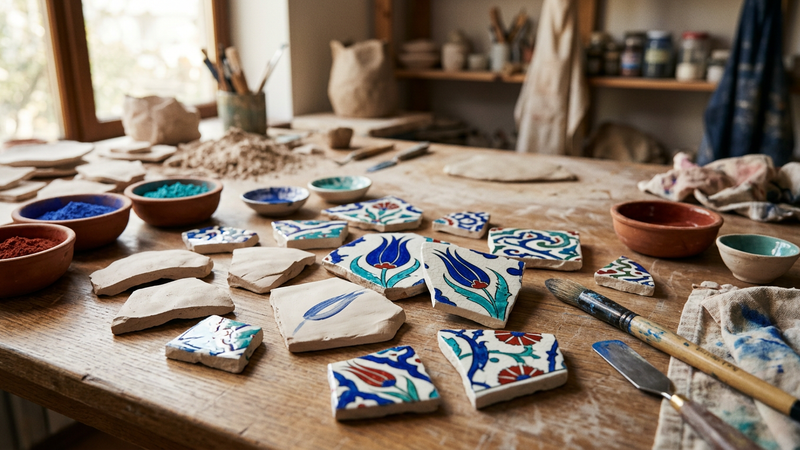
Ottoman Art and the Court Workshop
Court workshops, Iznik tiles, metalwork, textiles and imperial architecture from Bursa to Topkapı, with named museum works
Ottoman art names the luxury objects, tiles, metalwork, textiles and architectural programmes made under sultans from the fourteenth century to the early twentieth. The Ehl-i Hiref court corps and the nakkashane design office coordinated makers in Istanbul, Iznik and Bursa. This survey stays with workshop organisation and decorative media; miniature painting and manuscripts sit in sibling guides.
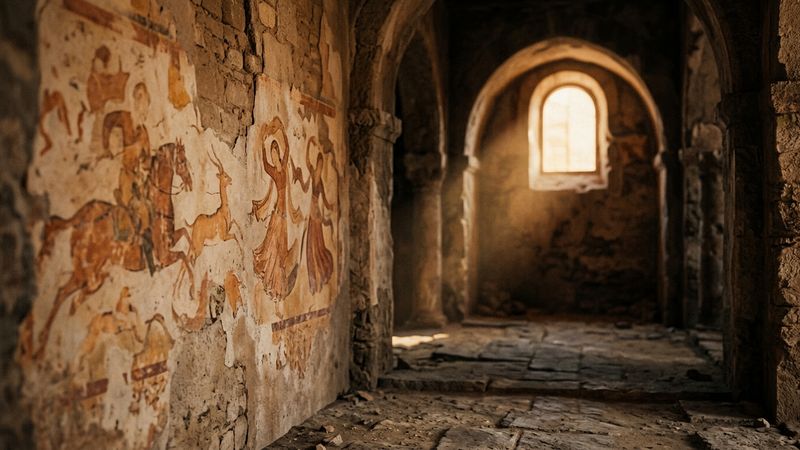
Aniconism: Why Figurative Imagery Is Rare in Islamic Art
Quranic silence, prophetic hadith, legal schools and court workshops: where figural art was avoided, tolerated, or painted at scale.
Aniconism names the avoidance of figural images in much Islamic religious art, but the history is not a single ban. This guide traces scripture, law, regional practice and museum examples from Umayyad palace painting to Persian manuscripts, without flattening a long scholarly debate into a slogan.
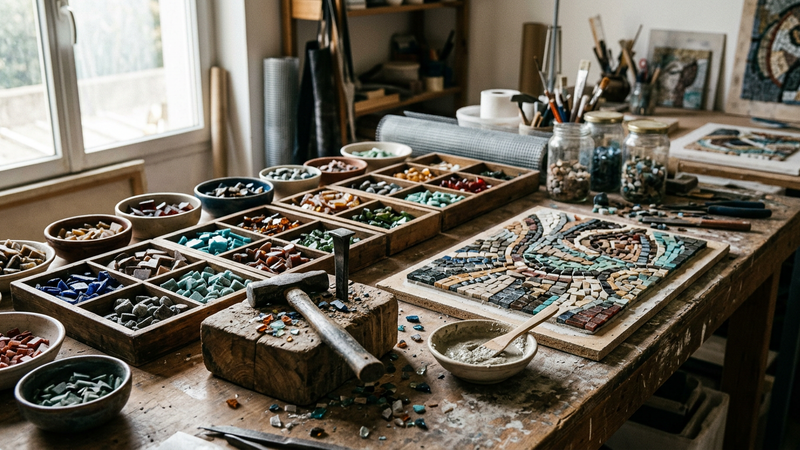
What Is Mosaic?
Tesserae, mortar, and andamento: how mosaicists build durable pictures in stone and glass, from Roman floors to Byzantine walls.
Mosaic in art is a surface built from small set pieces (tesserae) fixed in mortar or adhesive. This guide covers materials, direct and indirect methods, opus and andamento, six museum examples, failure modes, and what a serious commission costs today.
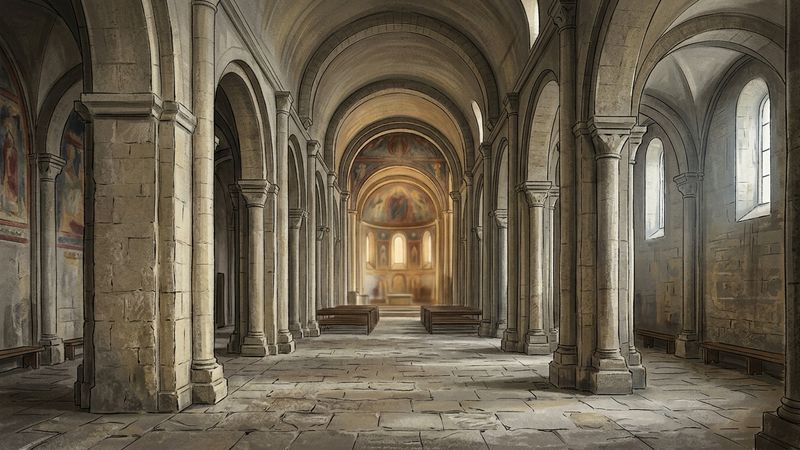
Romanesque Art and Architecture
Round arches, thick walls and carved portals: Europe’s eleventh- and twelfth-century visual language for pilgrimage churches.
From Conques to Durham, Romanesque makers vaulted stone naves, carved Last Judgments over doors and cast bronze for liturgy. This guide maps dates, traits, named workshops and key buildings, then follows critics from Bernard of Clairvaux to modern museums, while leaving the Gothic sequel to its sibling essay.