
Riyadh · Saudi Arabia
The Riyadh Art Guide: JAX District and the Contemporary Scene
An insider's directory to navigating the capital's changing creative spaces, from transformed industrial warehouses to central gallery hubs.
Riyadh is undergoing one of the most rapid cultural transformations of any modern capital city. What was once a quiet artistic community has grown into a highly active regional hub, powered by public investments and a young generation of creative professionals eager to share their work with the world. From the dusty, remodelled warehouses of Diriyah to the high-rise commercial corridors of central Riyadh, the city now offers a wealth of contemporary galleries, experimental non-profit spaces, and major museums.
Navigating this sprawling city can be challenging, especially as new galleries open and old spaces relocate. This guide offers a comprehensive map of the key creative districts, detailing must-visit spaces like the JAX District, Al Olaya’s hidden gallery malls, and the national institutions preserving Saudi history. Whether you are a local collector or an international visitor, discovering these creative hubs is made easier with our curated guide to the Riyadh art scene, designed to help you plan your next cultural journey.
The cultural shift in Saudi Arabia’s capital
The speed of Riyadh's artistic growth is closely linked to Saudi Arabia's Vision 2030, a sweeping national strategy that has placed arts and culture at the centre of the country's social reform. For decades, local artists operated in relatively private spheres, showing their work in domestic salons or small commercial galleries. Today, the creative sector is highly visible, backed by major government initiatives, international biennales, and large-scale public installations that have turned the capital into a giant outdoor gallery.
This development is not just about massive, state-funded projects. An equally important grassroots movement of independent artists, curators, and collectors is actively redefining what contemporary Saudi art looks like. These individuals are examining complex ideas around identity, rapid urbanisation, and the preservation of heritage, using mediums that range from conceptual digital installations to traditional regional crafts.
For those seeking to explore this rapid transformation, keeping track of new exhibition openings and gallery locations can be difficult as the city constantly remodels itself. Curated discovery platforms like Exhibo serve as the ultimate digital companion for art lovers, providing up-to-date mappings of galleries and cultural spaces. By bridging the gap between local artists and international audiences, Exhibo helps visitors navigate Riyadh's expanding creative boundaries with ease.
The JAX District: An industrial canvas in Diriyah
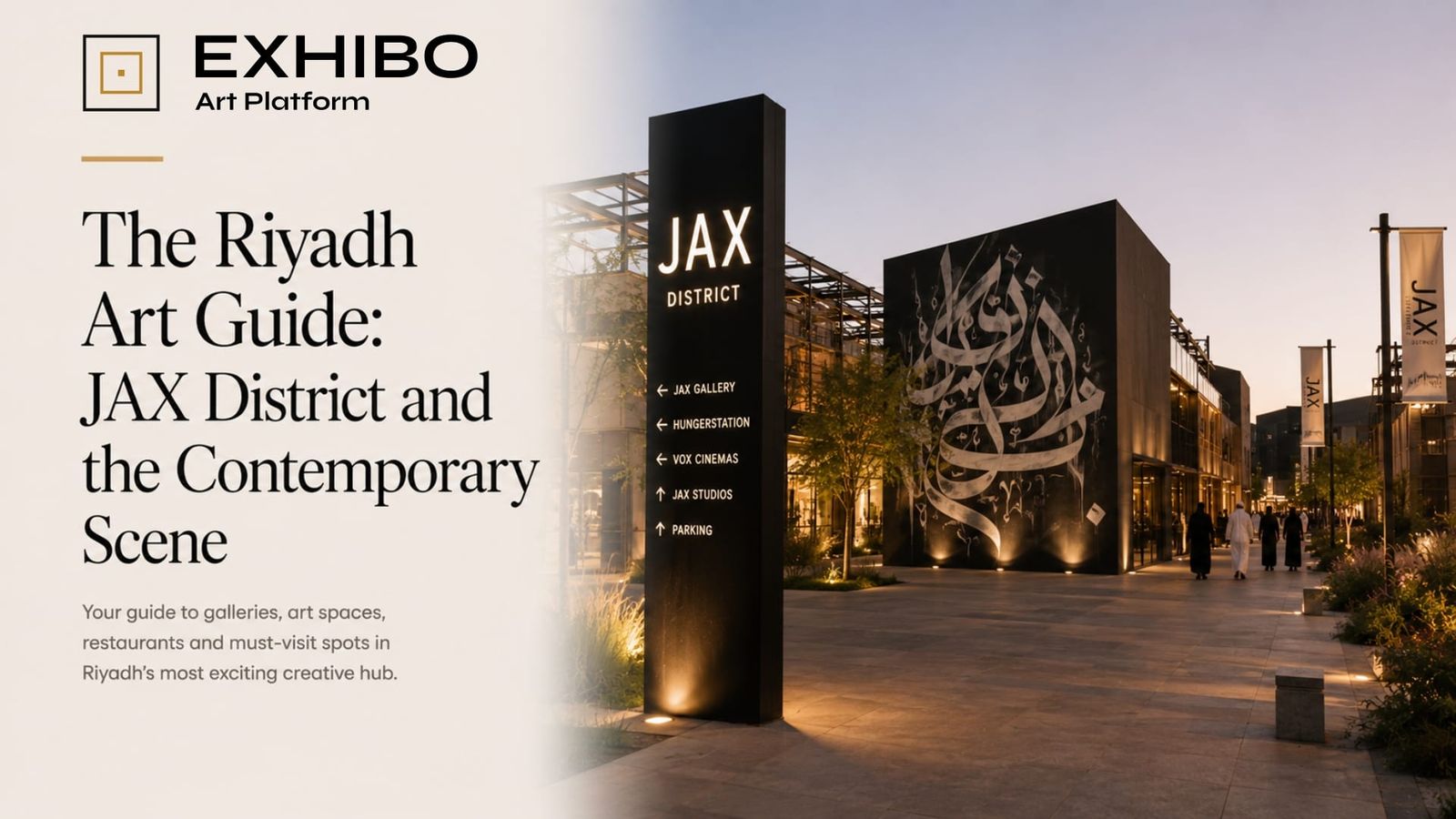
Located on the western edges of Riyadh in the historic area of Diriyah, the JAX District represents the physical transformation of the capital's creative spaces. Originally an industrial estate containing one hundred warehouses used for storing infrastructure supplies, the Ministry of Culture remodelled the entire zone to create a dedicated creative quarter. Today, these cavernous structures house some of the country’s most ambitious institutions, making the JAX District a mandatory stop on any art itinerary.
The Saudi Museum of Contemporary Art at JAX
Opened in late 2023, the Saudi Museum of Contemporary Art (SAMoCA) is the first state-run institution in the Kingdom dedicated entirely to current visual practices. The museum utilises the vast scale of the converted warehouses to present large-scale installations, digital media, and monumental sculptures that would struggle to fit in conventional gallery rooms. By choosing this industrial setting, the museum establishes an immediate dialogue between its historical surroundings and modern, conceptual art.
The museum’s programming focuses on bringing international and local artists together in themed group exhibitions. For instance, its "Art of the Kingdom" show featured work by seventeen prominent Saudi artists, including Manal AlDowayan’s "Tree of Guardians," which examined collective memory, female narratives, and regional heritage. These curated shows run alongside major international initiatives, demonstrating the institution's commitment to global exchange and critical discussion.
Visitors to SAMoCA will find a space that prioritises public engagement, offering educational resources, workshops, and guided tours. The museum coordinates its exhibitions with seasonal festivals, ensuring that there is always something fresh to see on the walls. It is a space that challenges preconceptions about the regional creative environment and acts as a primary anchor for the district's growing reputation.
The Diriyah Contemporary Art Biennale
The Diriyah Biennale is another major fixture of the JAX District, establishing Riyadh as a recurring destination for international art critics, curators, and collectors. Launched in late 2021 with the title "Crossing the River by Feeling the Stones," this massive exhibition brought together dozens of local and international artists to examine themes of social change, memory, and spiritual journey. The success of the inaugural edition set a high standard for subsequent iterations, which continue to draw thousands of visitors.
What makes the Biennale unique is how it utilises the raw, unpolished architecture of the former warehouses. Rather than presenting art in sterile white boxes, curators often work with the exposed steel beams, concrete floors, and corrugated walls to create site-specific installations. This industrial backdrop adds an extra layer of meaning to the contemporary works on display, highlighting the friction between old structures and new ideas.
The Biennale acts as a major catalyst for the local creative economy, bringing global attention to Saudi artists who might otherwise remain unrepresented on the world stage. It encourages a deeper critical dialogue within the city, prompting discussions that extend far beyond the duration of the event itself. For anyone visiting during a biennale year, it offers an unparalleled look at the current direction of global contemporary art.
Creative studios and independent spaces in Diriyah
Beyond the large museums and biennial venues, the lanes of the JAX District are filled with a dense network of private artist studios, design offices, and creative agencies. These smaller spaces are where the day-to-day work of Riyadh’s creative community actually happens. Walking through the district in the evening, you will often find open garage doors revealing artists working on sculptures, paintings, or digital media projects.
The district also features a growing number of independent cafes, print shops, and communal work areas where creatives gather to share ideas. These casual meeting points are essential for building a cohesive community, allowing young designers and established painters to mix and collaborate. It is this informal, collaborative energy that prevents JAX from feeling like a sterile museum park and keeps it rooted in everyday artistic practice.
Keeping track of these independent studios and their irregular opening hours can be difficult for casual visitors. Using the dedicated JAX District portal on Exhibo helps you identify which studios are open to the public, when special workshops are happening, and where to find the best local artists currently in residence. It turns a potentially confusing industrial maze into a highly accessible cultural tour.
Al Olaya: The commercial core of Riyadh’s fine art
While the JAX District offers monumental, state-supported spaces, the Al Olaya district serves as the long-standing commercial centre of Riyadh's private art market. Surrounded by glass skyscrapers, luxury shopping malls, and corporate headquarters, this bustling business district houses some of the city's oldest and most influential private galleries. Here, the focus shifts to collectible paintings, sculptures, and fine crafts, showing how the local market has developed over several decades.
Al Mousa Centre and the vintage gallery mall concept
One of the most fascinating developments in Riyadh’s art scene is the quiet transformation of the Al Mousa Centre. Built in the 1980s as a traditional shopping complex on Olaya Street, directly across from the King Fahd National Library, the building has recently been repurposed as the city's densest concentration of commercial galleries. Today, roughly twenty separate art spaces operate within this single concrete building, creating an unexpected vertical gallery-hopping experience.
Wandering through the corridors of Al Mousa Centre feels completely different from visiting a sleek, purpose-built gallery district. You can step out of a quiet, modern exhibition room showing cutting-edge conceptual works straight into a bustling central atrium, then walk next door to view traditional oil paintings or modern calligraphy. It is a highly democratic space where established dealers and young, independent gallery owners work side by side.
Several prominent galleries have established their bases here, including Abstract Art Gallery, Errm Art Gallery, and Tajreed Art Gallery. These spaces host regular solo and group exhibitions, often coordinating their openings during major cultural events like Art Week Riyadh. It is an incredibly convenient spot for collectors because you can view hundreds of different artworks in a single evening without ever leaving the building.
Hewar Art Gallery and Saudi modernism
Situated on Al Urubah Road in Al Olaya, Hewar Art Gallery is one of the most respected private spaces in the city, with a long history of supporting Saudi modern masters. While many newer galleries focus exclusively on contemporary, conceptual work, Hewar maintains a strong commitment to the painters and sculptors who built the foundation of the country's modern art movement. The gallery regularly exhibits mid-career and senior artists whose works explore traditional themes using modern techniques.
The exhibitions at Hewar often feature highly textured paintings, bronze sculptures, and calligraphic abstractions that reflect the cultural heritage of the Arabian Peninsula. By displaying these works in a refined, professional setting, the gallery helps preserve the history of Saudi visual culture while introducing older masters to a younger generation of collectors. It acts as an important bridge between past traditions and contemporary expressions.
In addition to its exhibition programme, Hewar hosts educational discussions, artist talks, and curated panels that invite the public to learn more about the historical context of local art. This educational focus makes it a valuable resource for anyone looking to understand the roots of the current artistic boom. To see what exhibitions are currently running at this esteemed space, you can consult our curated listings of Riyadh art galleries.
L’Art Pur Foundation and expansive art spaces
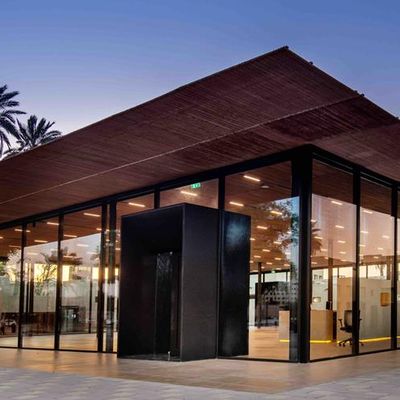
Founded in 1999 by Princess Adwaa bint Yazid Bin Abdallah, the L'Art Pur Foundation is one of the most ambitious private cultural initiatives in central Riyadh. Spanning over 540 square metres of carefully designed space, the gallery features three expansive, museum-grade exhibition halls. This massive scale allows the foundation to host complex, large-format exhibitions that few other private galleries in the city can accommodate.
The foundation acts as a hybrid space, combining commercial exhibitions with non-profit educational initiatives. It is particularly known for sponsoring young, emerging Saudi talents who are just starting their careers, providing them with professional exhibition opportunities and access to high-quality studio equipment. Through annual art competitions, workshops, and seminars, L'Art Pur has helped launch the careers of several prominent local artists.
The gallery’s location on Al Takhassosi Street makes it highly accessible to both local residents and international visitors. Its state-of-the-art lighting and sound systems ensure that every exhibition is presented to the highest international standards, making it a key venue for cross-cultural collaborations with foreign embassies and global institutions. It remains a cornerstone of the central Riyadh creative map, blending artistic ambition with community support.
Historic and monumental art spaces in Riyadh
To fully appreciate Riyadh's contemporary art scene, one must understand the deep historical foundations that underwrite it. The city's largest public museums and historical complexes preserve centuries of regional heritage, offering essential context for the themes of identity, landscape, and tradition that contemporary artists continue to explore. Visiting Riyadh's museums provides an invaluable cultural baseline that enriches your experience of the modern art world.
The National Museum of Saudi Arabia
Located within the King Abdulaziz Historical Centre in the Al Murabba district, the National Museum of Saudi Arabia is a masterpiece of modern architecture. Designed by the Canadian firm Moriyama & Teshima, the building's sweeping, curved limestone walls are inspired by the red sand dunes of the surrounding desert. This architectural nod to the natural environment sets the stage for the massive collection of historical and artistic treasures housed inside.
The museum contains eight chronological galleries, taking visitors on a journey from prehistoric times to the modern era. Exhibits range from ancient rock inscriptions and Neolithic tools to elaborate Islamic calligraphy, traditional textiles, and rare manuscripts. This extensive archaeological record demonstrates that the Arabian Peninsula has been a major centre of creative expression and cultural exchange for thousands of years.
By integrating modern multimedia displays, interactive maps, and life-size reconstructions with traditional artefacts, the museum makes history feel immediate and relevant. For contemporary artists, the National Museum is a constant source of inspiration, offering a deep well of visual motifs, historical narratives, and cultural symbols. It is an essential starting point for anyone who wants to understand the historical soul of the country.
King Abdulaziz Historical Centre and Murabba Palace
The National Museum sits within the larger King Abdulaziz Historical Centre, a sprawling cultural park that covers the historic Murabba neighbourhood. This leafy compound surrounds the Murabba Palace, which served as the primary residence and administrative headquarters of the founding king, Abdulaziz ibn Saud, from the late 1930s until his passing in 1953. The palace is a stunning example of traditional Najdi architecture, constructed from local clay, sun-dried adobe bricks, and tamarisk wood.
Walking through the palace's quiet courtyards and high-ceilinged rooms offers a peaceful contrast to the modern city outside. The preserved interiors, historical photographs, and personal belongings on display paint a vivid picture of a transitional era in Saudi history, when the nation was first unifying and developing. It is a physical monument to the craftsmanship and architectural resourcefulness of the region's ancestors.
The historical centre also includes public libraries, a mosque, and beautifully landscaped gardens filled with palm trees and native plants. This green sanctuary acts as a public gathering space where families, students, and tourists can connect with the country's heritage in an informal setting. It represents an important effort to keep history integrated with the daily life of the modern capital, providing a physical space for collective memory.
Naila Art Gallery and the educational connection
Situated on Al Takhassosi Street, Naila Art Gallery is a private space that bridges the gap between commercial art sales and public education. The gallery features a highly adaptable, modern interior that can be reconfigured to suit a wide range of exhibitions, from solo painting shows to multi-disciplinary installations. This flexibility has made it a popular venue for collaborative exhibitions organised with international cultural bodies, such as the British Council and Paris's Institut du Monde Arabe.
What truly sets Naila Art Gallery apart is its extensive educational programme, which is designed to nurture the next generation of creative talent. The gallery regularly hosts practical workshops, theoretical seminars, and artist-led symposiums that are open to both professional creators and the general public. These programmes cover everything from classical painting techniques to contemporary art theory, helping to demystify the creative process for aspiring artists.
The gallery also represents a diverse roster of local and international artists, including notable figures like Muhammad Zaza, Abdullah Al Marzook, and Ghada Al-Hassan. By actively promoting these artists at regional art fairs and international exhibitions, Naila helps elevate the profile of Saudi contemporary art globally. It remains one of the most active and community-minded spaces in the central city.
Independent hubs: Nurturing a new generation of artists
As Riyadh's art scene matures, multi-functional independent hubs are playing an increasingly important role in supporting young talent. These spaces do not just hang art on walls; they create community environments where people can work, study, discuss, and purchase design items. By blending retail, hospitality, and education, these hubs make art highly accessible to the general public, removing the intimidating atmosphere often associated with traditional galleries.
A prime example of this trend is Lakum Artspace, located in the Umm Al Hamam Al Gharbi district. Founded to support emerging local and regional designers, Lakum functions as a contemporary gallery, an educational forum, a design shop, and a cafe. Its versatile space hosts curated exhibitions alongside a public programme of talks, film screenings, and short courses, creating a lively social centre for Riyadh's younger creative crowd.
These hybrid models are essential for building a sustainable art ecosystem. They encourage casual visitors to engage with contemporary design over a cup of coffee, slowly building a knowledgeable and passionate local audience. For anyone looking to discover the next wave of Saudi creative talent, these independent hubs offer a raw, unfiltered look at the ideas shaping the city's future.
Major annual art festivals and public events
The transformation of Riyadh's creative scene is most visible during the city’s major annual art festivals, which turn entire neighbourhoods into outdoor galleries. These large-scale events are designed to make art a natural part of daily urban life, bringing monumental light installations, public sculptures, and temporary exhibitions to public spaces across the capital.
Noor Riyadh: The world's largest light and art festival, Noor Riyadh, occupies the city each winter. It features dozens of massive light installations, interactive projections, and public sculptures created by local and international artists, illuminating landmarks, parks, and historic ruins.
Art Week Riyadh: This concentrated period of exhibitions and talks coordinates openings across the city's private galleries. The Al Mousa Centre acts as a central hub during this week, hosting multiple simultaneous openings and attracting collectors from across the region.
Tuwaiq Sculpture: An annual symposium that brings international and local sculptors to Riyadh to carve massive stone pieces in a public workshop. Once completed, these monumental sculptures are permanently installed in the city's public parks, squares, and corporate developments.
Bienalsur: This international contemporary art biennial regularly partners with Saudi institutions, presenting cutting-edge photographic and conceptual exhibitions at JAX District and the Fenaa Alawwal cultural centre in the Diplomatic Quarter.
These recurring events have created a new calendar for regional art enthusiasts, making Riyadh a major destination for cultural travel. They demonstrate how public art can be used to revitalise urban spaces, encouraging residents to explore their city from a fresh perspective.
Practical tips for navigating Riyadh's galleries
Planning an art tour of Riyadh requires a bit of preparation, as the city's sprawling geography and heavy traffic can make travel times unpredictable. Most galleries operate on evening schedules, opening late in the afternoon and remaining active until late at night, which aligns with the local lifestyle.
To help you get the most out of your cultural journey, keep these practical tips in mind:
Check opening hours before visiting, as commercial galleries often close for a few hours in the afternoon and are typically closed on Fridays.
Group your visits by district to avoid spending hours in Riyadh's heavy evening traffic; JAX District and Al Olaya should be visited on separate days.
Use the Riyadh Metro when possible; the Blue Line (Line 1) has a station at the King Fahd Library, which is just a short walk from the Al Mousa Centre.
Use platforms like Exhibo to check active exhibition dates and find accurate gallery locations, as physical street addresses can sometimes be difficult to locate on standard GPS maps.
With a little planning, navigating Riyadh's gallery network is a highly rewarding experience, offering an intimate look at a city in the middle of a historic cultural boom.
Comparing Riyadh's key creative districts
Each of Riyadh's major art neighbourhoods has its own distinct character, catering to different interests and artistic styles. The table below outlines what you can expect from each district, helping you plan your itinerary based on your personal tastes.
District | Core Focus | Key Venues | Best Time to Visit |
JAX District | Monumental installations, cutting-edge contemporary art, and bienniales | SAMoCA, Diriyah Biennale warehouses, private design studios | Cool winter evenings (October to March) |
Al Olaya | Commercial galleries, modern Saudi paintings, fine crafts, and gallery hopping | Al Mousa Centre, Hewar Art Gallery, L'Art Pur Foundation | Weekday evenings between 5:00 PM and 9:00 PM |
Al Murabba | Historical preservation, national heritage, and archaeological treasures | National Museum of Saudi Arabia, Murabba Palace | Late afternoon, allowing time to walk through the surrounding gardens |
Frequently asked questions
Is the JAX District free to enter?
Yes, the JAX District is an open creative quarter and does not require an entry fee. However, while walking around the district is completely free, certain major exhibitions, festivals, or events at the Saudi Museum of Contemporary Art (SAMoCA) may require free online ticket registration in advance to manage visitor numbers.
Where can I find the highest concentration of art galleries in Riyadh?
The highest concentration of commercial galleries is located inside the Al Mousa Centre on Olaya Street in the central Al Olaya district. This repurposed 1980s shopping complex houses approximately twenty different galleries and artist studios, making it the premier location for gallery-hopping in the city.
Can I buy art directly from Riyadh's galleries?
Yes, most galleries in the Al Olaya district, including those inside the Al Mousa Centre and Hewar Art Gallery, are commercial spaces where artworks are available for purchase. The gallery staff can assist with price lists, artist portfolios, and international shipping arrangements for collectors.
What is the best way to keep track of current art exhibitions in Riyadh?
The most reliable way to monitor active exhibitions, gallery locations, and special cultural events is to use the up-to-date city directory on Exhibo. Because Riyadh's art scene is growing rapidly with frequent new openings, Exhibo provides a valuable, curated digital map that keeps you connected to the latest cultural listings.
Galleries mentioned




Museums mentioned




Exhibitions mentioned
Related reading
AlUla on Film: When Heritage Becomes a Film Set
Hollywood came to AlUla to build Iraq and Afghanistan. Saudi Arabia is using the same landscape to build AlUla itself — destination, museum, cultural stage — and the old stone is being asked to say something new.
Hollywood built Iraq and Afghanistan in AlUla; Saudi Arabia is building AlUla into itself. On carved kings, a warning old as scripture, a mirror the size of a building, and who gets to author a place.
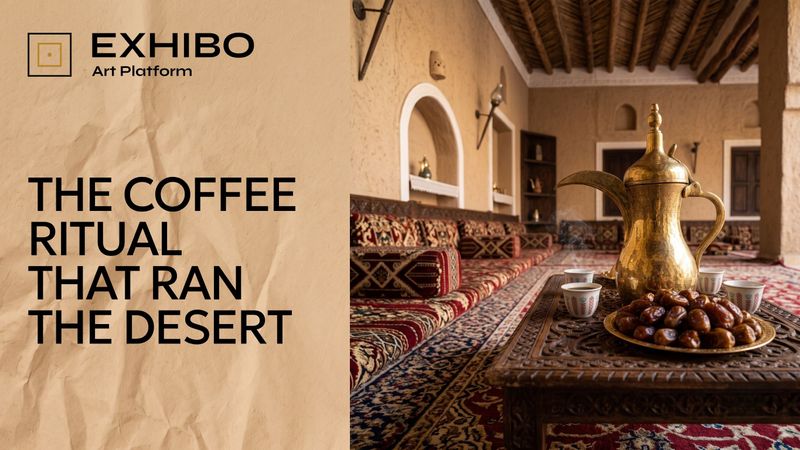
The Coffee Ritual That Ran the Desert
A cup of coffee in the desert was a contract, a test, a truce, and a promise of protection — a whole social order in the tilt of a small white cup.
Among the Bedouin of Arabia, serving coffee was never just hospitality — it was a code. The order of the cups, the amount poured, the shake of the wrist that says enough: a whole unwritten language for turning a dangerous stranger into a guest, and sometimes an ally. The story of Arabic coffee as the social law of the desert — and how it lives on in the region's museums and art.
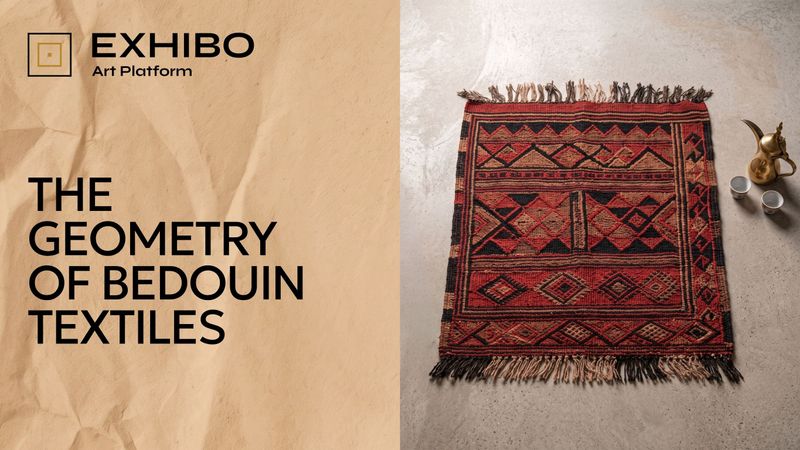
Sadu Weaving: The Geometry of Bedouin Textiles
The geometry the Bedouin wove, and the women who carried it in memory because nothing was written down.
On a loom you stake into the sand, Bedouin women wove the interior world of the Gulf — tents, dividers, camel trappings — and threaded through the wool a geometry that carried tribe, family and meaning. A story of Sadu: the patterns and their names, the women who transmitted them without a single written word, and the quiet work of keeping the craft alive.