Iran

Cities

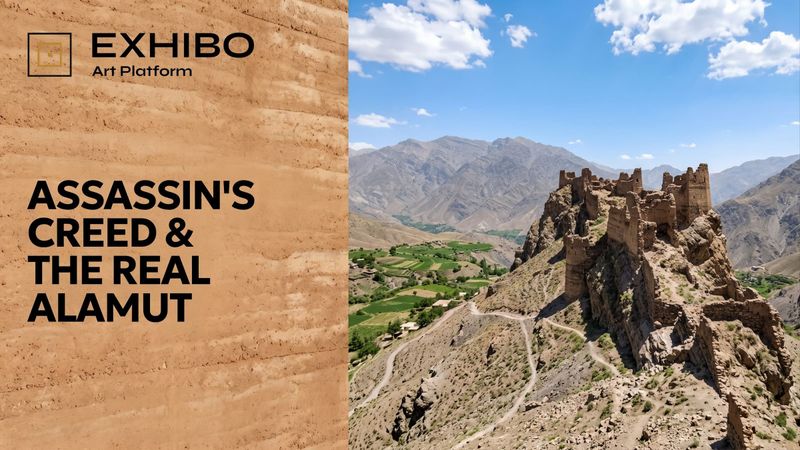
The ruined mountain fortress of Alamut on a narrow rock spur in the Alborz mountains of northern Iran, its broken walls rising above a green valley under a clear sky.
Editorial

Assassin's Creed and the Real Alamut

The world's most widely played version of the Assassins inherits a story that passed through a chain of tellers eight hundred years long — Muslim polemicists, Crusaders, Marco Polo, a Slovenian novelist, Ubisoft — not one of whom spoke from inside the community it described.

Ubisoft's motto "Nothing is true, everything is permitted" comes from a 1938 novel, drawing on Marco Polo, drawing on slander. The real Alamut was no garden of hashish but a puritan fortress where the flute was banned — and most of its own account was lost in Mongol fire.
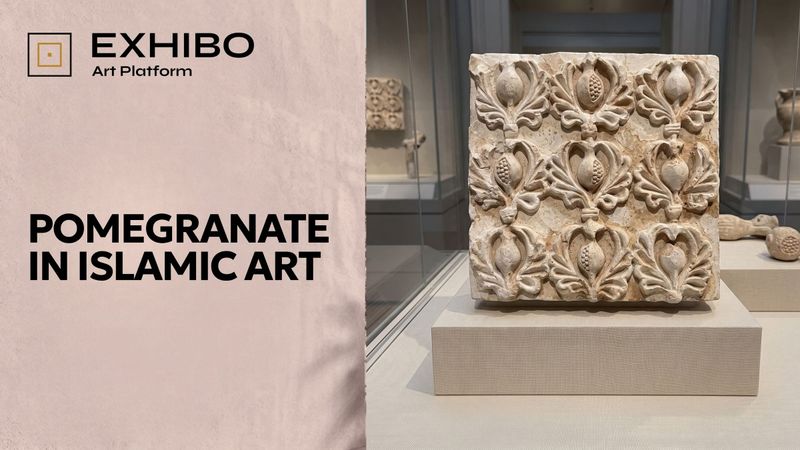
Sixth-century Sasanian moulded stucco panel showing a repeating pomegranate-in-palmette design, excavated near Ctesiphon, in the Metropolitan Museum of Art.
Editorial

The Fruit We Are Sure We Recognize

How the pomegranate became one of the most confidently named motifs in Islamic ornament — and one of the least confidently identified — across a thousand years of tile, silk and stucco, with meanings we mostly attached later.

A slab of sixth-century plaster in the Met shows a fruit you recognise at a glance: a pomegranate, and surely it means paradise. Hold that certainty up to the light and it dissolves. Across a thousand years of tile, silk and stucco, the pomegranate is the shape we name most confidently and identify least — blurring into the artichoke and the palmette, its meanings attached by later viewers, its very name partly a nineteenth-century invention

A deep cobalt-blue Ilkhanid ceramic bowl decorated with white, red, and cut gold-leaf ornament, its glaze imitating the color of lapis lazuli.
Editorial

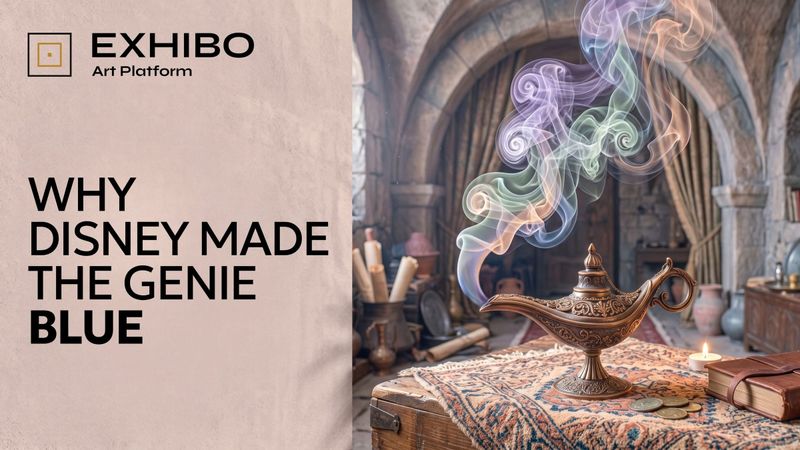
Why Disney Made the Genie Blue

The long material and colonial history behind the most recognizable blue body in popular culture.

Almost everyone remembers that Disney's genie is blue. Fewer ask why. The answer runs backward through five thousand years — Egyptian blue standing in for lapis, cobalt on a Mongol palace, the eye that guards against envy, the last color most languages learned to name, and a layout artist photographing Isfahan just before a war — to a color that was rarely, in this part of the world, quite what it claimed to be.