
Cairo · Egypt
Byzantine Treasures Unearthed at Dakhleh Oasis: Coins and Inscribed Pottery Reveal Desert Life
Egyptian excavations uncover rare gold currency and hundreds of ancient texts at the 'Ain al-Sebil settlement
New Discoveries from the Desert Frontier
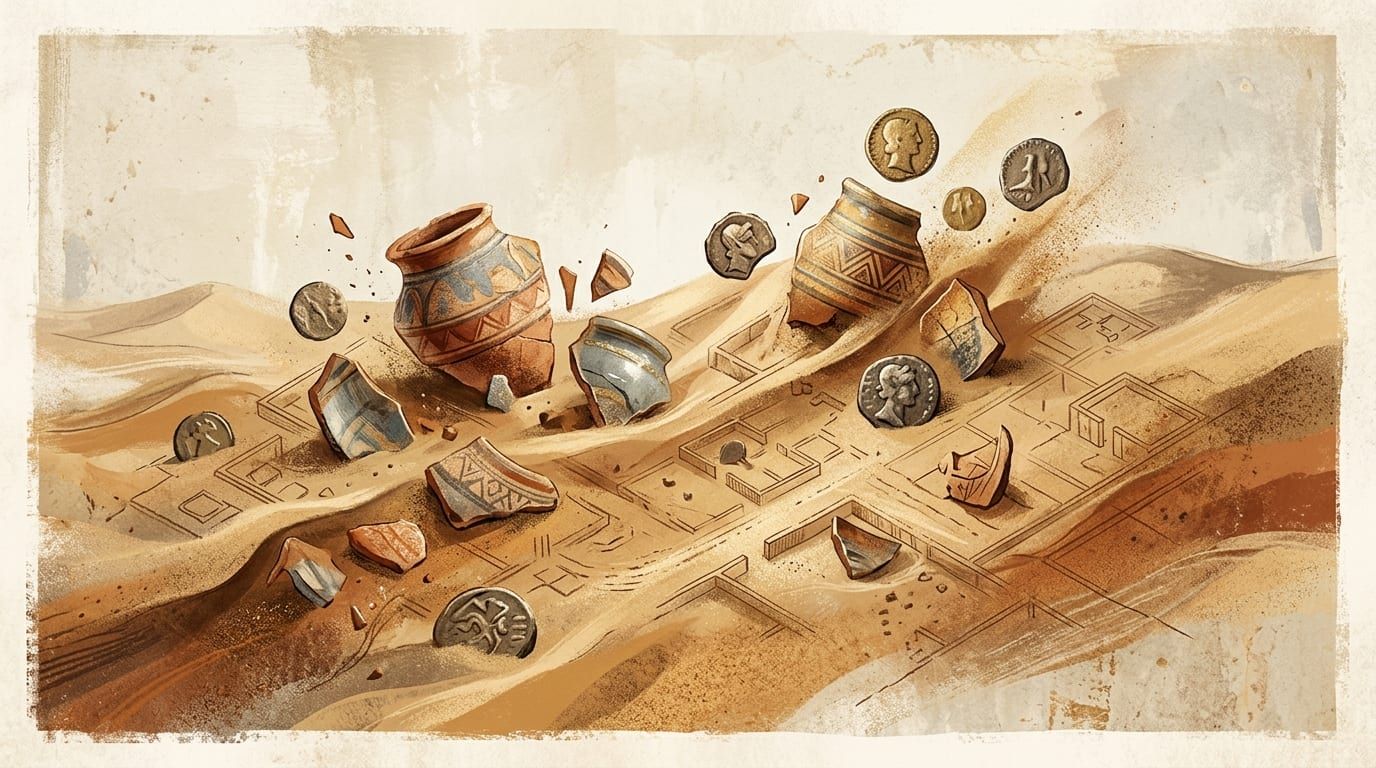
Excavations at Dakhleh Oasis, located approximately 565km south-west of Cairo, have yielded an extraordinary collection of artefacts from Egypt's Byzantine period. The archaeological team has uncovered a mud-brick settlement that provides unprecedented insight into rural life during a transformative era spanning roughly AD284 to AD641.
The site, known as 'Ain al-Sebil, has produced several hundred inscribed pottery fragments alongside bronze and gold currency. These discoveries come after more than ten years of systematic excavation by Egyptian archaeologists, whose work has been complicated by threats from expanding agricultural development across the region.
Writing on Broken Pottery
Among the most significant finds are approximately 200 ostraca—pottery shards repurposed as writing surfaces. These fragments bear Greek and Coptic inscriptions documenting commercial transactions, correspondence, personal names, and religious practices. Such evidence offers a rare glimpse into the quotidian concerns of oasis inhabitants, from property dealings to spiritual observances.
Currency and Status Questions
Bronze coins featuring imperial portraits and Christian iconography have emerged from the excavation, alongside an unusual cache of gold pieces from the reign of Constantius II (AD337-361). The presence of precious metal currency in what was clearly an agricultural community raises intriguing questions about wealth distribution and economic networks in this desert region.
"These gold coins are uncommon in Dakhleh contexts," observes Colin Hope of Monash University, who specialises in the oasis but was not directly involved in the current work. "Their discovery prompts us to consider how such wealth reached this remote settlement and whether it circulated locally."
Architectural Remains
The settlement displays evidence of planned development, including a fourth-century basilica positioned at its heart. Additional structures comprise defensive fortifications with thick walls and watchtowers, residential buildings featuring vaulted ceilings and spacious halls. One dwelling, attributed to an individual named Tabibos, may have functioned as an early Christian gathering space prior to the basilica's construction.
Domestic infrastructure remains remarkably intact, with grinding tools, cooking vessels, ovens, and perfume containers offering tangible connections to daily routines. The architectural sophistication suggests considerable investment in community infrastructure despite the challenging desert environment.
Regional Significance
These findings contribute to growing understanding of Dakhleh's importance during late antiquity. While the third century witnessed intensive occupation, fourth-century activity appears to have continued at reduced levels before Christian communities established themselves more permanently. The basilica's excellent preservation places it among the better-maintained examples from this period in the oasis.
Dakhleh Oasis has been recognised for its cultural value since 2003, appearing on UNESCO's tentative World Heritage list as part of Egypt's nomination encompassing the Southern and Smaller Oases of the Western Desert.
Galleries mentioned
Museums mentioned
Related reading
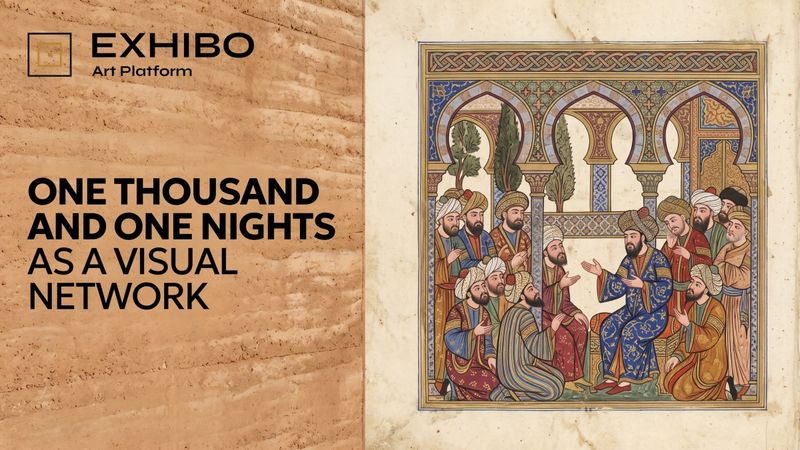
One Thousand and One Nights as a Visual Network
The book that taught Europe to picture the East arrived with no pictures at all. Three centuries of illustrators — Dutch, Egyptian, Persian, French, German, Iraqi — each gave it a face, and every face was a self-portrait.
Open Galland's Thousand and One Nights, the edition that conquered Europe, and there is nothing to look at: no genie, no lamp, not one illustration. The most visually imagined book in the world began blind — and because its text was never fixed either, no picture of it could ever be a copy.
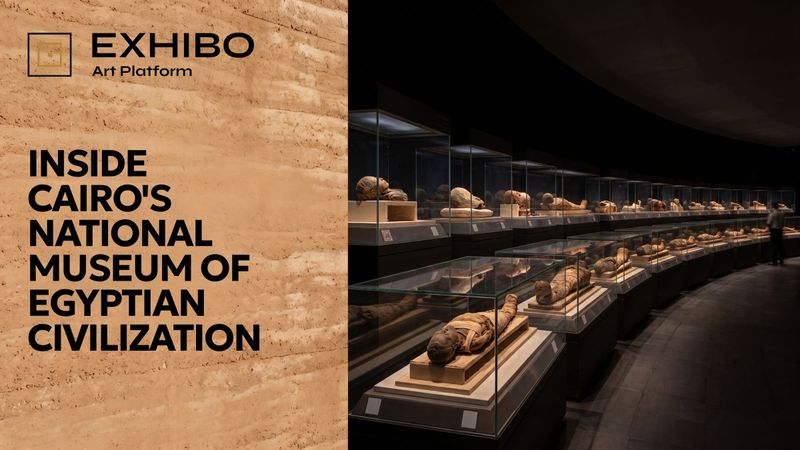
The Museum of Everything That Became a Tomb
Egypt built a museum to tell the story of an entire civilisation — seven thousand years of it, from flint tools to the present. The public knows it for one thing: the room where twenty dead kings lie in the dark.
In a black, hushed hall beneath the National Museum of Egyptian Civilization in Old Cairo lie the mummified bodies of Ramesses II, Hatshepsut, and eighteen other rulers of the New Kingdom — carried here in 2021 in a televised parade watched around the world.
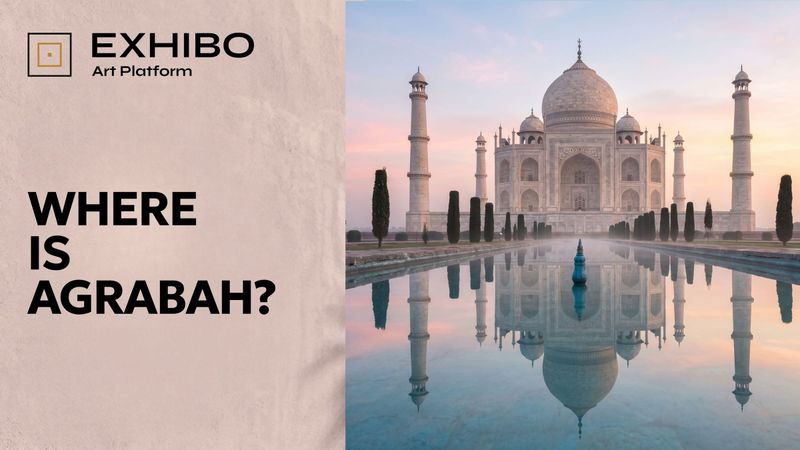
Where Is Agrabah? The City Disney Assembled From Real Places
Agrabah was going to be Baghdad. A war made it fictional — and then Disney built it back out of real places, from a tomb in Agra to a valley in Jordan that usually plays Mars.
The Sultan's palace where Princess Jasmine feels trapped has the silhouette of the Taj Mahal — which is not a palace at all, but a tomb. That is how Agrabah works. Disney's fairy-tale city was going to be Baghdad, until the Gulf War made the name impossible; the studio invented a place that could not be found on a map, then quietly rebuilt it out of real ones — Isfahan and Agra, Marrakesh and Mandalay, a Jordanian desert that has played both Arabia and Mars.