
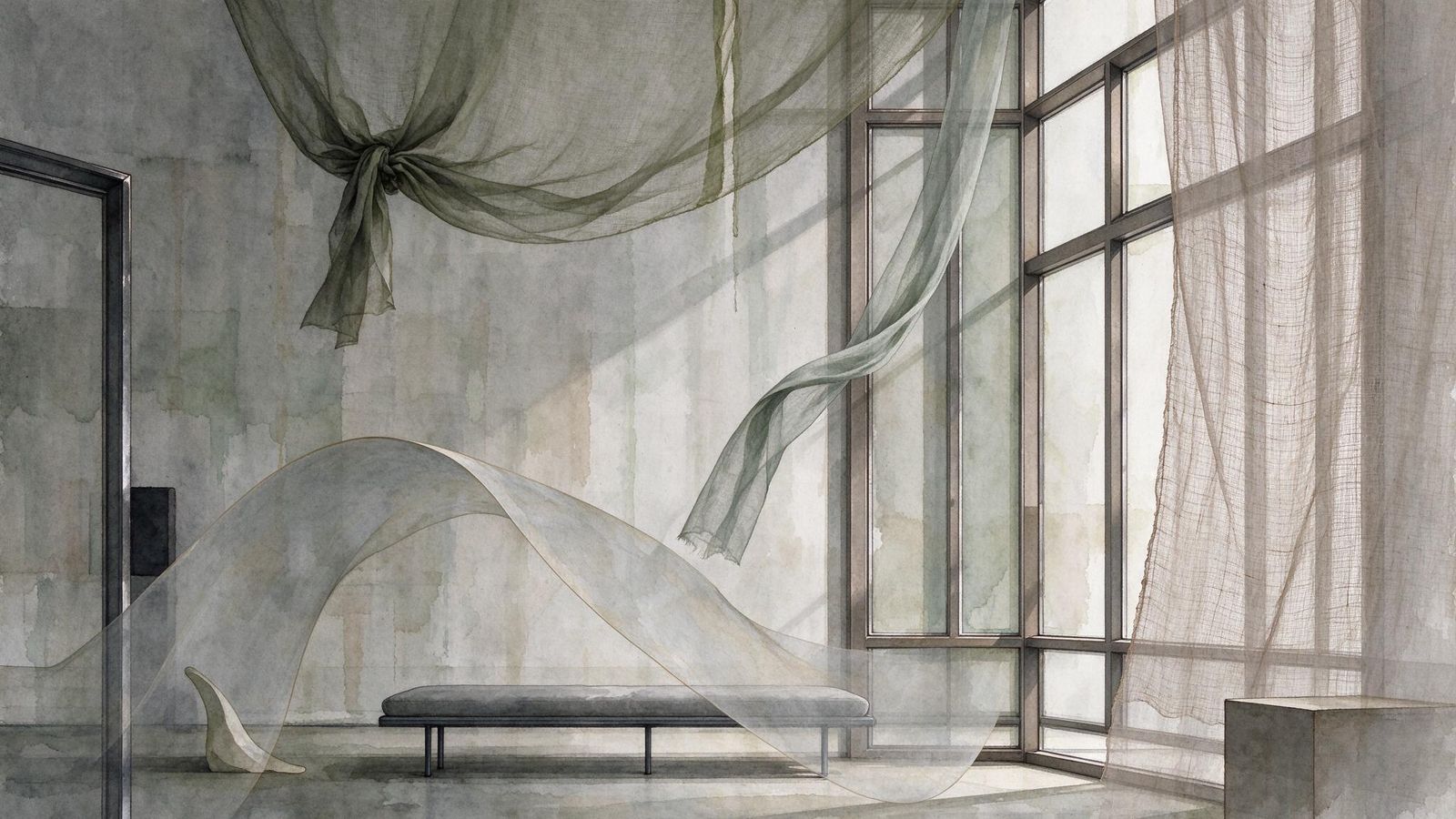
Venice · Italy
Fermata: Hong Kong in Venice
Exploring urban rhythms and forgotten details at the 61st Venice Biennale
A Musical Rest Between Metropolises
Running from 9 May to 22 November 2026, Fermata: Hong Kong in Venice operates as a collateral presentation alongside the sixty-first iteration of the Venice Biennale. Organised by the Leisure and Cultural Services Department and the Hong Kong Arts Development Council, with curation led by the Hong Kong Museum of Art, the project positions two artists against a backdrop of global contemporary discourse. Rather than offering sweeping historical surveys, the show concentrates on minute observations drawn from urban existence. The selection deliberately avoids grand narratives, instead favouring intimate investigations into how residents navigate shifting landscapes.
Echoes of the Everyday
The presentation engages directly with the biennial's overarching framework, In Minor Keys, conceived by Koyo Kouoh prior to her passing. Both featured practitioners investigate the subtle markers of routine activity that typically slip past public awareness. By mapping the parallel movements of Hong Kong and Venice, the works suggest a common tempo beneath seemingly unrelated coastal environments. This conceptual alignment encourages viewers to reconsider how familiar surroundings shape perception over time. The curatorial approach treats the city itself as an archival medium, where weathering facades and improvised domestic arrangements serve as primary sources.
Sculpting Silence and Shadow
Kingsley Ng contributes three bespoke arrangements that elevate domestic and municipal habits into contemplative moments. His piece Laundry Nocturne emerged after observing suspended garments across Venetian courtyards, a visual motif that triggered recollections of former Hong Kong residential architecture. Previously, bamboo racks draped with washing defined countless neighbourhoods before modernisation altered the skyline. Within the exhibition space, a solitary projection casts darkened silhouettes of hanging textiles, while a radio broadcast delivers an auditory thread linking the two locations. The composition functions as a quiet archive of disappearing infrastructure, relying on ambient sound rather than explicit commentary to convey temporal displacement.
Adjacent to these projections, Angel Hui constructs a scenario that directs scrutiny toward discarded or ignored materials. Her contribution, titled I Would Like to Open a Window for You, features a manually forged metal frame produced alongside veteran craftspeople specialising in traditional joinery techniques. By elevating functional hardware into a sculptural focal point, she prompts audiences to acknowledge the hidden labour embedded within ordinary structures. The arrangement balances theatrical staging with meditative observation, reinforcing her interest in repurposing mundane items through experimental fabrication methods. Both practitioners share a commitment to material honesty, allowing wear and manufacturing marks to dictate the final aesthetic outcome.
Institutional Context and Curatorial Vision
Dr Maria Mok, director of the hosting museum, frames the initiative as an exploration of atmospheric continuity between port cities. She emphasises how lighting conditions and acoustic pauses create invisible bonds across geography. The title itself references a notation used in classical scores to indicate a temporary suspension of rhythmic progression. Much like that musical device, the spatial layout asks participants to interrupt their usual pace, allowing peripheral details to surface. Joint production support ensures the project maintains rigorous academic standards while remaining accessible to international visitors navigating the crowded spring season. Ultimately, the presentation functions less as a retrospective survey and more as a methodological exercise in attentive looking.
Galleries mentioned
Museums mentioned
Related reading

A Defiant Stance on Global Participation at the Venice Biennale
Pietrangelo Buttafuoco justifies Russian inclusion amid sanctions and political backlash
Digital Horizons at the Venice Biennale's Collateral Shows
How independent pavilions are redefining technology-driven practice beyond the main competition
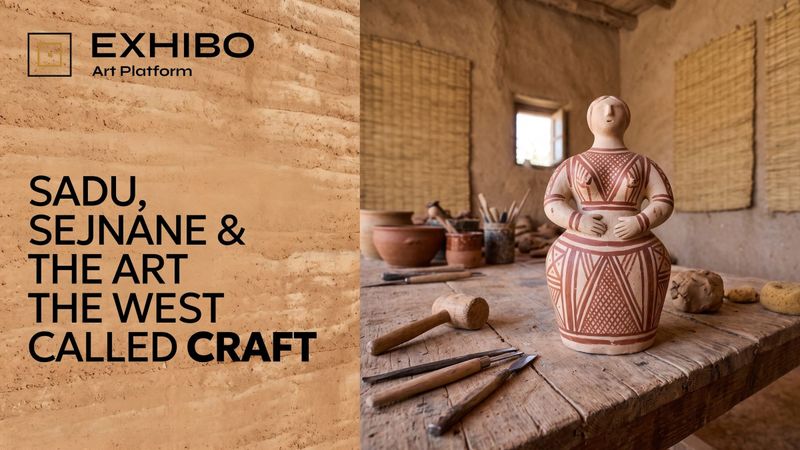
Women Makers: Sadu, Sejnane and the Art the West Called Craft
How the women of Sejnane and the Sadu tents made a world of geometric art the museum system had no shelf for — and how it is finally being called by its name.