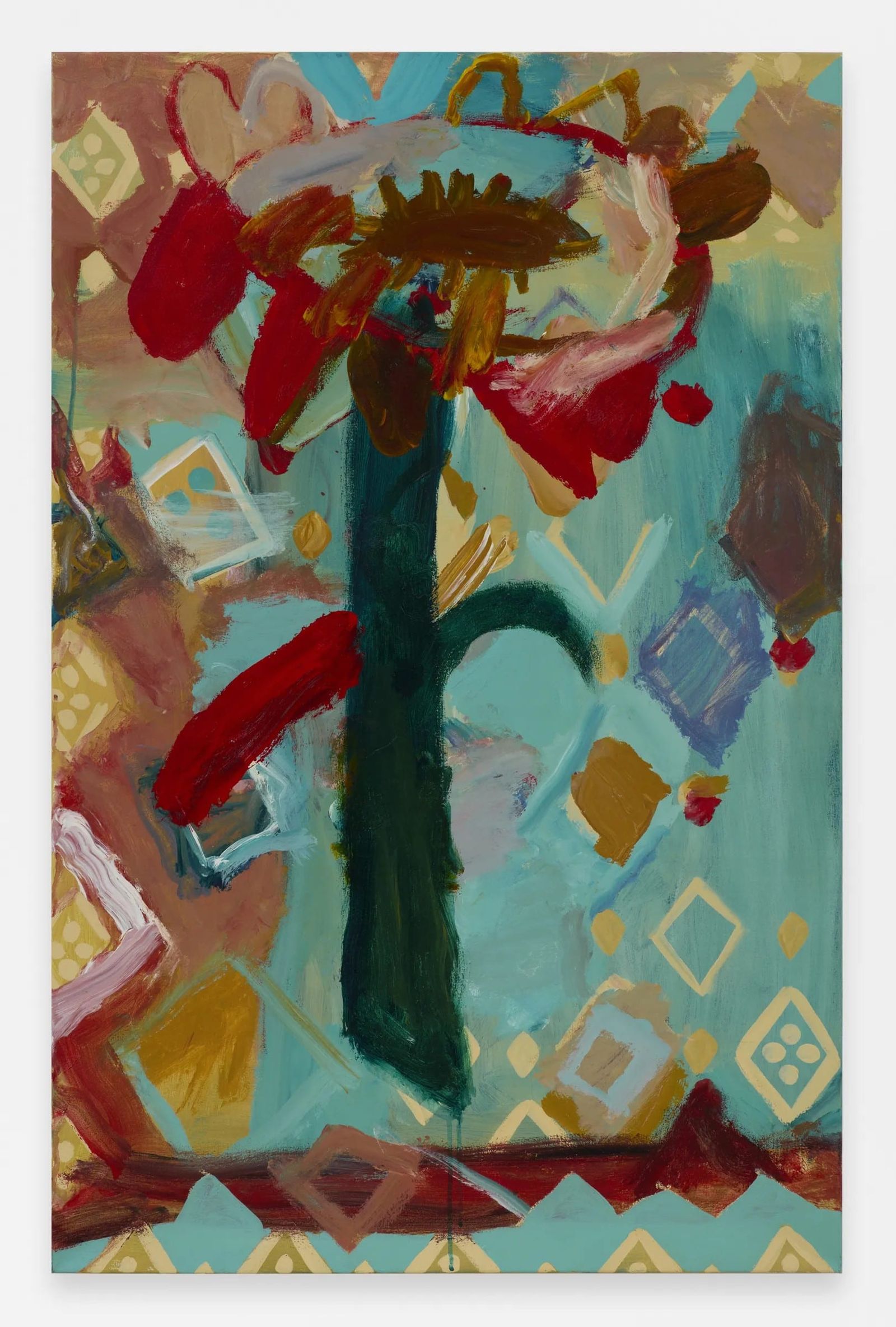
Fragments
Price on request
111.8 cm × 71.1 cm
Presented by
Anton Kern GalleryTags
About the work
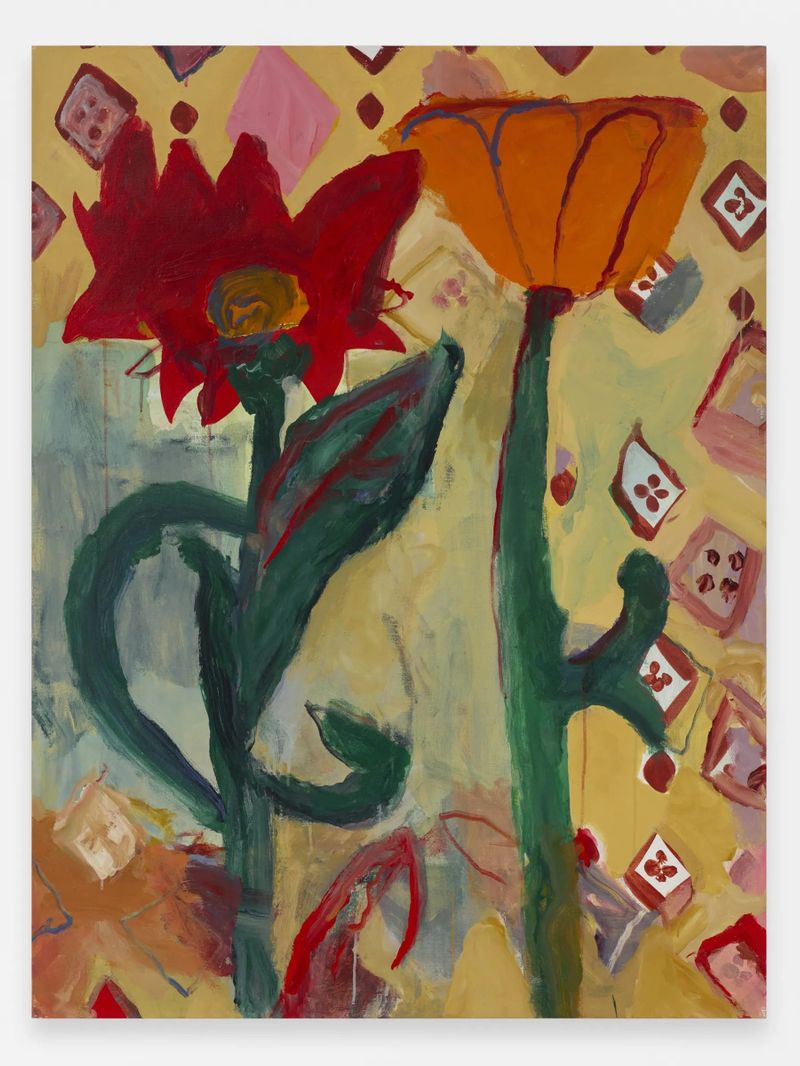
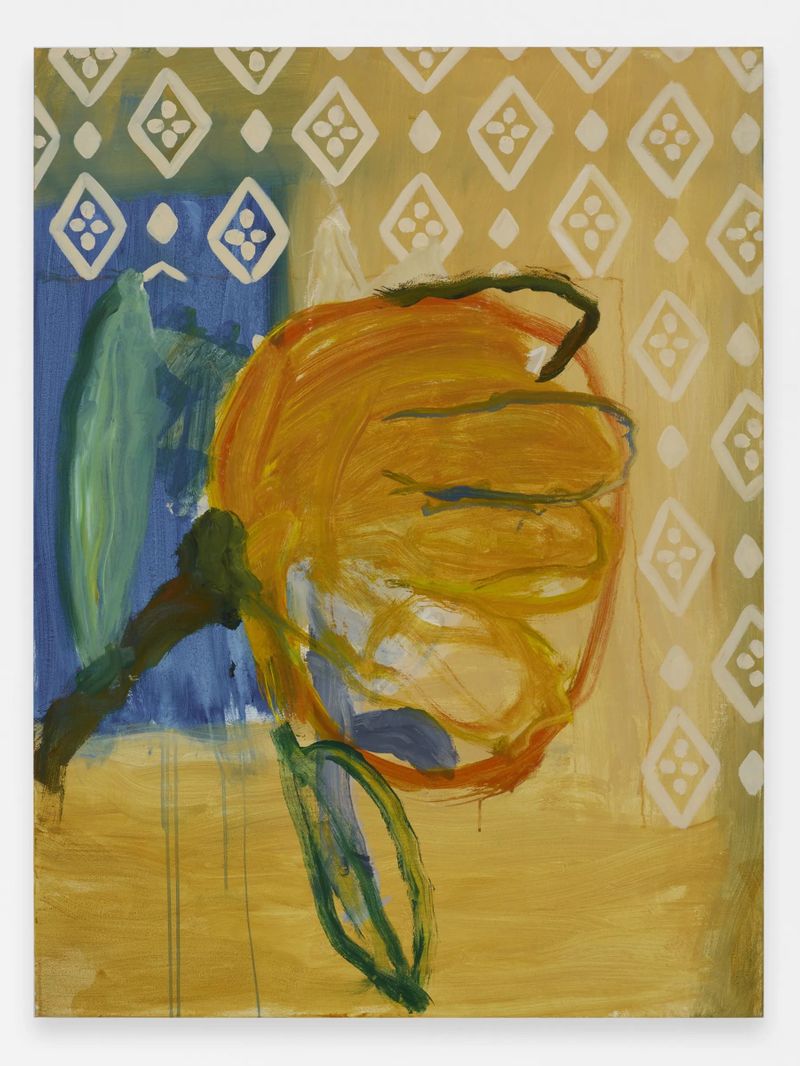
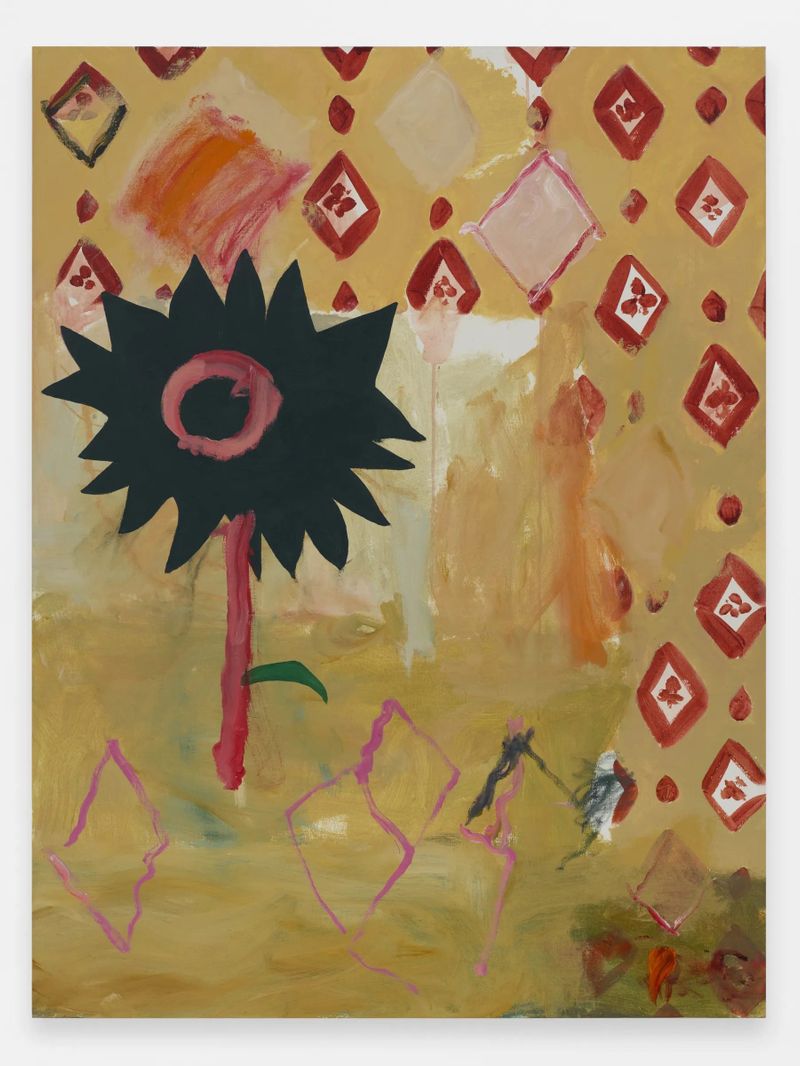
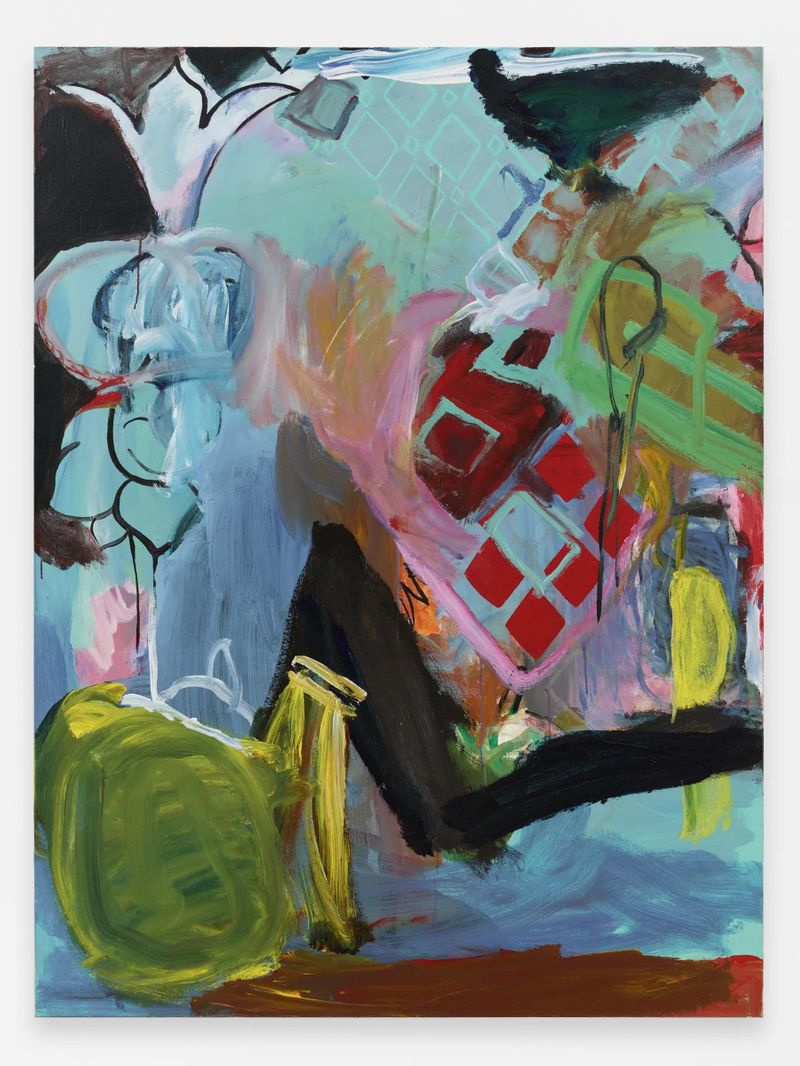
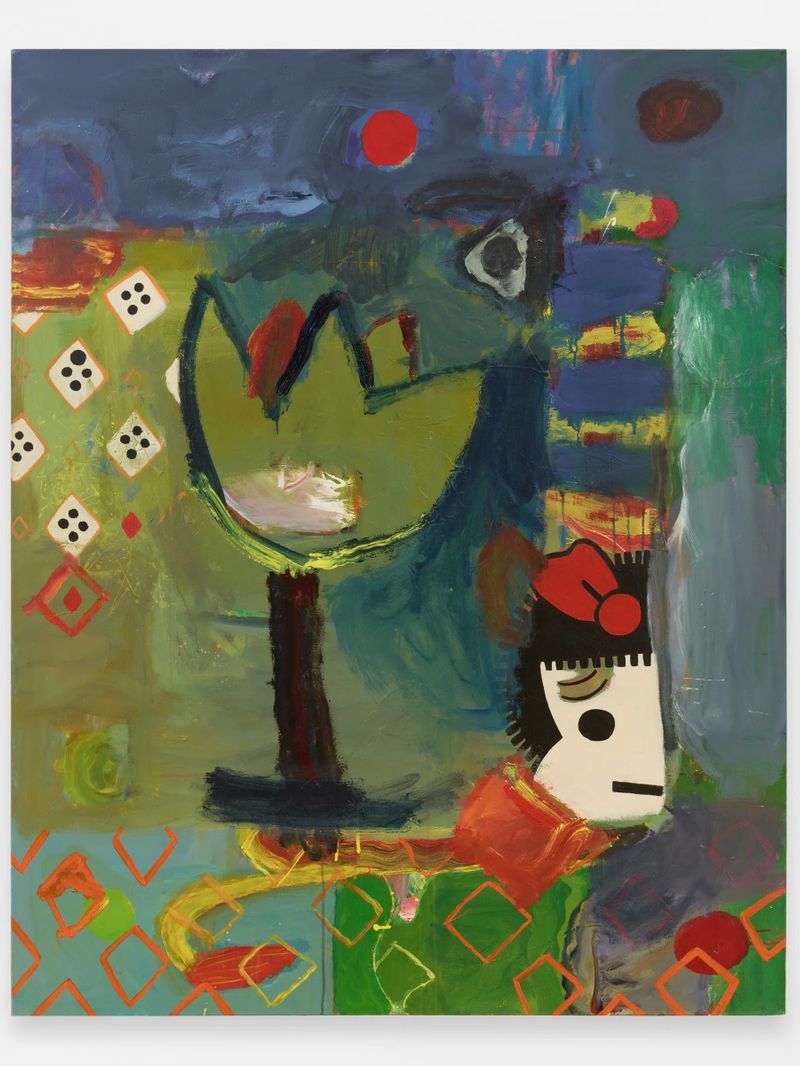
A dark green vertical form topped with red-outlined shapes rises amid scattered diamond patterns and red flourishes on a pale blue-green ground.
News by Exhibo
Editorial coverage on Exhibo
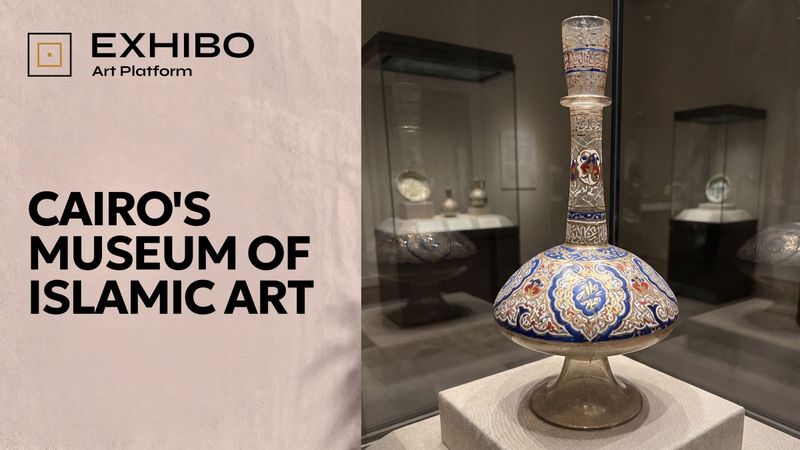
The Bottle That Was in Pieces on the Floor
A car bomb left one of the world's great collections of Islamic art in fragments on the floor. What the Museum of Islamic Art chose to do with the repair — mark it, rather than hide it — turns out to be the most quietly radical decision in the building.
Near the entrance of Cairo's Museum of Islamic Art stands an eight-hundred-year-old Syrian glass bottle with a small gold mark on its label. The mark does not mean the bottle is precious, though it is. It means it was broken — shattered on the floor by the 2014 bombing across the street, then patiently glued back into a single shape.

Orientalism in Western Art
How nineteenth-century European painters built an “Orient” of harems, mosques and deserts, and how Said and museums rewrite that gaze
Orientalism in Western art names European pictures of North Africa and the Middle East shaped by empire, travel and studio fantasy. This guide traces Ingres, Delacroix, Gérôme and Matisse through dated museum works, then follows Said, Nochlin, and museum debates on display, provenance and restitution.
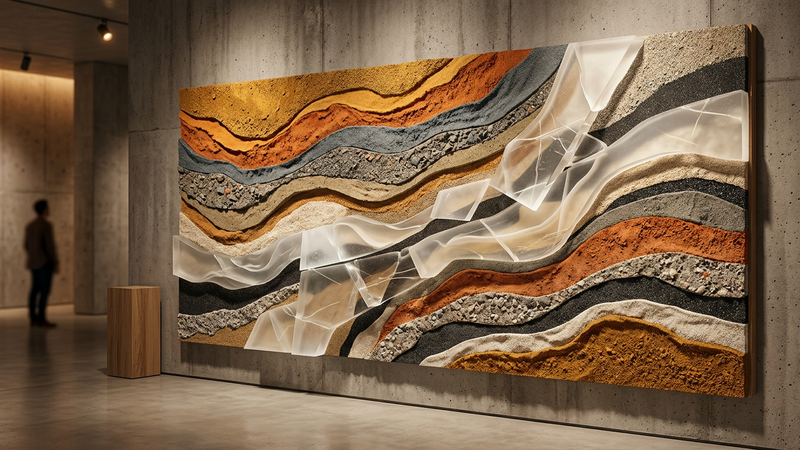
Jeewi Lee: Residual Memories
Tracing transience through material memory
The Berlinische Galerie hosts Jeewi Lee's first major Berlin solo show, exploring sand, impermanence, and ecological shift alongside the GASAG Art Prize 2026.
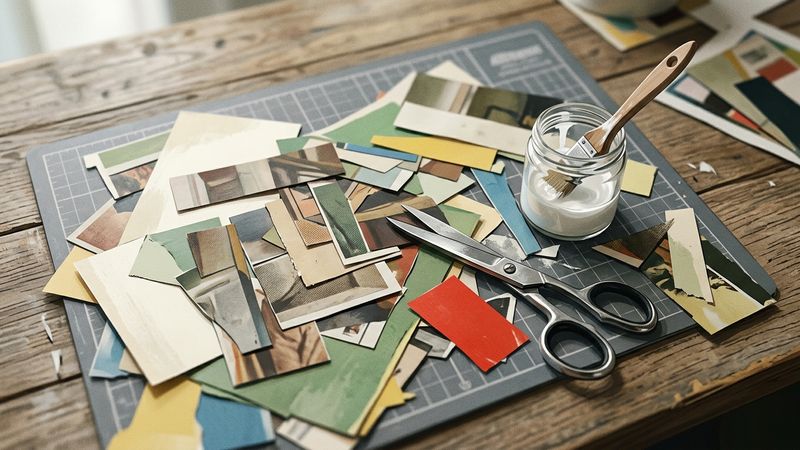
What Is Collage?
Cut paper, glue and found print on a support: how collage works as technique and object, from Cubist papiers collés to digital layers
Collage glues fragments of the visible world into a new picture plane. This guide defines the technique against photomontage and assemblage, traces paper chemistry and adhesives, walks a studio sequence from support to seal, reads six museum works from Picasso to Bearden, and notes how acidic glue and cheap print stock fail in storage.
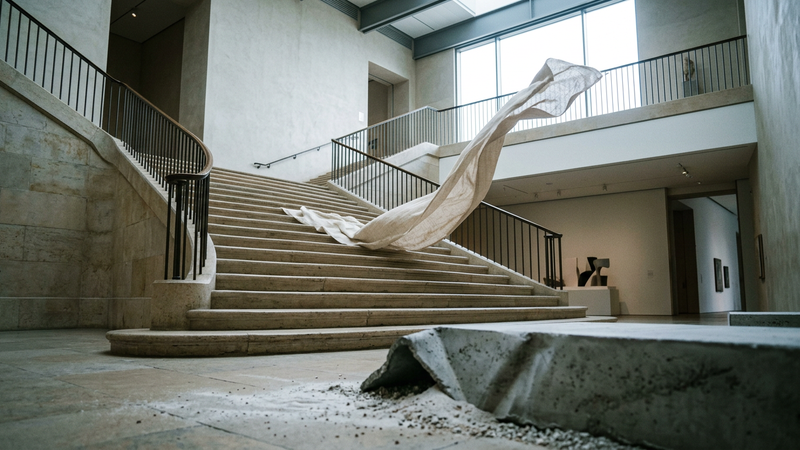
What Is Movement in Art?
Visual movement as the path the eye takes: implied line, repetition and rhythm, read on six named museum works rather than a timeline of styles.
Classroom posters mix three jobs under one word: the route looking takes, a depicted action, and a historical style. This guide keeps the first job. It tests implied line, repetition and optical pulse on six named objects, from the Louvre’s Nike of Samothrace to Bridget Riley’s Movement in Squares.
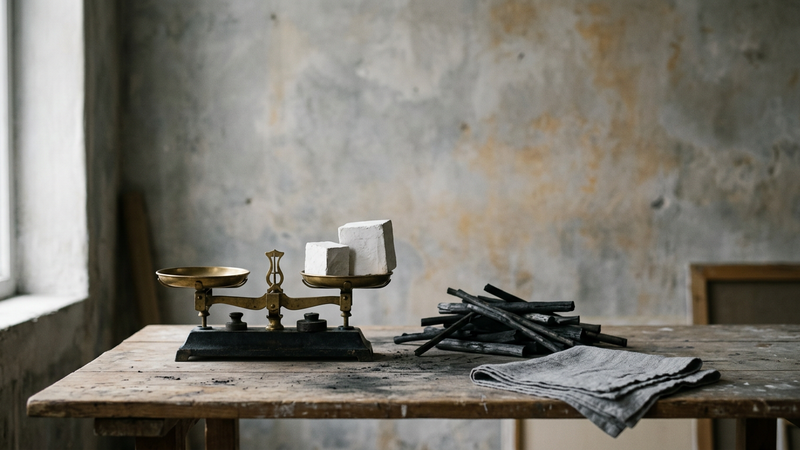
What Is Balance in Art?
Visual weight, three classroom types and six named museum works: how artists keep a picture from tipping without mirroring every side.
Balance in art is the distribution of visual weight so a picture, print or object holds together under the eye. This vocabulary guide separates symmetry, asymmetry and radial design from composition as a whole, then reads six dated works from Chartres to Mondrian and names the looking mistakes that still wreck classroom essays.