
Berlin · Germany
Jeewi Lee: Residual Memories
Tracing transience through material memory
Tracing Transience Through Material Memory
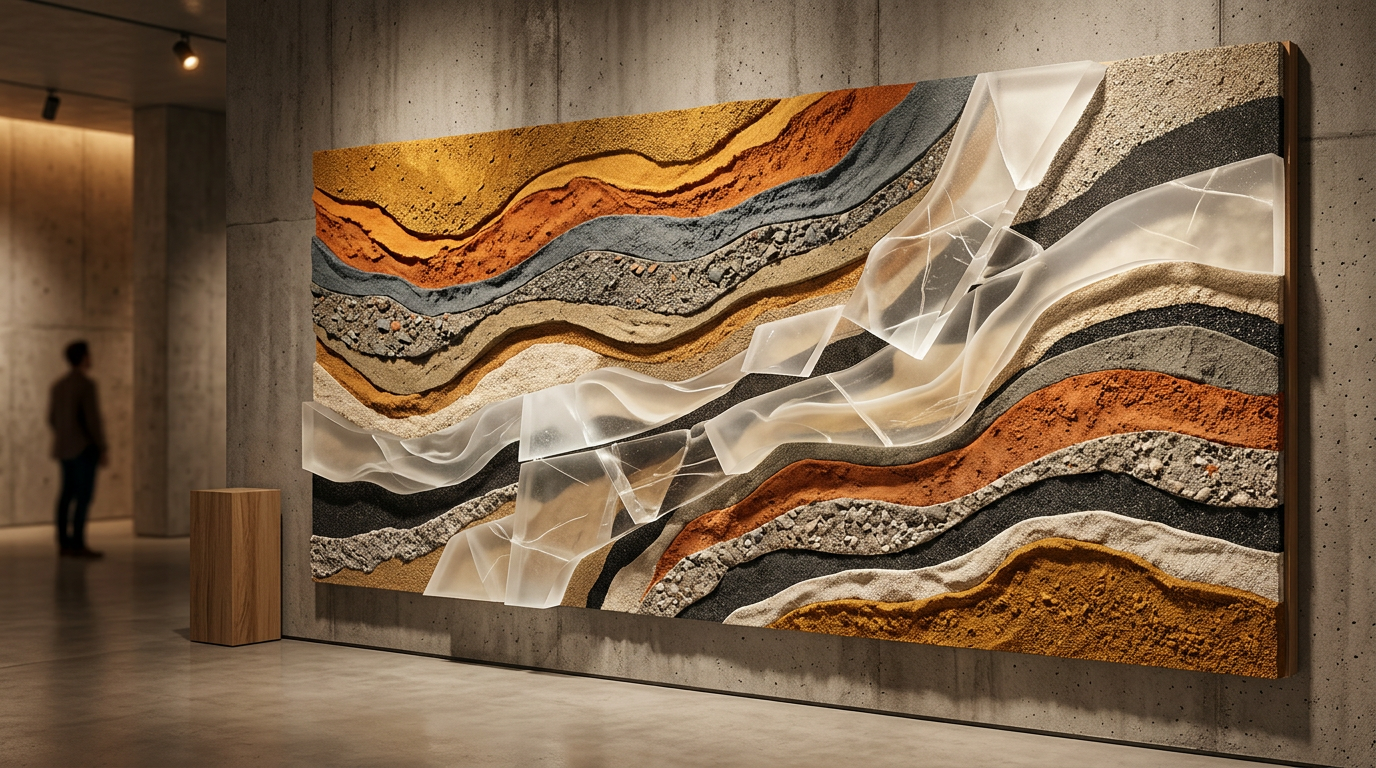
The Berlinische Galerie is set to host Jeewi Lee's inaugural institutional solo presentation in the capital, running alongside the prestigious GASAG Art Prize 2026. Scheduled from 11 September 2026 through 5 April 2027, the show offers a comprehensive survey of the South Korean-born practitioner's evolving visual language. Her practice consistently interrogates how ordinary substances accumulate historical weight, transforming discarded or overlooked matter into contemplative objects that speak to impermanence.
Drawing upon a diverse array of mediums ranging from serial canvases to three-dimensional forms and architectural interventions, Lee constructs environments that feel both intimate and expansive. She frequently selects humble components whose surfaces bear the physical marks of decay or passage. This methodology merges rigorous material investigation with philosophical frameworks rooted in Eastern thought and individual narrative. The resulting installations invite viewers into a quiet, reflective space where observation becomes a form of meditation.
Central to this new body of work is sand, a substance ubiquitous yet increasingly precarious. Beneath its deceptively simple appearance lies a complex composite of geological fragments, biological remnants, and synthetic pollutants such as microplastics. Beyond its natural origins, granular earth serves as a fundamental building block for modern infrastructure, appearing within construction aggregates, optical fibres, semiconductor manufacturing, and filtration systems. Paradoxically, while essential to contemporary civilisation, global extraction rates have pushed terrestrial reserves toward depletion, turning a once-abundant element into a contested commodity.
Lee's engagement with this resource aligns perfectly with the biennial award's mandate to explore intersections between creative practice, scientific inquiry, and technological development. Since its inception in 2010, the initiative has been co-organised by the hosting institution and the energy company behind it, recognising practitioners who navigate these disciplinary boundaries with distinction.
Alongside the main gallery presentations, the artist will participate in the wider cultural calendar surrounding Hallen 07, a regional arts festival taking place at the Wilhelm Hallen between 5 and 13 September 2026. During this period, visitors can encounter Ashes to Ashes, a project developed between 2019 and 2021 that utilises charred deposits collected following wildfires on Monte Serra near Pisa. This complementary display will situate earlier investigations within the broader thematic concerns explored in the current showcase.
Born in Seoul during 1987, Lee pursued formal training in painting across European and American centres, including studies at the University of the Arts Berlin and Hunter College in New York. Her career trajectory demonstrates consistent recognition within international circuits, highlighted by fellowships at Villa Romana and Villa Aurora, alongside the junger westen Art Prize in 2021. Currently based in the German capital, she continues to refine a methodology that treats environmental change and human experience as interconnected phenomena.
By foregrounding materials that exist at the margins of visibility, the exhibition underscores how ecological shifts manifest within everyday objects. Lee's approach avoids didacticism, instead relying on tactile presence and atmospheric composition to communicate urgency. In an era defined by rapid consumption and environmental recalibration, her work reminds us that even the most mundane elements carry layers of history waiting to be read.
Related reading
Lovis Corinth: Then Came Berlin!
How a mid-life relocation ignited a German modernist revolution
An expansive survey at the Berlinische Galerie traces how Lovis Corinth's 1901 move transformed him into a cornerstone of early twentieth-century avant-garde practice.
Maurizio Cattelan: NIGHT at Berlin's Neue Nationalgalerie
A new exhibition transforms Mies van der Rohe's pavilion into a secular sanctuary of contemplation and historical reflection.
Maurizio Cattelan's NIGHT reconfigures Berlin's Neue Nationalgalerie into a ritualistic space, merging archival sculptures with new commissions to explore memory and altered perception.

Seba Calfuqueo's CAUTÍN Maps Riverine Memory in Berlin
The Mapuche artist's European debut reimagines hydrology through ancestral philosophy and hybrid media.
A landmark solo presentation tracing the Cautín River's course while challenging colonial resource extraction through Mapuche cosmology.