
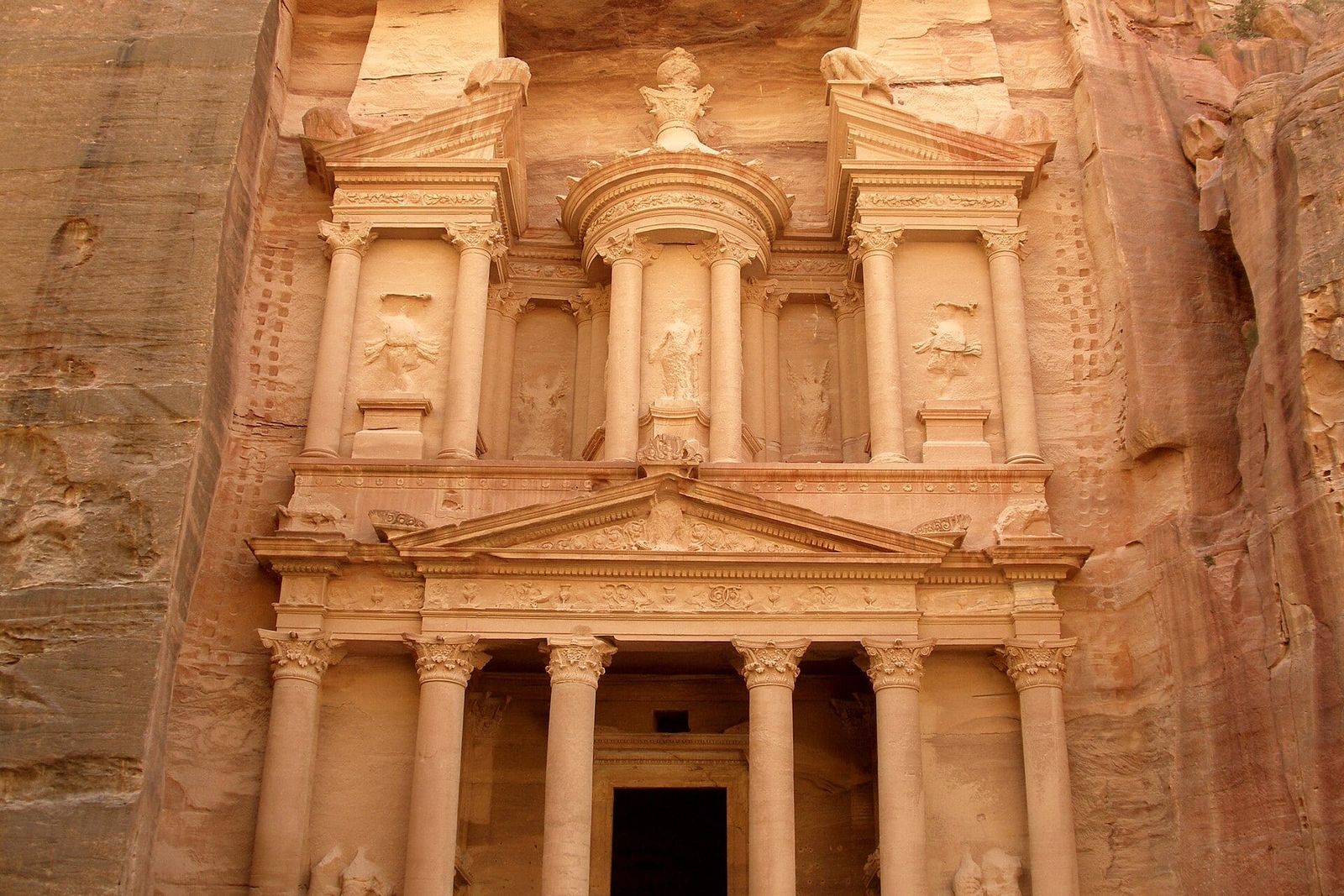
Al-Khazneh (The Treasury), Petra
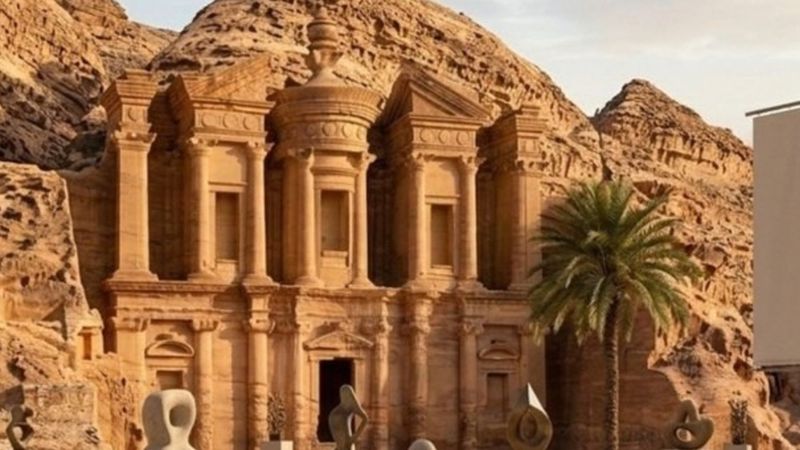
Petra's most famous facade, carved from the top down into the cliff at the end of the Siq.
The monument
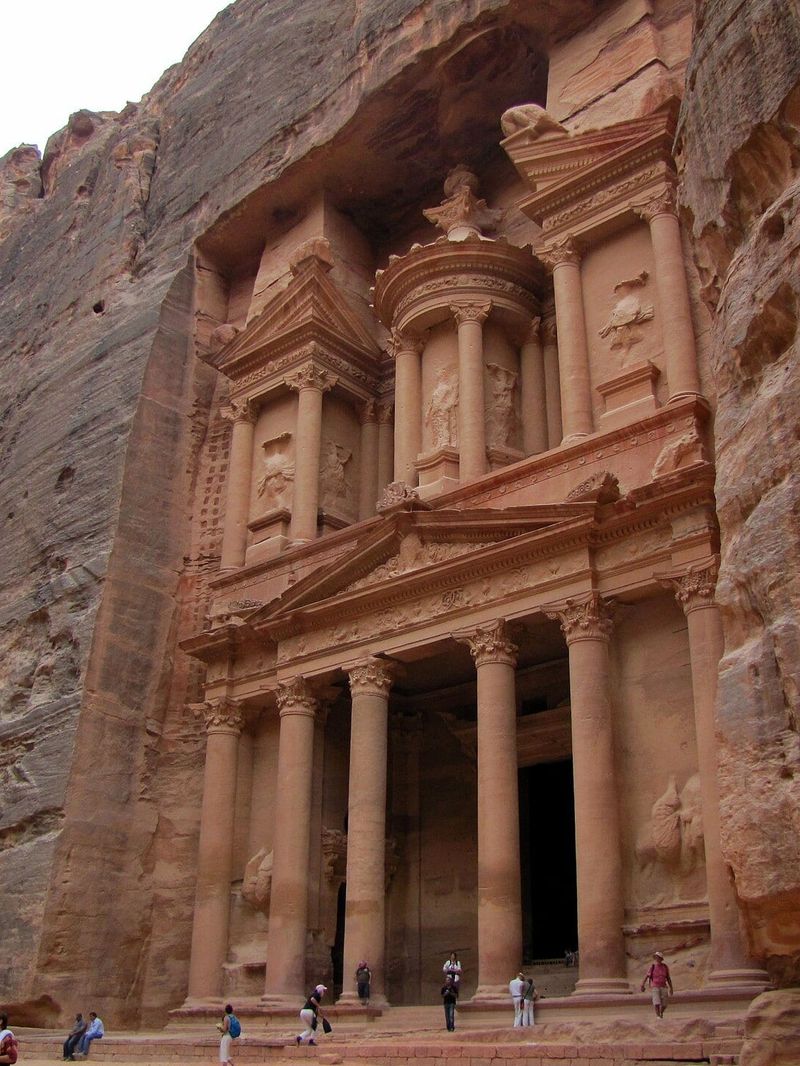
Al-Khazneh, the Treasury, is the rock-cut facade that faces the end of the Siq and the best-known monument of Petra. About 40 metres high and 25 metres wide, it was cut from the top downwards into the cliff of Jabal al-Khubtha.
Date and purpose
It is generally dated to the first century AD and is widely held to be the tomb of the Nabataean king Aretas IV, who reigned from 9 BC to AD 40, at the height of Petra's wealth. Excavations in front of the facade in 2003 found burial chambers below the present ground level, which confirmed its funerary role.
The facade
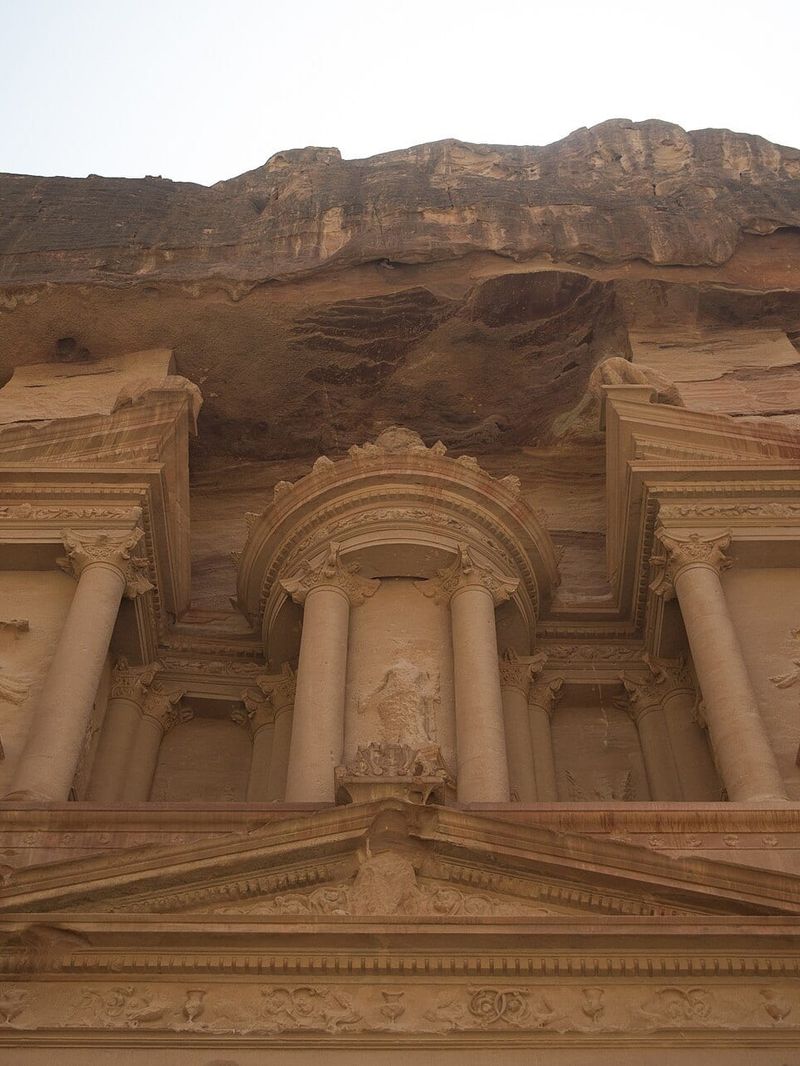
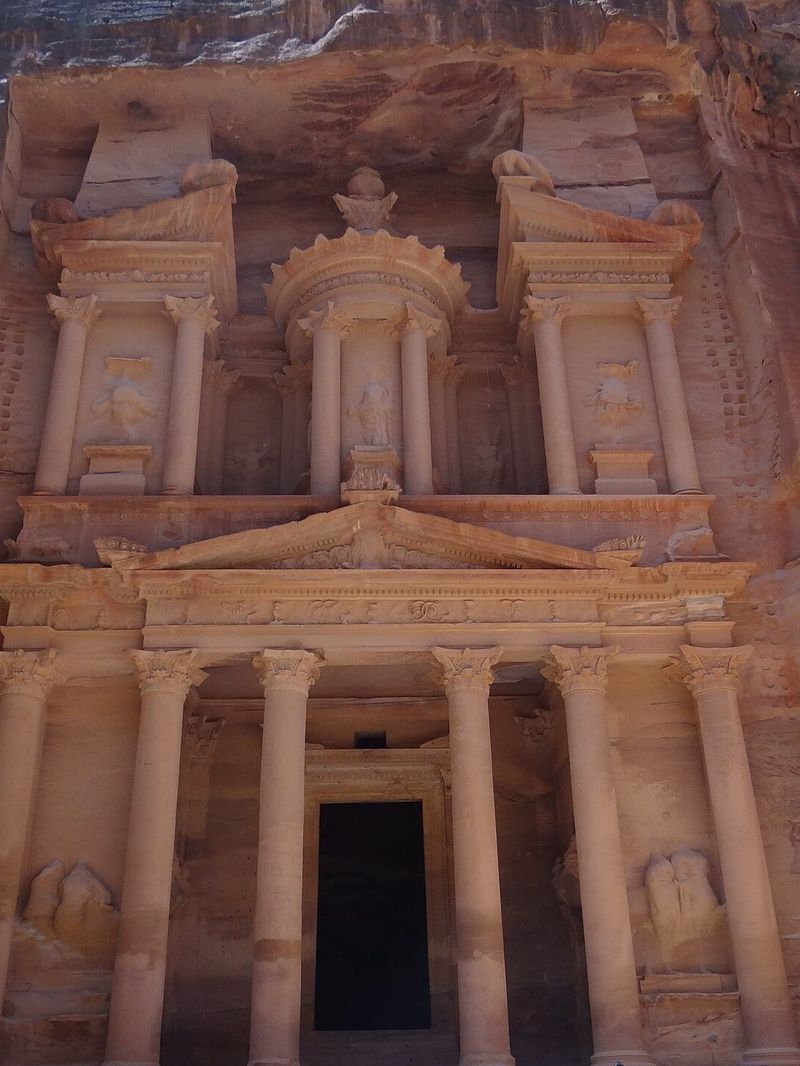
The design is deeply Hellenistic. The lower storey has six Corinthian columns under a pediment. The upper storey has a tholos, a round pavilion, between two halves of a broken pediment, crowned by an urn. Carved figures include the Dioscuri, Amazons with axes, Victories and a female deity on the tholos, often identified with Isis or the Nabataean goddess al-Uzza. Behind the facade is a plain square chamber with smaller rooms on each side.
The name
The name comes from a Bedouin story that a pharaoh's treasure was hidden in the urn. The stone is pitted with bullet marks from attempts to shoot it open. In 1989 the facade appeared in Indiana Jones and the Last Crusade. The best view from above is from the Al-Khubtha viewpoint.
Exhibo editorial
It is smaller than you expect and better than you expect. Smaller, because forty metres of rock does not fill the sky the way the photographs suggest. Better, because the carving is so precise: capitals, garlands, the folds of a goddess's robe, all cut in one go into a cliff with no room for second thoughts.
Come early, before the square fills, while the facade is still in shade and the colour is a deep salmon. Late morning the sun reaches it and the stone turns almost orange. It is the same rock, in a different hour.
Gallery
How to find it
At the end of the Siq, about 2 km from the Visitor Centre. The gorge opens directly onto the facade. For the view from above, take the Al-Khubtha trail from the Royal Tombs, about an hour's climb.
Similar places
All places
News by Exhibo
Editorial coverage on Exhibo
Where Is Agrabah? The City Disney Assembled From Real Places
Agrabah was going to be Baghdad. A war made it fictional — and then Disney built it back out of real places, from a tomb in Agra to a valley in Jordan that usually plays Mars.
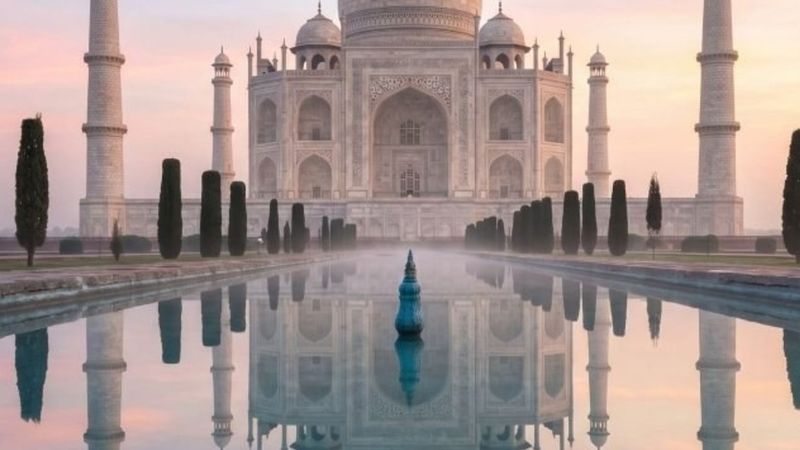
The Sultan's palace where Princess Jasmine feels trapped has the silhouette of the Taj Mahal — which is not a palace at all, but a tomb. That is how Agrabah works. Disney's fairy-tale city was going to be Baghdad, until the Gulf War made the name impossible; the studio invented a place that could not be found on a map, then quietly rebuilt it out of real ones — Isfahan and Agra, Marrakesh and Mandalay, a Jordanian desert that has played both Arabia and Mars.
Petra Beyond Indiana Jones
The 1989 film gave Petra a façade and invented everything behind it. The real story is in the water systems, the aniconic sculpture, the painter who framed your photograph in 1839 and the families moved out so the world could come in.
Spielberg's crew filmed the Treasury's façade in Jordan, then built the Grail chamber on a soundstage in Hertfordshire — because the real interior of Al-Khazneh is a plain, undecorated room. It's a perfect miniature of how Petra is understood: one wall, photographed a million times a year, standing in for a city that is mostly still unexcavated.