Petra Church (Byzantine Church)
A Byzantine church with 70 square metres of mosaic floors and the burnt archive of the Petra Papyri.
A Christian city
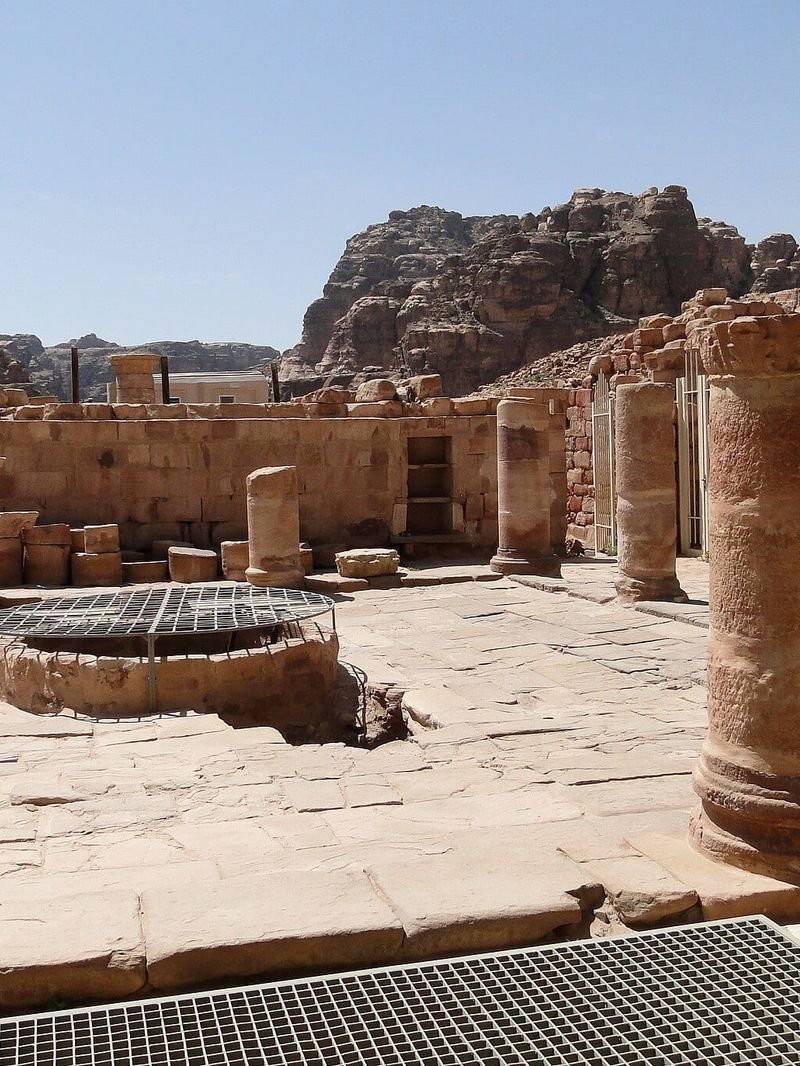
The Petra Church is a Byzantine basilica on the slope north of the Colonnaded Street. It was discovered in 1990 and excavated by the American Center of Oriental Research. It shows that Petra was still an important Christian city, the seat of a bishop, long after the Nabataean kings.
Mosaics
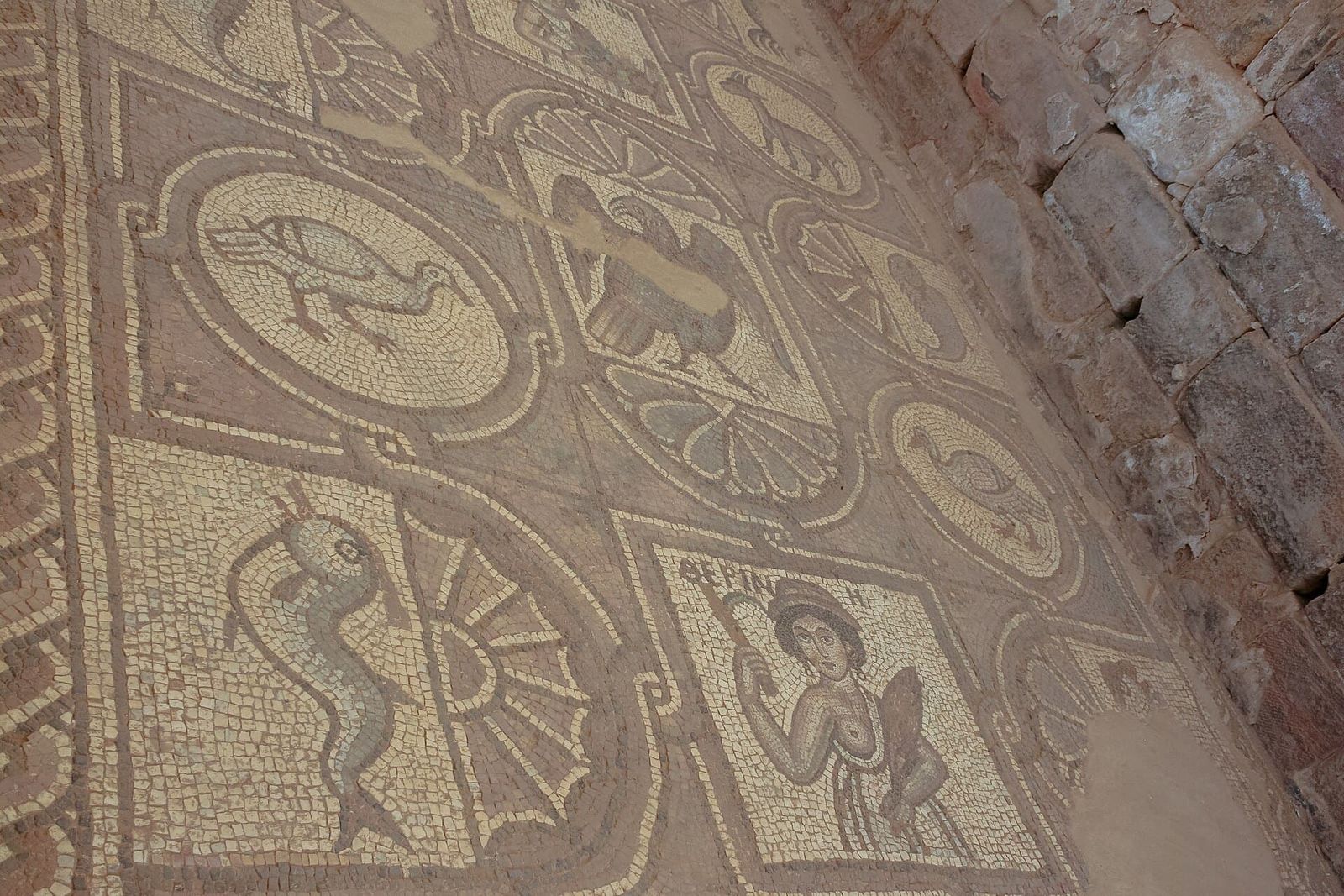
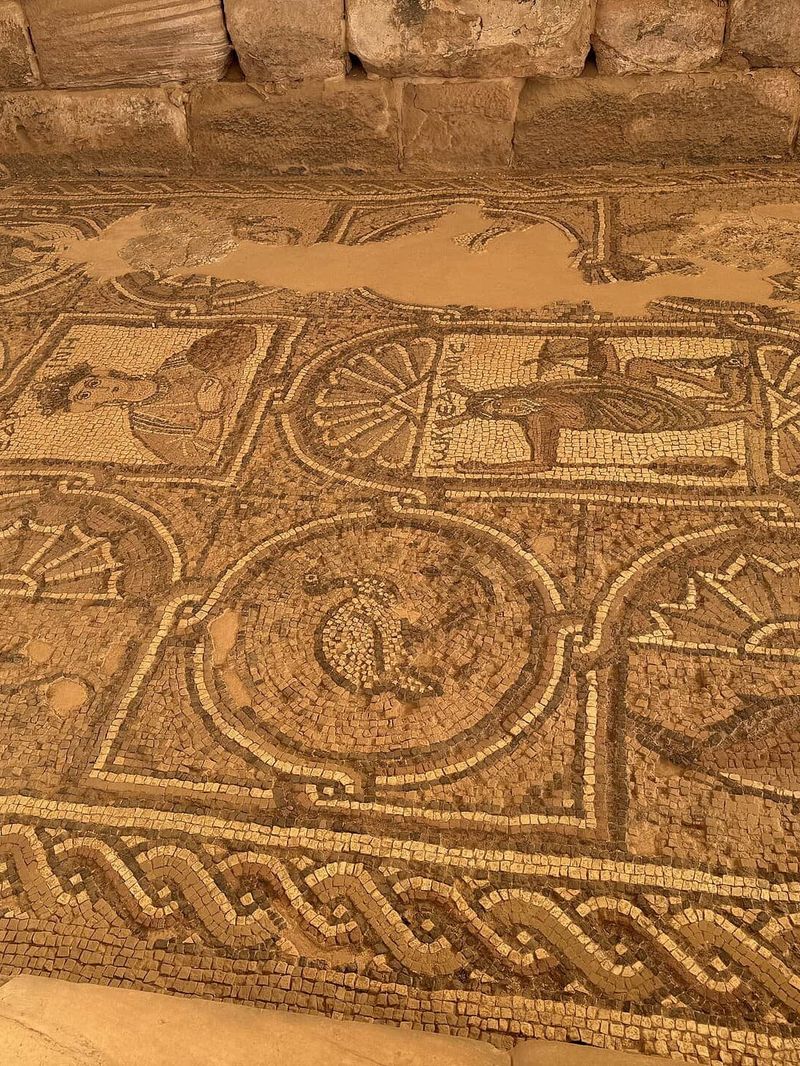
The church was built in the later fifth century and remodelled in the sixth. Its two side aisles keep about 70 square metres of mosaic floors. The south aisle shows personifications of the Seasons, Ocean, Earth and Wisdom with fishermen and animals. The north aisle is laid out in roundels with birds, animals and vessels, among them a giraffe, an elephant and a camel. A baptistery lies to the north-west. A light tent-like roof protects the floors.
The Petra Papyri
In 1993 the excavators found about 150 carbonised papyrus rolls in a room of the church, burnt when the building caught fire. Deciphered over the following years, the Petra Papyri are sixth-century deeds, marriage settlements, tax records and other papers of a local family, the largest archive of its kind from the region.
Exhibo editorial
After the facades, this is the place where Petra suddenly has names. The papyri found here are about property, inheritance, marriages and taxes, the ordinary paperwork of a family that lived among the old tombs and thought of the city as home.
The mosaics carry the same mood. A giraffe, a fisherman, a woman holding the fruits of a season: the Byzantine city liked to decorate its floors with the whole world, laid out in roundels for the congregation to walk across.
Gallery
How to find it
On the slope north of the Colonnaded Street, opposite the Great Temple. A short signposted path climbs from the main trail. Look for the large white shelter roof. The Blue Chapel and the Ridge Church are a few minutes further up the same hill.