Punic Quarries of El Haouaria
Vast man-made caverns on the tip of Cap Bon, cut to quarry the stone that built Carthage.
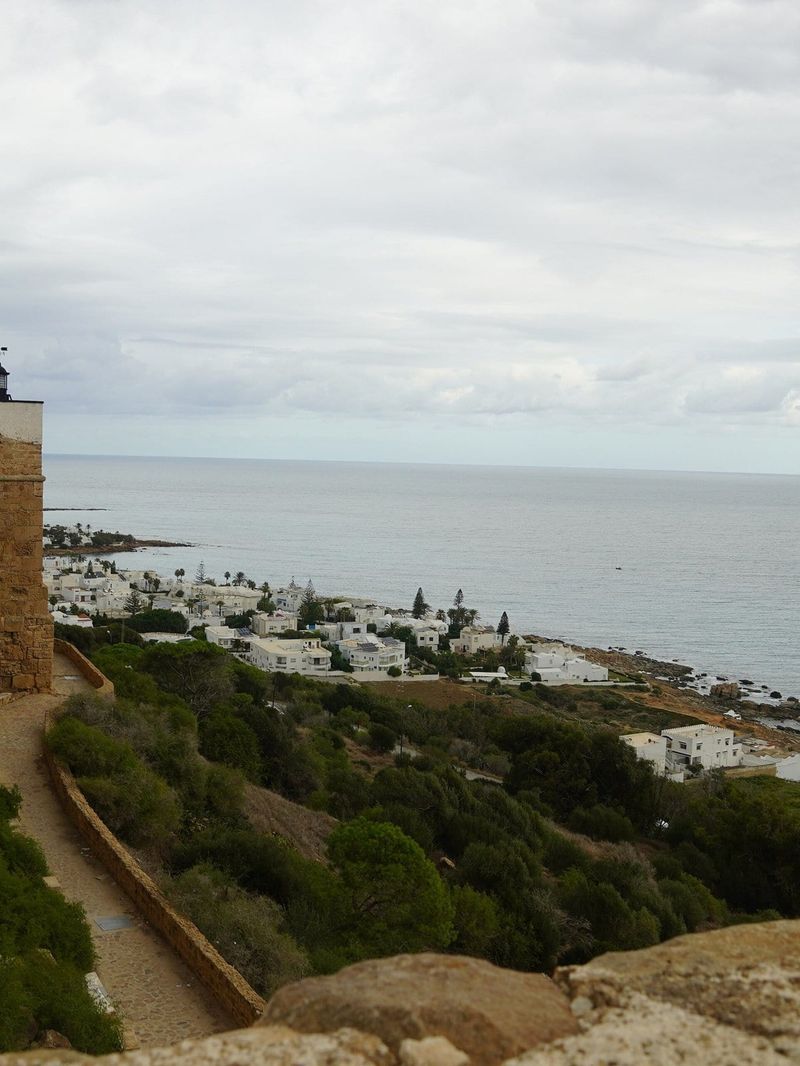
The quarries of El Haouaria lie on the coast at the northern tip of the Cap Bon peninsula, near the headland of Ghar El Kebir, just north-west of the town of El Haouaria. They are about eighty kilometres north-east of Hammamet by road. Locally they are called the Roman caves, but their story begins much earlier.
In antiquity El Haouaria was Hermaea, named after a temple of Hermes on the promontory the Romans called the Promontory of Mercury. Greek writers, among them Diodorus of Sicily and Strabo, mention its quarries, the latomiai. It was near here that Agathocles, the Greek tyrant of Syracuse, landed his army in 310 BC to attack Carthage.
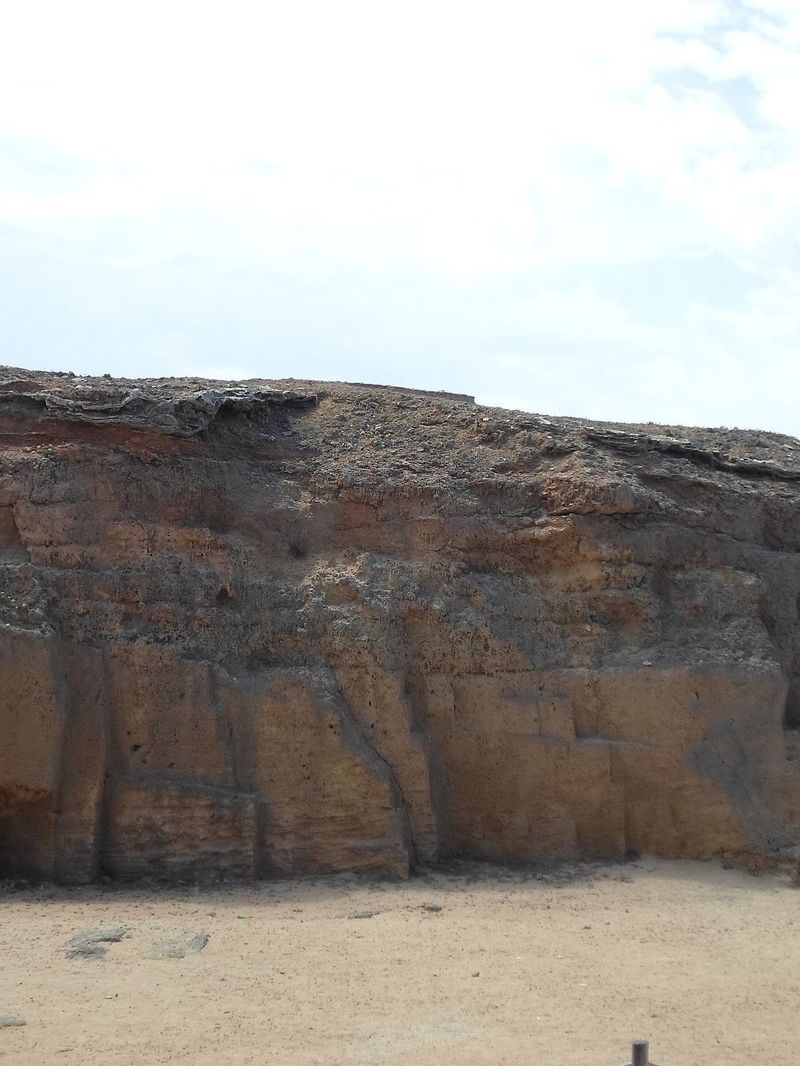
The stone is a soft yellow sandstone that is easy to cut. From the seventh century BC it was quarried for Carthage, which lay about sixty kilometres away across the Gulf of Tunis; blocks were shipped there by sea when the weather allowed. The stone supplied the Punic city and its oldest tombs. Quarrying continued under the Romans.
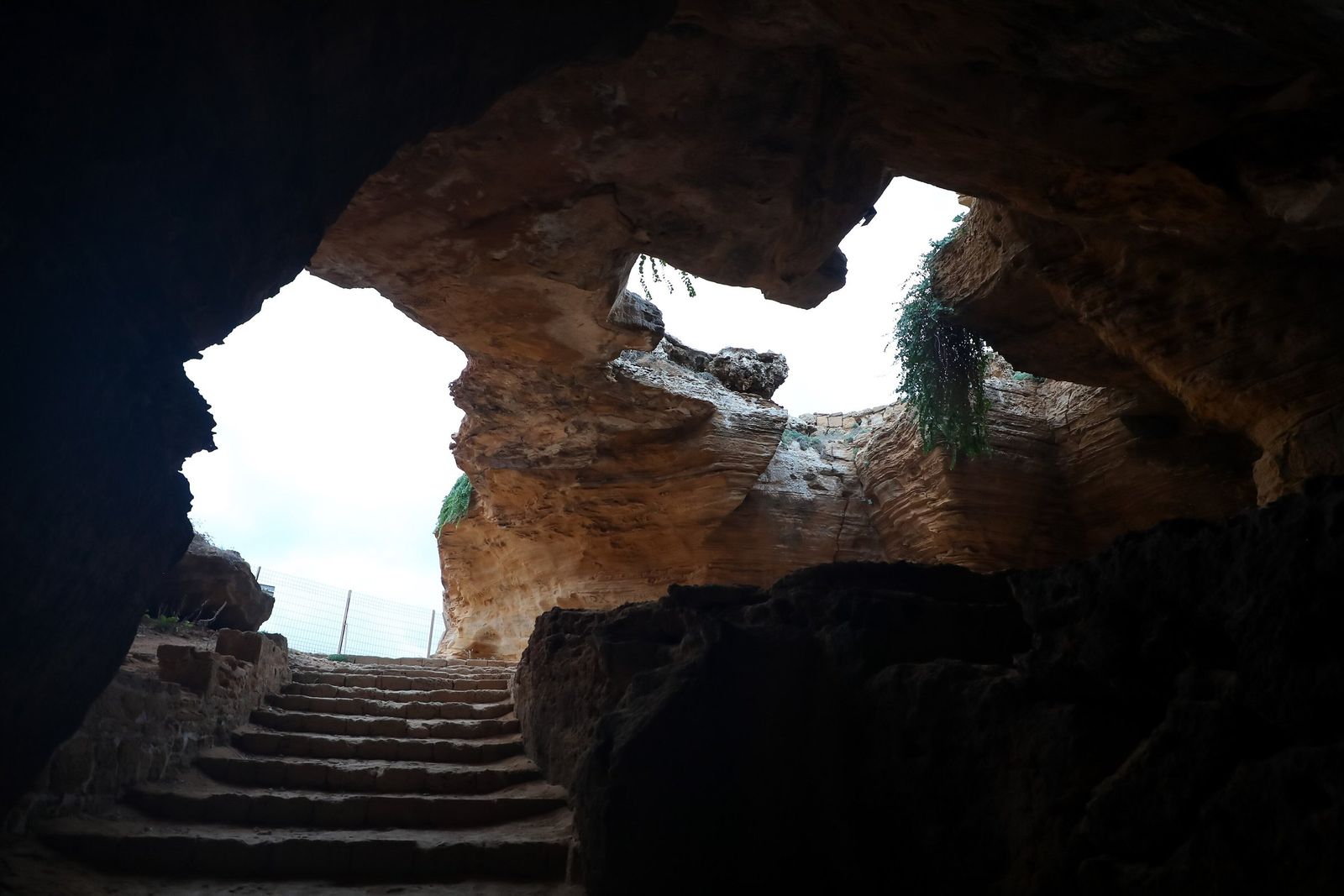
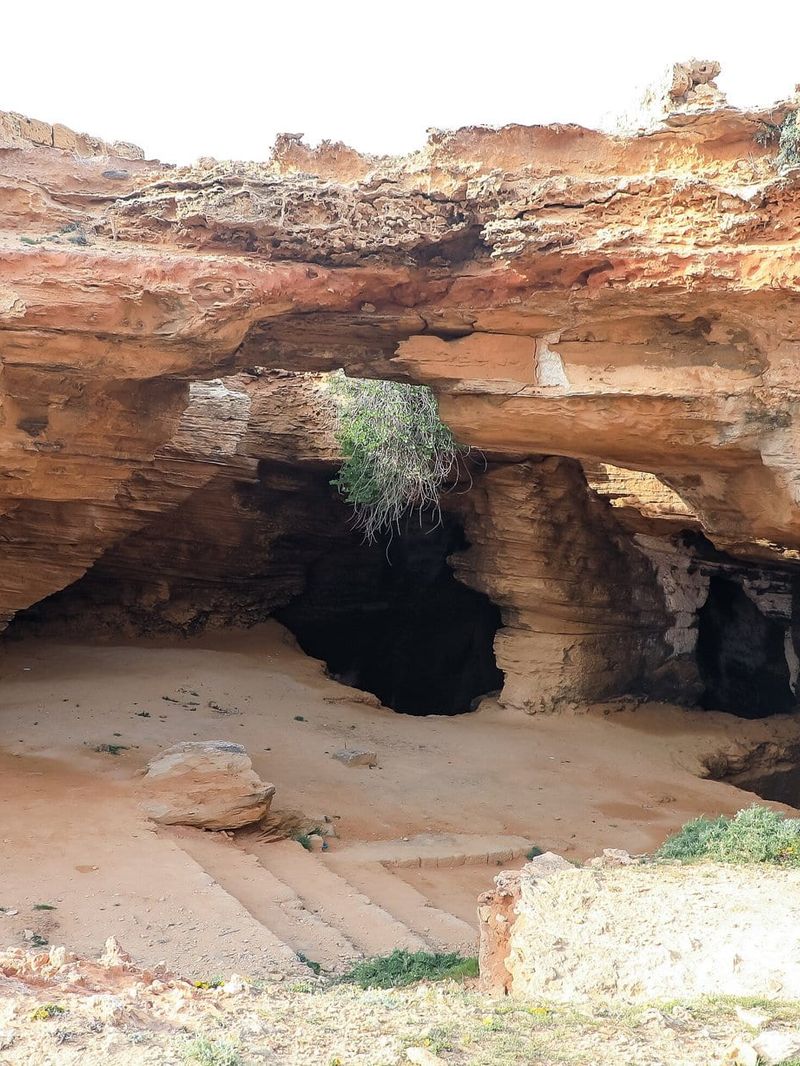
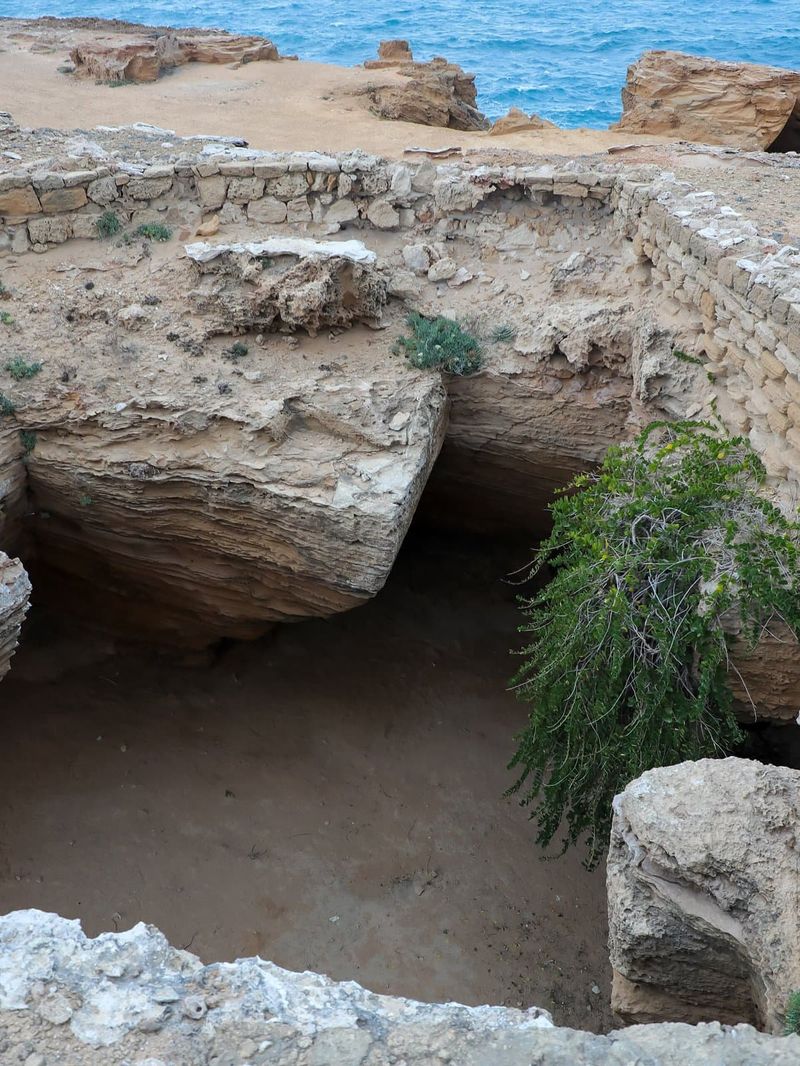
The workers dug downward rather than across. From the surface they cut square shafts, then widened the hole below as they extracted the stone. Today dozens of these chambers open one into another under the cliff. Light falls through the square openings in the ceilings onto the sandy floors and the walls still bear the marks of the tools. The caves are said to have served later as barracks and as prisons. The site is protected as a cultural site.
Exhibo editorial
The quarries are one of those places where the scale of the ancient world becomes physical. You walk down a few steps out of the sun and suddenly you are inside a cathedral of hollowed rock, lit from above through square holes like skylights. Every block that left here went into a city on the other side of the water.
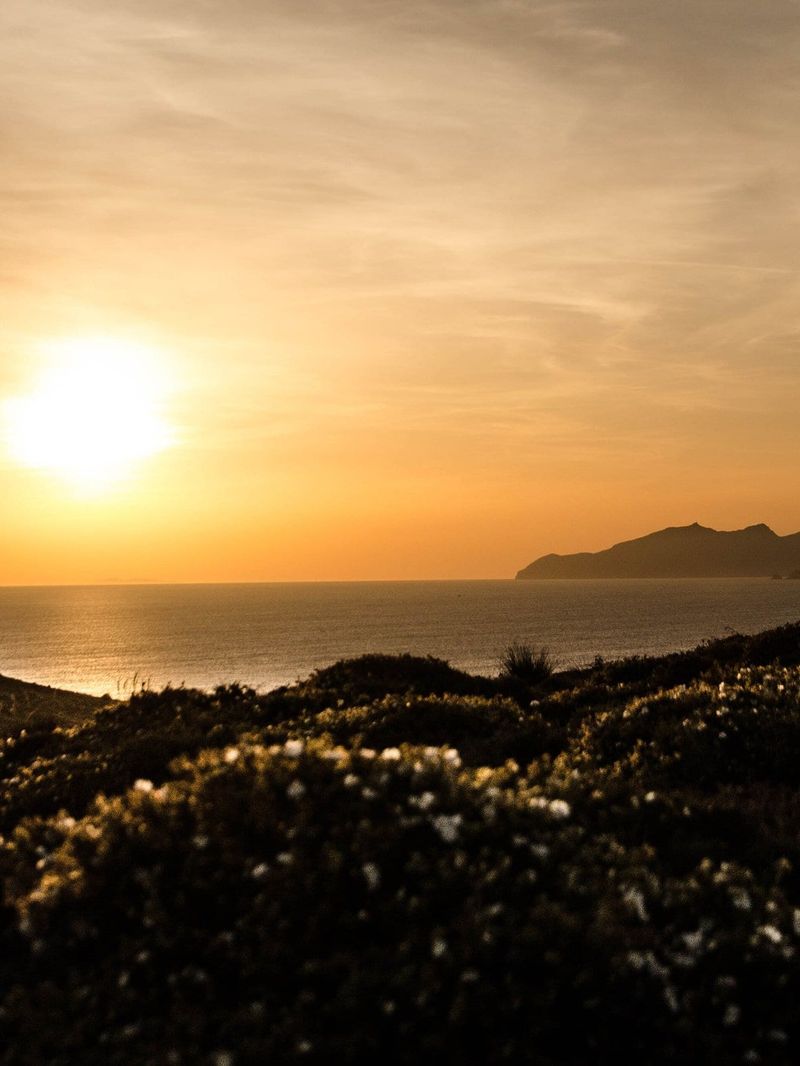
Come in the morning, when the light enters the shafts at an angle. Take your time in the inner chambers. Then go out to the edge of the cliff and look across the sea toward where Carthage stood. On a very clear day the hills of Sicily can be seen from the mountain behind the town. For the other end of this coast, the garum works of Neapolis make a good contrast.
Gallery
How to find it
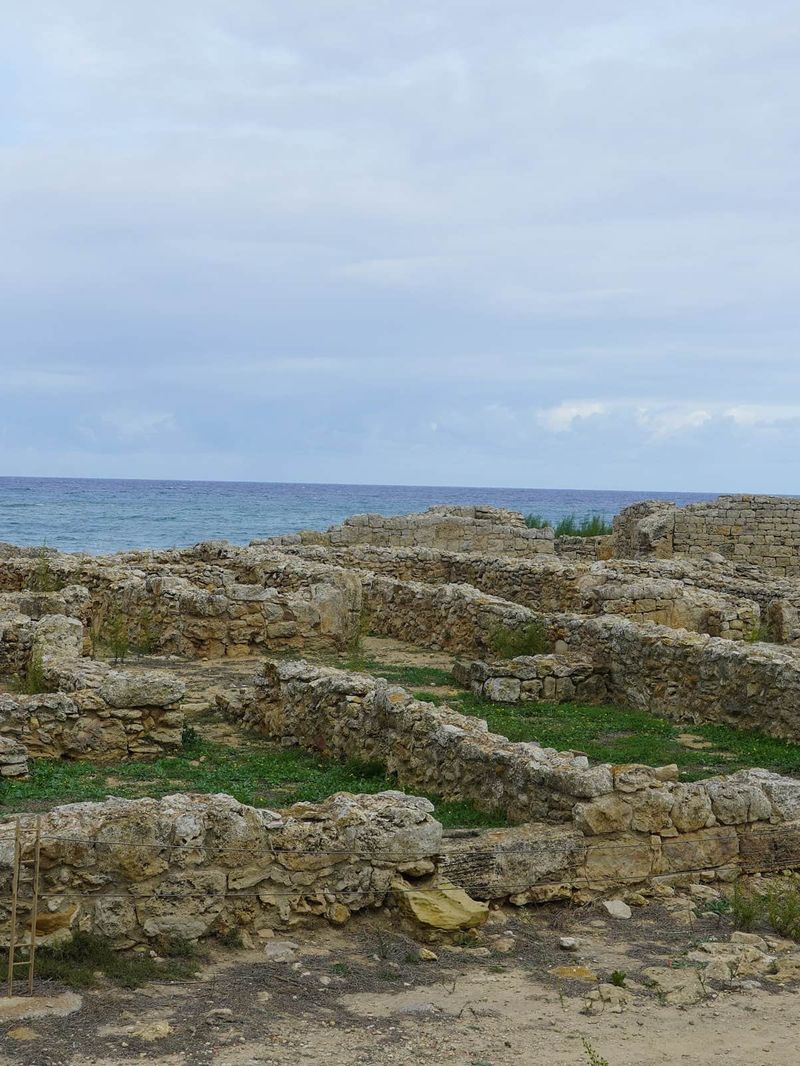
From the town of El Haouaria, follow the signs for Les Grottes or Ghar El Kebir north-west to the coast, about three kilometres. Paths and steps lead into the main caverns. Wear shoes with grip: the sand inside is soft and the steps uneven. The road above the quarries climbs Jebel El Haouaria. The Punic town of Kerkouane is twenty minutes south.