
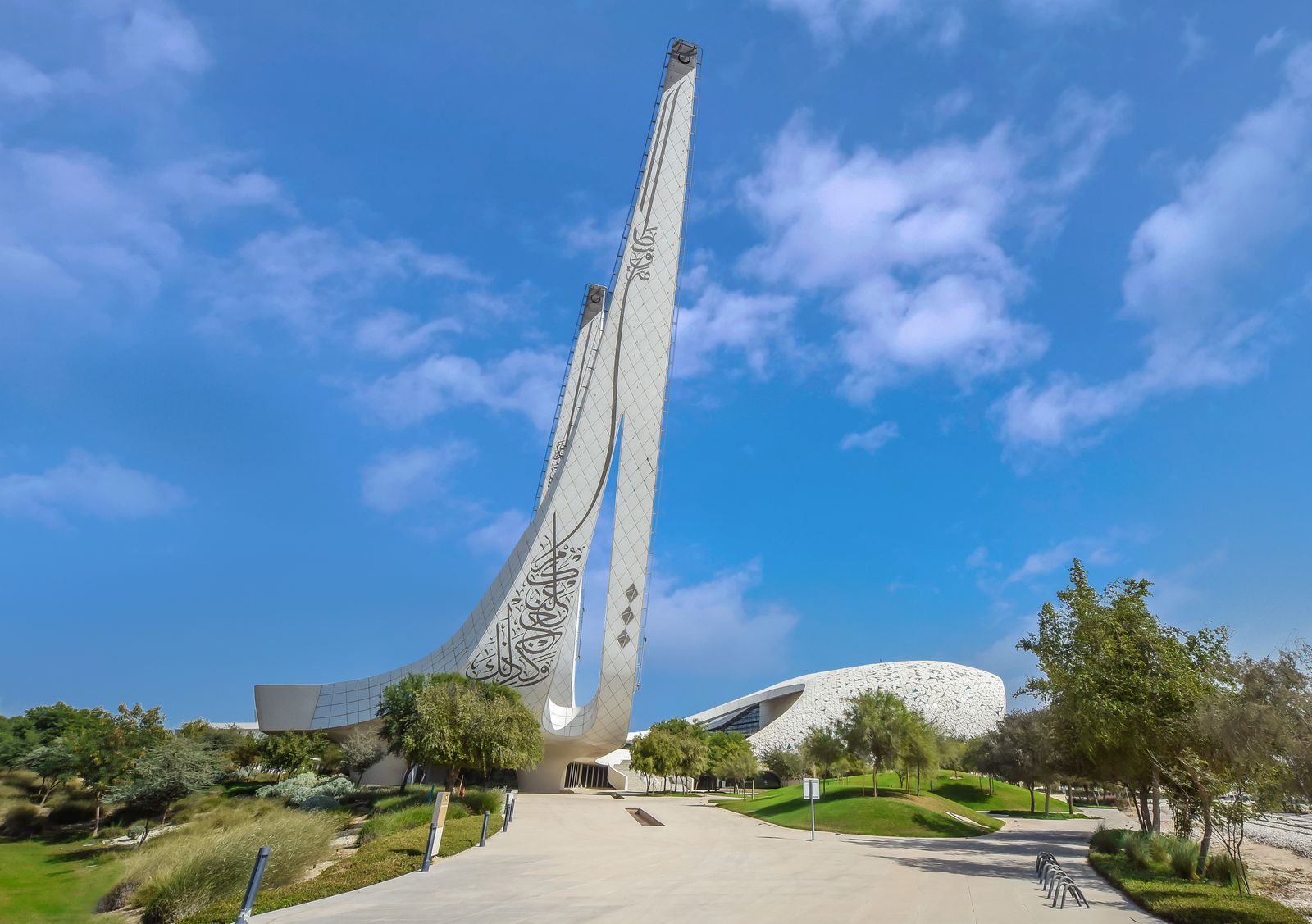
Education City Mosque
Twin 90-metre minarets and a spiral plan linking faith with learning at HBKU's College of Islamic Studies.
The Education City Mosque occupies the Minaretein building at Hamad Bin Khalifa University's College of Islamic Studies. Iraqi architect and calligrapher Taha al-Hiti designed twin minarets rising 90 metres, their surfaces carved with vertical script that draws the eye upward. Five structural pillars represent Islam's five pillars, and courtyard streams allude to the four rivers of Paradise described in the Qur'an.
Though it serves the Al Rayyan community as a working mosque, the building is also a deliberate statement about Islam and modernity. Visitors of all backgrounds are welcome outside prayer times; the main hall holds 1,800 worshippers and the courtyard another 1,000. The complex includes the Qur'anic Botanic Garden, planted with species mentioned in the Holy Qur'an.
Exhibo editorial
This is one of the few mosques in Doha where architecture is the main event rather than a backdrop. The spiral routes between college and prayer hall make the intellectual argument explicit: knowledge and faith are not separate journeys.
Arrive by metro if you can — Qatar National Library station on the Green Line is a short walk — and allow time for the courtyard gardens after you have seen the minarets.
How to find it
Education City, off Georgetown Access Rd. Green Line metro: Qatar National Library. On-site parking available. Respect prayer times and dress modestly; women may need a head covering.
Similar places
All places
News by Exhibo
Editorial coverage on Exhibo
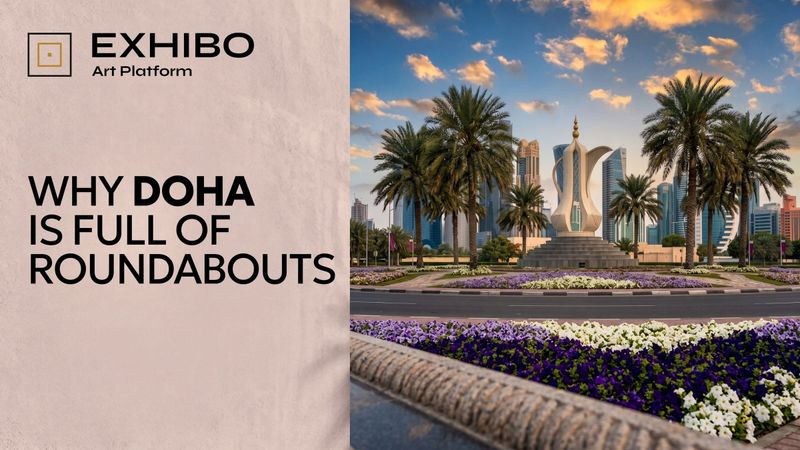
Why Doha Is Full of Roundabouts
An old circle at a crossroads, sharpened by British road engineering, became the way an Arabian city found its way and remembered itself — and it took the bulldozers to reveal it.
In a city where a landmark was more useful than an address, Doha's roundabouts became its navigation, its landscaping and its national image all at once. Now they're being torn out for signalled junctions — and the affection for them arrived, as one scholar put it, only posthumously.
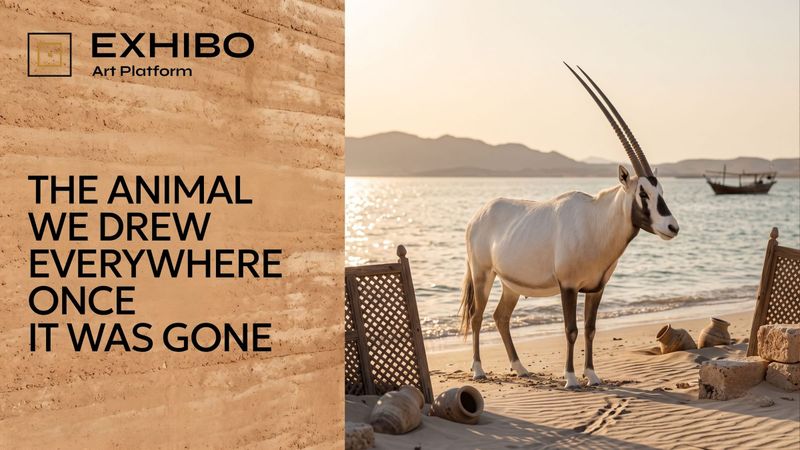
The Animal We Drew Everywhere Once It Was Gone
From Neolithic rock to airline tailfin — how the Arabian oryx vanished from the desert, came back from nine animals, and multiplied everywhere as a symbol in the very decades it was gone.
The last wild Arabian oryx was shot in 1972. By then it was already a picture — carved on Bronze Age tombs, mistaken by the ancients for a unicorn, praised by poets as the eyes of the beloved. This is the story of an animal that went extinct in the wild and was brought back from nine survivors, and of the strange gap between the creature and the emblem it became: fast, sharp and ascendant on a nation's tailfin, while the animal itself survives by standing still in the shade.
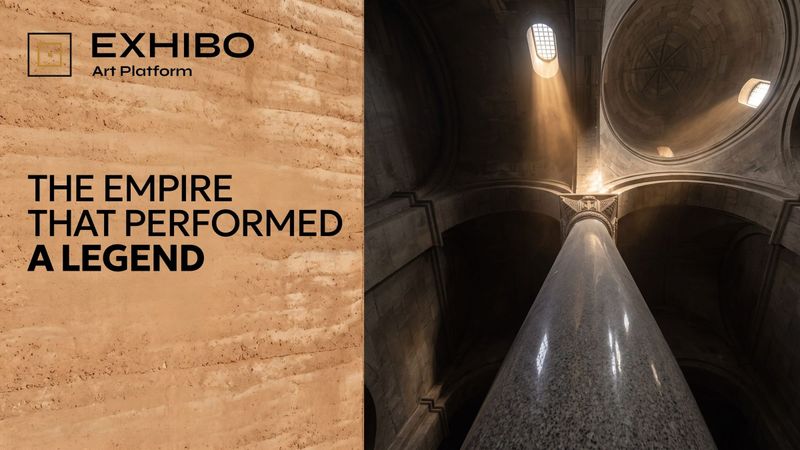
Seventy Thousand Solomons: The Empire That Performed a Legend
A demon catalogue in the conqueror's library, a sixteenth-century text where kingship is an office held seventy thousand times, and the columns a sultan dragged across three provinces to prove he held it.
Mehmed II kept a Greek catalogue of demons in his library at Topkapı. Seventy years later a sultan named for a prophet was rebuilding the walls of Jerusalem and hauling Roman columns out of Egypt and the Lebanon into a mosque above the Golden Horn. In between, Ottoman writers turned Solomon from a warning into a job — and the empire applied for it in stone.