Aswan Granite Quarries
The red granite hills where ancient Egypt cut its obelisks, colossi and pyramid chambers, still scarred by 4,500 years of work.
The stone of kings
Aswan sits where a great mass of granite breaks through the sandstone and limestone of the Nile Valley. Its red and pink granite was the most prized hard stone of ancient Egypt. It was used from at least the First Dynasty for doorjambs and lintels. In the Old Kingdom it lined the burial chambers and temples of the pyramids of Khafre and Menkaure at Giza. In the New Kingdom it gave Egypt its obelisks and colossal statues. It was still in demand under the Romans. Obelisks cut here now stand in Rome, Paris, London and New York.
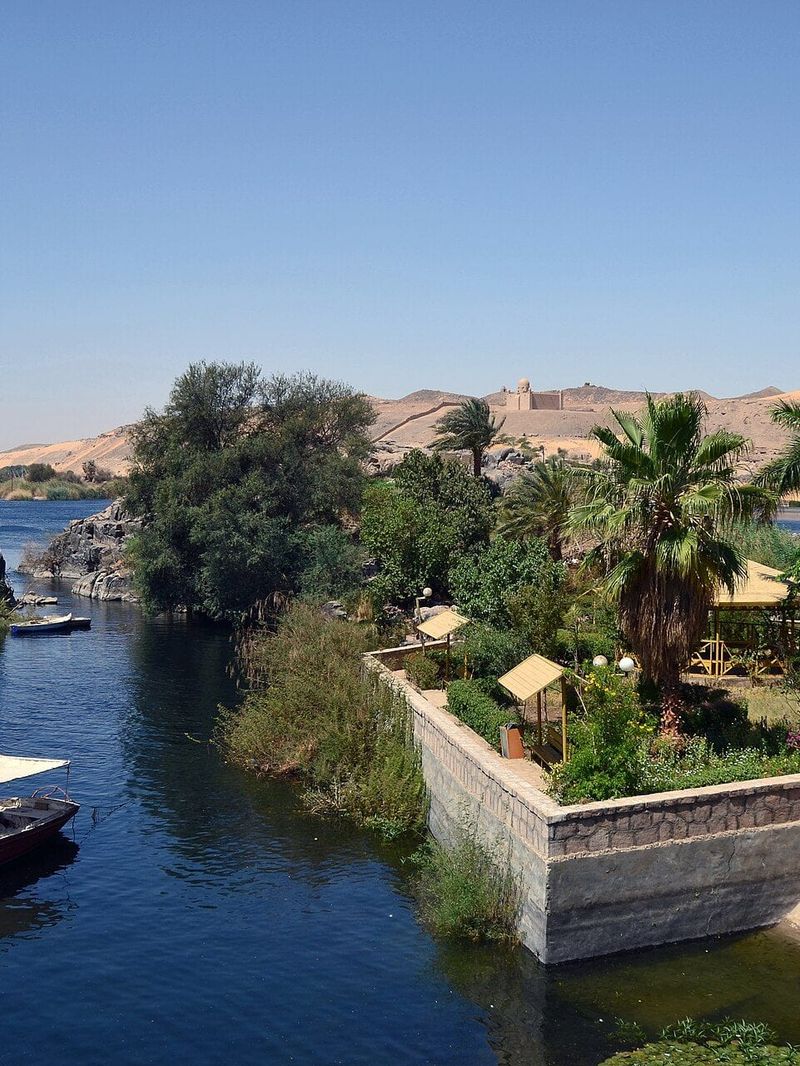
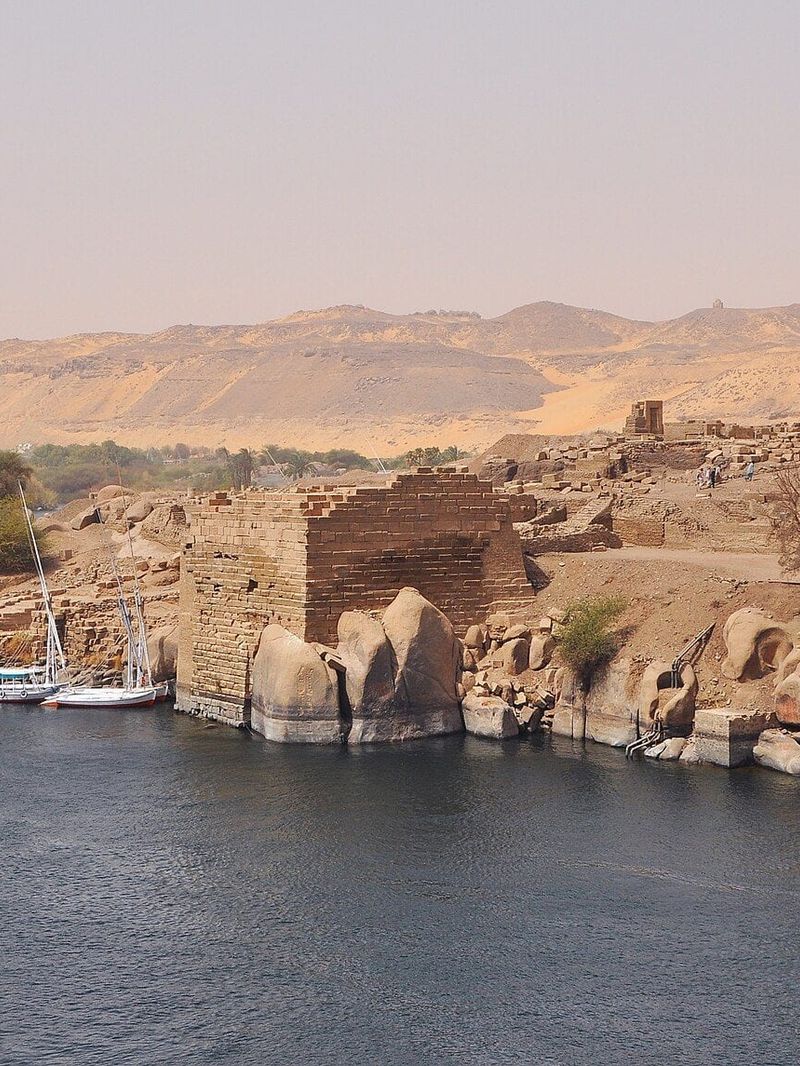
The ancient quarries cover most of the east bank south of the city, from the edge of modern Aswan to Shallal by the First Cataract. There were smaller quarries on Elephantine Island and on Sehel Island.
How granite was quarried
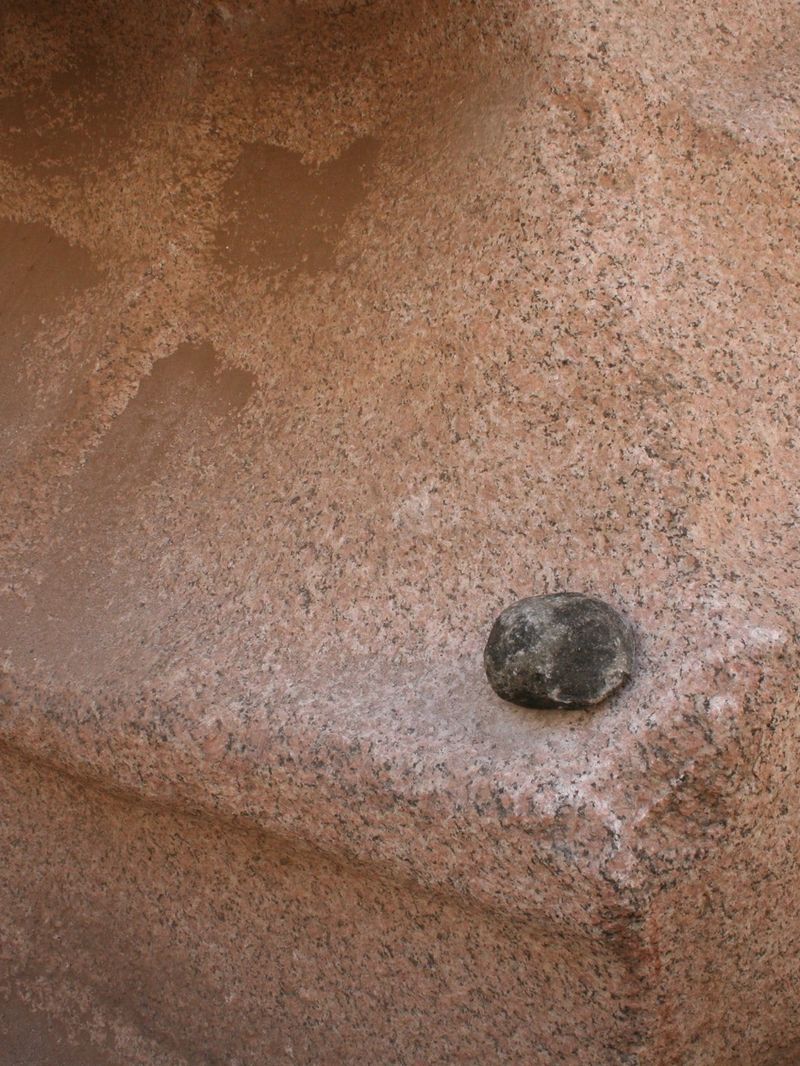
Much of the early work did not cut into solid rock at all. Weathering had broken the granite into huge rounded boulders. The first quarrymen split and dressed these. Only for the largest pieces, such as obelisks, did they attack the bedrock. They pounded trenches around a block with balls of dolerite, a stone harder than granite. They also used fire to crack the surface. Many of these pounders still lie in the quarries. From the Iron Age onwards, workers split stone with lines of small iron wedges, which left rows of triangular slots along the rock edges.
Northern, central and southern quarries
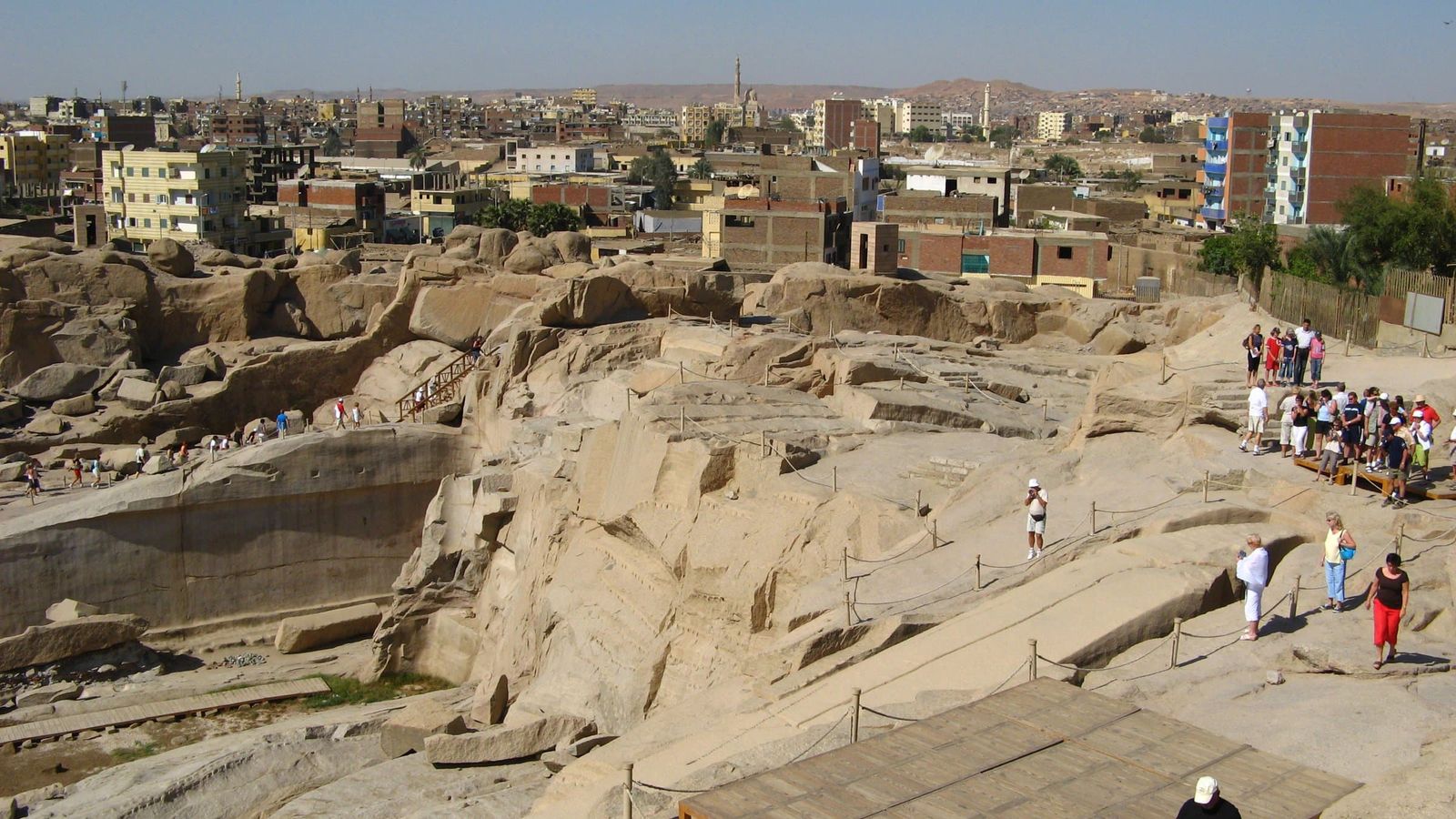
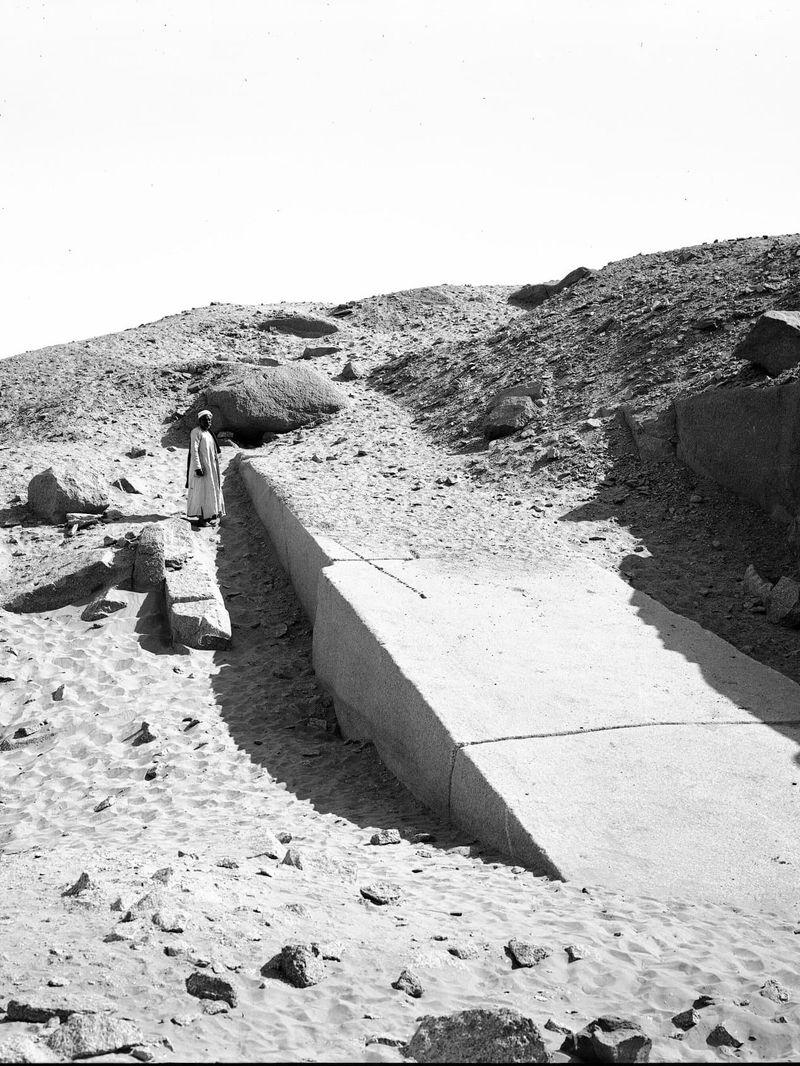
The best known area is the Northern quarry around the Unfinished Obelisk, where a giant obelisk of the New Kingdom cracked and was left in the rock. Excavations there uncovered trenches from which obelisks were taken for Karnak, an inscription of Thutmose III and drawings left by the workers. A paved quarry road 350 metres long, built of local granite, runs down from a New Kingdom quarry on the plateau.
Further south, the Central quarries hold a sandstone cliff carved with inscriptions, one naming Queen Hatshepsut. The Southern quarries around Shallal are the best preserved part of the landscape. Here lie unfinished New Kingdom colossi, including the colossal statue at Shallal, together with an unfinished seated statue and granite baths of the Roman period, abandoned where they were cut.
A landscape under pressure
Since the 1990s Egyptian archaeologists have cleared and mapped the quarries. In the 2000s the Supreme Council of Antiquities surveyed them with the Geological Survey of Norway as part of the European QuarryScapes project. They recorded quarry roads, ramps, workers' shelters, inscriptions and unfinished objects, then marked the limits of the surviving ancient quarries. Modern housing and granite quarrying have destroyed much of the ancient landscape, which is why the survey called for urgent protection.
Exhibo editorial
The temples of Egypt are finished things. The quarries show the work. Here you see the trench walls still pocked by pounding, the grids drawn on the rock and the cracks that ended the work in a moment.
Start at the Unfinished Obelisk, then look south across the hills. Much of the pale, smoothed rock you see was shaped by people with no iron tools, only stone and fire. Somewhere in that rock is the source of the obelisk you once walked past in Rome or Paris.
Gallery
How to find it
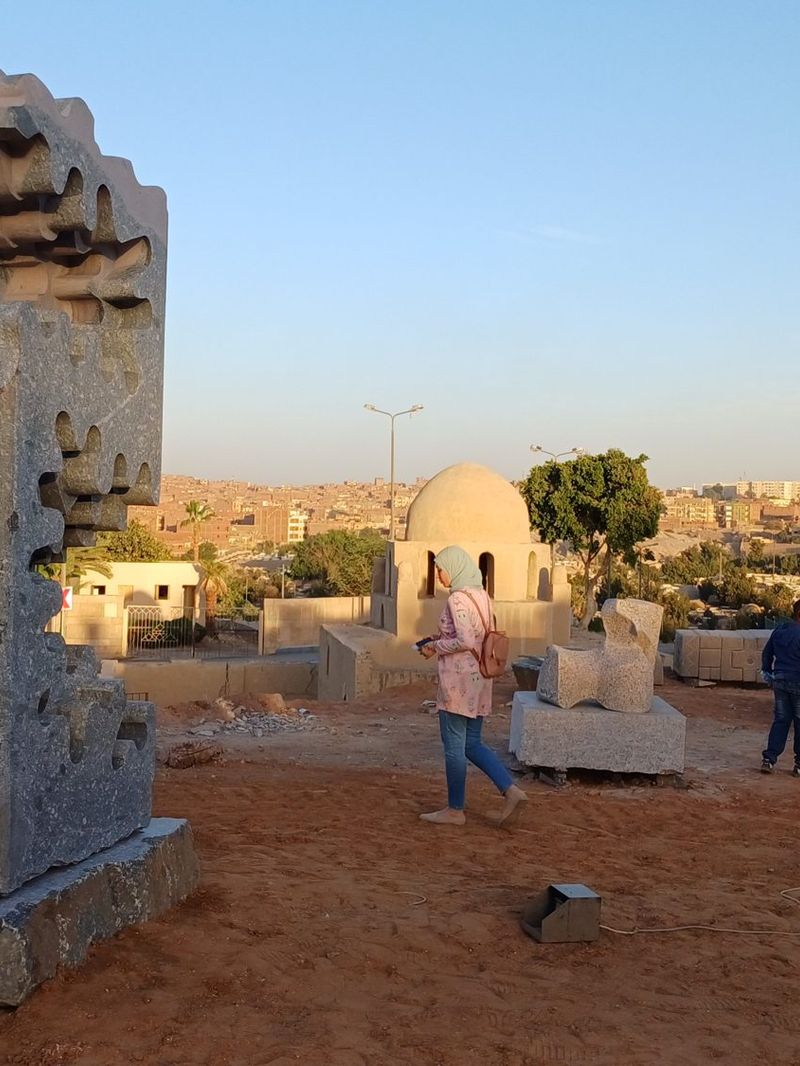
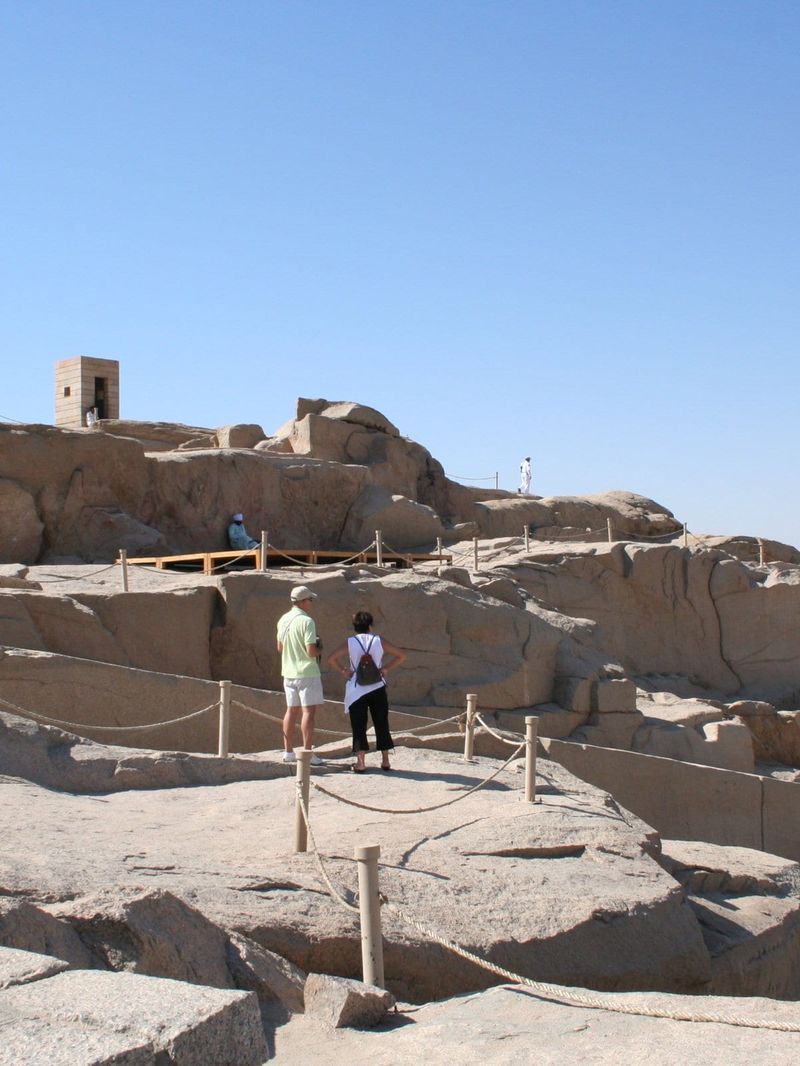
The main visitable part of the quarries is the Unfinished Obelisk site on the east bank, south of central Aswan near the Fatimid Cemetery, with a visitor centre, walkways and a ticket office. The other ancient quarries stretch south through the hills and among the houses towards Shallal. They have no visitor facilities, so go with a local guide.