Sehel Island
Granite boulders of the First Cataract carved with hundreds of inscriptions — including the Famine Stela.
The rocks of the cataract
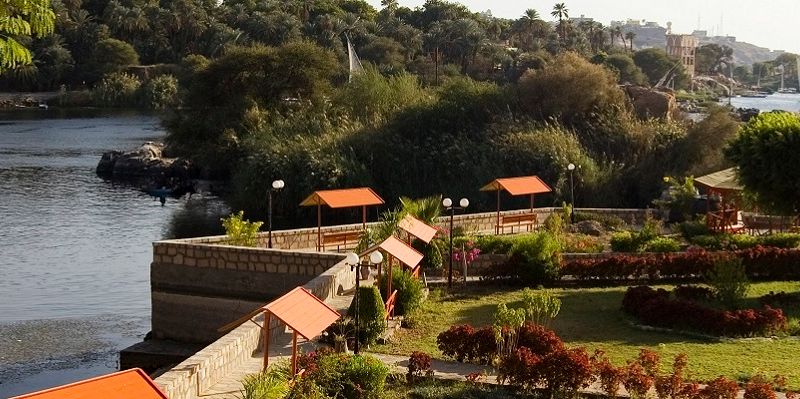
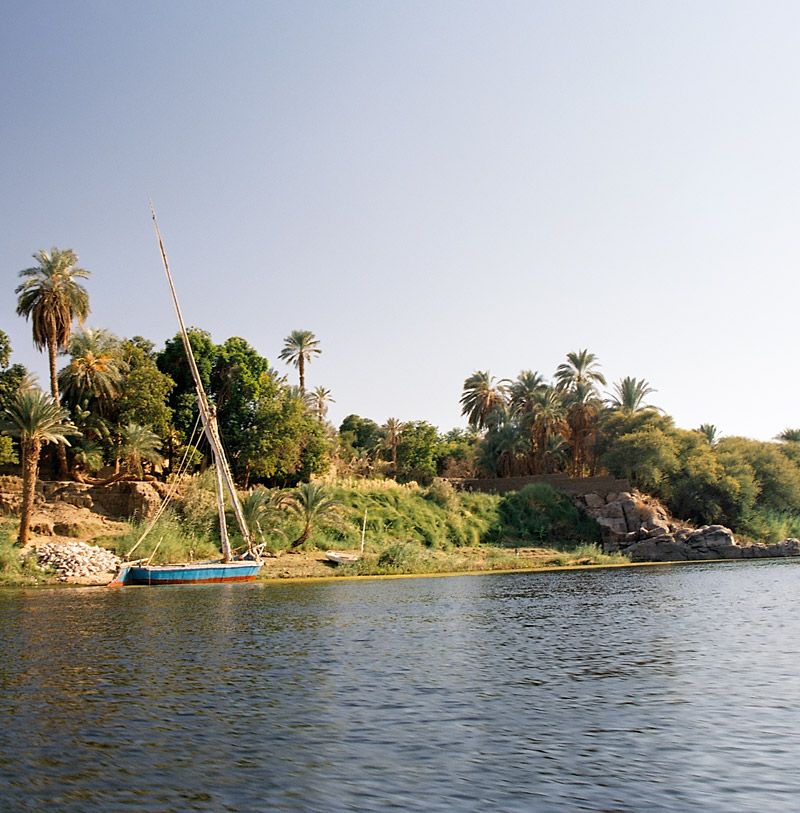
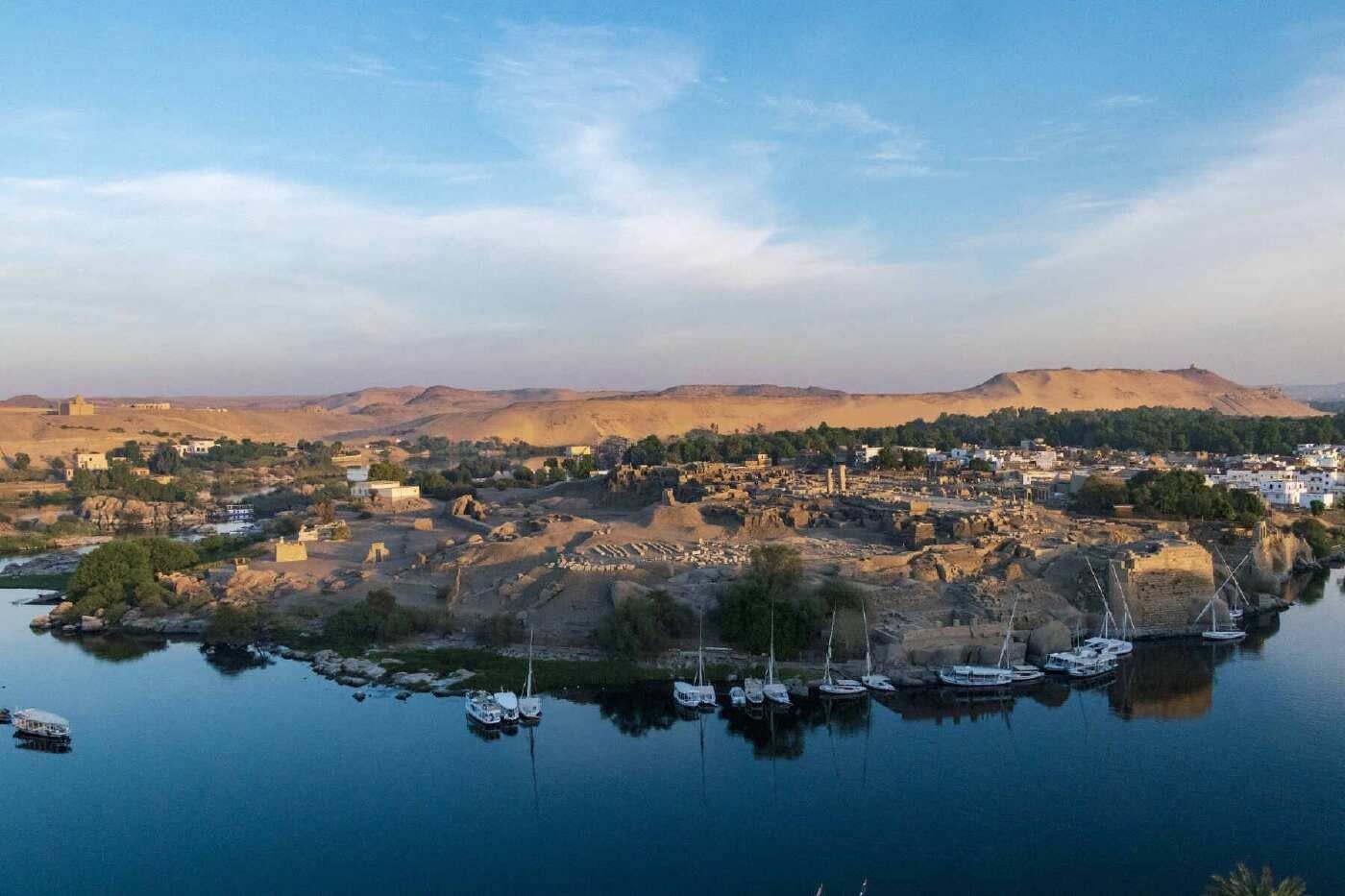
Sehel is an island in the Nile at the First Cataract, a few kilometres south of the centre of Aswan, where the river breaks around heaps of dark granite boulders. In antiquity the island was sacred to Anuket, goddess of the cataract, and to the triad of Elephantine — Khnum, Satet and Anuket. Expeditions setting out for Nubia or returning from it, officials, priests and travellers left their mark here over some three thousand years, and the granite boulders of the island carry more than two hundred inscriptions and carvings, from the Old Kingdom to the Ptolemaic period: prayers, records of expeditions, names and titles.
The Famine Stela
The most famous inscription is the Famine Stela, carved on a large granite boulder in the Ptolemaic period. Its text is set in the reign of Djoser of the Third Dynasty, some 2,500 years earlier, and tells how Egypt suffered seven years of famine because the Nile failed to rise; on the advice of the sage Imhotep, the king made offerings to Khnum, the god of the cataract, who appeared to him in a dream and promised to restore the flood. In gratitude, Djoser granted the god's temple the revenues of the region. The story, probably composed by the priests of Khnum to support their claims, has often been compared with the biblical story of Joseph and the seven lean years.
Visiting
The island has a small Nubian village on its northern side, and the inscriptions are reached along paths among the boulders. Sehel is visited by boat from Aswan and receives few visitors.
Exhibo editorial
It is an extraordinary landscape: a jumble of black, sun-polished granite boulders rising out of the river, and on almost every flat face, carved words — names, prayers, the titles of officials setting off for Nubia thousands of years ago, like an ancient guestbook written in stone.
Climb to the Famine Stela and trace the story of seven lean years, a dream of the god of the cataract and a king's promise. Go by felucca in the late afternoon, wander among the rocks with the river rushing below, and stop for tea in the Nubian village on the way back.
How to find it
Hire a felucca or motorboat from the Aswan Corniche for the trip south to Sehel Island, about 30–45 minutes depending on the wind. From the landing, paths lead up among the boulders to the inscriptions; the Famine Stela is on the higher ground, signposted, and the Nubian village is on the northern side of the island.