Elephantine Island
Ancient Abu at the First Cataract — temples of Khnum and Satet, a nilometer, Nubian villages and five thousand years of frontier history.
Egypt's southern gate
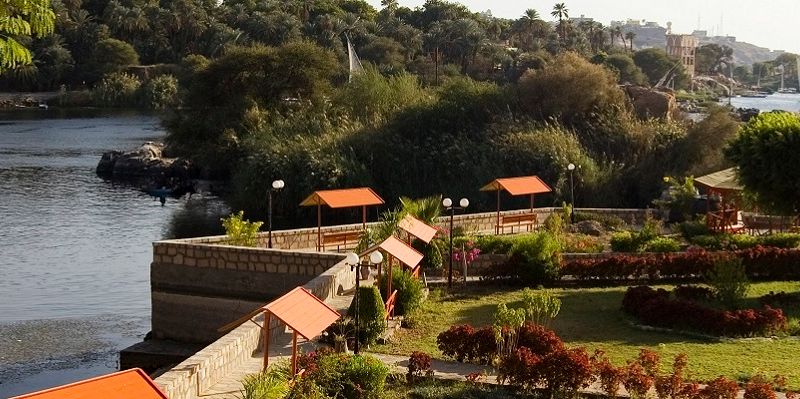
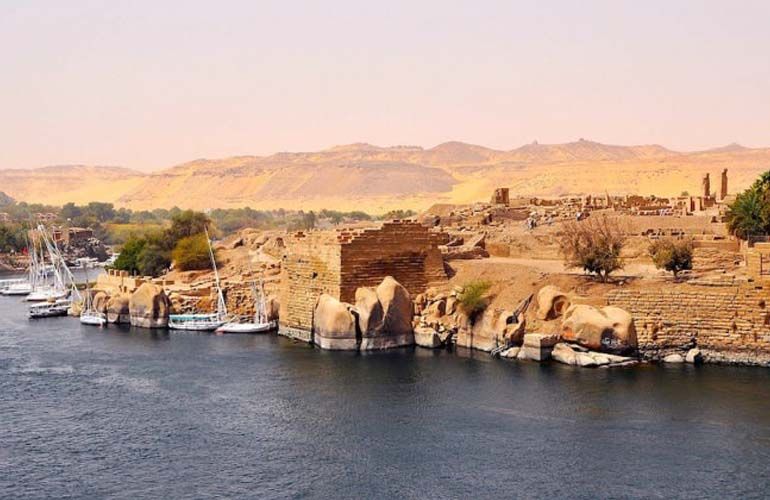
Elephantine is the largest island in the Nile at Aswan, facing the city's corniche. In antiquity it was the town of Abu (later Yebu), a frontier settlement and fortress guarding Egypt's southern border at the First Cataract, a centre of trade with Nubia and Africa — its name, "Elephant Island", probably reflecting the ivory trade or the shape of the granite boulders. Inhabited for more than five thousand years, it has been excavated since 1969 by the German Archaeological Institute and the Swiss Institute in Cairo, revealing a long sequence of towns, temples and houses.
Temples and nilometers
The southern part of the island is an archaeological site. Its main monuments are the temple of Khnum, the ram-headed god believed to control the Nile flood and to shape humans on his potter's wheel, rebuilt in the Late Period and under the Ptolemies, and the temple of Satet, goddess of the cataract and the inundation, partly reconstructed from blocks of the temple of Hatshepsut and Thutmose III. Two nilometers, stairways descending to the river with marked scales, were used to measure the flood; one was restored in the nineteenth century. The site also includes a reconstructed small Ptolemaic chapel, a granite gateway of Alexander IV, and cemeteries of the sacred rams of Khnum.
Many communities
Elephantine's history reflects many peoples. In the fifth century BC, a community of Jewish soldiers serving the Persian empire lived here with its own temple to Yahu; the Elephantine papyri, letters and contracts in Aramaic found on the island, are among the most important documents for the history of Judaism in this period. Today the north of the island is home to the Nubian villages of Siou and Koti, with brightly painted houses and gardens, where visitors can walk and stop for tea.
Exhibo editorial
Take the public ferry from the corniche and in five minutes you are in another world: Nubian lanes, painted doorways, palm gardens, children chasing goats — and at the southern tip, the ruins of a town that guarded Egypt's frontier for five thousand years.
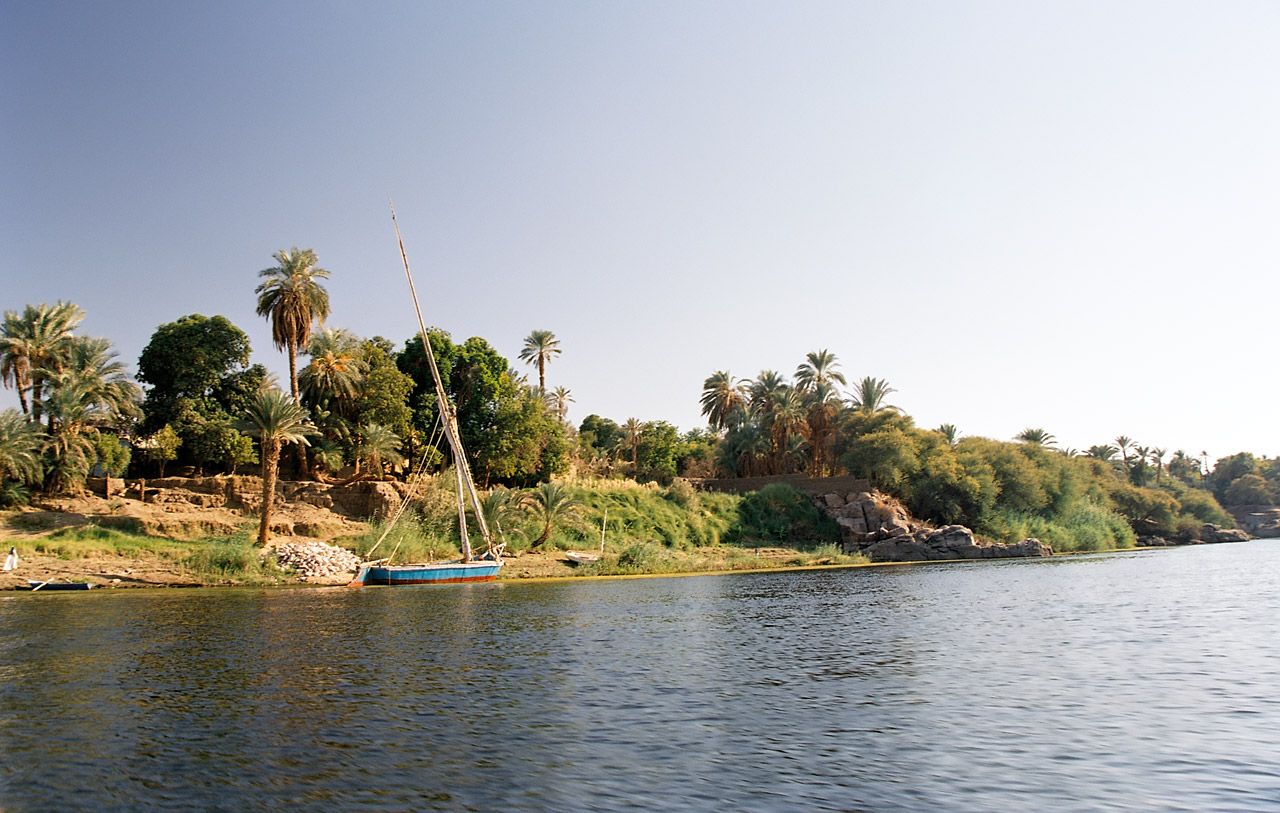
Walk among the temple foundations at sunset, look down the nilometer steps into the river, and watch the feluccas tacking between the granite boulders. Then wander back through the villages. Elephantine is not about one great monument, but about layers of life on one small island, and it's one of the loveliest walks in Aswan.
Gallery
How to find it
Take the public ferry from the Aswan Corniche (near the Egyptair office) or hire a felucca or motorboat to the southern landing on Elephantine Island. The archaeological site and ticket office are at the southern end of the island; the Nubian villages of Siou and Koti lie to the north and can be reached on foot along the island's lanes.