
Dubai · 11/09/2026
The sky held it, the earth remembered
Shahana Rajani, Rohini Devasher and Sarker Protick, in collaboration with the Han Nefkens Foundation
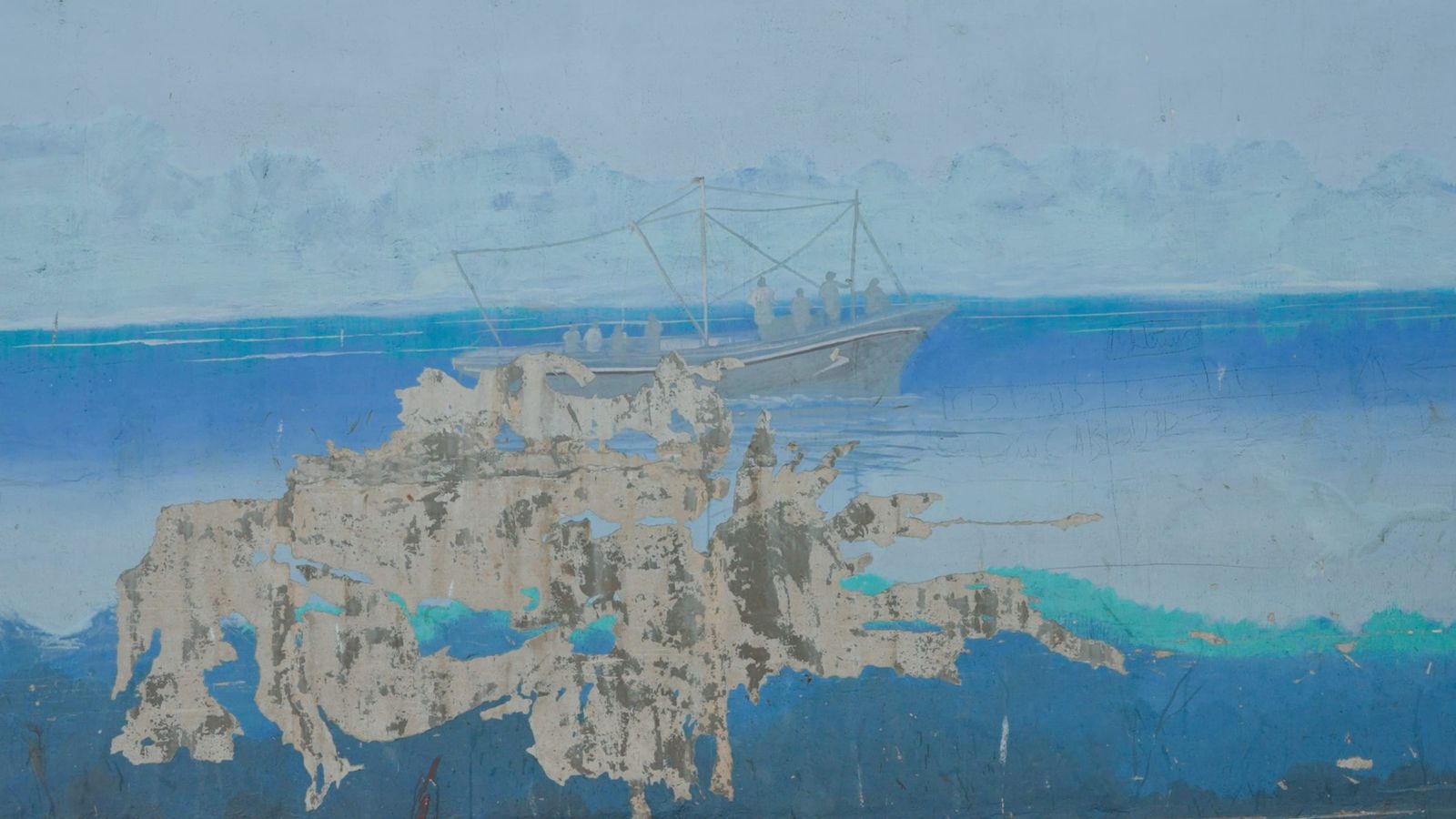
Ishara Art Foundation presents The sky held it, the earth remembered, organised in collaboration with the Han Nefkens Foundation and on view from 11 September to 15 December 2026. The exhibition brings together major works by Shahana Rajani — the recipient of the inaugural South Asian Video Art Production Grant — Rohini Devasher and Sarker Protick. The exhibition considers how land, water and the cosmos act as living archives of memory and history. Through photography, moving image and installation, it proposes that the environment carries the material traces of ecological change and preserves them across deep time. Engaging with contemporary critiques of the Anthropocene, it rejects a human-centred view of the world in favour of one in which people and non-human forces are inseparably entangled. Far from being a passive witness to history, the earth embodies the effects of environmental destruction and infrastructural violence. These traces are inscribed on the environment as residues and stratified layers that often escape human perception. Dense urban infrastructure conceals the vegetation that came before it, which now survives only in liminal spaces; the banks of the Indus, erased by flooding, become brushstrokes in a mural painted from memory; and celestial phenomena turn into repositories of information invisible to the naked eye. In Shahana Rajani's Lines That World a River, the Indus appears as a site of extraction, erasure and contested memory. The three-channel film follows displaced communities of the delta who make murals and paintings to reconstruct and commemorate ancestral villages submerged by hydraulic dams and barrages. At the centre of the three screens stands an enclosure evoking a dargah, often the only structure left standing amid inundated settlements. Rohini Devasher's Latent Fields comprises three monumental habotai silk panels suspended from the ceiling, each measuring three by five and a half metres. Inspired by sunspots and other solar phenomena, their imagery shifts in scale from the microscopic to the atmospheric, as if carrying the viewer through the body of a star. Drawing on specialised technologies used to observe distant stars and subatomic particles, and layering luminous forms with delicate tracings, the installation presents the atmosphere as a palimpsest of cosmic time. A selection from Sarker Protick's Dhaka 1217, a series of 135 black-and-white photographs, completes the exhibition. Made between 2011 and 2026, the images record the transformation of a one-square-mile area around the neighbourhood where the artist was born and still lives, presenting Dhaka as a contested terrain where social, ecological and individual histories meet. The full series is the basis of a forthcoming book of the same title, due in autumn 2026. Bringing together perspectives from Pakistan, India and Bangladesh, The sky held it, the earth remembered foregrounds shared experiences of ecological decline and shows how rivers, landscapes and skies bear witness to changes that cross national borders. Rather than offering a definitive historical account, it invites close and sustained attention to subtle traces that tell stories of both dispossession and resilience — for those willing to listen. The Han Nefkens Foundation – South Asian Video Art Production Grant 2023, in collaboration with Prameya Art Foundation, New Delhi, is presented in partnership with Ishara Art Foundation, Nottingham Contemporary, the Museum of Contemporary Art Tokyo, M HKA Antwerp and Para Site, Hong Kong. Founded in Barcelona in 2009 by the writer and collector Han Nefkens, the foundation supports emerging and mid-career artists working with video through awards and commissions with institutions worldwide.