The Artist's Career Guide
The statement, the CV, the portfolio, the submission, the price list, the commission agreement. Nobody teaches this at art school and everyone needs it. The professional apparatus, written out.
The apparatus art school skips
Most artists learn to make work and then discover a second curriculum: how to describe that work, document it, price it, and send it into the world without sounding like a press release or a plea. This series covers that apparatus — statements, bios, CVs, portfolios, photography, gallery approaches, open calls, edition signing and commission agreements.
What belongs here
Practical guides written for the maker. How to write an artist statement and a short bio that do different jobs. How to build a portfolio and a CV that a gallery or residency can scan. How to approach a gallery without cold-email spam. How to price your own work, photograph it for applications, prepare a submission pack, apply to an open call, sign and number an edition, and set terms for a commission.
Gallery economics, representation as an institution, and buyer-side pricing belong elsewhere: the how-the-art-world-works series for representation definitions, editorial buyer guides for collectors, and edition-numbering technical depth in the paperwork cluster when those pieces are live.
Fences readers should expect
No "get rich from your art" pitches. No guaranteed representation stories. Pricing pieces stay on the artist's side of the table; collector valuation belongs to buyer guides. Commission agreements explain common clauses; they are not law-firm templates for every jurisdiction. Platform sales pitches stay out.
How to use these guides
Read the direct answer first, then the method and the checklist or table. When a step needs a lawyer, an accountant or a specialist photographer, the text says so. Internal links point to this hub, to sibling career guides, and to Exhibo's museums directory when institutional practice is the model. British spelling in the body.
Articles in this series
- GuideFor Artists
How to Write an Artist Statement
A practical method for what, how and why texts that sit beside images, with length targets for applications, walls and websites
An artist statement explains the work, not the career. This hub guide covers a reusable what-how-why draft method, clear length targets for applications and walls, how statement differs from bio and CV, what busy panels actually skim for, and when mentoring or access support is worth paying for.
- GuideFor Artists
How to Build an Artist Portfolio
Select, sequence and format an artist portfolio for galleries, residencies and open calls: PDF, website and file specs
An artist portfolio is a curated set of works with a fixed review order, captions and supporting documents. This guide covers selection, sequencing, PDF versus website, image specifications from CaFÉ and CAA norms, edge cases for installation and time-based work, cost bands, and when to hire help.
- GuideFor Artists
How to Write an Artist CV
Exhibition chronology, education, residencies and collections in a clean reverse-chronological file curators can scan in minutes
An artist CV is a dated record of exhibitions, education, residencies, awards and collections, not a job résumé and not a biography. This guide follows CAA and UK arts-practice conventions: master file, selected cuts, entry formats, layout specs, UK/US terminology, and when to pay for editorial help.
- GuideFor Artists
How to Approach a Gallery
Research, soft approaches, cold-email etiquette and timing for artists who want a gallery conversation without burning bridges
Galleries decide on fit, capacity and trust more than abstract talent. This guide covers how artists research programmes and price bands, read submission policies, build warm contact, write a short outreach email, prepare materials, time follow-ups, and spot pay-to-exhibit traps, without promising representation.
- GuideFor Artists
How to Price Your Own Artwork
Square-inch, linear-inch and time-based formulae, comps, career stage, editions and commissions: a maker’s price list you can defend
Set retail prices you can explain: size multipliers, hourly floors from union guidance, comps by career stage, edition and commission rules, and gallery splits that protect your net. Practical artist-side method for painters and makers, not buyer valuation, secondary-market gossip or insurance appraisal.
- GuideFor Artists
How to Photograph Your Artwork
Straight-on lighting, colour control and file specs so application and portfolio images match the work on your wall
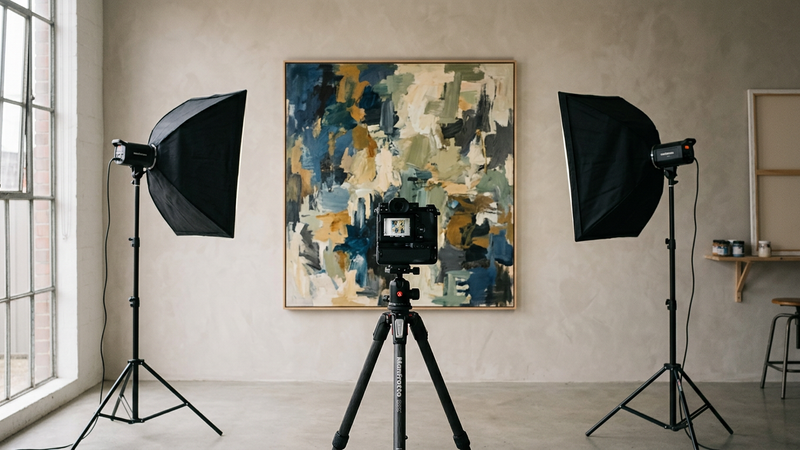
Photograph paintings, drawings and objects for juries and portfolios with even light, parallel camera alignment, honest colour and clean crops. Covers natural and two-light setups, glare control, RAW-to-JPEG export, a kit table, edge cases, professional practice, costs and when to hire an art photographer.
- GuideFor Artists
How to Write an Artist Bio
Third-person career paragraphs for websites, press packs and programmes, with length targets from fifty words to a short page
An artist bio is a short third-person career summary for websites, press and programmes. This guide covers bio versus statement versus CV, a draft method from verified facts to prose, length versions by context, edge cases for thin records and collaborations, how editors cut text, and when paid help is worth it.
- GuideFor Artists
How to Describe Your Own Work
Tombstone facts, wall-length captions and sales copy for single paintings and objects, without rewriting your artist statement
Describe one painting or object with museum-grade tombstone data, a short looking caption and, when needed, practical sales notes. Covers title, date, medium and size conventions, context-specific lengths, process language that stays honest, edge cases, professional editing habits, costs and when to hire help.
- GuideFor Artists
What Goes in a Gallery Submission
Images, CV, statement, cover note and price list: the pack galleries ask for, with file specs and a ready checklist
A gallery submission pack is a fixed set of files: images with captions, artist statement, short bio, CV, cover note and a price or inventory list. This guide covers what each piece does, common file specs from CAA and CaFÉ norms, how to assemble email and portal bundles, and where approach etiquette belongs instead.
- GuideFor Artists
How to Apply for an Open Call
Eligibility, proposals, portals and fee warnings for artists applying to residencies, prizes and exhibition open calls
An art open call application succeeds when you match eligibility, follow file rules, and write a clear proposal for that programme. This guide covers how to select calls, build materials, handle deadlines, read fees, spot predatory offers, and decide when to skip, with pointers to gallery approach and submission-pack siblings.
- GuideFor Artists
How to Sign and Number an Edition
Pencil layout, fraction numbering and AP/HC/PP marks so every impression in your limited edition reads as authorised studio practice
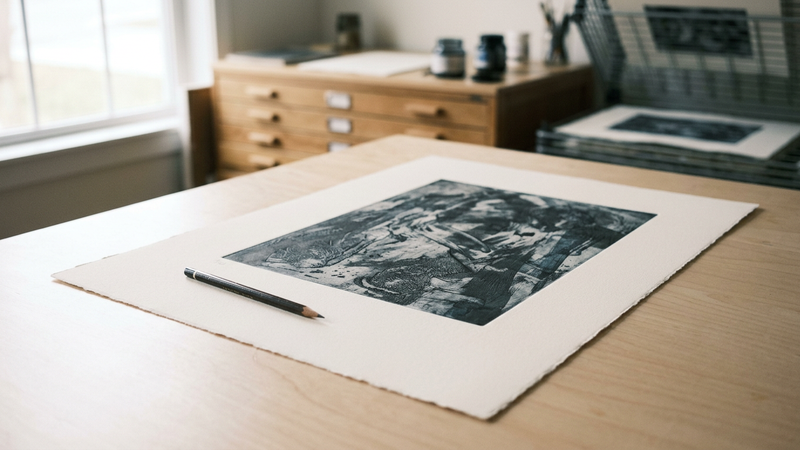
Sign and number limited edition prints with standard pencil placement: edition fraction left, optional title centre, signature right. Covers AP, HC, PP and BAT marks, 2H pencil habits, full-bleed and verso signing, workshop chops, a materials table, professional studio practice, costs and when to bring in a master printer or publisher.
- GuideFor Artists
Commission Agreements for Artists
Scope, deposits, copyright, delivery and cancellation: the key clauses you lock into writing before any studio work starts
Map the clauses in an art commission agreement before you stretch a canvas: brief and revision limits, deposits and kill fees, title versus copyright, delivery, acceptance and exit ramps. Educational overview from union and arts-law templates. Not legal advice; pricing method sits in the sibling guide.