
Dubai · United Arab Emirates
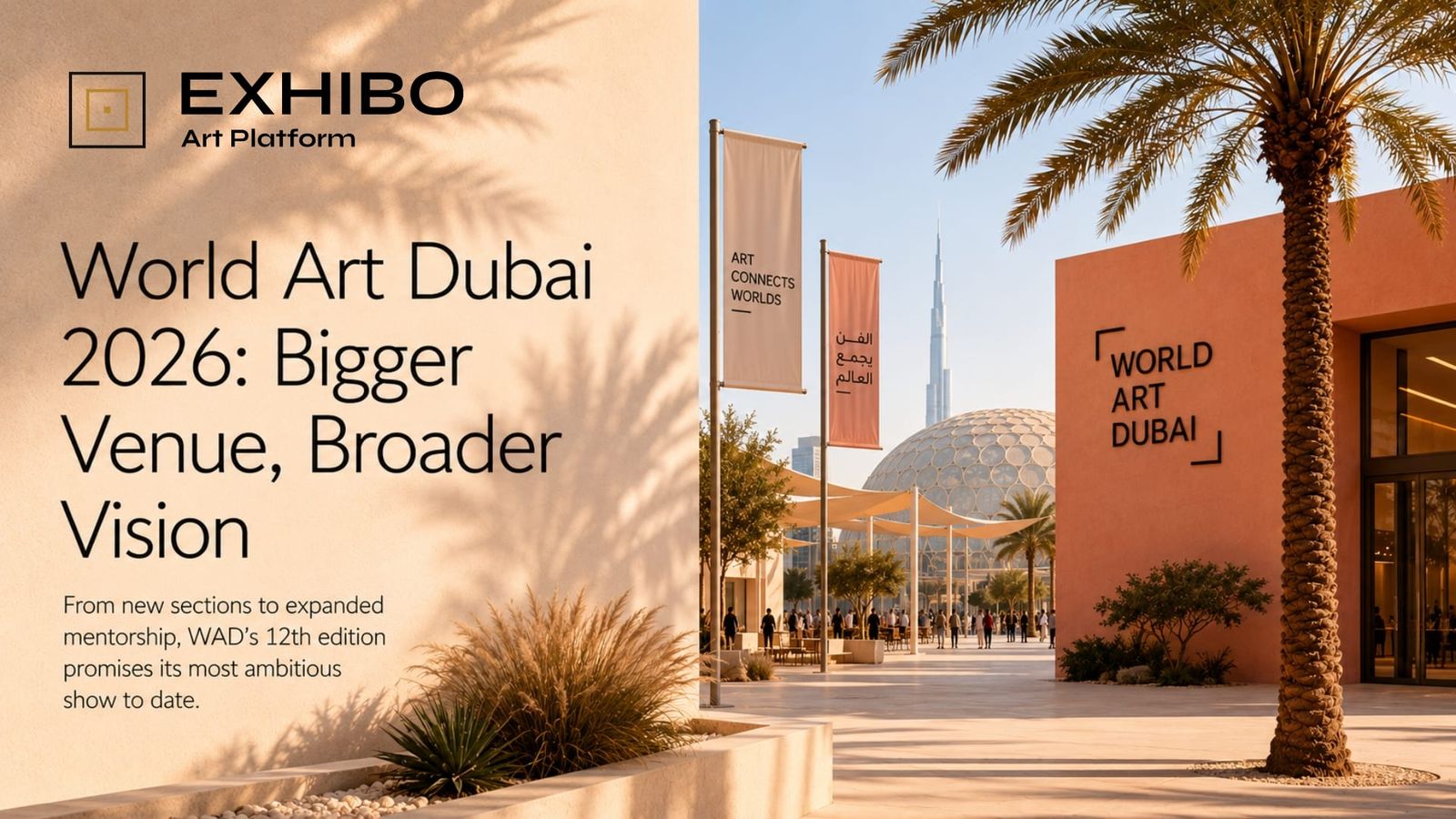
World Art Dubai 2026: Dates, Curators and What to Expect at Expo City
The fair's 12th edition moves to a new venue, introduces a dedicated photography section and expands its mentorship programme — here is everything you need to know.
World Art Dubai returns for its 12th edition from 19 to 22 November 2026 — and this year brings a significant change of address. The fair moves to Dubai Exhibition Centre at Expo City, a venue that offers greater floor space and, for the first time, an outdoor programme to sit alongside the indoor halls. Over 10,000 contemporary works from more than 400 galleries and independent artists representing upwards of 65 countries are expected on show.
The scale places World Art Dubai firmly in a different register from the invitation-only circuit. Where Art Dubai and the international fair calendar tend to concentrate on blue-chip galleries and established names, WAD has always positioned itself as a point of entry — for collectors new to buying, for artists seeking direct exposure, and for galleries testing the Dubai market without committing to a full booth at one of the larger fairs. That positioning becomes more legible this year with an expanded programme built explicitly around access, mentorship and discovery.
PRACTICAL INFORMATION
Dates | 19–22 November 2026 |
Venue | Dubai Exhibition Centre, Expo City Dubai |
Editions | 12th edition |
Scale | 10,000+ artworks, 400+ galleries and artists, 65+ countries |
Website |
A New Curatorial Team
The 2026 edition is led by four curators whose backgrounds span Europe, the Middle East and the broader collector community. Rachael Brown, creative director and co-founder of Capsule Arts, brings a focus on regional artist development and boutique curation. Stéphane de Boysson, a mixed media artist and collector, contributes an international perspective rooted in sculpture. Gottfried Eisenberger, an Austrian artist and gallery owner, adds expertise in the European fine art market. Samar Kamel, an Egyptian artist, author and curator, brings the clearest MENA focus of the four, with deep knowledge of regional emerging talent and contemporary practice.
The curatorial brief for this edition centres on bridging global trends with local heritage — a familiar ambition in Dubai's cultural calendar, but one that gains traction here through the specific selection criteria: works chosen for artistic integrity that nonetheless remain accessible to buyers at various stages of collecting.
PhotoWAD: A Dedicated Photography Section
New to the 2026 programme is PhotoWAD, a standalone platform within the fair focused entirely on photography and lens-based practice. The section brings together regional and international photographers and is positioned as a specialist destination within the broader fair — a recognition that photography has long been under-represented at WAD relative to its presence in the regional gallery ecosystem. Given the strength of documentary and fine art photography coming out of the Gulf and South Asia, this is an addition worth watching.
The Textile Hub Returns
Following its well-received debut in 2025, the Textile Hub returns for a second edition. The section foregrounds material experimentation, contemporary textile art and traditional craftsmanship — woven works, innovative fabric constructions and large-scale textile installations. Alongside the displays, the hub will host hands-on sessions exploring both the history of textile art in the region and contemporary techniques, making it one of the more participatory corners of the fair.
Mentorship and Emerging Artists
World Art Dubai has always taken its educational role seriously, and the 2026 programme reinforces that commitment. The WAD Mentorship Programme returns with a roster that includes Dr Najat Makki, Abdulraheem Salim and Rashid Al Mulla — established names in the Emirati and Gulf art worlds — providing structured guidance to emerging artists over the course of the fair.
Running alongside it, the WAD Future Artists initiative gives students and early-career artists a platform to exhibit their work and make direct connections with professional galleries. For galleries on Exhibo looking to identify emerging talent or develop their artist rosters, this programme is one of the more practical reasons to attend.
Live Art, Installations and Workshops
The outdoor areas at Expo City will host large-scale public sculptures and installations, extending the fair into the surrounding urban space. Inside, the Artist in Residence programme puts selected artists to work live on the floor — visitors can watch work being made and engage directly with the artists throughout the four days.
A full schedule of free workshops runs across the fair for families, young artists and professionals, covering both technical practice and the business of art. Sessions are spread across the day to allow for different schedules.
Galleries mentioned
Related reading
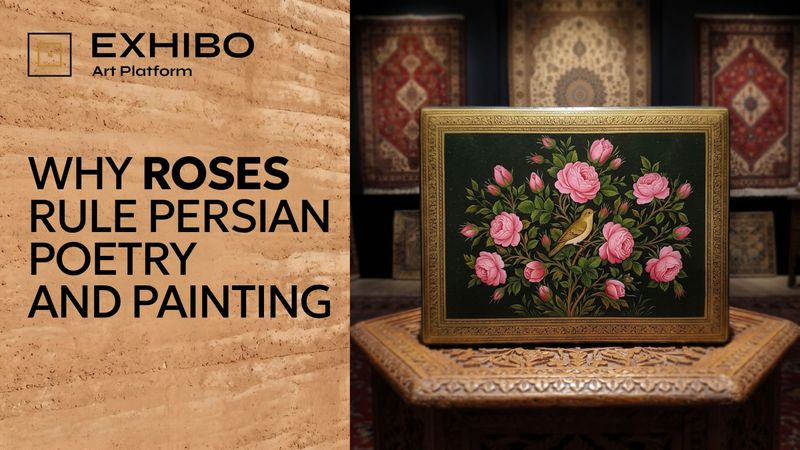
The Flower That Was Never Only Beautiful
The rose rules Persian poetry and painting — but under the sweetness sits a thorn, a bleeding bird, and a national emblem quietly assembled out of Chinese, European and Persian parts. A history of gol o bolbol, from a medieval still to a Dubai gallery.
Gol o bolbol — the rose and the nightingale — is among the most beautiful images in a thousand years of Persian art, and in modern Persian it also means sweet, empty talk. Under the tile, the picture is darker: a bird singing in blood for a flower that will not answer and will not last.
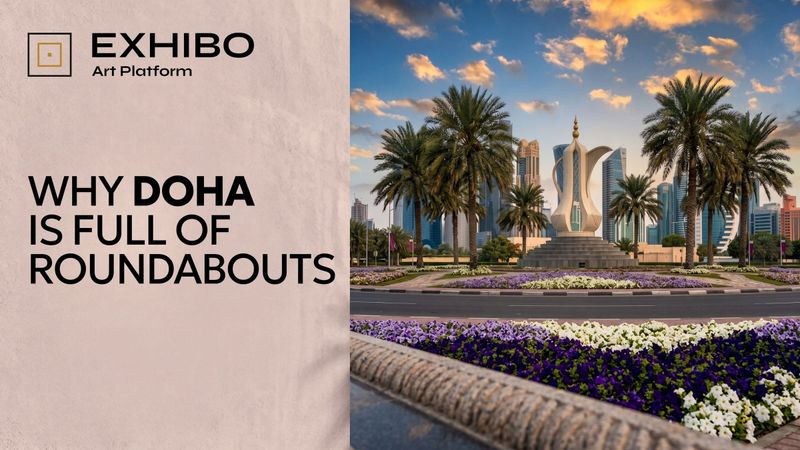
Why Doha Is Full of Roundabouts
An old circle at a crossroads, sharpened by British road engineering, became the way an Arabian city found its way and remembered itself — and it took the bulldozers to reveal it.
In a city where a landmark was more useful than an address, Doha's roundabouts became its navigation, its landscaping and its national image all at once. Now they're being torn out for signalled junctions — and the affection for them arrived, as one scholar put it, only posthumously.
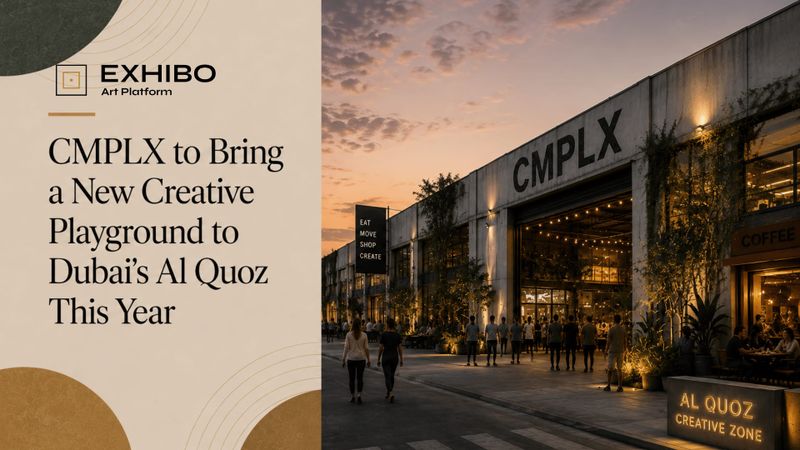
CMPLX to Bring a New Creative Playground to Dubai's Al Quoz This Year
A seven-warehouse lifestyle hub combining food, wellness, retail and creative studios is set to open in Al Quoz Creative Zone by the end of 2026, adding a new anchor to the neighbourhood built around Alserkal Avenue.
CMPLX, a new warehouse-style lifestyle destination combining food, wellness, retail and creative studios, is set to open in Dubai's Al Quoz Creative Zone by the end of 2026 — adding a fresh anchor to a neighbourhood already defined by Alserkal Avenue's galleries and cultural spaces.