
Gwangju · South Korea
Rites of Passage: Navigating Liminality at Gwangju Biennale 2026
Liminality and cross-cultural dialogue at the 2026 edition
Navigating the Threshold
The upcoming Poland Pavilion at the Gwangju Biennale turns its attention to liminal states. Titled Rites of Passage and organised by the Adam Mickiewicz Institute, the presentation examines the quiet uncertainty that follows closure but precedes renewal. Running from 5 September to 15 November 2026, the project aligns with the sixteenth edition's overarching directive: You Must Change Your Life. Rather than offering definitive conclusions, the show invites visitors to sit with ambiguity, mirroring how contemporary society navigates upheaval without traditional communal frameworks.
Curator Paulina Olszewska anchors the conceptual framework in a specific passage from Han Kang's The White Book. The author drafted those reflections while residing in Warsaw during 2016, capturing the hesitation that defines moments between established realities and unformed futures. This literary starting point expands into a wider meditation on transformation across personal, historical, and ecological dimensions. The pavilion acknowledges that modern existence lacks shared ceremonial structures to mark these shifts, leaving individuals to interpret change largely in isolation.
A Cross-Cultural Dialogue
The exhibition bridges Polish and Korean practices through a carefully assembled roster. Works by Alicja Bielawska, Anna Zaradny, and the duo Inside Job (Ula Lucińska and Michał Knychaus) converse with historical pieces by Urszula Broll and Park Saengkwang. The latter remains a foundational figure in modern Korean art, whose legacy continues to inform regional visual culture. Yeesookyung contributes a site-specific installation, rounding out a lineup that deliberately spans generations and methodologies.
Material diversity drives the sensory experience. Canvas paintings and graphite drawings share walls with ceramic forms, woven textiles, and sculptural assemblages built from both natural and manufactured components. Video projections and audio elements intersect with tactile objects, creating layers that resist singular interpretation. The curatorial strategy avoids a linear narrative, instead favouring an open architecture where meaning emerges through juxtaposition rather than instruction.
Spatial Choreography and Acoustic Guidance
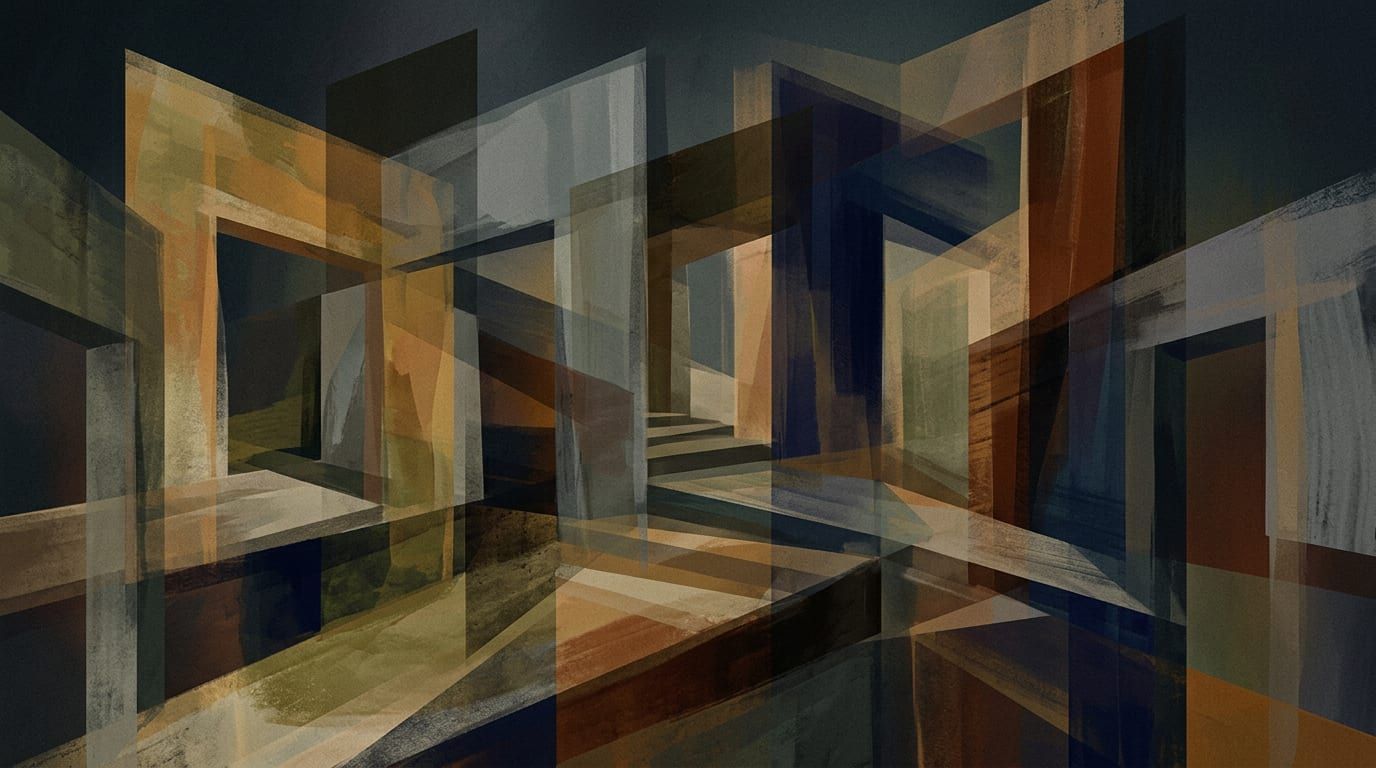
Movement through the pavilion itself functions as a metaphorical crossing. Olszewska has designed distinct zones that alternate between seamless integration and abrupt fragmentation. Some corridors encourage gradual immersion, allowing adjacent works to bleed into one another visually and conceptually. Other areas deploy sharp contrasts, employing dissonance and structural rupture to mirror societal fractures. Visitors physically enact the threshold they are observing, shifting from contemplative stillness to active navigation.
A bespoke acoustic score underpins this journey. Drawing upon regional musical traditions whilst embracing avant-garde techniques, the composition acts as an invisible guide. Listeners encounter shifting frequencies and rhythmic patterns that respond to architectural transitions, reinforcing the pavilion's focus on suspended time.
Situated within a global landscape defined by environmental strain, geopolitical conflict, and widening social divides, the presentation treats metamorphosis as an urgent reality rather than an abstract theory. Supported by the Embassy of the Republic of Poland in Seoul, the ING Polish Art Foundation, Galeria Studio, leeleenam studio, and the Ministry of Culture and National Heritage of Poland, the project demonstrates how institutional backing can facilitate nuanced cross-border conversations. By framing transition as both subject and structure, the Poland Pavilion offers a reflective space where Polish and Korean perspectives converge, acknowledging that adaptation remains an inherently collective yet deeply individual undertaking.
Related reading
M+M: The Day of the Mantis at the 16th Gwangju Biennale
Luxembourg Pavilion's immersive insect-centric film trilogy explores ecological anxiety and non-human perspectives
A new cinematic installation by Marc Weis and Martin De Mattia refracts contemporary unease through the eyes of arthropods at South Korea's premier contemporary art festival.
Birke Gorm: the evening and the morning and the night at the Gwangju Biennale
Austria's national pavilion reimagines a museum loft as a living archive of repurposed sculpture and hidden histories.
The Austrian Pavilion transforms an upper-floor gallery into a tactile attic, exploring material memory and marginalised narratives through sculpture and sound.
Vibe Era: Contemporary Abstraction and the Rise of Atmosphere
How four artists reframe non-representational practice through organic process and visual mutation
The Ilmin Museum of Art's latest survey examines how contemporary abstraction navigates the tension between historical legacy and algorithmic generation.