
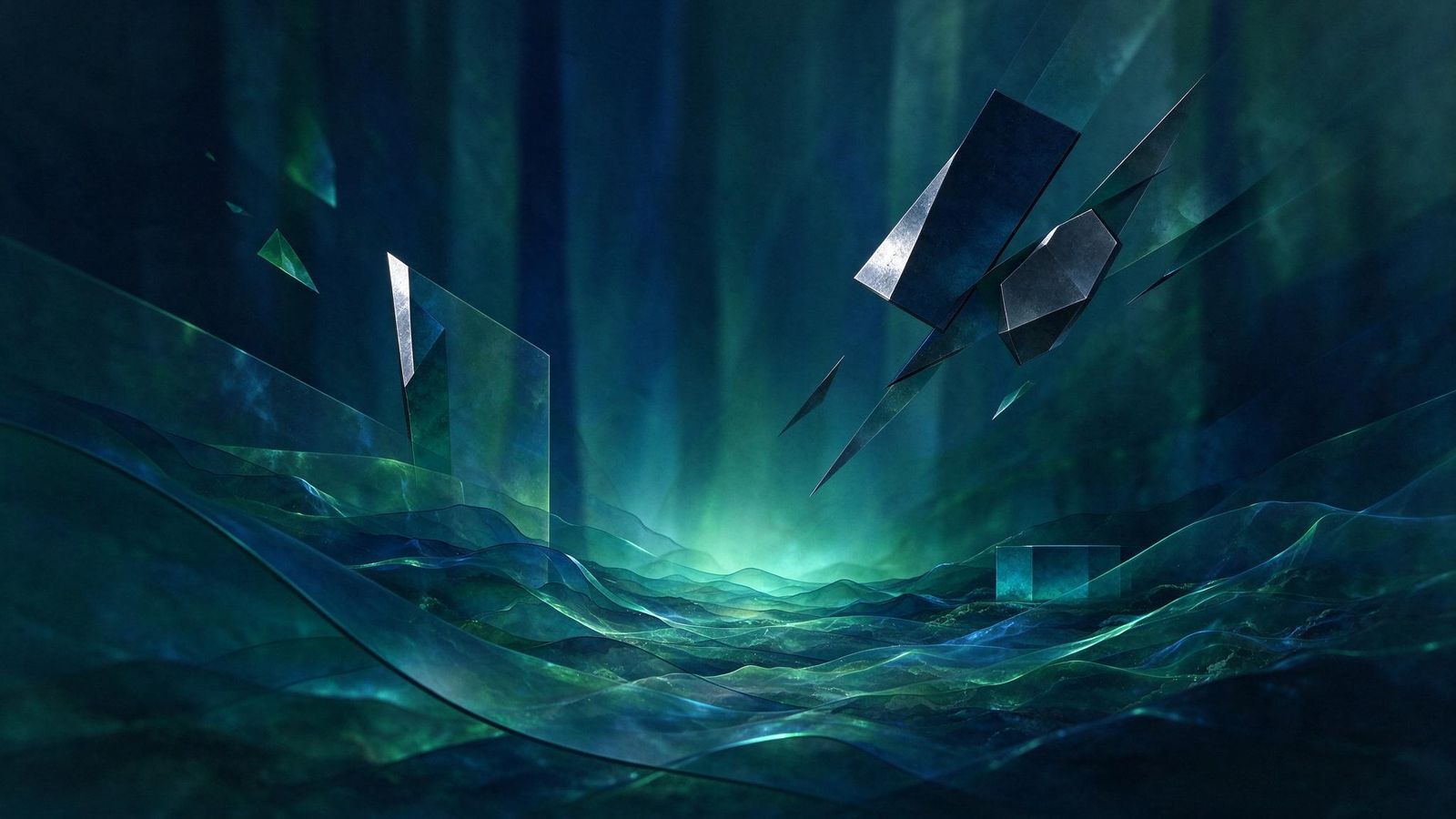
Gwangju · South Korea
Aqua Paradiso: Revisiting Water as Ecological Actor
Three Korean artists explore aqueous systems and the Anthropocene in the touring exhibition
Revisiting the Fluidity of Aqua Paradiso
Originally staged in Gwangju during 2022, Aqua Paradiso operated as a substantial survey examining aqueous systems through multiple disciplinary lenses. Organised by the National Asian Culture Center, the initial presentation gathered eleven practitioners to investigate how liquid environments intersect with philosophy, aesthetics, and environmental science. Now resurfacing in 2026, the project travels to venues across India and Australia, running from September 11 through November 20. This iteration narrows its focus to three South Korean contributors: Boo Jihyun, Hyewon Kwon, and Eunhae Jung, who perform under the moniker eco orot. The reduction from a sprawling collective display to a concentrated triptych allows visitors to engage more intimately with distinct methodological approaches to the same central motif.
Rather than treating moisture simply as a utilitarian commodity or scenic backdrop, the curatorial framework positions it as an active participant within global ecosystems. Historical societies often interpreted hydrological phenomena through spiritual frameworks, experiencing profound reverence when confronted with tidal forces and oceanic vastness. Modern industrialisation subsequently stripped away this mystical dimension, reframing fluids exclusively as commodities to be regulated and extracted. Contemporary environmental crises now manifest as direct consequences of that ideological pivot. By deploying creative methodologies, the show seeks to resurrect those diminished modes of observation. The underlying argument suggests that reclaiming a sense of the sublime is not merely an aesthetic exercise, but a necessary prerequisite for developing sustainable cohabitation strategies in an increasingly fractured planetary landscape.
Boo Jihyun contributes Where is it going, a sculptural arrangement constructed from discarded manufacturing materials. Through slow, rhythmic machinery, the piece visualises continuous biological cycles while functioning as a cautionary statement regarding resource depletion. The apparatus illustrates how terrestrial organisms and synthetic refuse remain permanently interwoven, operating beyond conventional boundaries of waste and utility. Viewers are invited to witness the quiet persistence of natural processes even when surrounded by human-made remnants.
Hyewon Kwon offers Liquid Vision, a moving-image work framed as a fictional field report recorded by an alien survey drone navigating planetary hydrospheres. By adopting an artificial observational stance, the footage interrogates how light diffuses through saline layers and how tactile feedback operates outside human biology. The sequence ultimately questions whether technological mediation can deepen our understanding of aquatic habitats rather than distance us from them. Stripping away anthropocentric assumptions reveals alternative ways of perceiving fluid dynamics and ecological interdependence.
Meanwhile, eco orot transforms coastal detritus recovered from Jeju Island into contemplative objects. Plastic Mandala arranges recovered polymers according to traditional circular iconography, suggesting that destruction and regeneration operate simultaneously. Paired with Ocean Tears, which suspends thousands of transparent vessels containing microscopic polymer fragments, the duo constructs a memorial space dedicated to marine degradation. These interventions convert pollution into tangible prompts for ethical reflection, challenging audiences to confront the physical reality of consumption.
The initiative forms part of a broader cultural exchange programme funded by South Korea's Ministry of Culture, Sports and Tourism alongside the Korean Foundation for International Cultural Exchange. Presenting these works outside their original institutional setting underscores the adaptability of contemporary Korean artistic practices. As climate narratives dominate global discourse, exhibitions like this demonstrate how galleries can function as laboratories for empathy rather than mere repositories of objects.
Related reading
M+M: The Day of the Mantis at the 16th Gwangju Biennale
Luxembourg Pavilion's immersive insect-centric film trilogy explores ecological anxiety and non-human perspectives
Birke Gorm: the evening and the morning and the night at the Gwangju Biennale
Austria's national pavilion reimagines a museum loft as a living archive of repurposed sculpture and hidden histories.
Vibe Era: Contemporary Abstraction and the Rise of Atmosphere
How four artists reframe non-representational practice through organic process and visual mutation