
Gwangju · South Korea
Birke Gorm: the evening and the morning and the night at the Gwangju Biennale
Austria's national pavilion reimagines a museum loft as a living archive of repurposed sculpture and hidden histories.
A Living Attic in Gwangju
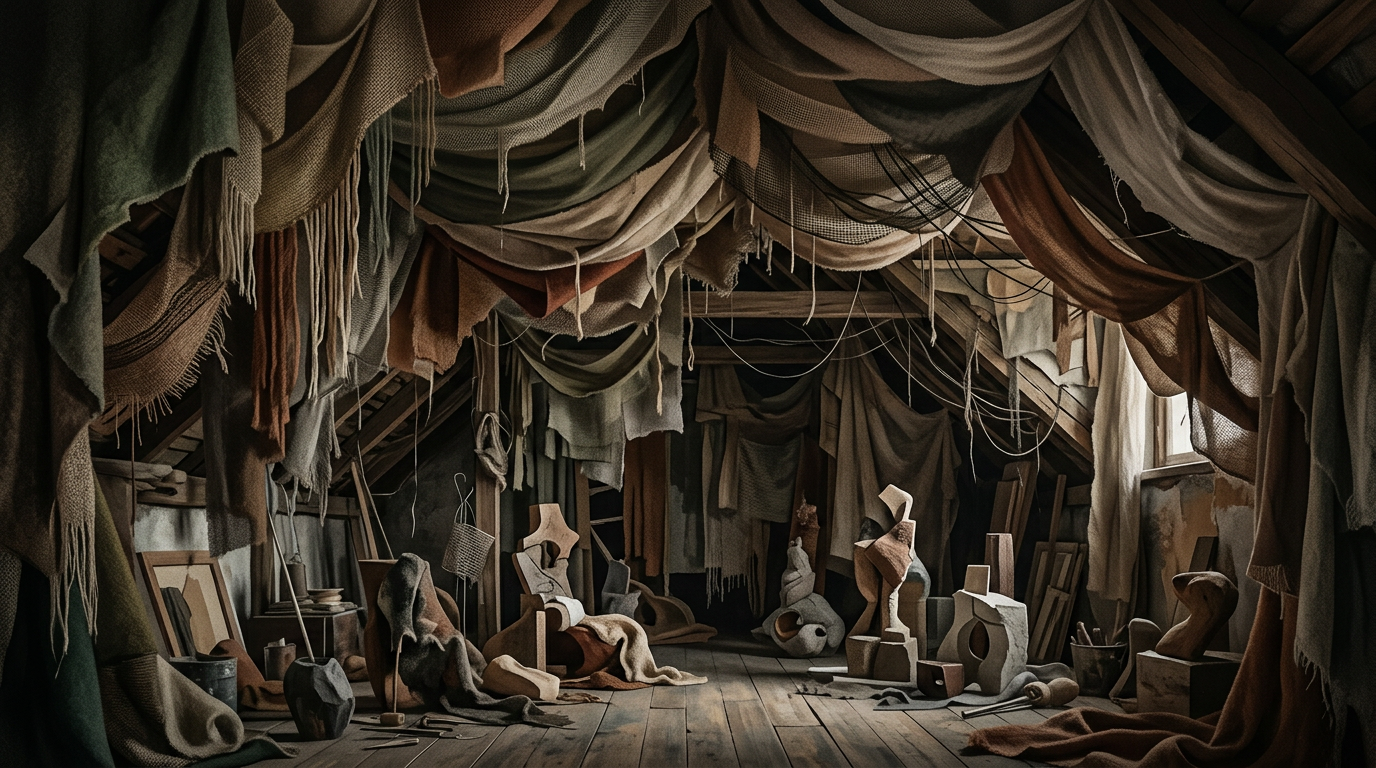
Austria returns to the international stage with Birke Gorm occupying the national pavilion for the sixteenth edition of the Gwangju Biennale. Running from early September through mid-November 2026, the presentation unfolds across the upper level of the Eunam Museum of Art. Titled the evening and the morning and the night, the project reimagines this architectural zone as a domestic loft brimming with dormant potential. Curated by Attilia Fattori Franchini, the installation marks Vienna's second solo appearance at the South Korean festival, shifting focus away from polished display toward concealed archives.
Material Memory and Hidden Histories
Gorm's practice consistently interrogates how mundane items accumulate cultural weight over time. By salvaging and recontextualising found substances, she explores the shifting boundaries between utility and obsolescence. This year, the attic serves as both physical framework and psychological metaphor. Layered drapery forms a canopy of sloping ceilings and shadowed recesses, constructed entirely from reclaimed cloth. The resulting atmosphere evokes a repository where forgotten belongings rest undisturbed, yet pulse with unseen narratives. Much like human cognition, this elevated chamber holds suppressed recollections and unvoiced perspectives, particularly those historically excluded from dominant records. Marginalised experiences emerge here as acts of quiet endurance rather than passive absence.
Sculptural Topographies and Sensory Shifts
At the heart of the spatial arrangement are numerous sculptural assemblages drawn from several ongoing projects spanning recent years. Crafted primarily from salvage gathered across Vienna and local workshops in Gwangju, these ambiguous figures embody states of fatigue, vigilance, and collective pause. Embedded elements such as oxidised hardware and corrugated board anchor the compositions in recognizable domestic reality, prompting reflection on cycles of production, maintenance, and discard. Accompanying the visual field is a dynamic audio-visual programme orchestrated by composer Christian Ingemann. Shifting illumination and ambient frequencies dissolve the boundary between daylight hours and darkness, transforming the static environment into a breathing ecosystem. Visitors encounter a space that refuses fixed interpretation, instead encouraging contemplation regarding contemporary rhythms of labour and repose.
Curatorial Framework and Publication
The accompanying volume tales from the attic extends the exhibition's theoretical underpinnings through essayistic prose and speculative writing. Designed by the Vienna-based studio FONDAZIONE and released by Berlin publisher DISTANZ, the book bridges analytical critique with imaginative narrative. Gorm, originally from Hamburg and now operating from Vienna, continues to challenge conventional manufacturing hierarchies while examining gendered divisions of creative labour. Fattori Franchini, who also directs KUNSTVEREIN GARTENHAUS, brings her extensive curatorial expertise to guide the project's conceptual architecture. The initiative receives institutional backing from Phileas – The Austrian Office for Contemporary Art, alongside financial support from federal cultural ministries.
Related reading
M+M: The Day of the Mantis at the 16th Gwangju Biennale
Luxembourg Pavilion's immersive insect-centric film trilogy explores ecological anxiety and non-human perspectives
Vibe Era: Contemporary Abstraction and the Rise of Atmosphere
How four artists reframe non-representational practice through organic process and visual mutation
The Look is A Li(k)e at the Gwangju Biennale
Interrogating visual culture and national identity at the 16th Gwangju Biennale