
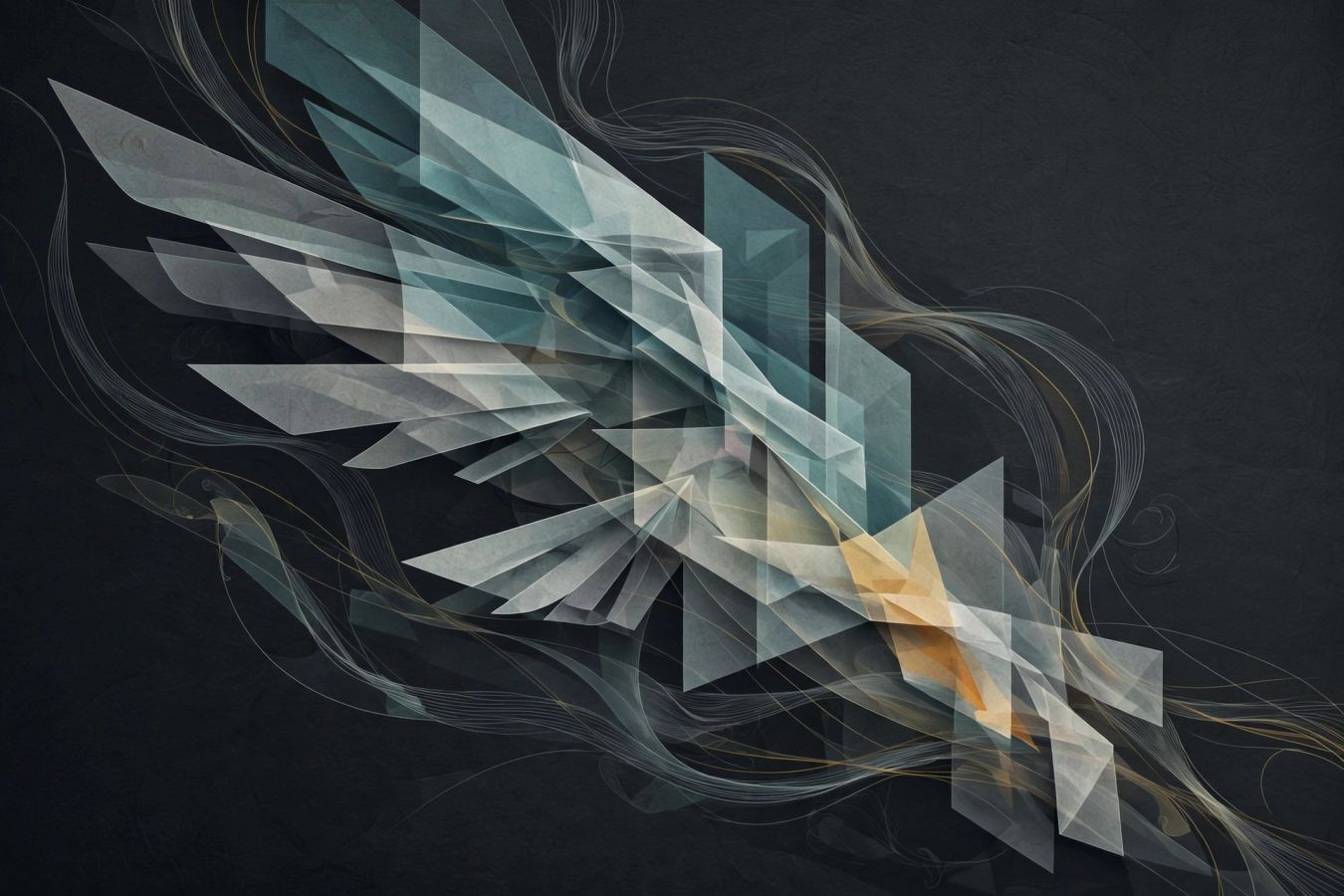
Gwangju · South Korea
ACC Future Class and Sun Choi's Breath-Driven Artworks
How respiration replaces the brush in a shifting participatory practice
Breath as Medium
What remains when air leaves the body? Visual artist Sun Choi has spent over a decade asking exactly that question through a participatory practice that treats respiration as both pigment and protocol. Originally launched in 2014 under the working title Butterflies, the initiative invited strangers to exhale across stretched canvases. The resulting splatters and trails occasionally mirrored insect wings, yet the true subject was always human presence. Each participant contributed without training or intention, allowing chance and physiology to dictate composition. Traditional abstract painting usually centres the maker's hand and trained eye. This approach deliberately removed those controls. The resulting surfaces function as archives of anonymous activity rather than expressions of singular vision.
Digital Respiration
By 2026, ACC Future Class introduced a new iteration titled You and I, Butterflies. The core mechanism shifted from physical paint to algorithmic translation. Users now direct their exhalation into smartphone microphones. Sensors record pressure and rhythm, converting those biometric signals into distinct digital forms. No two sequences produce identical outputs. Geographic boundaries dissolve entirely. Contributors may join from any location at any hour, adding individualised shapes to a growing network. The cumulative dataset eventually resolves into a moving image installation scheduled for display on the ACC Media Wall in December 2026. This transition from tactile medium to virtual space does not abandon the original premise. It simply scales the encounter beyond architectural limits.
Distributed Agency
The project operates as a quiet critique of conventional creative hierarchies. When breath replaces brushwork, the distinction between creator and spectator blurs. Anonymous contributions sit side by side on a shared screen, neither dominating nor erasing the others. This arrangement mirrors broader social dynamics where disparate lives occupy overlapping spaces without demanding uniformity. Choi continues to probe fixed categories within visual culture, questioning whether aesthetic value requires deliberate craftsmanship. His practice consistently favours everyday gestures over polished technique, positioning ordinary biological functions as legitimate artistic material. The work refuses to separate beauty from basic survival, treating a single inhalation as inherently worthy of preservation.
Viewing Window
The expanded programme runs from 9 October 2026 until 30 September 2027 at the National Asian Culture Center. Visitors can observe the accumulating digital system while contributing their own respiratory data through a dedicated mobile portal. The interface accepts continuous input, allowing visitors to return multiple times throughout the exhibition period. Each session generates a fresh visual fragment that merges with existing layers. The final composite will remain accessible online after the physical run concludes. Participation requires only a functioning mobile device and an open channel for airflow. Those wishing to join the ongoing experiment can access the platform directly at sunchoi-butterflies.art.
Related reading
Aqua Paradiso: Revisiting Water as Ecological Actor
Three Korean artists explore aqueous systems and the Anthropocene in the touring exhibition
M+M: The Day of the Mantis at the 16th Gwangju Biennale
Luxembourg Pavilion's immersive insect-centric film trilogy explores ecological anxiety and non-human perspectives
Birke Gorm: the evening and the morning and the night at the Gwangju Biennale
Austria's national pavilion reimagines a museum loft as a living archive of repurposed sculpture and hidden histories.