
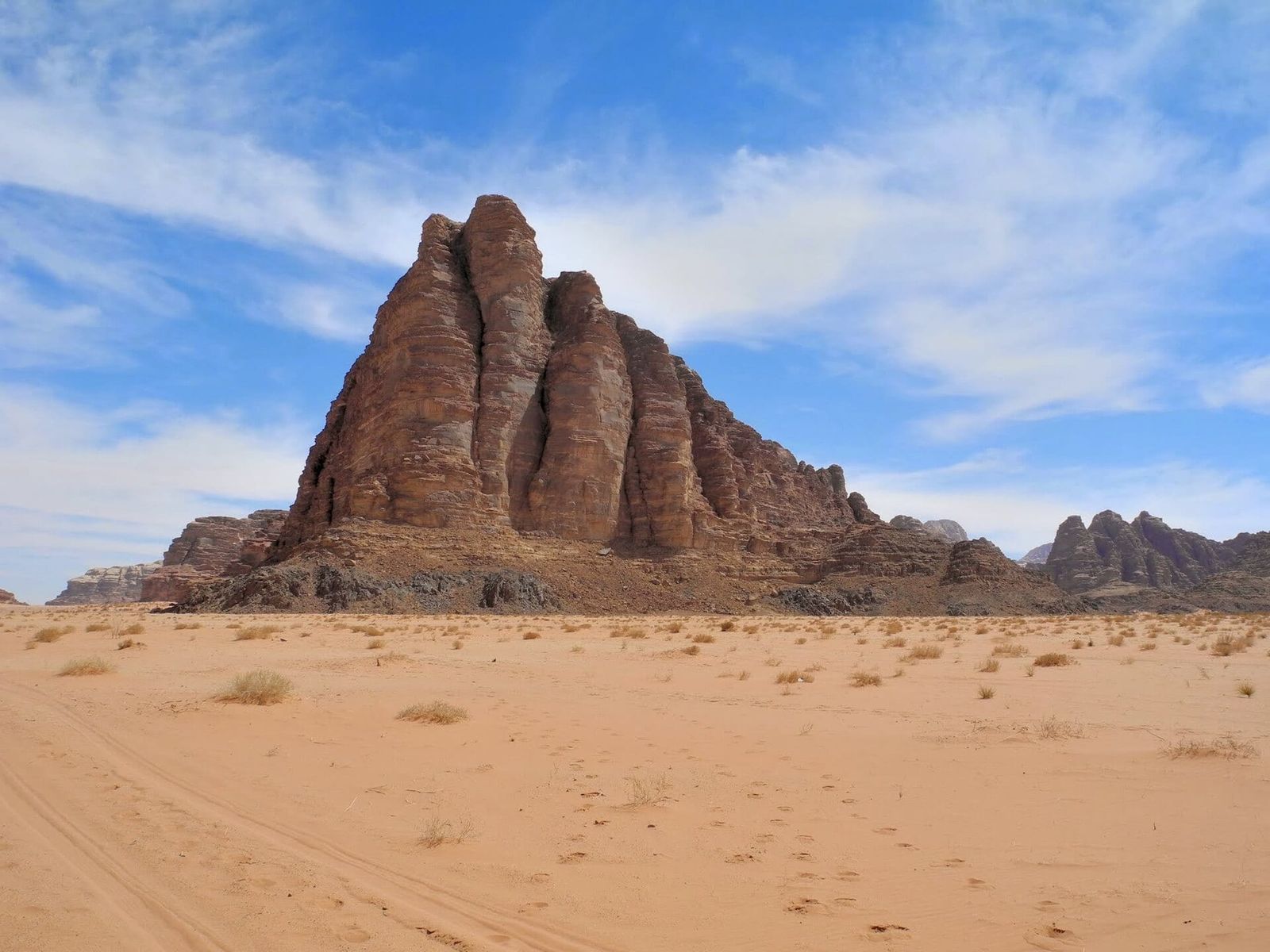
Seven Pillars of Wisdom (Jabal al-Mazmar)
The fluted sandstone massif by the Wadi Rum visitor centre, named after T. E. Lawrence's book about the Arab Revolt.
The massif at the gate
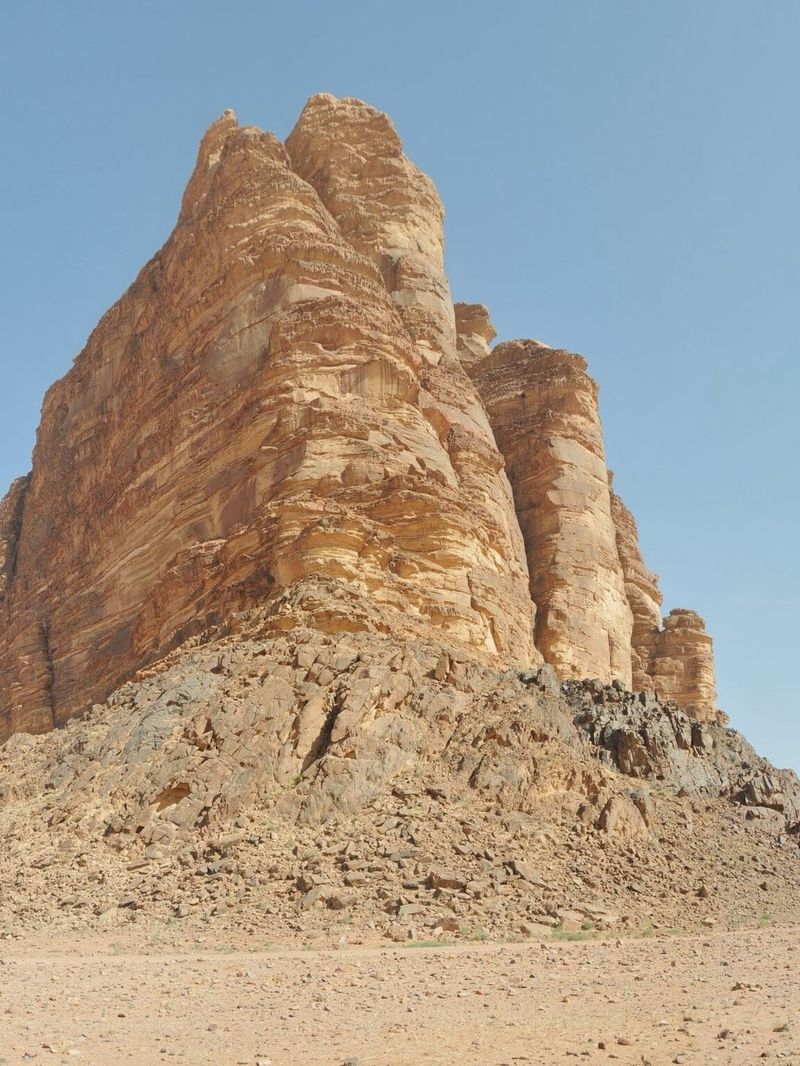
The Seven Pillars of Wisdom is the sandstone massif that rises beside the Wadi Rum visitor centre, at the entrance to the protected area. Its local name is Jabal al-Mazmar. The north face is cut into a row of tall fluted columns. The rock is iron-red at the base and paler above, the layered sandstone typical of the Rum massifs.
The name
The English name comes from Seven Pillars of Wisdom, T. E. Lawrence's account of the Arab Revolt of 1916 to 1918, which took him through this region. Lawrence took his title from the Book of Proverbs ("Wisdom hath builded her house, she hath hewn out her seven pillars"). He did not use it for this rock. The name was attached to the massif later. How many pillars a visitor counts depends on where they stand.
The wider desert
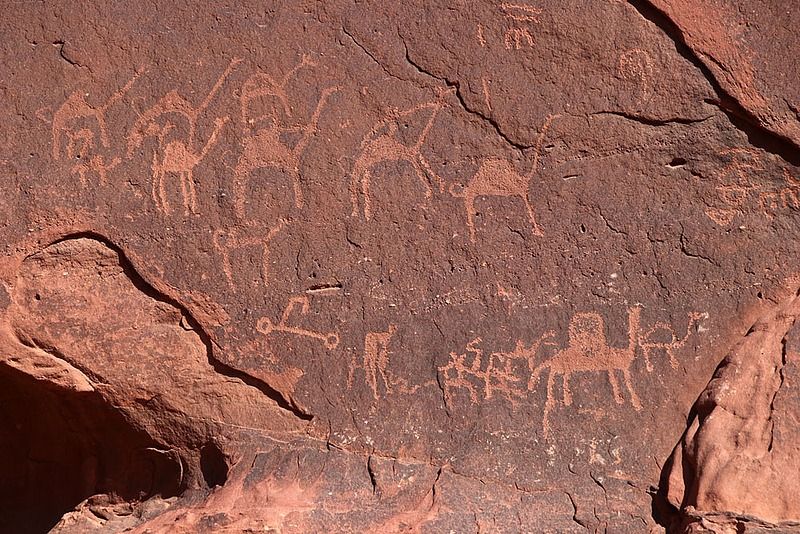
Wadi Rum was inscribed on the UNESCO World Heritage List in 2011 as a mixed natural and cultural site. Its sandstone and granite mountains carry thousands of rock inscriptions and petroglyphs left over some 12,000 years. Most jeep, camel and walking routes into the desert start from Rum Village, a few kilometres further on, after the park entry at the visitor centre.
Nearby
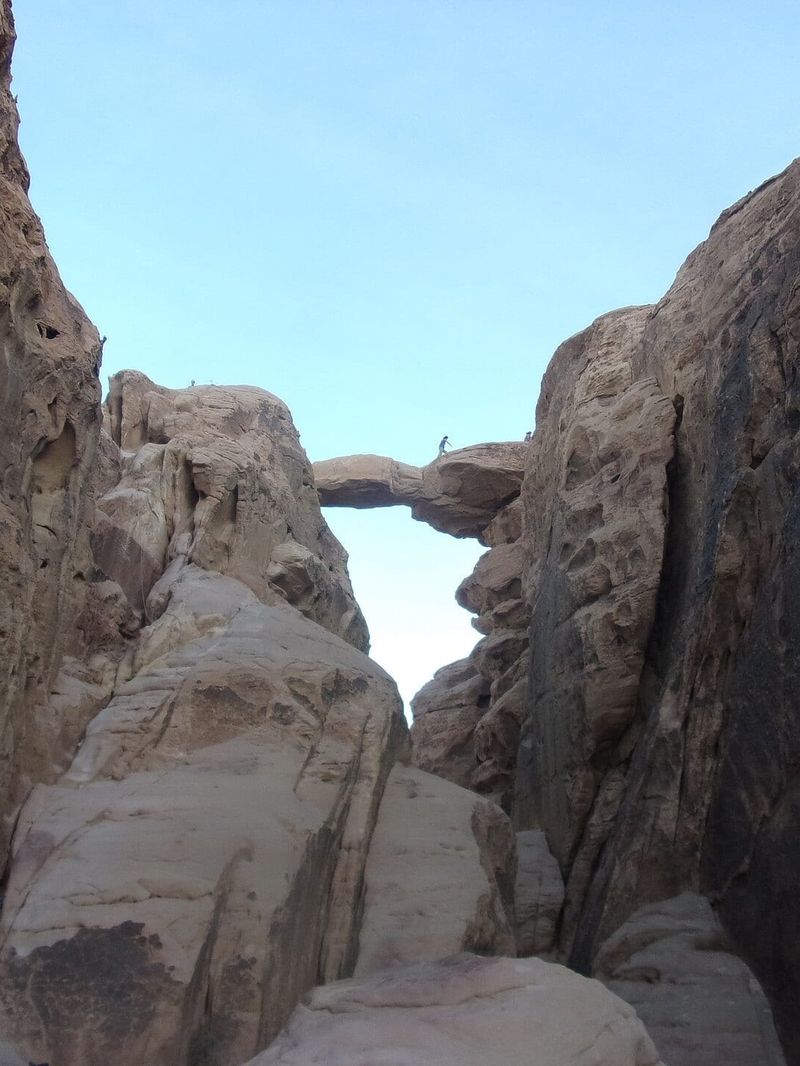
Beyond the village lie Lawrence's Spring, the Nabataean Temple of Allat and the inscribed walls of Khazali Canyon.
Exhibo editorial
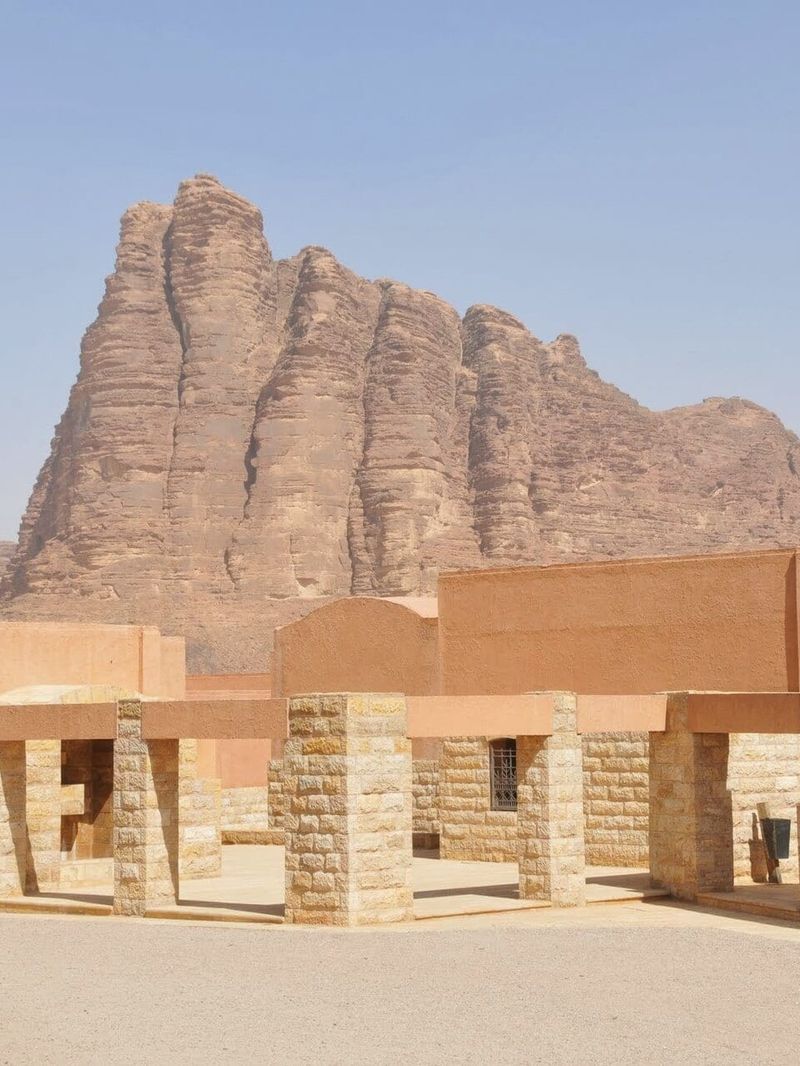
Most people meet this mountain with a ticket in their hand. It stands right behind the visitor centre, so it becomes the first photograph of Wadi Rum for almost everyone who comes. Then they turn and drive on into the desert. It stays behind them.
The name says more about how we arrive here than about the rock. A British officer's book title, borrowed from the Bible, attached to a Jordanian mountain for the benefit of visitors who had read the book or seen the film. Count the pillars anyway. You will get a different number from the person standing next to you.
Gallery
How to find it
At the Wadi Rum visitor centre, on the road from the Desert Highway to Rum Village. The massif stands directly behind the visitor centre buildings and can be seen from the car park.
Similar places
All places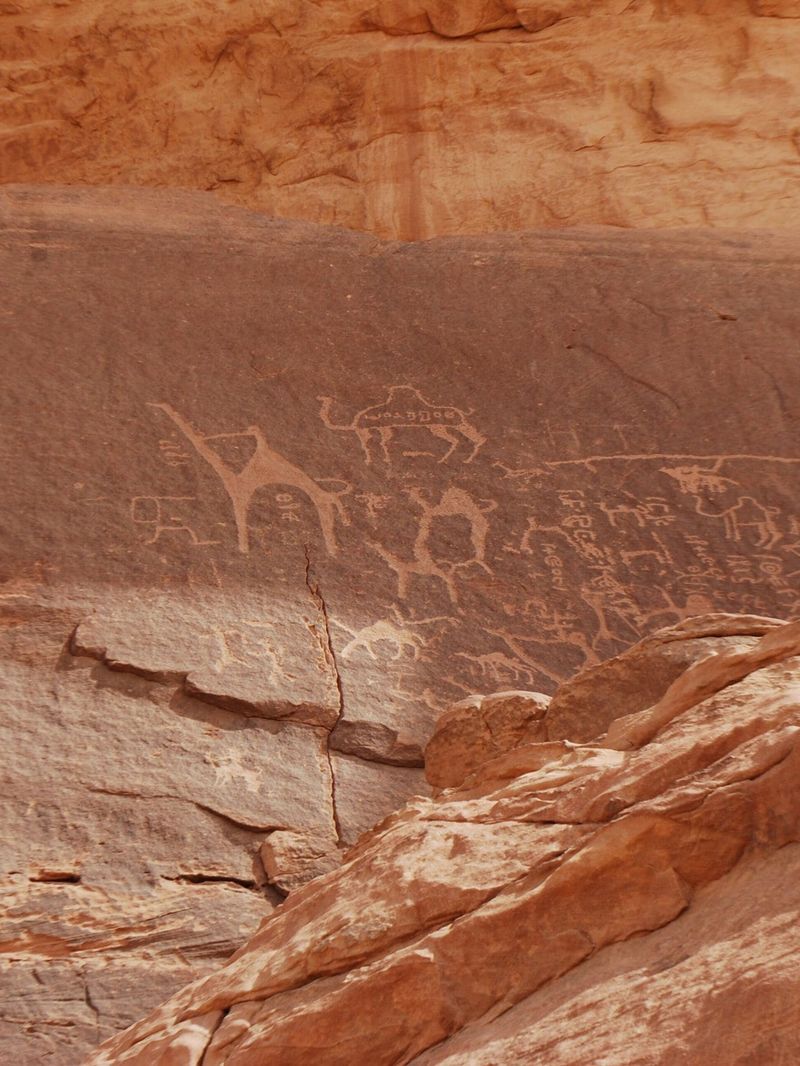
News by Exhibo
Editorial coverage on Exhibo
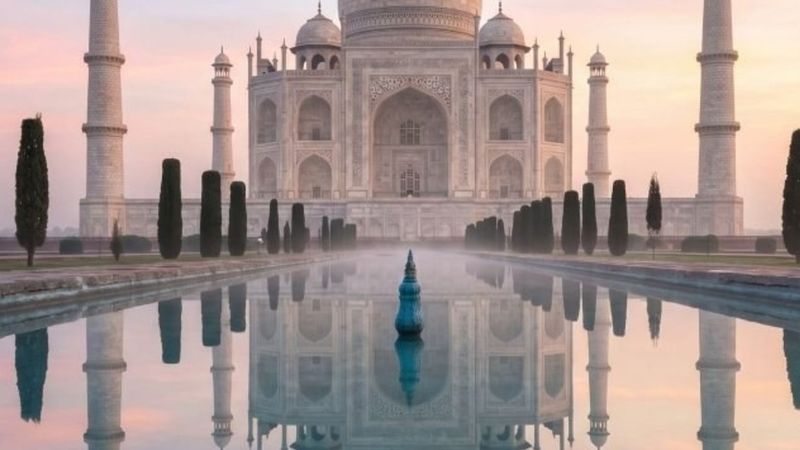
Where Is Agrabah? The City Disney Assembled From Real Places
Agrabah was going to be Baghdad. A war made it fictional — and then Disney built it back out of real places, from a tomb in Agra to a valley in Jordan that usually plays Mars.
The Sultan's palace where Princess Jasmine feels trapped has the silhouette of the Taj Mahal — which is not a palace at all, but a tomb. That is how Agrabah works. Disney's fairy-tale city was going to be Baghdad, until the Gulf War made the name impossible; the studio invented a place that could not be found on a map, then quietly rebuilt it out of real ones — Isfahan and Agra, Marrakesh and Mandalay, a Jordanian desert that has played both Arabia and Mars.
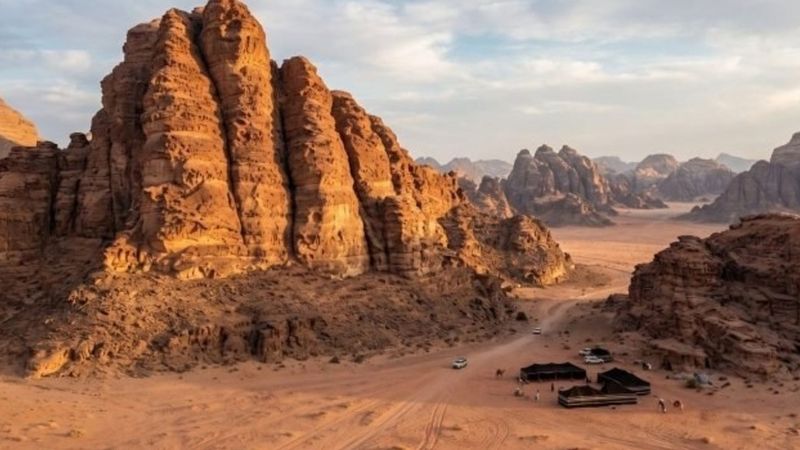
The Desert That Was Written Over
Twenty-five thousand ancient inscriptions, one British officer, and a Hollywood desert filmed largely in Spain — how Wadi Rum keeps being renamed by whoever holds the power to make it visible.
The rock at the entrance is called the Seven Pillars of Wisdom, after a book that never named it. Beneath the film legend lies a landscape covered in older writing almost nobody stops to read.