A village in the dunes
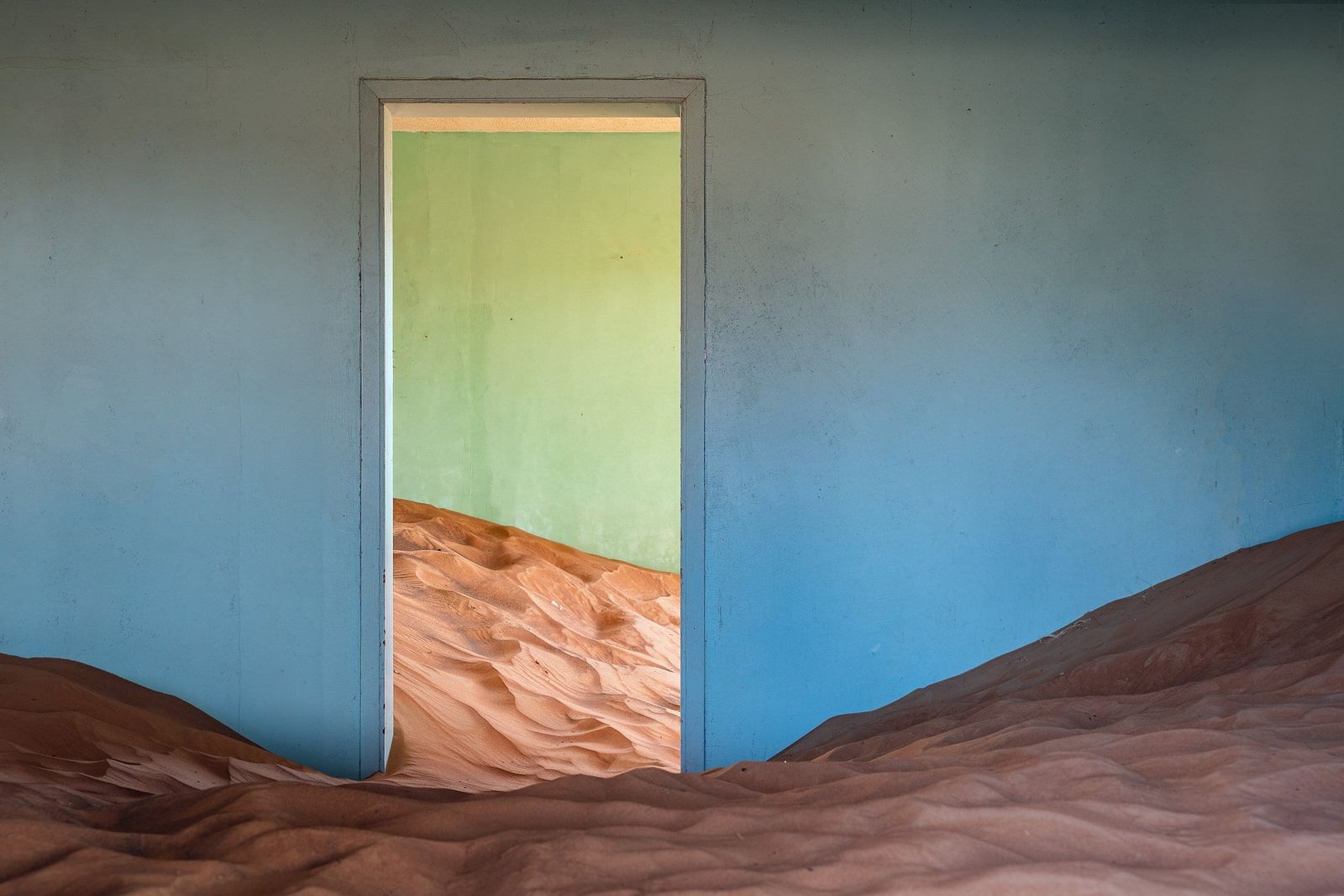
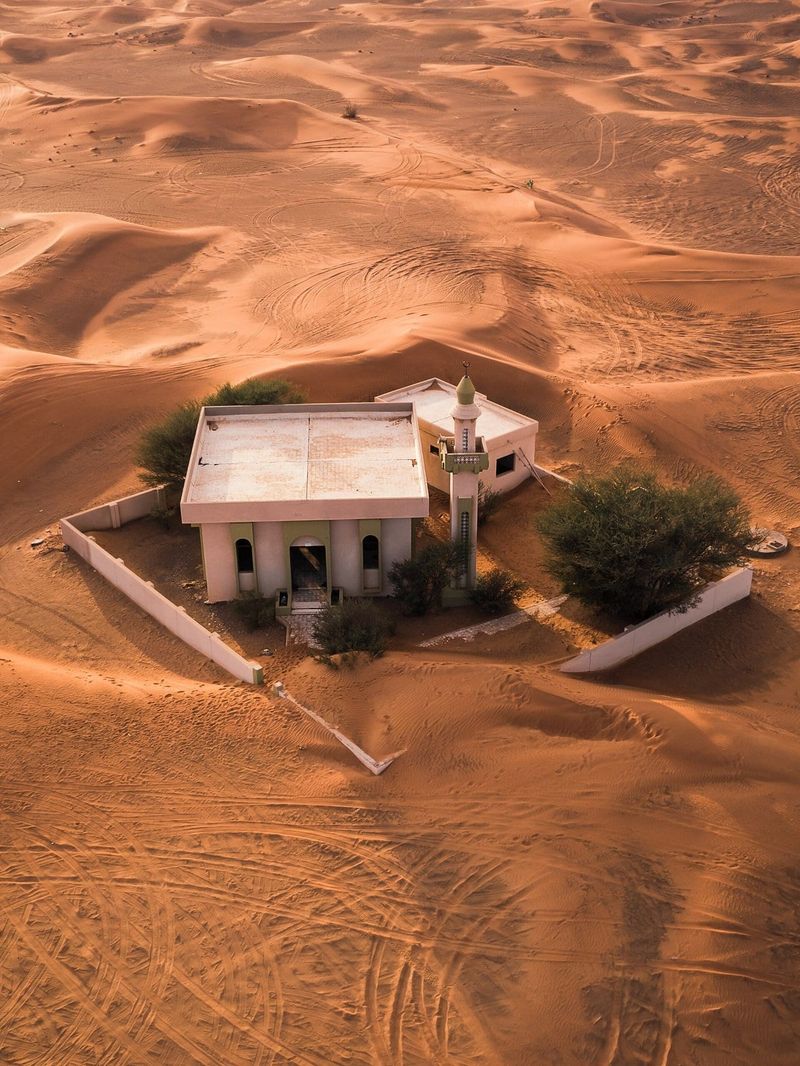
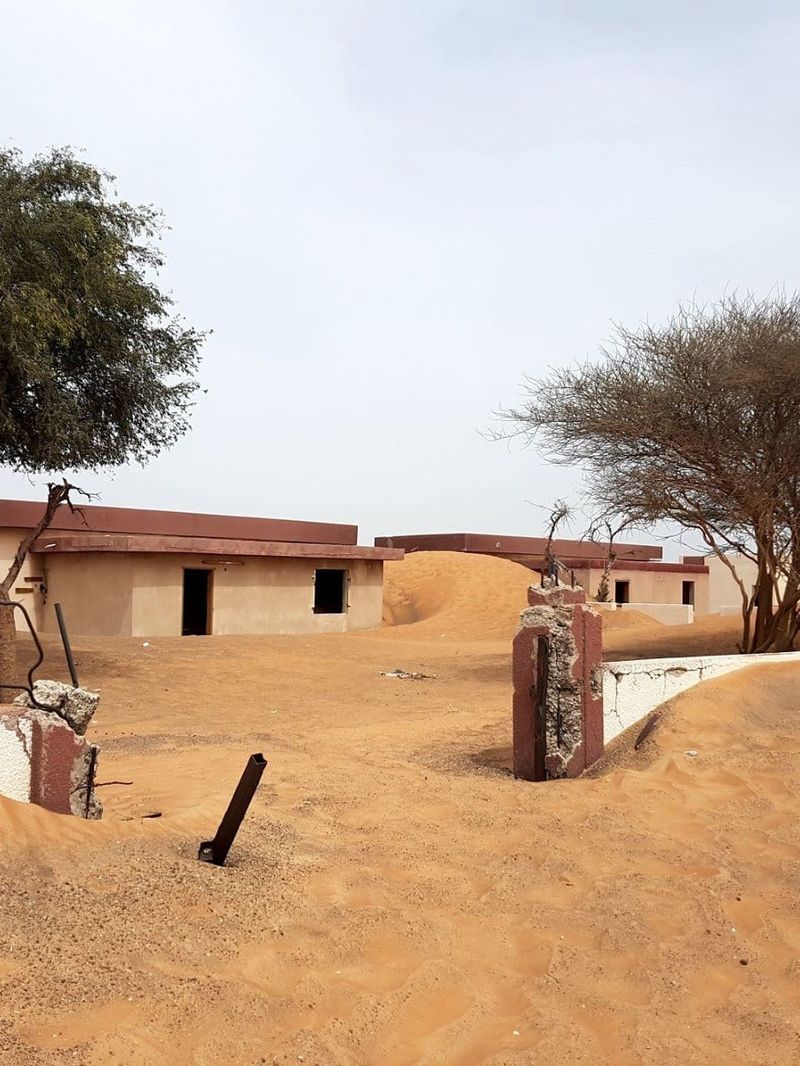
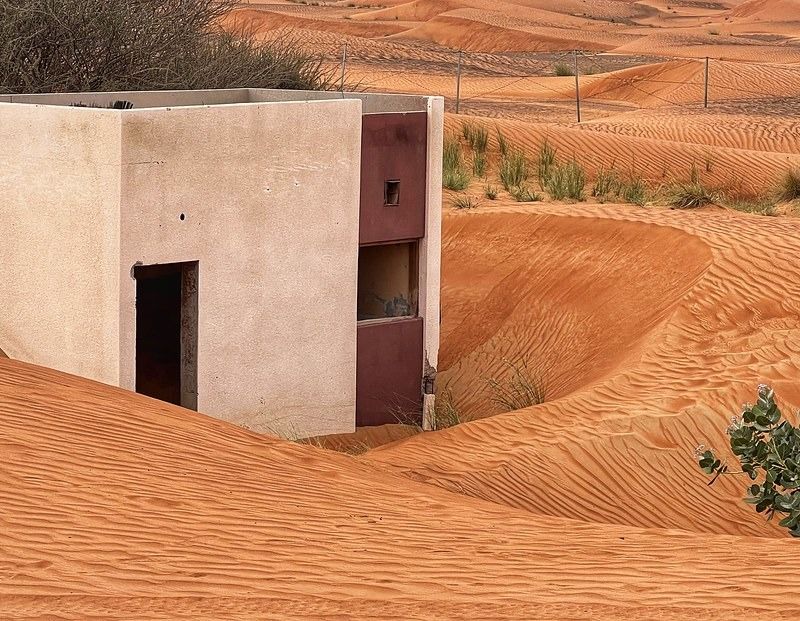
The buried village lies in the desert near Al Madam, in the inland part of Sharjah, less than an hour's drive from Dubai. It is a small, neatly planned settlement: two straight rows of identical single-storey houses facing each other across a sandy street, with a mosque at one end. Red dunes have rolled in over the decades. Sand pours through the windows, fills the courtyards and climbs the walls, so that some houses are now buried almost to the roof.
Modern housing for the desert
The village was built in the 1970s. According to Yasser Elsheshtawy, an architect who has studied housing in the Gulf, it belongs to the UAE's programme of sha'bi (people's) housing. From the late 1960s the state built modern homes across the country for Bedouin families, part of the wider modernisation that followed the discovery of oil. The compound style of Al Madam, with its walled houses in regular rows, appears in other villages of the period across the Emirates.
Why it was abandoned
No official record explains why the families left. In 2018 the Sharjah Art Foundation interviewed people from the area about the village. Several of them linked the departure to fierce sandstorms that made life here impossible. Others suggest that the village lacked water, electricity or other services. Visitors have found mosaics inside some houses and a painted landscape on one back wall. The empty rooms have given rise to local stories of djinn and ghosts.
The mosque, with its small courtyard, is the best preserved building in the village. The site is open, with no fence or gate. Sharjah Tourism has said that visitors are welcome but that there are no plans to develop it as an attraction.
Exhibo editorial
It is not an ancient ruin. These are ordinary concrete houses from the 1970s, the kind of homes many Emirati families moved into in the same years. That is exactly what makes it so unsettling. Modern life arrived here and then, within one generation, the desert took it back.
Go in the late afternoon. The light turns the sand deep orange against the pale walls. The doorways frame little dunes where the floors used to be. Walk softly. Some of these rooms were someone's bedroom not so long ago.
Gallery
How to find it
The village lies in the desert about 9 km south of the town of Al Madam, in Sharjah. The last stretch crosses sand, so a four-wheel drive is the safest choice. There are no facilities. Bring water and keep away from walls and roofs that look unstable.
News by Exhibo
Editorial coverage on Exhibo
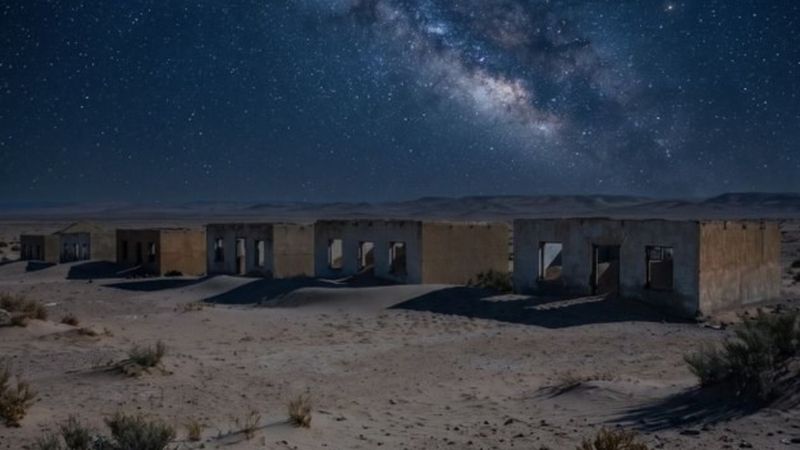
The Night Is Not for Humans: Umm Al Duwais and the Women of Emirati Folklore
A village half-buried in sand an hour from Dubai, a name that means "she of the little sickle," and what Emirati sources actually say.
The houses at Al Madam went up around 1980 and stood empty by the mid-1990s. People will tell you she lives there — not in the old stories, though. That attachment is recent, and it is the interesting part.
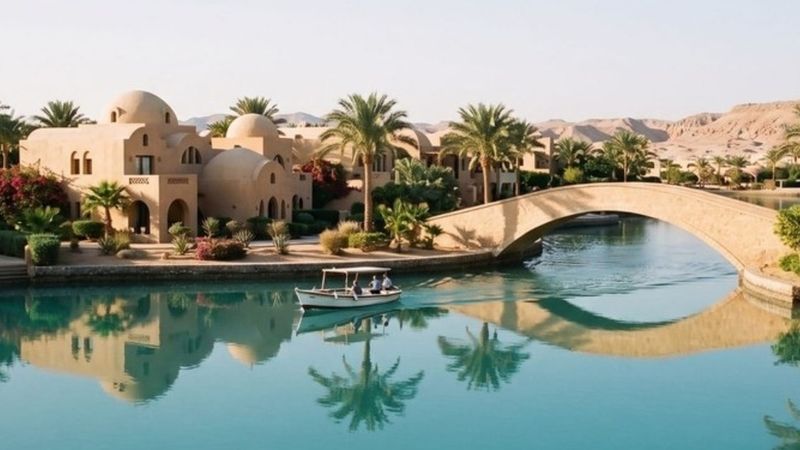
Why the Middle East Keeps Building Venice
From the Red Sea to the Gulf, canal towns keep getting called Venice. The water was usually about something else — and Venice was never quite Venice either.
The Middle East is full of “Venices”. Most began as a way to manufacture shoreline; the name usually arrived later, in English, from the people selling it.
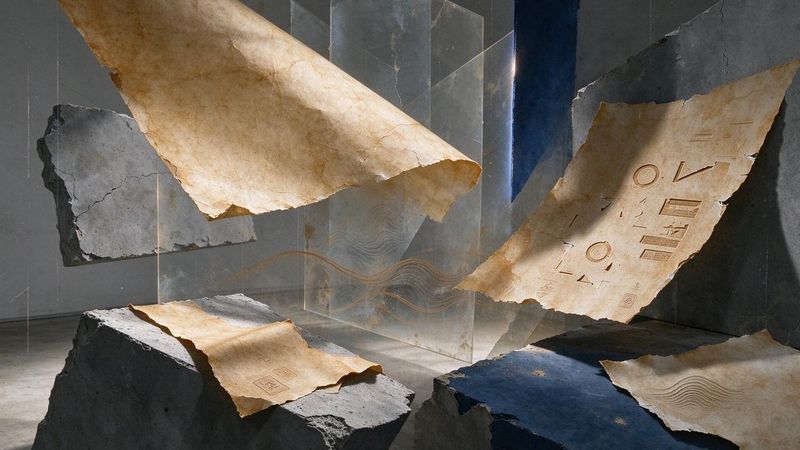
Sharjah Biennial 17 Unveils Curatorial Vision and Opening Schedule
Angela Harutyunyan and Paula Nascimento frame the 2027 edition around archival residue and spatial memory
The seventeenth iteration of the Sharjah Biennial runs from January to June 2027, presenting a dual curatorial methodology that examines historical legacies and infrastructural critique across multiple emirate locations.