
Palais Garnier (Opéra Garnier)
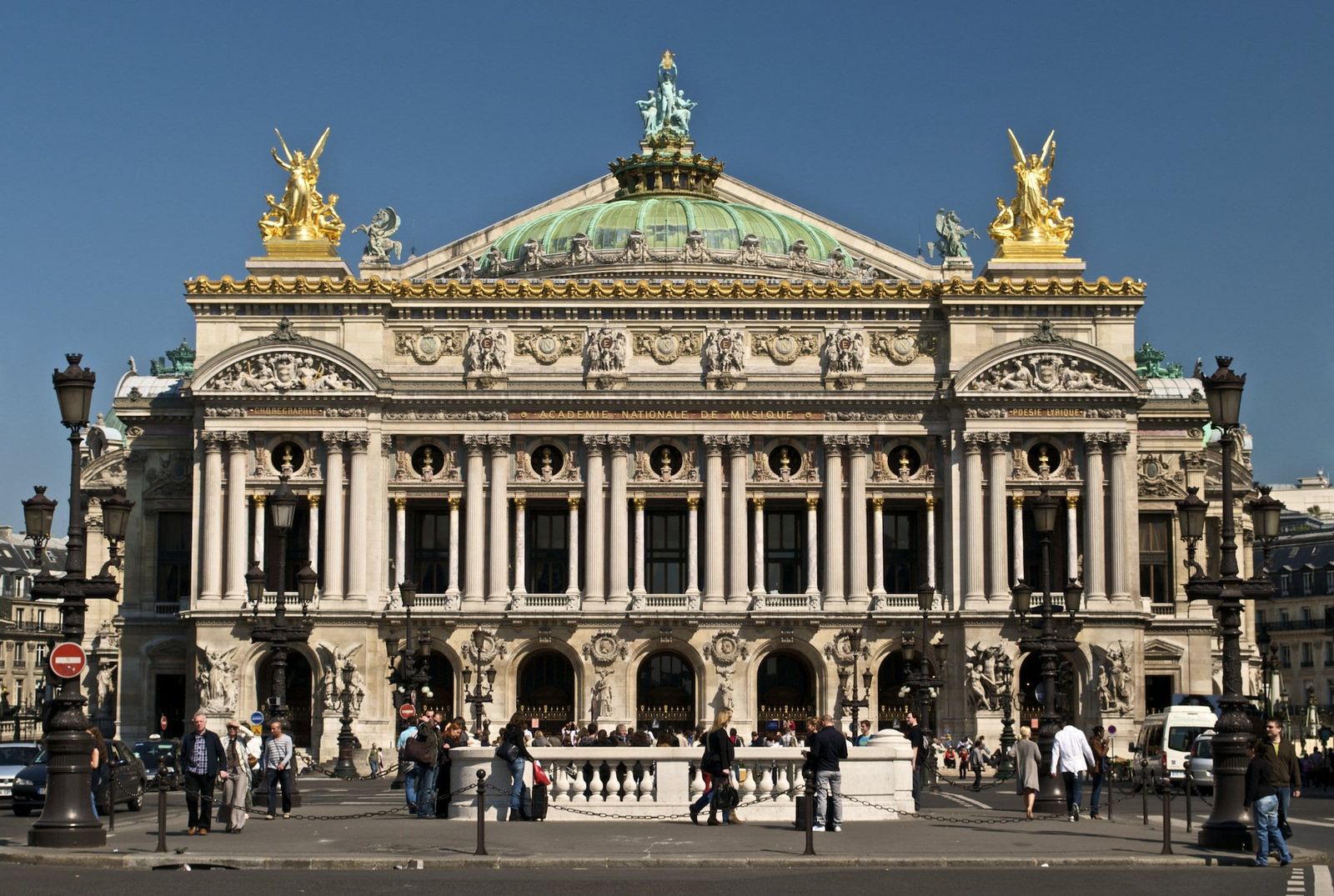
Charles Garnier's gilded opera house of the Second Empire, with its grand staircase and a ceiling painted by Chagall.
An opera house for an empire
The Palais Garnier was commissioned under Napoleon III as the new home of the Paris Opéra, one of the oldest opera companies in the world. In 1861 a competition for its design was won by Charles Garnier, then an unknown architect of 35. Work began in 1862 on a site at the heart of Baron Haussmann's new boulevards. It was slowed by the Franco-Prussian War of 1870 and the fall of the Second Empire. The building was finally inaugurated on 5 January 1875.
Garnier created a style of his own, rich in coloured marbles, gilding, bronze and sculpture. The facade on the Place de l'Opéra carries busts of composers and groups of statues. Among them is Jean-Baptiste Carpeaux's group The Dance. A green copper dome rises above the auditorium, crowned at the back by a gilded Apollo raising his lyre.
Staircase, foyer and auditorium
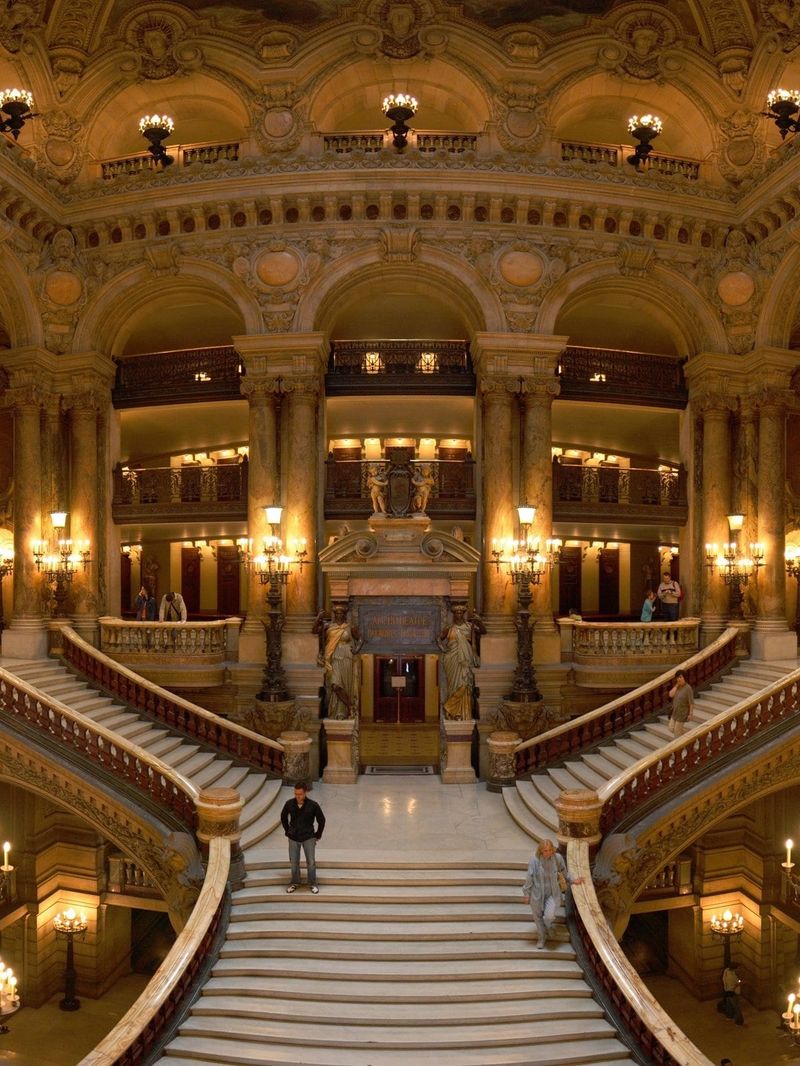
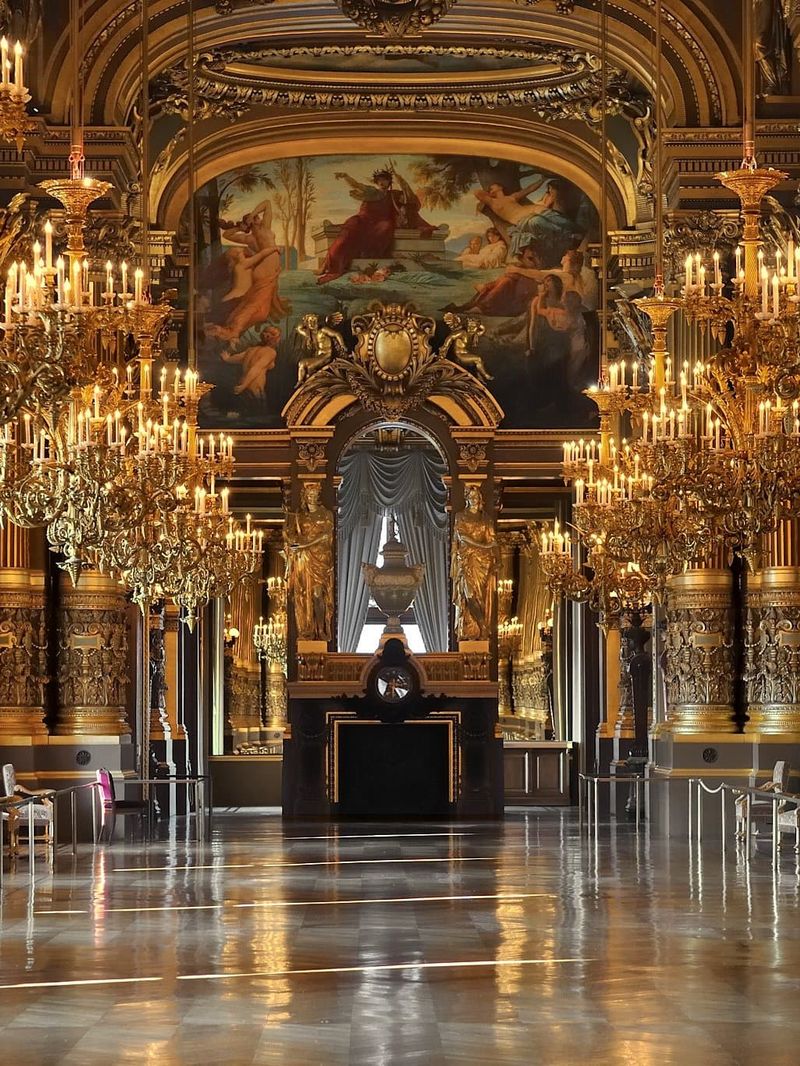
Inside, the Grand Staircase of white marble divides and climbs under painted ceilings to the balconies. It was designed as a stage of its own, where Parisian society came to see and be seen. The Grand Foyer above is a long gallery of mirrors, gilding and painted ceilings, lit by chandeliers.
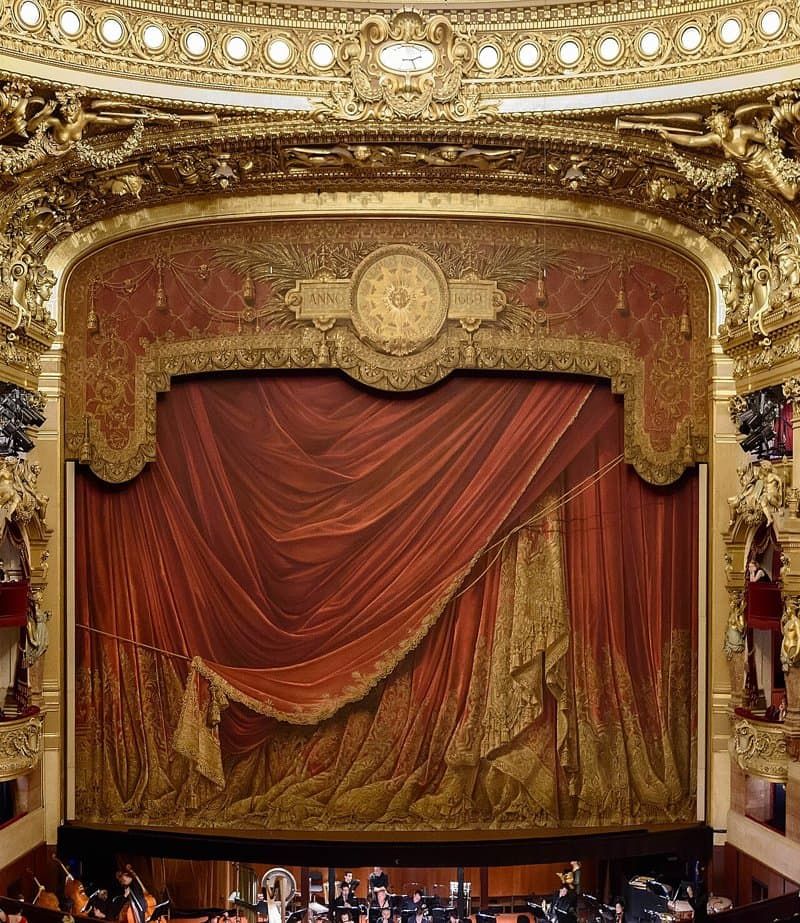
The red and gold horseshoe auditorium is lit by a great bronze and crystal chandelier weighing about seven tonnes. In 1964, at the request of the culture minister André Malraux, Marc Chagall painted a new ceiling for it. His bright panels pay tribute to composers and their works. The original 19th-century ceiling by Jules-Eugène Lenepveu was left in place beneath it.
Legends and the Opéra today
Below the stage lies a vast water tank built to steady the foundations on marshy ground. It fed the legend of an underground lake in Gaston Leroux's novel The Phantom of the Opera, published in 1910. The Paris Opéra was based here until 1990, when it moved most of its opera productions to the new Opéra Bastille. The Palais Garnier is still a working theatre, used today chiefly for ballet. It also houses the library and museum of the Opéra.
Exhibo editorial
Garnier was once asked what style his building was. He is said to have answered that it was Napoleon III style. Whether he said it or not, the joke holds. Nothing here is restrained.
The best way to see it is with a ticket for an evening performance. Arrive early and climb the Grand Staircase with everyone else. That is when the building does what it was designed to do: turn the audience into part of the show.
Gallery
How to find it
The Palais Garnier stands on the Place de l'Opéra in the 9th arrondissement, at the top of the Avenue de l'Opéra. The Opéra metro station opens right in front of it; Chaussée d'Antin La Fayette and Havre-Caumartin are a few minutes away. Visits are by timed ticket, booked online in advance; none are sold on site. The auditorium is often closed during the day for rehearsals.
Similar places
All places
News by Exhibo
Editorial coverage on Exhibo

Sinbad and the Real Trade Routes of Oman and Basra
A ninth-century ship sewn together without nails, a hold of Chinese porcelain, and the sailors’ yarns of Basra, Siraf and Sohar: the real sea behind the fantasy.
In 1998, sea-cucumber divers off an Indonesian island found a ninth-century ship stitched together with coconut cord and loaded with some sixty thousand pieces of Chinese porcelain — the only Arab-built vessel then known from Southeast Asian waters. Sinbad’s voyages are fiction.

Paris Photo's digital sector and the rise of soft photography
Curator Marco De Mutiis maps the evolving boundary between film and code at the Grand Palais.
Twelve galleries explore the friction between analogue traditions and synthetic imaging at this year's fair.
Monet's Monumental 'Iris' Commands €50m in Paris
A landmark auction results in a new domestic benchmark for Impressionist masterworks
Claude Monet's vast 1924 canvas achieves €50m at Sotheby's Paris, establishing a new national record and highlighting shifting collector strategies.