
From hunting lodge to palace
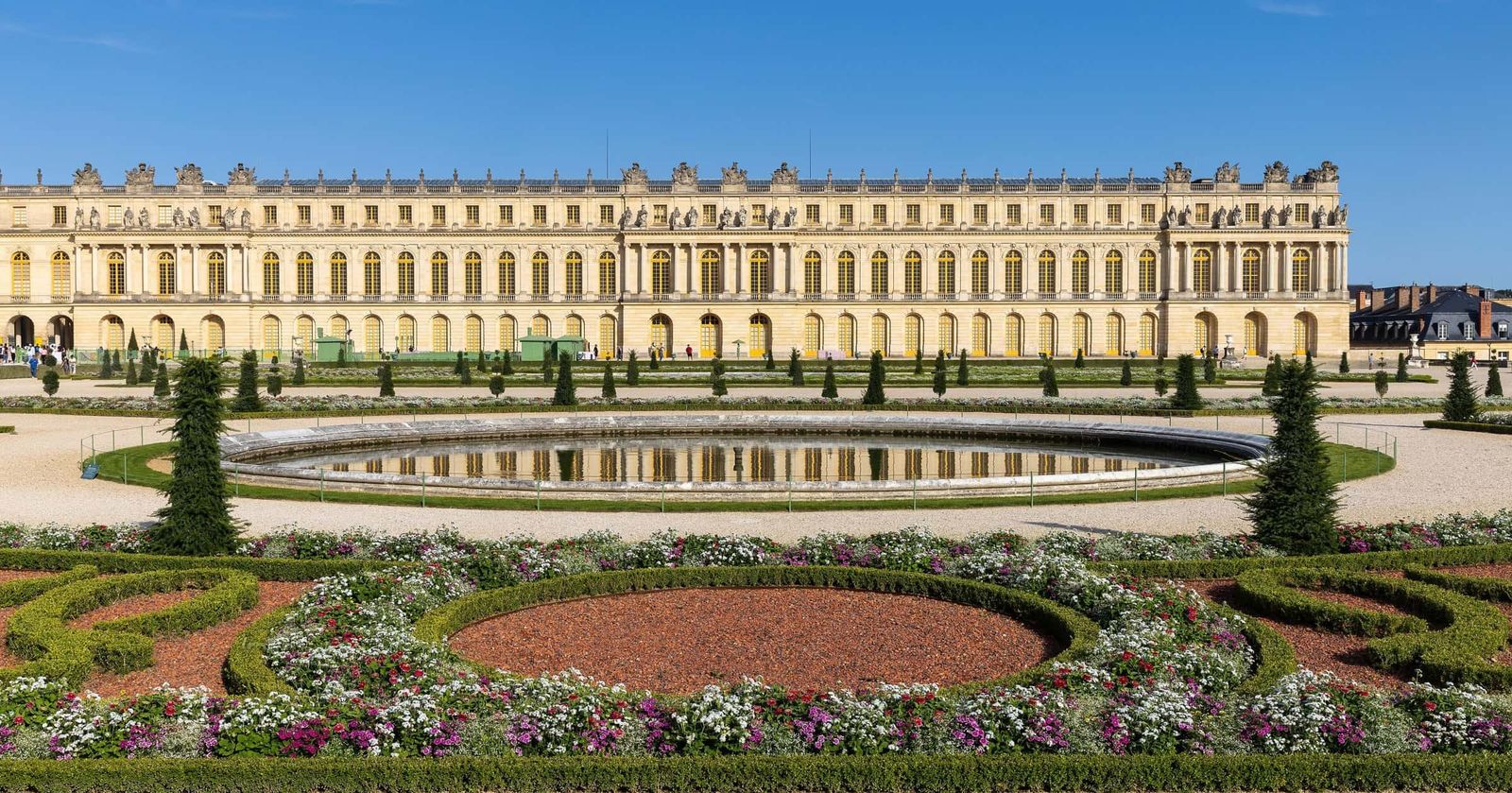
Versailles lies about 20 km south-west of central Paris. In 1624 Louis XIII built a small brick and stone château here as a hunting retreat. His son Louis XIV transformed it. From 1661 the architect Louis Le Vau enlarged the building. After 1678 Jules Hardouin-Mansart rebuilt and extended it into the immense palace that stands today. Charles Le Brun directed the interior decoration. In 1682 the king moved his court and government here. Versailles remained the seat of royal power until the French Revolution forced Louis XVI back to Paris in 1789.
Every part of it was designed to glorify the king. It became the model of a royal residence across Europe for more than a century, copied from Berlin to Hampton Court. UNESCO inscribed the Palace and Park of Versailles on the World Heritage List in 1979.
The Hall of Mirrors
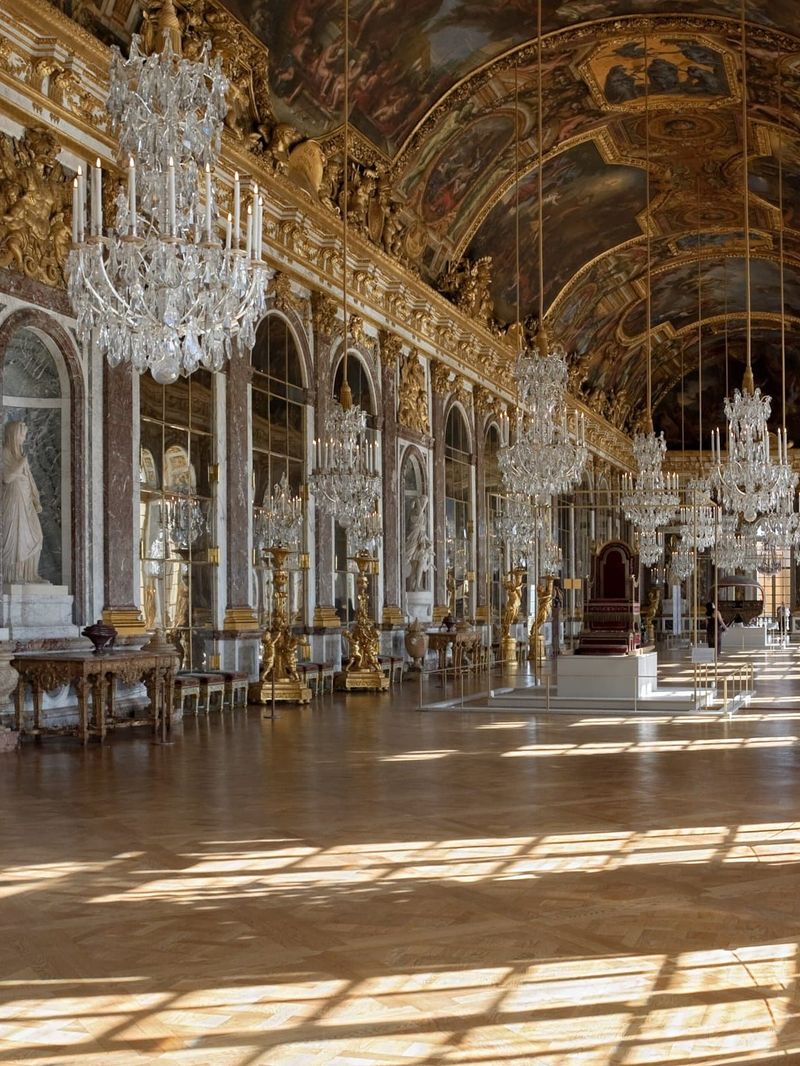
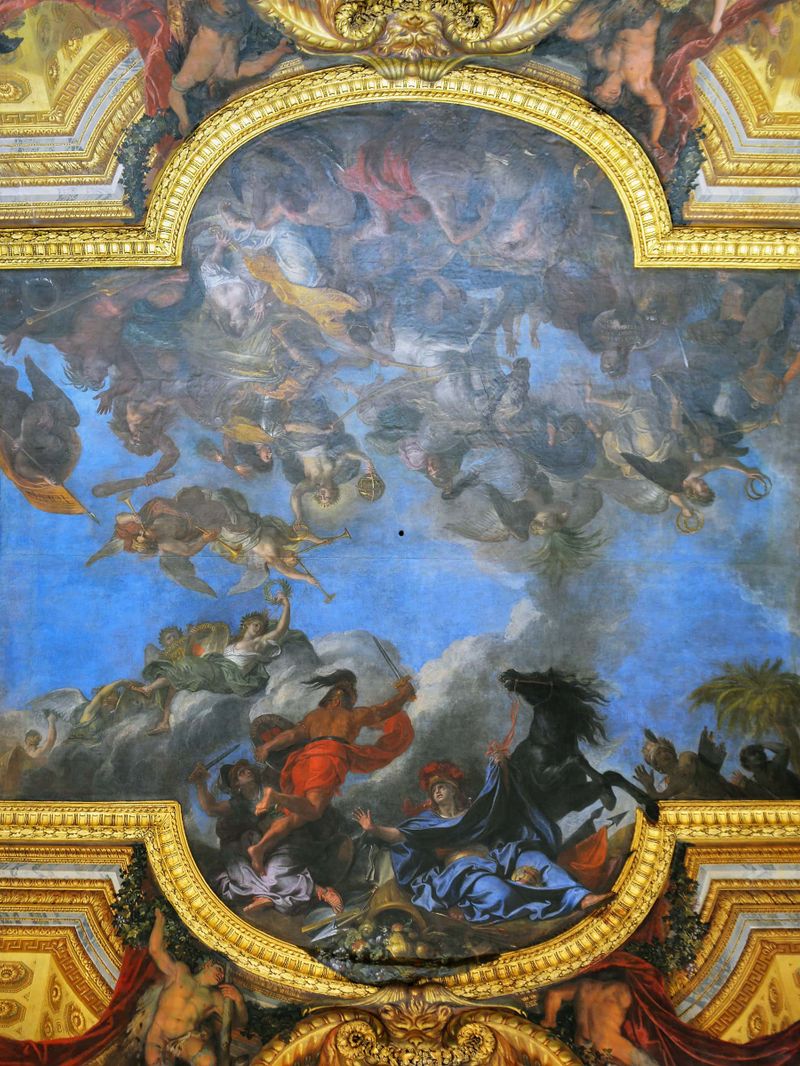
The most famous room is the Hall of Mirrors, built by Hardouin-Mansart from 1678. It runs for more than 70 metres along the garden front. Seventeen arched windows face seventeen arcades lined with mirrors, which reflect the light of the gardens. Le Brun painted the vaulted ceiling with 30 scenes glorifying the early reign of Louis XIV. In 1919 the treaty that ended the First World War was signed here.
The State Apartments of the king and queen, the Royal Chapel completed in 1710 and the Royal Opera built for the wedding of the future Louis XVI in 1770 complete the palace.
The gardens and the Trianons
The gardens were laid out by André Le Nôtre, the creator of the formal French garden. Long axes, terraces, parterres, fountains and statues lead the eye out to the Grand Canal and the horizon. In the park stand the Grand Trianon, built by Hardouin-Mansart, the Petit Trianon by Ange-Jacques Gabriel and the Hamlet of Marie-Antoinette, a mock village of cottages around a lake.
Exhibo editorial
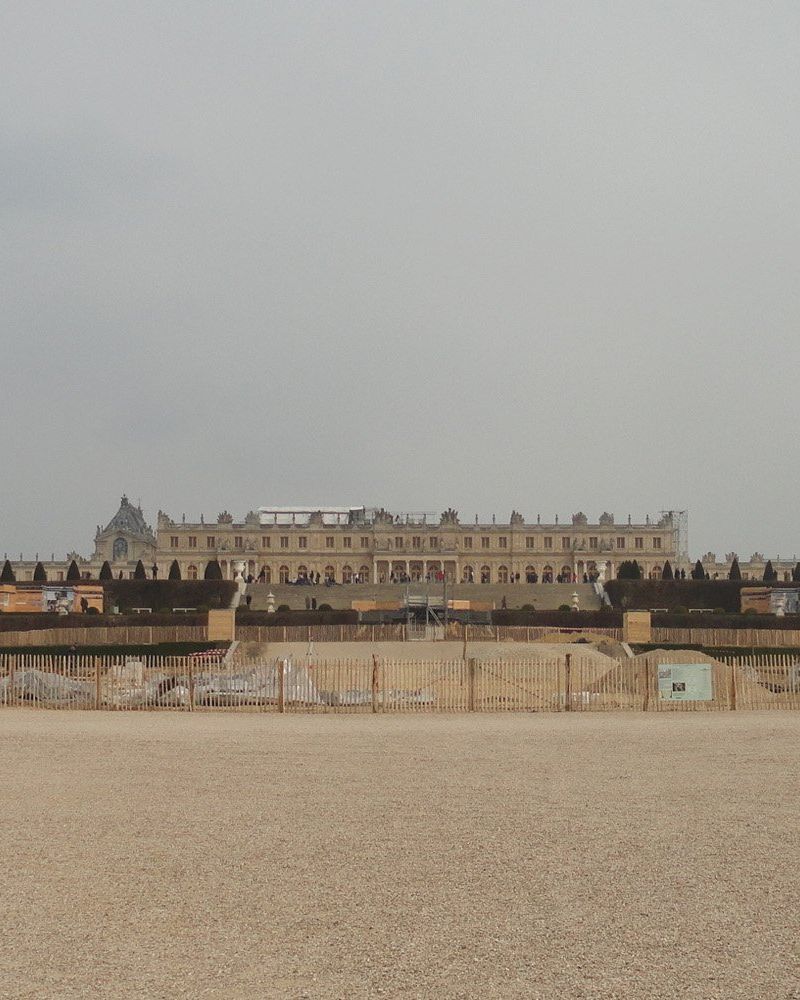
Versailles was built to make people feel small. It still works. The facade on the garden side runs on so long that it is hard to take in from any one place. The gardens do not end so much as fade into the sky.
Give it a whole day. See the Hall of Mirrors early, before the crowds. Then leave the palace behind and walk out through the gardens towards the Trianons. The further you go, the quieter and more human the royal world becomes.
Gallery
How to find it
Versailles is about 20 km south-west of central Paris. The RER C train runs to Versailles Château Rive Gauche, about ten minutes' walk from the palace. Trains from Gare Montparnasse to Versailles Chantiers and from Saint-Lazare to Versailles Rive Droite are other options. The palace is closed on Mondays. Book a timed ticket online in advance; the gardens and park have separate access rules on fountain show days.
Similar places
All places
News by Exhibo
Editorial coverage on Exhibo

Sinbad and the Real Trade Routes of Oman and Basra
A ninth-century ship sewn together without nails, a hold of Chinese porcelain, and the sailors’ yarns of Basra, Siraf and Sohar: the real sea behind the fantasy.
In 1998, sea-cucumber divers off an Indonesian island found a ninth-century ship stitched together with coconut cord and loaded with some sixty thousand pieces of Chinese porcelain — the only Arab-built vessel then known from Southeast Asian waters. Sinbad’s voyages are fiction.

Paris Photo's digital sector and the rise of soft photography
Curator Marco De Mutiis maps the evolving boundary between film and code at the Grand Palais.
Twelve galleries explore the friction between analogue traditions and synthetic imaging at this year's fair.

Monet's Monumental 'Iris' Commands €50m in Paris
A landmark auction results in a new domestic benchmark for Impressionist masterworks
Claude Monet's vast 1924 canvas achieves €50m at Sotheby's Paris, establishing a new national record and highlighting shifting collector strategies.