Makthar (Mactaris)
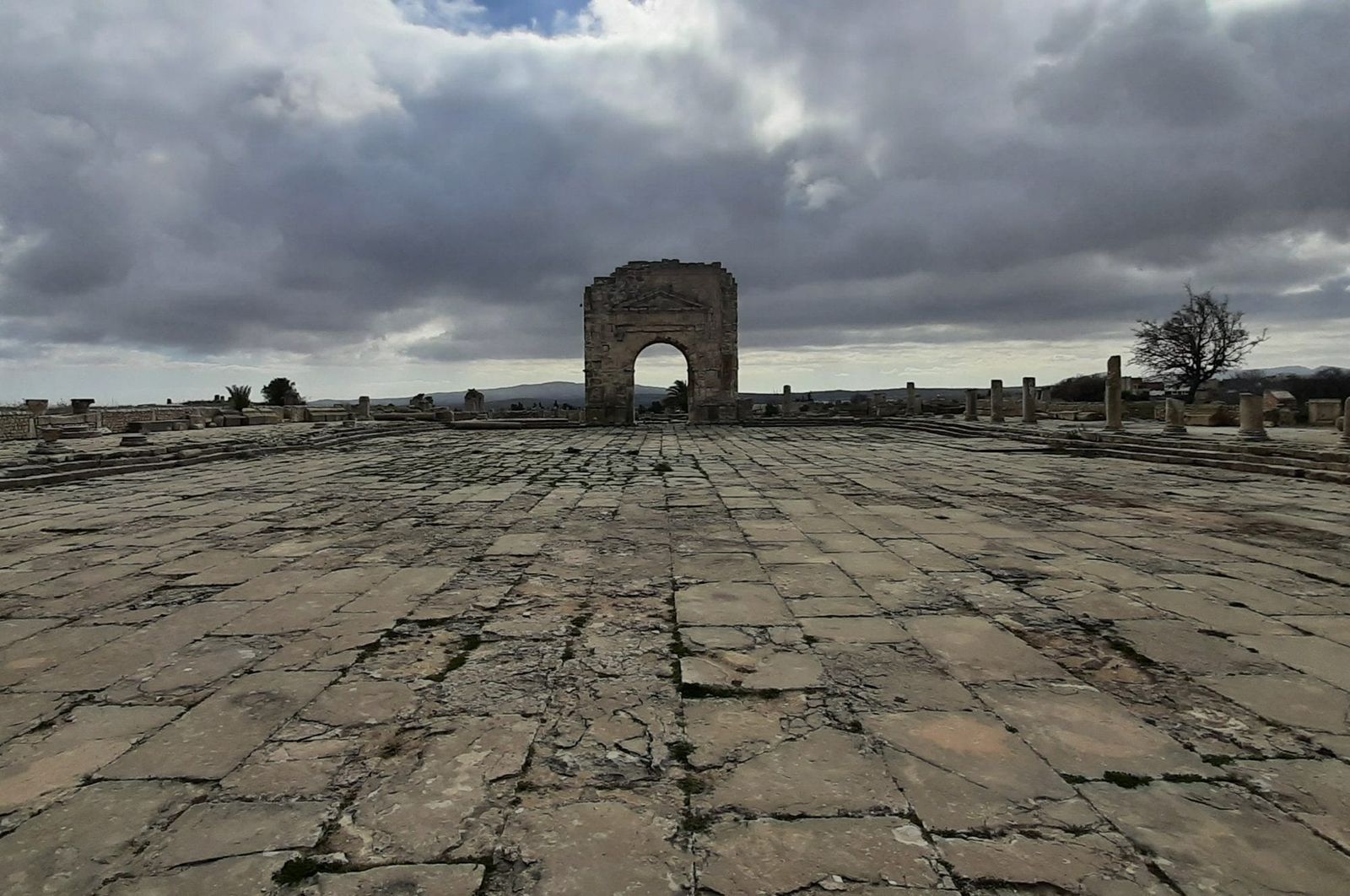
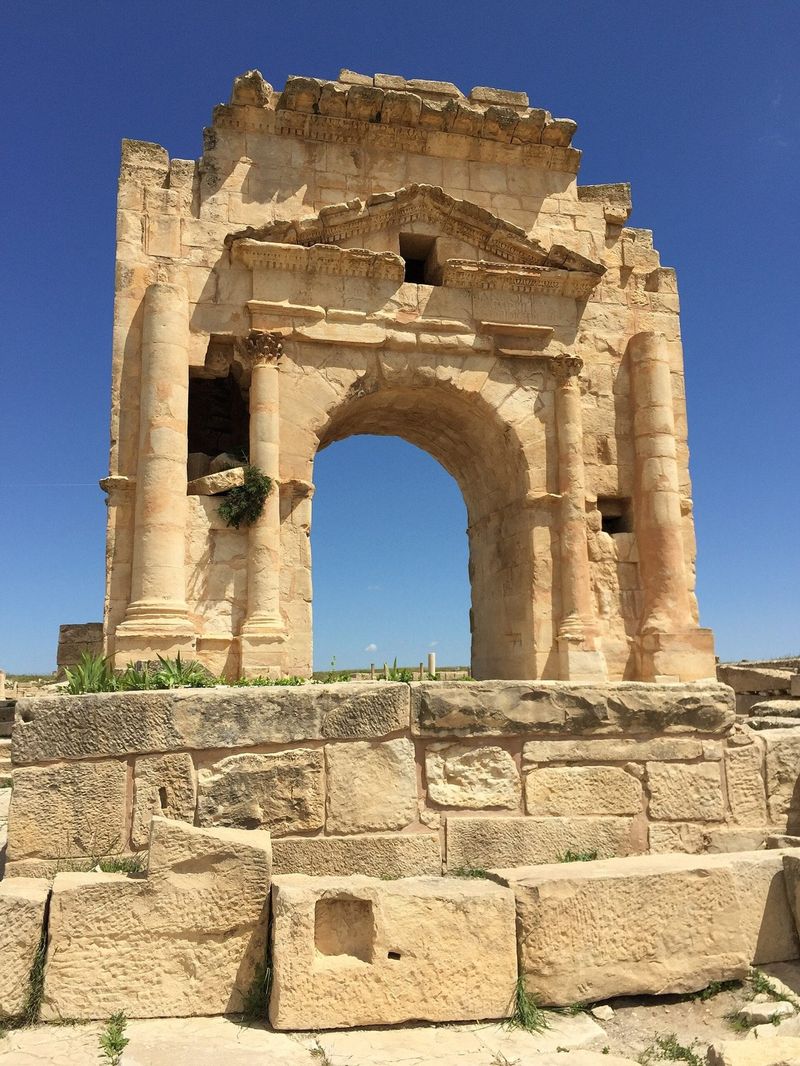
A Numidian hill town turned Roman colony, high on a plateau, with Trajan's arch still standing over its paved forum.
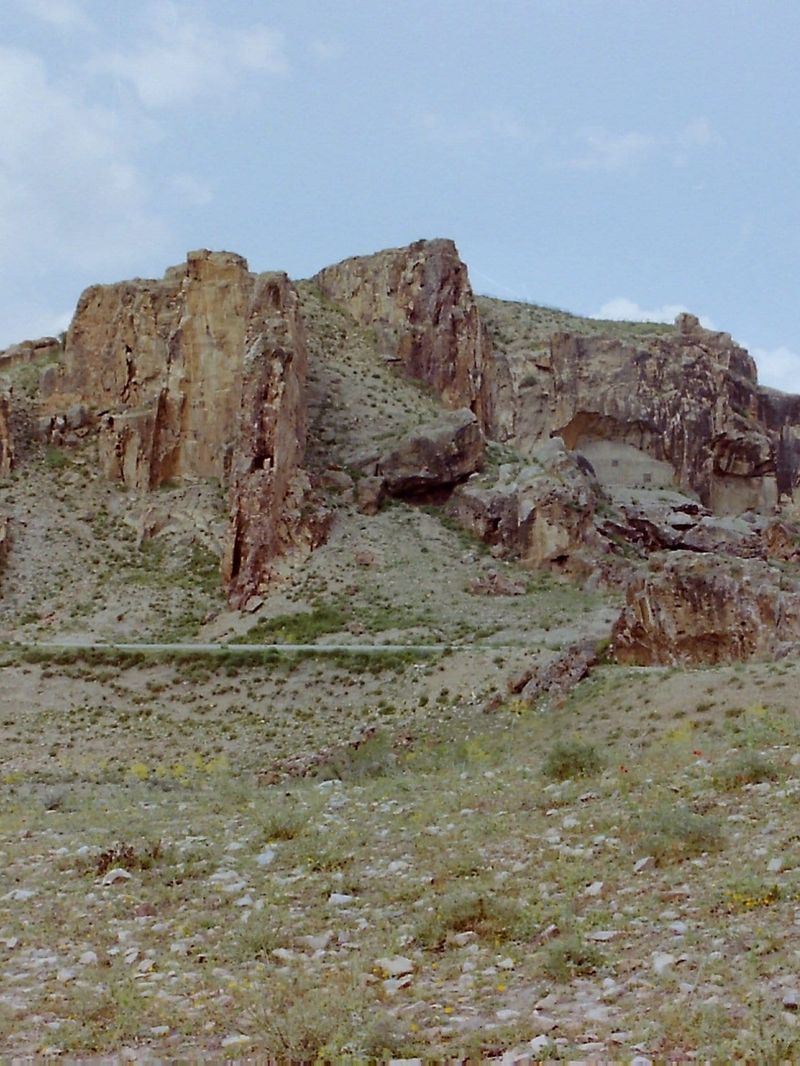
Makthar stands on a high plateau of the Tunisian Dorsal, more than 900 metres above sea level, in the governorate of Siliana. The ruins of ancient Mactaris spread along the edge of the modern town. The site is about sixty kilometres south-east of Le Kef.
Mactaris was a Numidian town long before Rome arrived. Its position near the highest point of the plateau made it a natural stronghold. Chamber tombs built of great stone slabs stand around the site and point to a much older settlement. After the destruction of Carthage at the end of the Third Punic War, refugees from Carthage settled here. Inscriptions in Libyan and Punic show how strong that mixed culture remained.
Under Roman rule the town prospered in the second century. In the later years of his reign the town laid out a new paved forum. At its entrance stands a single-arched gate dedicated to the emperor around 116. The proconsul of Africa dedicated it but the town paid for it. Under Marcus Aurelius Mactaris became a Roman colony.
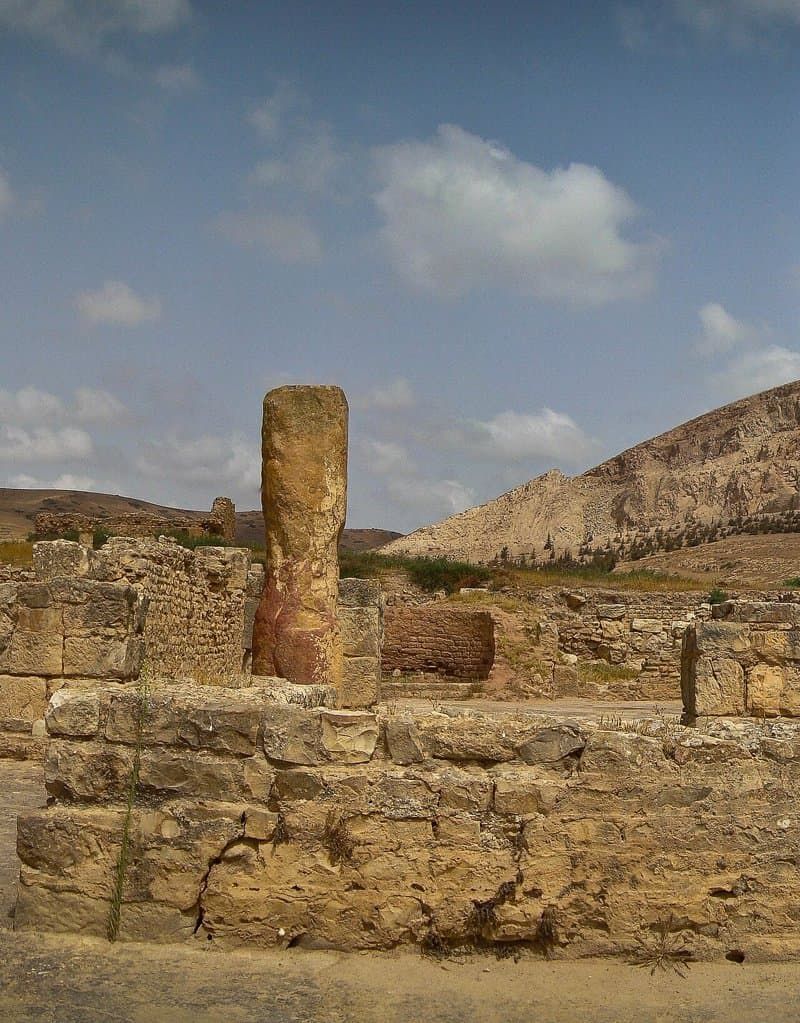
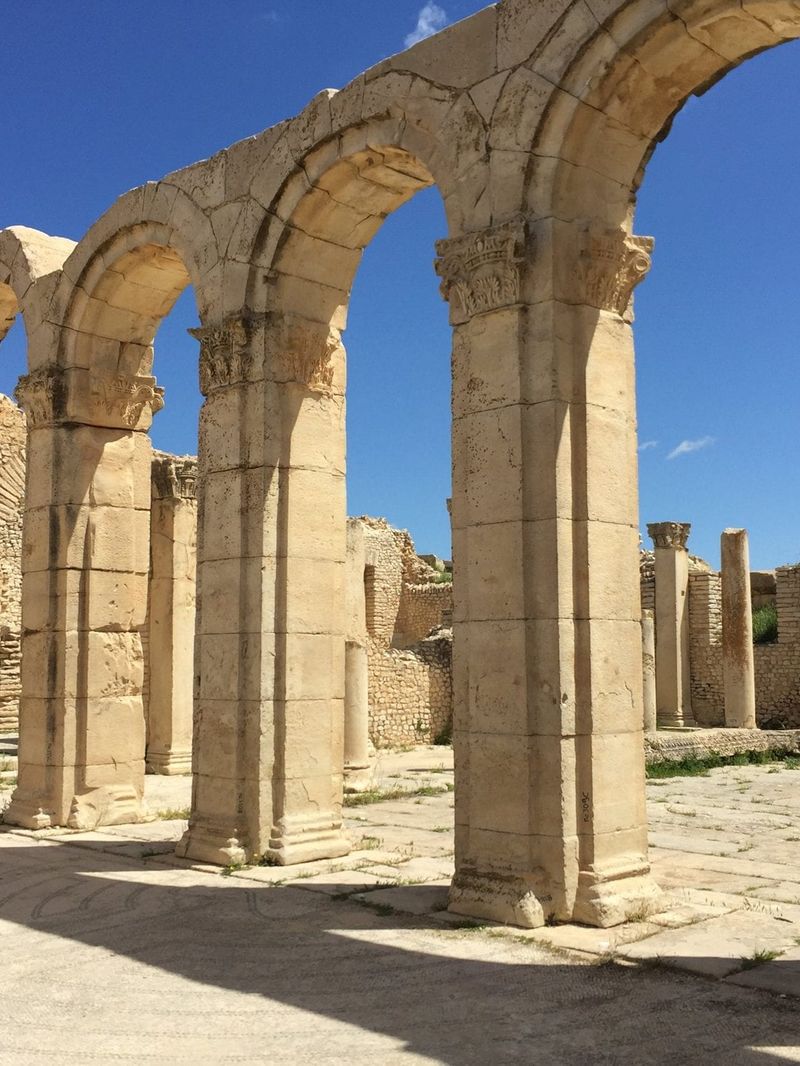
The ruins are spread over a wide area. Beyond the forum are a market, an amphitheatre and several baths. The large southern baths were later turned into a small Byzantine fort. One of their floors keeps a black and white mosaic of a labyrinth. To the west stands the Schola Juvenum, the meeting house of an association of young men. It was later turned into a church. Nearby is a building with a row of counters, thought to be an office where taxes in kind were collected.
Christianity reached the town early. Churches were built inside older buildings, one of them in the cold room of a disused bath. After 439 the town came under Vandal rule. In the sixth century it became part of the Byzantine defences of Africa. A small museum at the entrance displays inscriptions and sculpture from the site.
Exhibo editorial
Most of Tunisia's Roman towns sit low, in river valleys and on the coast. Makthar is up in the wind. The plateau is wide and bare, the light is hard and the paving of the forum runs out towards Trajan's arch like a stage with no audience.
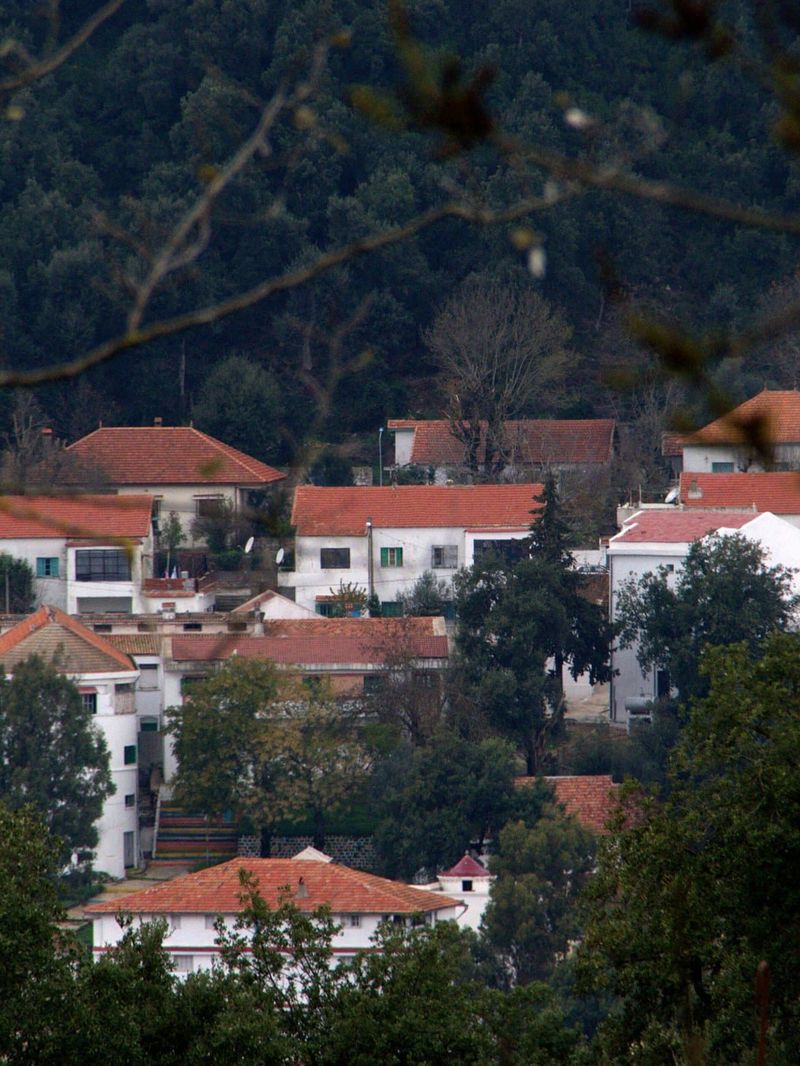
Take your time with the small things here. The counters where farmers once paid their taxes in grain. The arcade of the young men's club. The labyrinth on the bath floor, a puzzle laid down for people who came to wash and talk. Then drive twenty kilometres east to Kesra, a village that has been living on its rock since the same centuries.
Gallery
How to find it
The archaeological park lies on the south side of Makthar, on the road towards Kesra and Kairouan. The ticket office and museum are at the entrance. Paths lead from there to the forum and Trajan's arch, then on to the baths and the Schola Juvenum. Allow two hours. Le Kef and its kasbah lie about sixty kilometres to the north-west: see the old town of Le Kef.