Chemtou (Simitthus)
The quarries of Numidian yellow marble, prized in Rome, with the town and labour camp that grew around them.
Chemtou is the site of Simitthus, an ancient town on the Medjerda river in north-west Tunisia, west of Jendouba. It lies about forty kilometres north of Le Kef. It grew around a group of hills made of marble. That stone made the town famous across the Roman world.
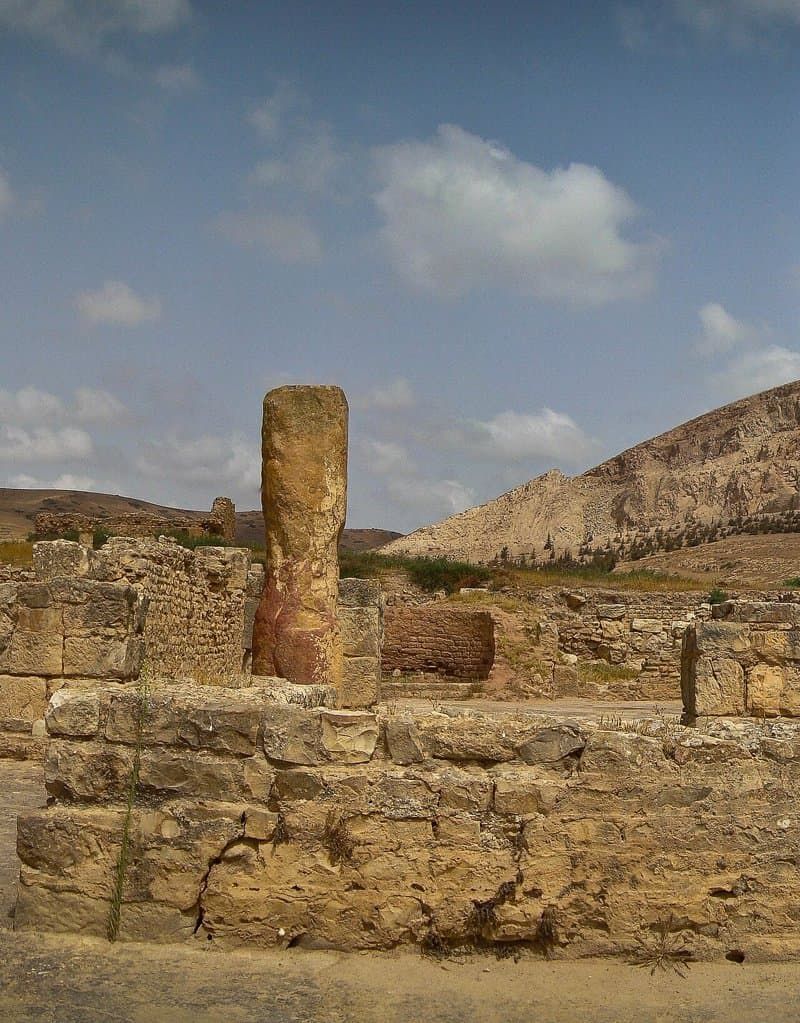
The marble is known as Numidian marble or giallo antico, the old yellow. It is yellow, often streaked with red. It was among the most prized decorative stones of antiquity. Roman writers praised it. Columns, panels and floors of it were shipped to Rome and other cities of the empire.
Long before Rome the hill was sacred. Under the Numidian king Micipsa, in the second century BC, a sanctuary was built on its summit in honour of his father Massinissa. Under Roman rule Simitthus became a colony. The quarries came under imperial control. Beside them archaeologists found a large walled camp. It held prisoners condemned to hard labour in the quarries, together with soldiers who guarded them and the offices that ran the work. A road was built across the mountains to the port of Tabarka.
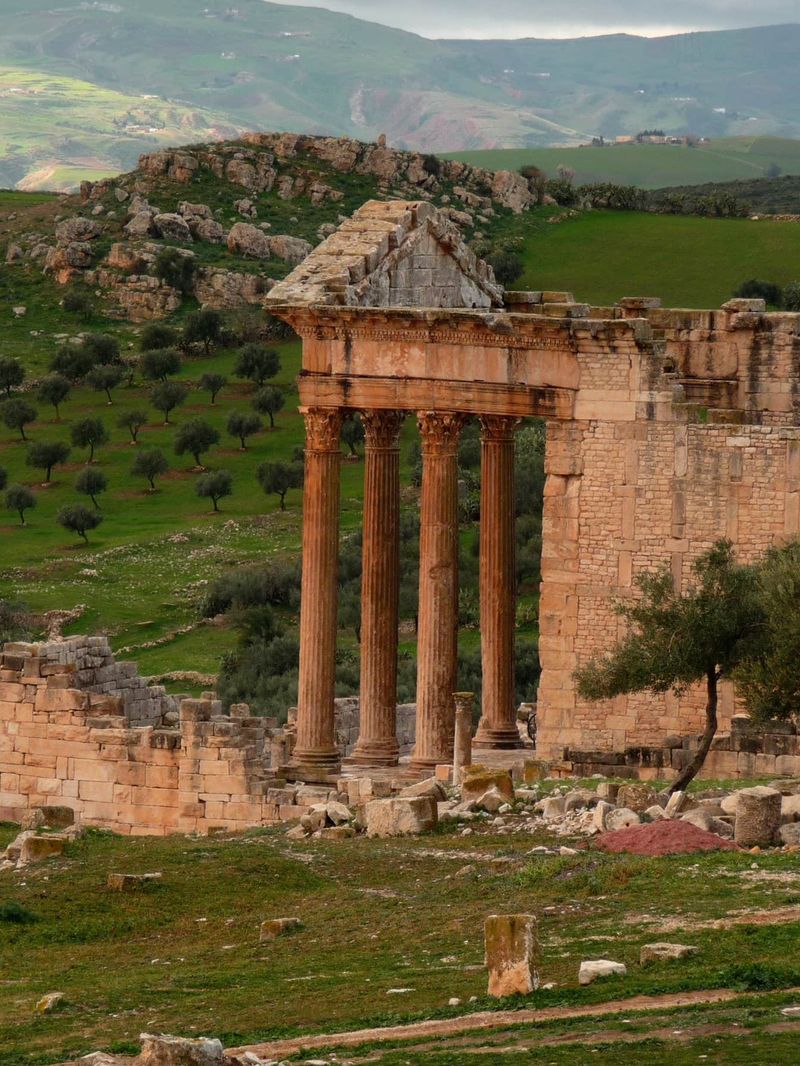
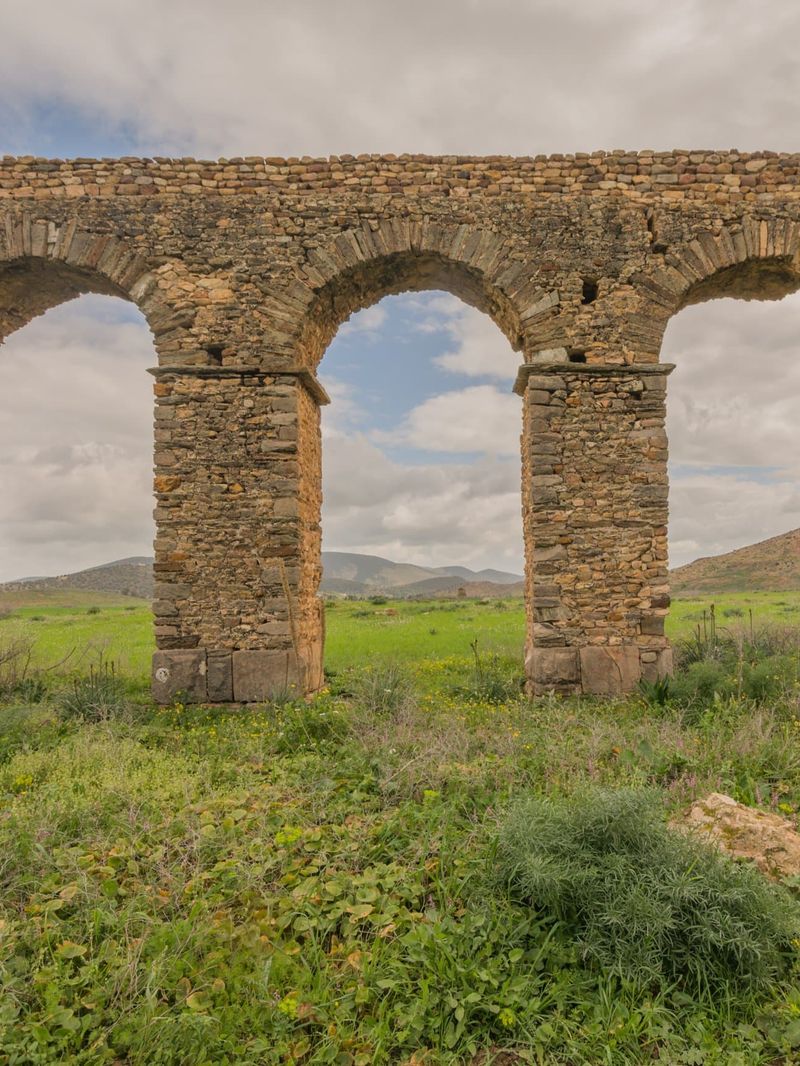
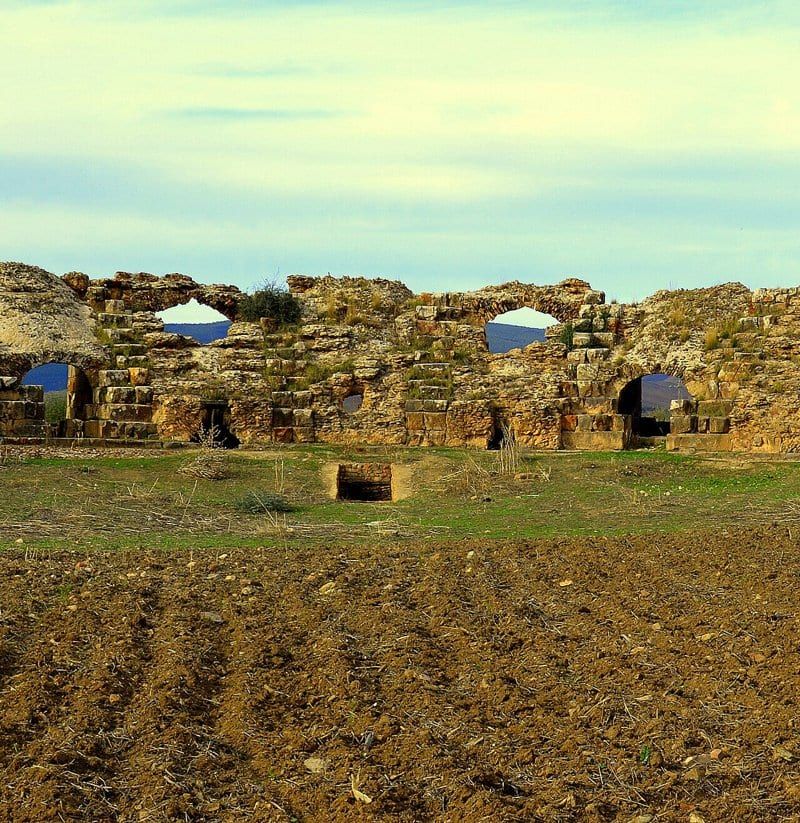
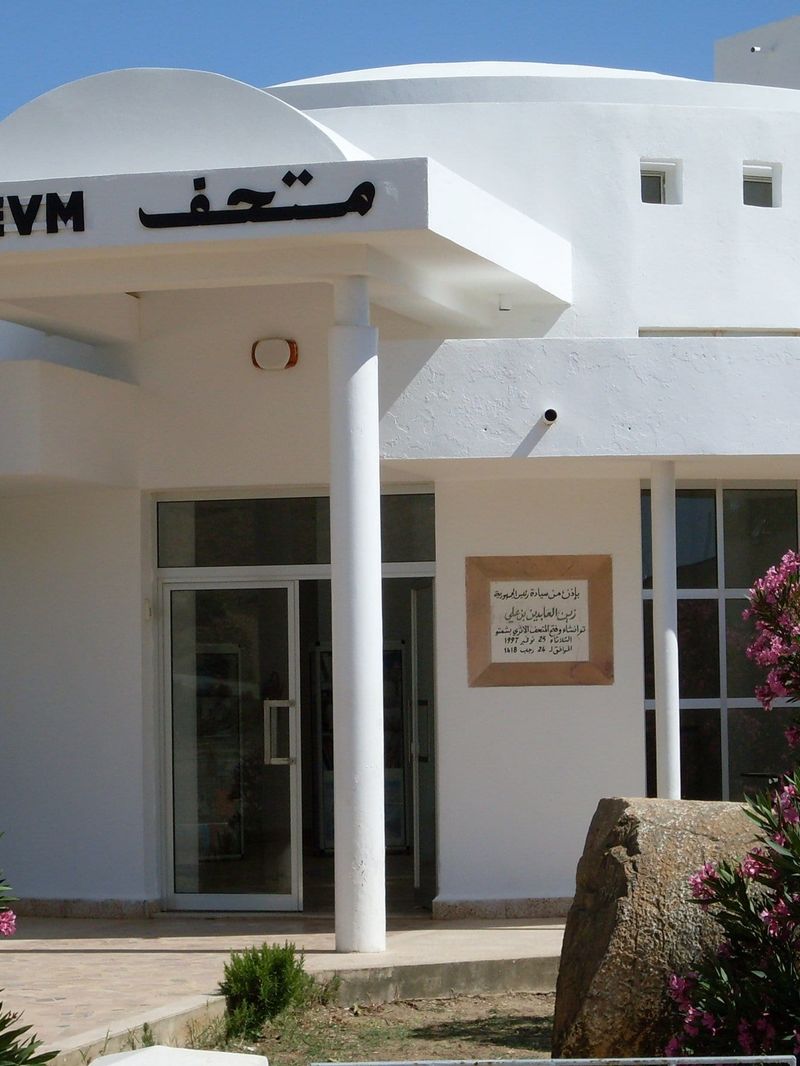
The town had a forum, baths, a theatre, an amphitheatre, an aqueduct, temples and Christian churches. A Roman bridge crossed the Medjerda. Since 1965 the Tunisian National Heritage Institute and the German Archaeological Institute have excavated the site together. Their work led to a museum that opened in the late 1990s. It presents the marble, the quarries and a full-size reconstruction of the facade of the Numidian sanctuary.
Exhibo editorial
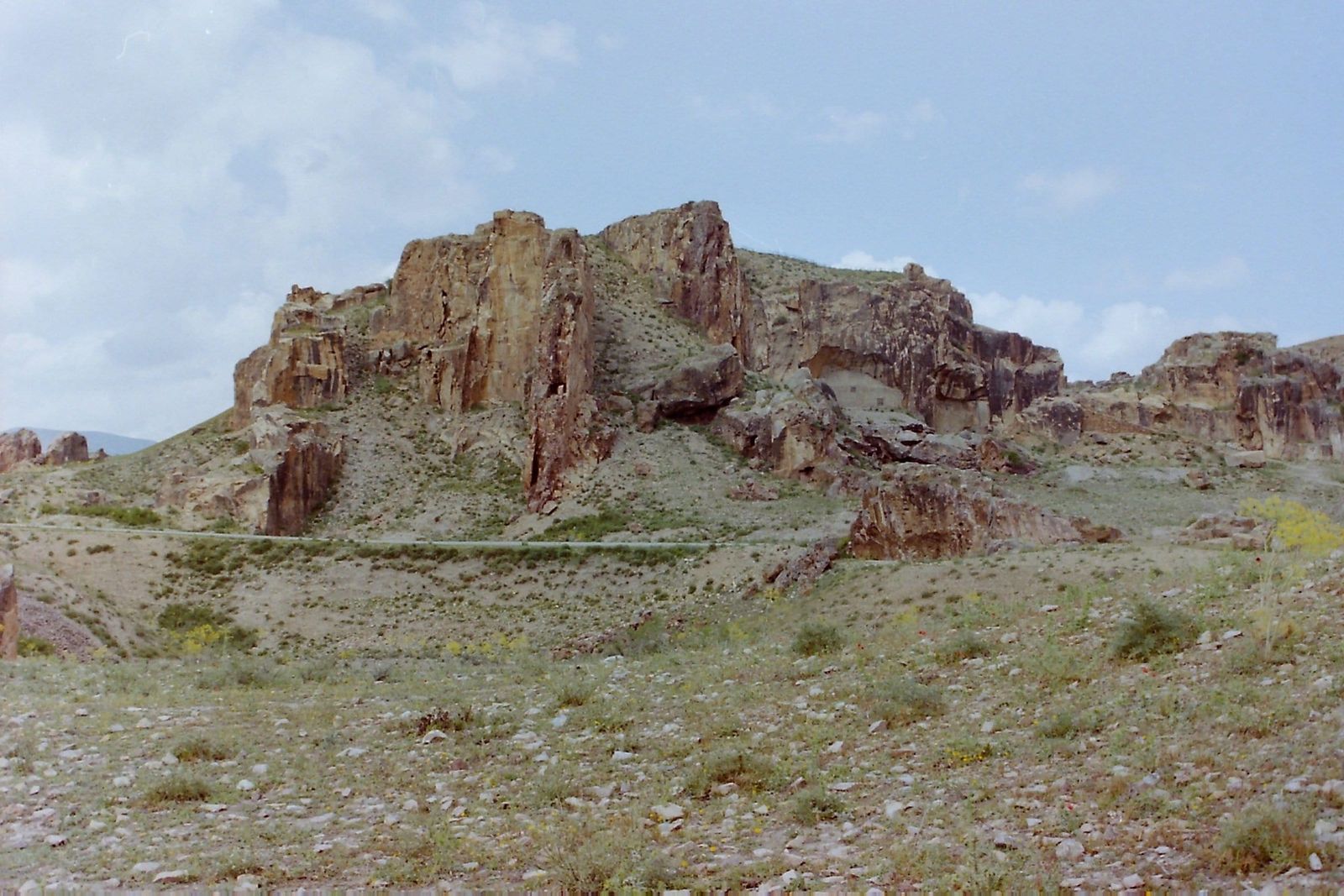
The hills at Chemtou look wounded. Whole slopes have been cut away, leaving cliffs of yellow and rust-red stone, terraces and piles of rubble that turn out to be Roman spoil heaps. You are looking at the source of floors and columns you may already have walked past in Rome.
Climb towards the quarries and then turn to look at the camp below. The prisoners worked the stone that paid for the baths and the theatre of the town below. Come in spring when the fields around are green. Then go on to Bulla Regia, half an hour away, where the same families lived underground.
Gallery
How to find it
Chemtou lies off the road from Jendouba towards the Algerian border, about twenty kilometres west of Jendouba. The quarries, the camp and the main ruins are spread over a wide area around the museum; tracks lead from one to the next. Wear sturdy shoes. The old route to the sea leads north through the mountains to Tabarka and its Genoese fort.