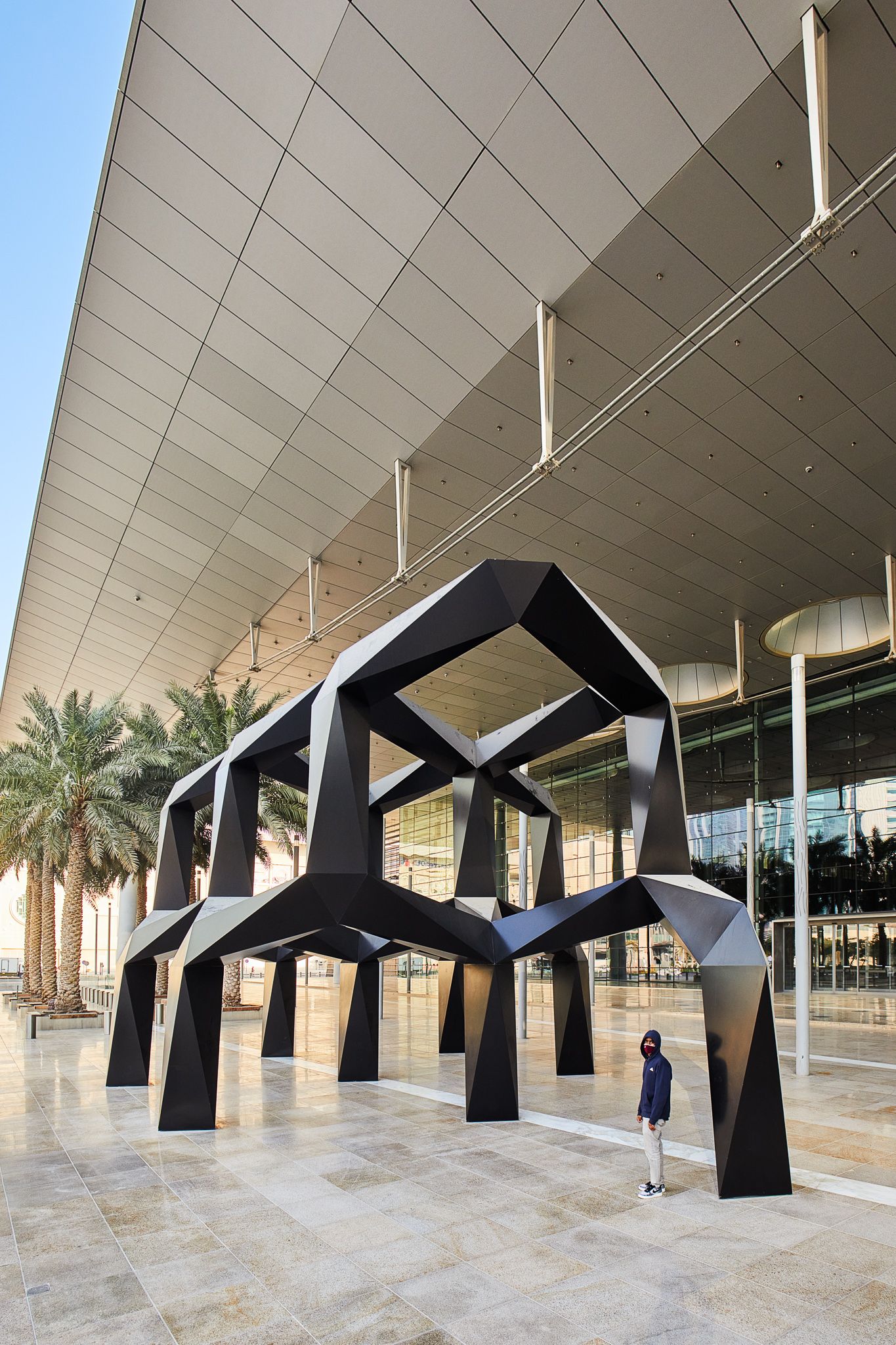
Smoke by Tony Smith is a 24-foot aluminium sculpture of interlocking tetrahedrons installed near the Doha Exhibition and Convention Center. First conceived in 1967 in painted plywood, the form plays with geometry and void: Smith liked the title because the interior spaces dissolve the sculpture's logic, like smoke itself. A sister cast stands in Los Angeles; Doha's version brings the work to a district of towers and convention traffic.
Smith produced more than fifty large sculptures in the last two decades of his life, and Smoke is among the most photographed in Qatar.
Exhibo editorial
Smith trained as an architect before he became a sculptor, and Smoke shows it: this is building logic turned inside out, a shape you could almost walk through if security allowed.
Visit after dark when DECC is lit; the lattice reads as a drawing in space against the glass facades.
How to find it
Near the Doha Exhibition and Convention Center in West Bay, visible from surrounding roads and the West Bay promenade. Check access to the immediate plaza around the sculpture on arrival.
Similar places
All places
News by Exhibo
Editorial coverage on Exhibo

Coffee Began in Yemen
The coffee plant is Ethiopian. But the drink — roasted, brewed, and made the center of a culture — is Yemeni.
Before the espresso machine, before the café, a Sufi in Yemen brewed a bean to stay awake for God. This is the story of how coffee became coffee — from the prayer lodges of the Shadhili order to the Red Sea port of Mocha that named a drink, and finally to the shape the Gulf poured all of it into: the dallah on the one-dirham coin.
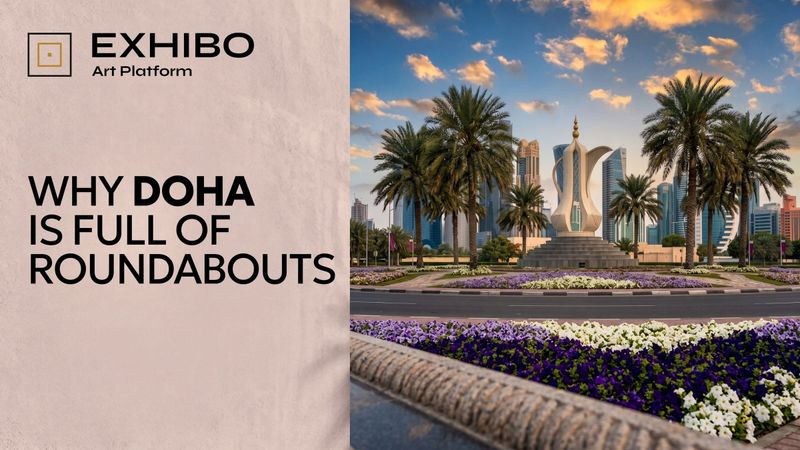
Why Doha Is Full of Roundabouts
An old circle at a crossroads, sharpened by British road engineering, became the way an Arabian city found its way and remembered itself — and it took the bulldozers to reveal it.
In a city where a landmark was more useful than an address, Doha's roundabouts became its navigation, its landscaping and its national image all at once. Now they're being torn out for signalled junctions — and the affection for them arrived, as one scholar put it, only posthumously.
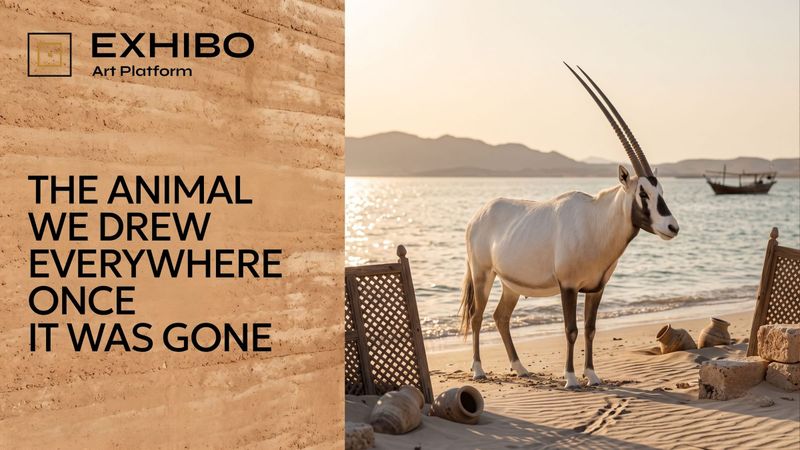
The Animal We Drew Everywhere Once It Was Gone
From Neolithic rock to airline tailfin — how the Arabian oryx vanished from the desert, came back from nine animals, and multiplied everywhere as a symbol in the very decades it was gone.
The last wild Arabian oryx was shot in 1972. By then it was already a picture — carved on Bronze Age tombs, mistaken by the ancients for a unicorn, praised by poets as the eyes of the beloved. This is the story of an animal that went extinct in the wild and was brought back from nine survivors, and of the strange gap between the creature and the emblem it became: fast, sharp and ascendant on a nation's tailfin, while the animal itself survives by standing still in the shade.