Al Koot Fort
Doha Fort in the heart of the city — Ottoman origins, Qatari battlements and a museum open by appointment.
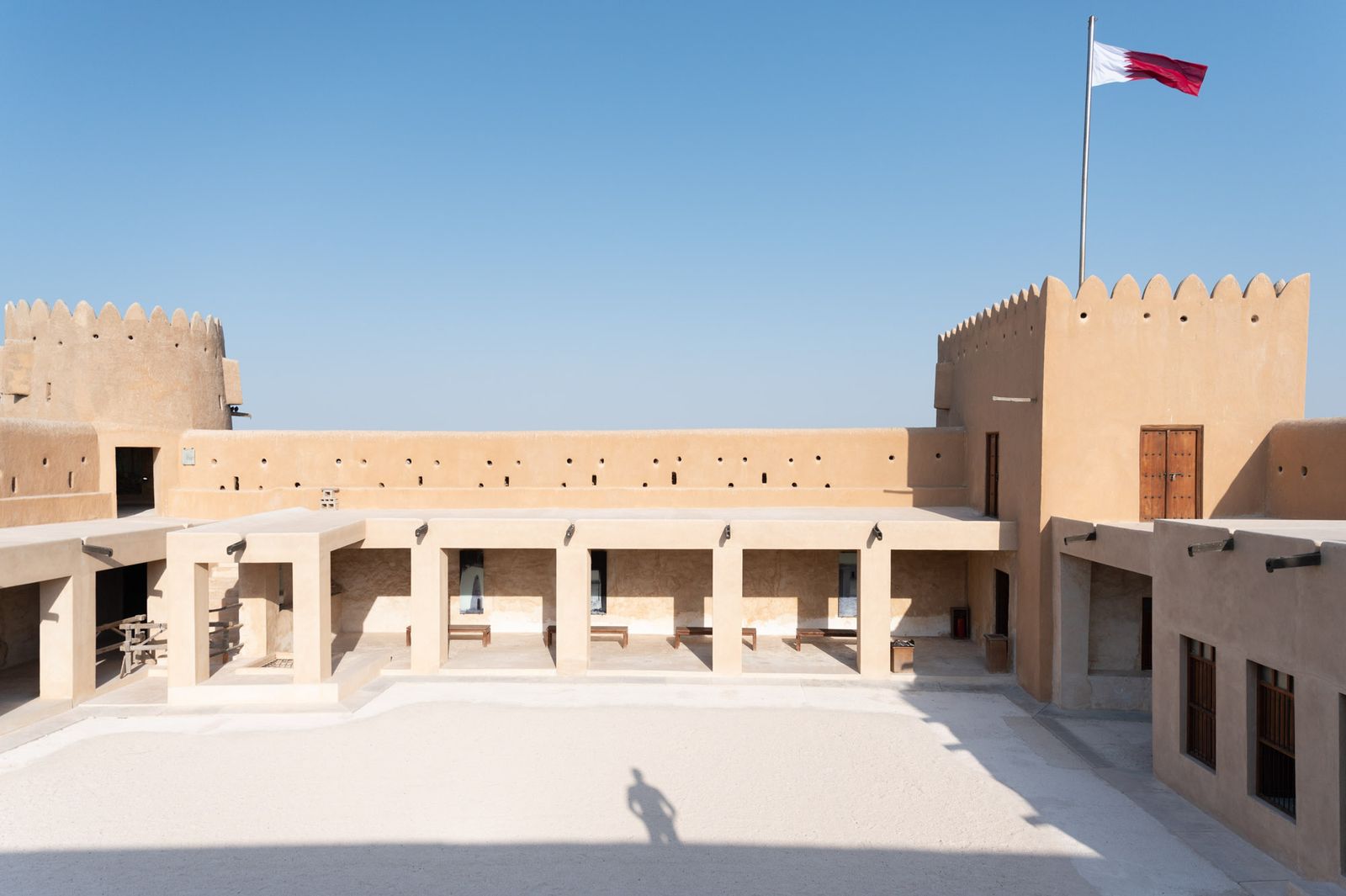
Al Koot Fort — also spelled Al Khoot or Al Kuwt, and commonly called Doha Fort — stands on the rise of Wadi Musheireb where Bedouin traders once gathered before Souq Waqif grew around it. Built in 1880 as an Ottoman police post, later rebuilt by Sheikh Abdullah bin Jassim Al Thani, it served as prison and police station before reopening as a museum.
The square courtyard has one rectangular and three round towers capped with traditional Qatari battlements; the open-air courtyard mosque allowed guards to watch prisoners at prayer. Exhibits include fishing equipment, boats, gypsum ornaments and historical photographs of craft workers.
Exhibo editorial
The exterior is free, photogenic and perfectly placed between Souq Waqif and the Corniche — most visitors admire the walls and fountain without going inside.
Call ahead if you want the museum; otherwise ten minutes here en route to the souq is time well spent.
How to find it
Central Doha, near Souq Waqif. Metro: Souq Waqif or Msheireb. Exterior accessible daily; interior by appointment (+974 4442 4143).
Similar places
All places
News by Exhibo
Editorial coverage on Exhibo
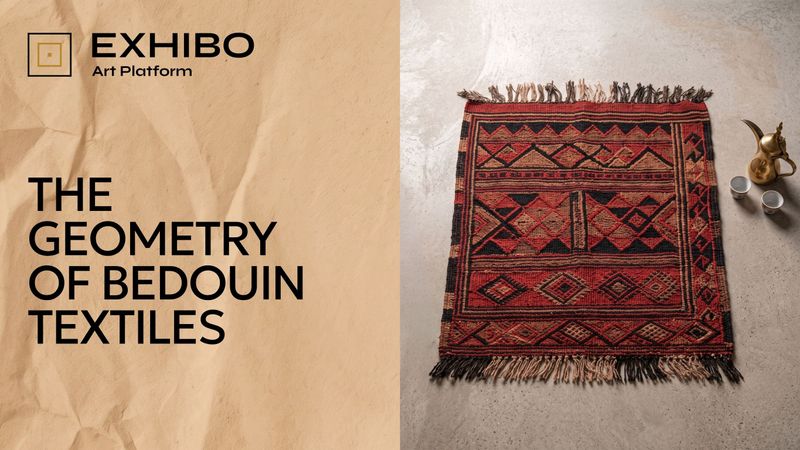
Sadu Weaving: The Geometry of Bedouin Textiles
The geometry the Bedouin wove, and the women who carried it in memory because nothing was written down.
On a loom you stake into the sand, Bedouin women wove the interior world of the Gulf — tents, dividers, camel trappings — and threaded through the wool a geometry that carried tribe, family and meaning. A story of Sadu: the patterns and their names, the women who transmitted them without a single written word, and the quiet work of keeping the craft alive.
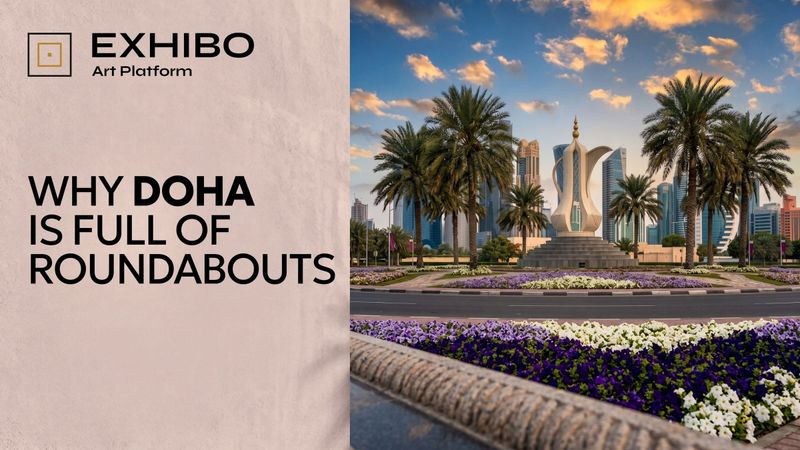
Why Doha Is Full of Roundabouts
An old circle at a crossroads, sharpened by British road engineering, became the way an Arabian city found its way and remembered itself — and it took the bulldozers to reveal it.
In a city where a landmark was more useful than an address, Doha's roundabouts became its navigation, its landscaping and its national image all at once. Now they're being torn out for signalled junctions — and the affection for them arrived, as one scholar put it, only posthumously.
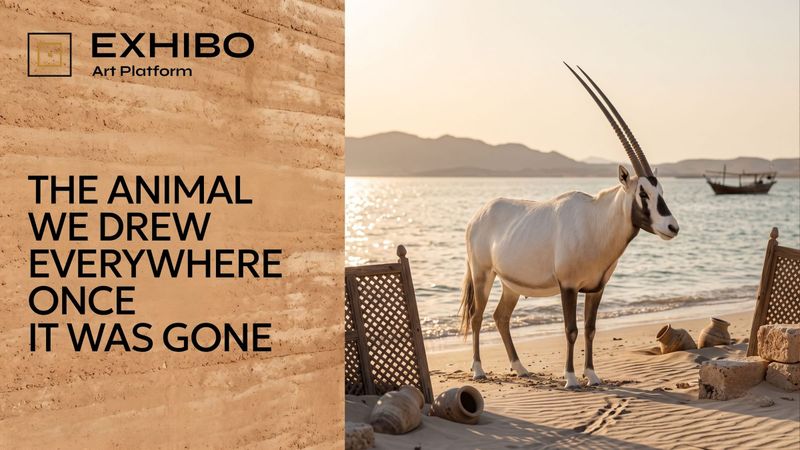
The Animal We Drew Everywhere Once It Was Gone
From Neolithic rock to airline tailfin — how the Arabian oryx vanished from the desert, came back from nine animals, and multiplied everywhere as a symbol in the very decades it was gone.
The last wild Arabian oryx was shot in 1972. By then it was already a picture — carved on Bronze Age tombs, mistaken by the ancients for a unicorn, praised by poets as the eyes of the beloved. This is the story of an animal that went extinct in the wild and was brought back from nine survivors, and of the strange gap between the creature and the emblem it became: fast, sharp and ascendant on a nation's tailfin, while the animal itself survives by standing still in the shade.