Directory listing — not yet managed by the museum. Spotted something wrong? Suggest an edit →

Golestan Palace

Golestan Palace

Golestan & Grand BazaarTehran

Qajar royal palace complex and its collections

About

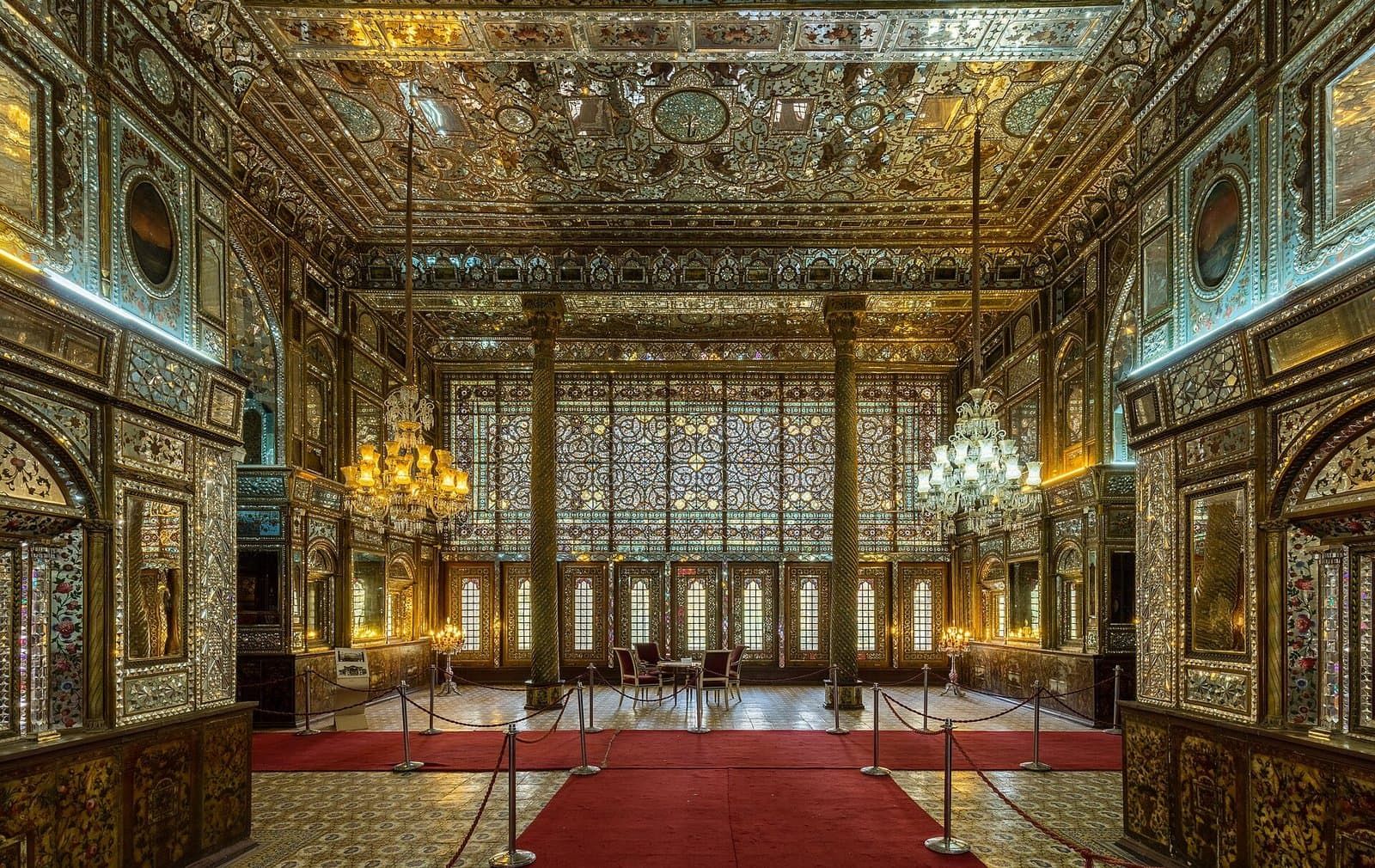
Golestan Palace is the former royal complex of the Qajar dynasty in central Tehran, on Arg Square close to the Grand Bazaar. It grew out of the citadel, or Arg, built under the Safavid shah Tahmasb I in the sixteenth century and later renovated by Karim Khan Zand. When Agha Mohammad Khan Qajar made Tehran his capital, the Arg became the seat of the Qajar court, which ruled Iran from 1794 to 1925. Golestan was the official residence of the royal family. UNESCO inscribed the palace on the World Heritage List in 2013. The buildings stand around a formal garden with long pools. The oldest, the Takht-e Marmar or Marble Throne verandah, was built in 1806 for Fath Ali Shah. Its throne is carved from yellow stone quarried in Yazd and rests on sculpted figures; the hall was used for royal ceremonies and coronations. The Shams-ol-Emareh, the Edifice of the Sun, was built between 1865 and 1867 to a design by Moayer-ol-Mamalek. Naser al-Din Shah wanted a tower from which he could look out over the city. It mixes Persian tilework with European ideas of a palace facade. Inside, the main halls are known for mirror work, painted tiles and stained glass. The Negar Khaneh shows Qajar painting, including portraits of the shahs and scenes of daily life in nineteenth-century Iran. The Howze Khaneh holds European paintings and sculpture sent as gifts to the Qajar kings. In the basement, the Aks Khaneh displays historic photographs from the Qajar court; Naser al-Din Shah was himself a keen photographer. Each section has its own ticket, bought at the gate. Guides give opening hours of about 9:00 to 17:00 with closures on public holidays, so check before visiting. The nearest metro station is Panzdah-e Khordad.

Why this museum matters

Exhibo editorial

Naser al-Din Shah took up photography not long after the camera was invented. The pictures in the Aks Khaneh are a royal court looking at itself through a new machine, which makes them feel far more private than the portraits upstairs. Above ground, the palace tells the same story in architecture. The Marble Throne belongs to an older Persian idea of kingship. Sixty years later the Shams-ol-Emareh shows a shah who had seen pictures of Europe and wanted a view over his own capital. Walk from one to the other and you cross the whole Qajar century. If you buy only some tickets, take the Main Halls with the Mirror Hall and the Negar Khaneh. Come early, then walk into the Grand Bazaar next door.

Visit

Hours, tickets, and directions for Golestan Palace.

Address

Arg Square, 15 Khordad Street, Tehran