Directory listing — not yet managed by the museum. Spotted something wrong? Suggest an edit →

Institut du monde arabe

Institut du monde arabe

Saint-GermainParis

Museum and cultural centre of the Arab world in Jean Nouvel's moucharabieh building, with a leading collection of modern Arab art

About

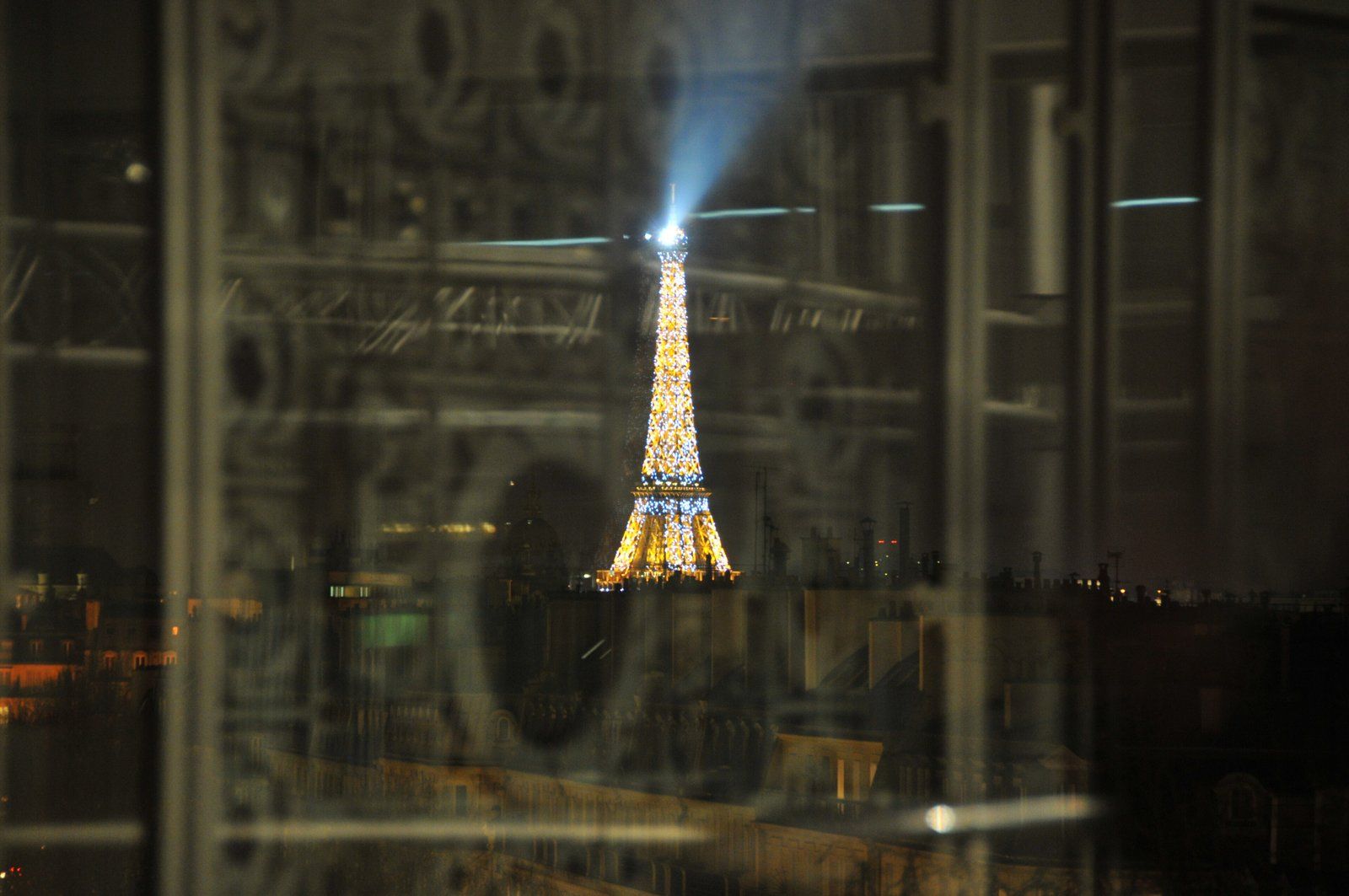
The Institut du monde arabe (Arab World Institute) is a museum and cultural centre devoted to the Arab world, on the left bank of the Seine in the 5th arrondissement of Paris. It faces the Île Saint-Louis, at the edge of the Jussieu university campus in the Latin Quarter. France and the Arab states began financing its construction together in 1980. The building opened to the public in December 1987. It was designed by Jean Nouvel with Architecture-Studio, Gilbert Lèzenes and Pierre Soria. The south façade, about 2,000 square metres, is made of 240 metal moucharabiehs. They reproduce patterns from Arab geometry. Half of their diaphragms are mobile, opening and closing like a camera lens as photoelectric cells measure the sunlight. Inside, the book tower of the library spirals upward in reference to the minaret of the Great Mosque of Samarra. A hall of columns recalls the Great Mosque of Córdoba. The building received the Aga Khan Award for Architecture in the 1987–1989 cycle. In 2014 the French-Tunisian artist eL Seed painted a large calligraphic mural on part of the north façade. The museum began collecting in 1982 with the arts of Islam, followed by ethnography in 1983 and modern Arab art in 1985. It was among the first in Europe to collect contemporary Arab artists. The Islamic collection now holds 665 pieces or lots from Spain to Central Asia, from the eighth century to the present, including the Marcel Destombes bequest of astrolabes and other astronomical instruments. The ethnographic collection has 338 objects of daily life, from jewellery and costume to shadow-theatre puppets. Since 2018 the donation of Claude and France Lemand has expanded the modern and contemporary collection to about 2,600 works, among them paintings by Paul Guiragossian. The museum describes it as the second-largest collection of modern and contemporary Arab art in the world, after Mathaf in Doha. Since 2012 the galleries have told the story of the Arab world from antiquity onward, with loans from the Louvre, the Musée du quai Branly and museums in Riyadh, Manama, Damascus, Aleppo and Tunis. The terrace on the ninth floor looks over the apse of Notre-Dame. Like the bookshop, it is free to enter. The museum and exhibitions are open Tuesday to Friday from 10:00 to 18:00. On weekends and public holidays they are open from 10:00 to 19:00. The institute is closed on Mondays and on 1 May.

Why this museum matters

Exhibo editorial

Walk round to the south side before you go in. Those 240 metal squares look like decoration. They are machines. Half of their diaphragms move, opening and closing with the sun like the lens of a camera. Jean Nouvel started from the moucharabieh, the carved wooden screen of Arab houses. He rebuilt it in steel for a Paris campus. The collection holds its own surprise. The IMA started buying contemporary Arab art in 1985, when hardly anyone in Europe did. The Lemand donation has since taken it to about 2,600 works. Only Mathaf in Doha holds more. Look for La Longue Marche, painted by Paul Guiragossian in 1982. Then take the lift to the ninth floor. The terrace is free and sits right behind Notre-Dame. Mondays are closed. Weekends run an hour later, until 19:00.

Visit

Hours, tickets, and directions for Institut du monde arabe.

Address

1 rue des Fossés Saint-Bernard, Place Mohammed V, 75005 Paris

Opening hours

Monday
Closed
Tuesday
10:00 – 18:00
Wednesday
10:00 – 18:00
Thursday
10:00 – 18:00
Friday
10:00 – 18:00
Saturday
10:00 – 19:00
Sunday
10:00 – 19:00

Tuesday to Friday 10:00–18:00; weekends and public holidays 10:00–19:00; ticket desks close 45 minutes earlier. Closed Mondays and 1 May (official website).

News by Exhibo

Editorial coverage on Exhibo

All articles →
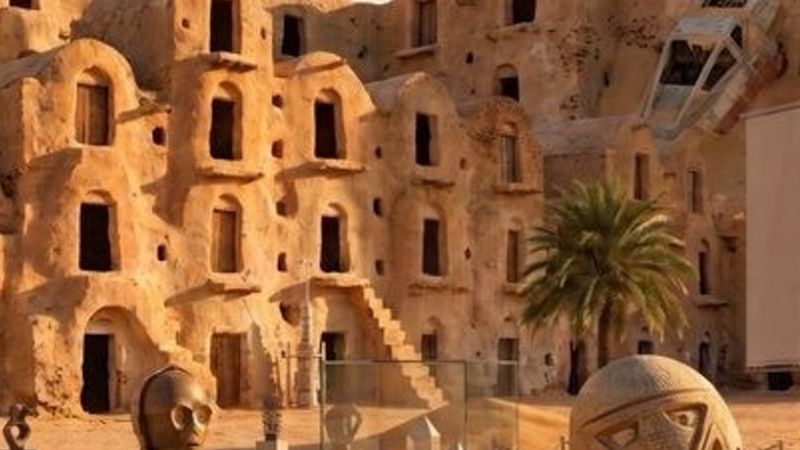
The Tunisian desert that became Tatooine — its Berber architecture, its vanishing film sets, and the living street-art scene painting over the myth.
Editorial

The Real Tatooine: Star Wars, Southern Tunisia and the Living Art Beneath the Myth

The Tunisian desert that became Tatooine — its Berber architecture, its vanishing film sets and the living street-art scene painting over the myth.

George Lucas filmed Star Wars across southern Tunisia, borrowing Berber pit-houses and 15th-century granaries as an alien world. But the real story is what's underneath: a living tradition of desert architecture, two millennia of coexistence on Djerba, and one of the most ambitious street-art projects on Earth.

The Complete Art Guide to Riyadh
Editorial

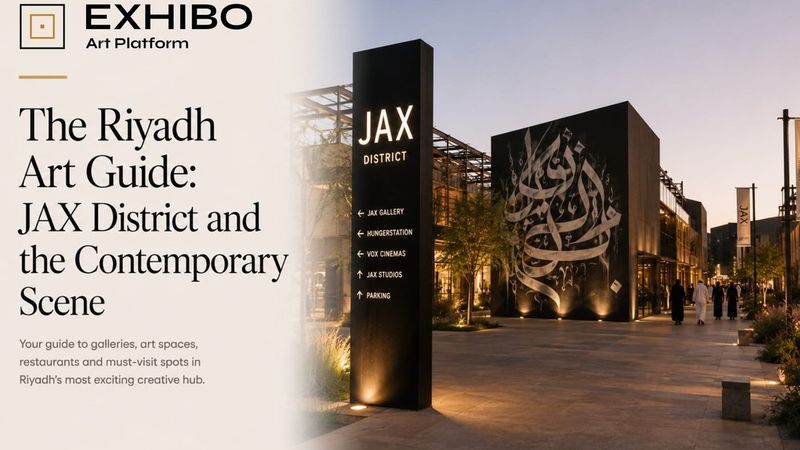
The Riyadh Art Guide: JAX District and the Contemporary Scene

An insider's directory to navigating the capital's changing creative spaces, from transformed industrial warehouses to central gallery hubs.

Riyadh's contemporary art scene is expanding at an extraordinary pace. Discover the city's essential creative hubs, from the monumental converted warehouses of the JAX District to the bustling commercial galleries of Al Olaya, with Exhibo's comprehensive cultural guide.